
Passage Saint Jean de Latran. — History & Facts
Who listens when art speaks of silence? In Passage Saint Jean de Latran, the quiet of an empty street draws viewers into an intimate moment, inviting them to feel the weight of solitude. Focus on the figures lingering in the foreground, framed within the archway's embrace. Notice how the interplay of light and shadow casts a gentle glow on their faces, while their stillness contrasts sharply with the busy texture of the cobblestones. The muted palette—soft grays and warm earth tones—creates a sense of nostalgia, as if the scene were frozen in time, echoing the whispers of countless passersby. At first glance, the painting captures an ordinary moment, yet the details reveal deeper layers of meaning.
The absence of bustling life evokes a haunting loneliness, suggesting a longing for connection in a rapidly changing world. The archway, a symbol of transition, stands as a reminder of paths taken and those yet to be explored, invoking a sense of obsession with the past and the possibility of unseen futures. Created in 1854, this work emerged during a time of profound social change in France. Bénard was experimenting with realism and impressionistic techniques, reflecting the burgeoning movement in art that sought to depict the genuine nuances of everyday life.
The artist's life was marked by personal challenges and a relentless pursuit of capturing the essence of urban experience, making this piece a poignant reflection of both his artistic journey and the collective consciousness of his time.
More Artworks by Auguste-Sébastien Bénard
Browse all →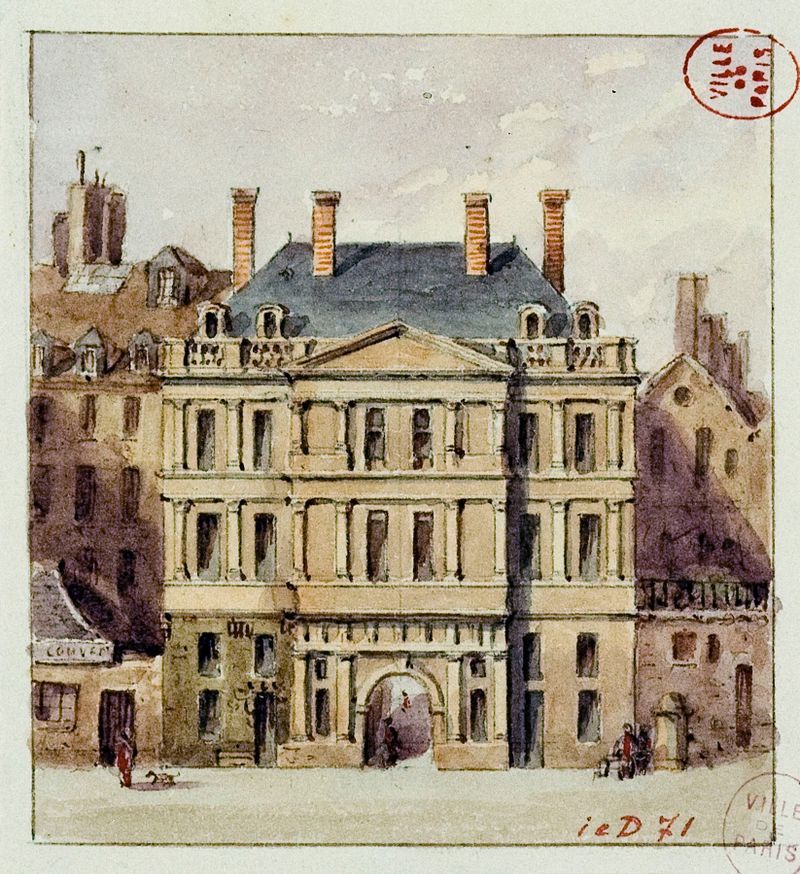
Cour de la Sainte Chapelle.
Auguste-Sébastien Bénard
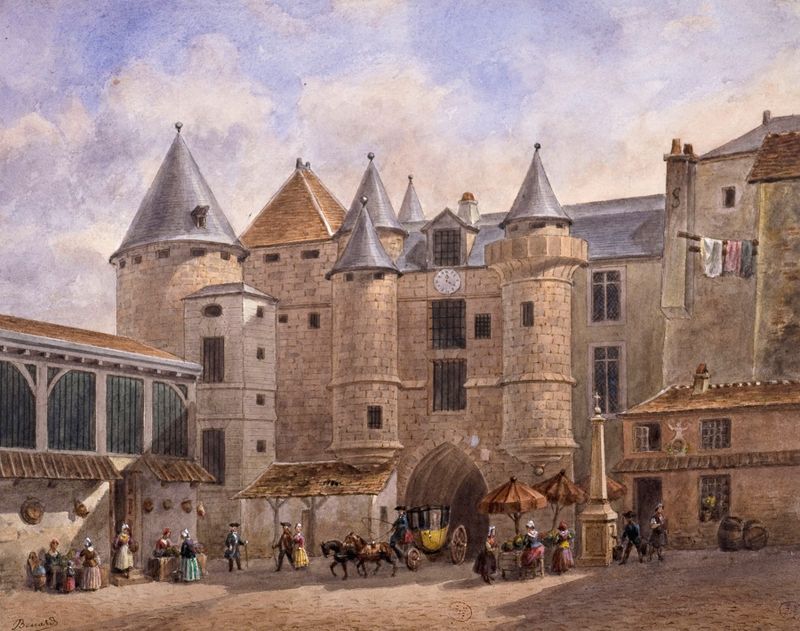
Le Grand Châtelet du XVIIIème siècle.
Auguste-Sébastien Bénard

Place de l’Hôtel de Ville.
Auguste-Sébastien Bénard

Salle souterraine du Palais de Justice.
Auguste-Sébastien Bénard

Voûtes du quai de Gesvres
Auguste-Sébastien Bénard

Monument expiatoire élevé à la mémoire du duc de Berry, à l’emplacement de l’ancien Opéra
Auguste-Sébastien Bénard
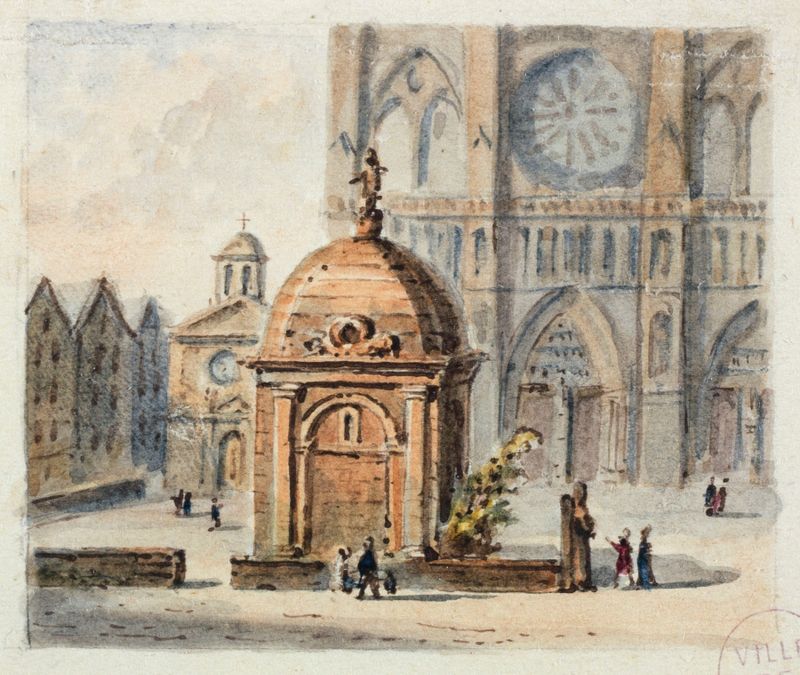
Le parvis de Notre-Dame de Paris
Auguste-Sébastien Bénard

Rue des chantres (entre le quai aux fleurs et la rue Chanoinesse).
Auguste-Sébastien Bénard

L’entrée de l’ancienne forteresse du Grand Châtelet, un jour de Carnaval
Auguste-Sébastien Bénard
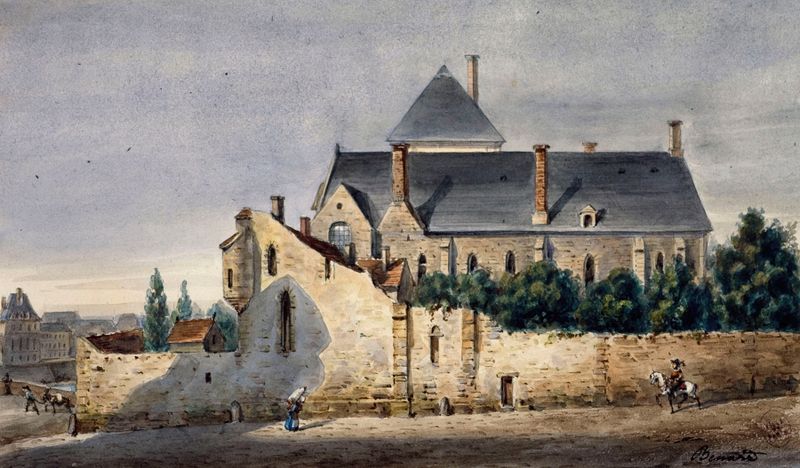
Les restes des bâtiments de l’hôtel du Petit Bourbon.
Auguste-Sébastien Bénard





