
Pasture — History & Facts
A hush settles over this patch of Dutch countryside, where the animals themselves seem to pause and listen to the quiet. The eye is drawn first to the gentle gaze of the cow in the foreground, its calm presence anchoring the scene. Around it, sheep and goats graze or rest, their forms arranged with a natural ease that invites the viewer to linger.
The light, soft and golden, washes over the animals and the grass, picking out textures in fur and leaf alike, while the low horizon grants the sky a vast, airy expanse. In the distance, the spire of a church peeks above the trees, a subtle reminder of village life beyond this peaceful pasture. Painted in 1650, Pasture by Adriaen van de Velde belongs to a world that prized such scenes for their quiet celebration of rural abundance. In the Dutch Golden Age, landscapes like this were cherished by urban collectors who longed for a vision of the countryside—untroubled, ordered, and fruitful.
Artists of the time, including van de Velde, became known for their ability to capture not just the look of nature, but its mood and rhythms. This work, now in the collection of the National Museum in Warsaw, stands as a modest but telling witness to that era’s fascination with the land and its creatures. Notice how the animals seem both separate and at ease with one another, inviting you to imagine the slow passage of a day in their company.
More Artworks by Adriaen van de Velde

Staande stier
Adriaen van de Velde
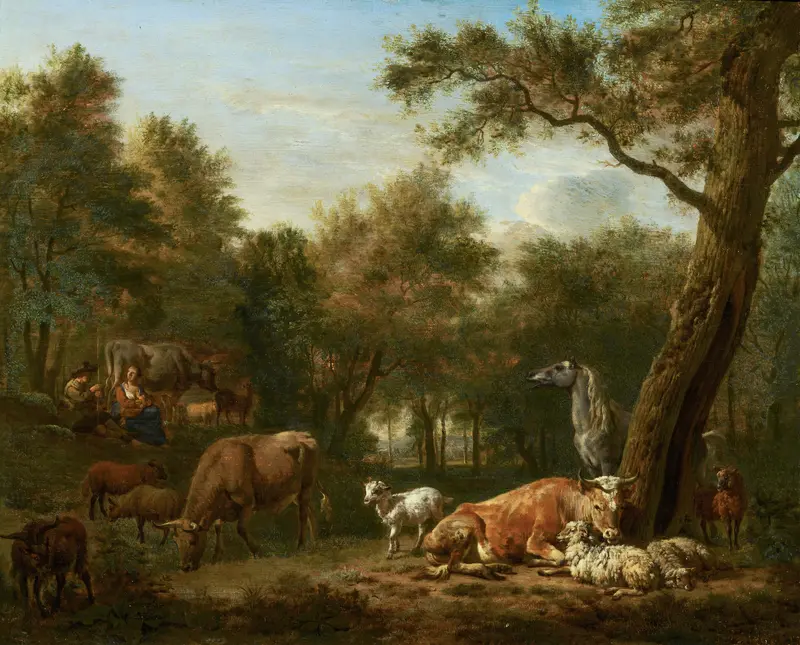
Wooded Landscape with Cattle
Adriaen van de Velde
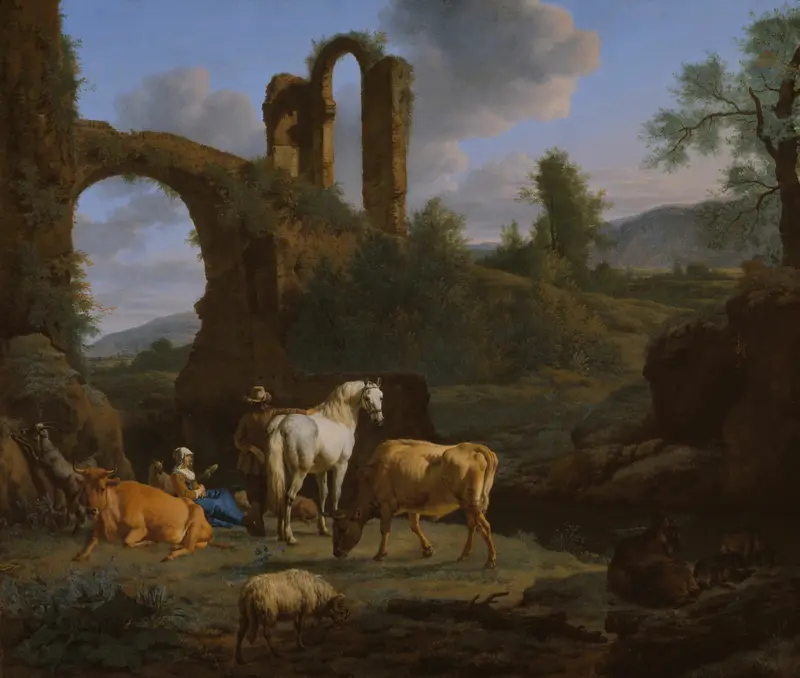
Pastoral Landscape with Ruins
Adriaen van de Velde
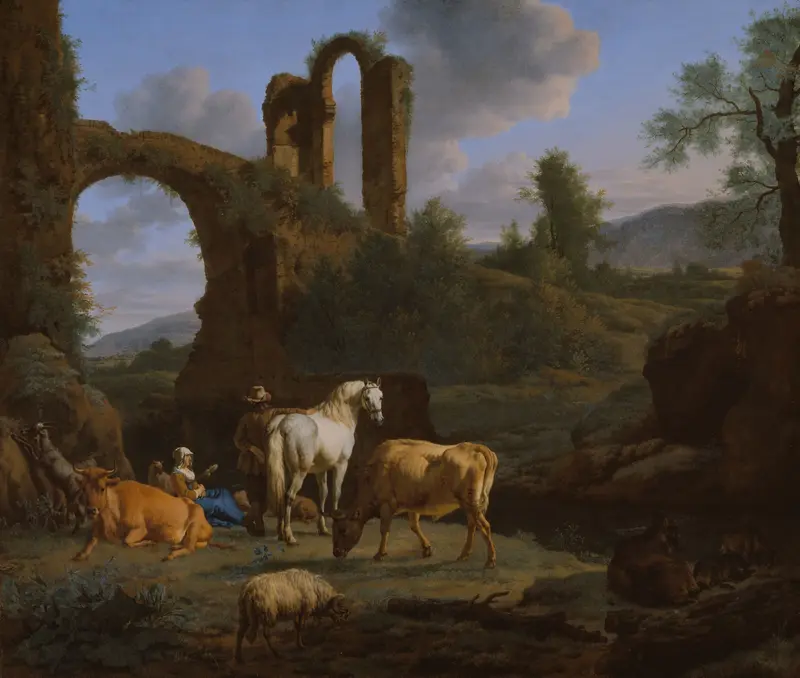
Pastoral Landscape with Ruins
Adriaen van de Velde
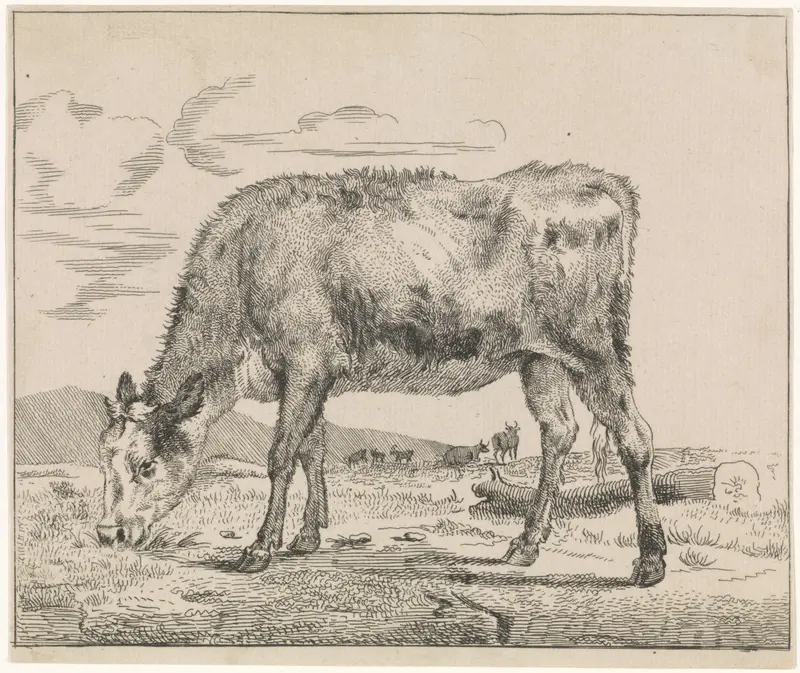
Grazend kalf
Adriaen van de Velde
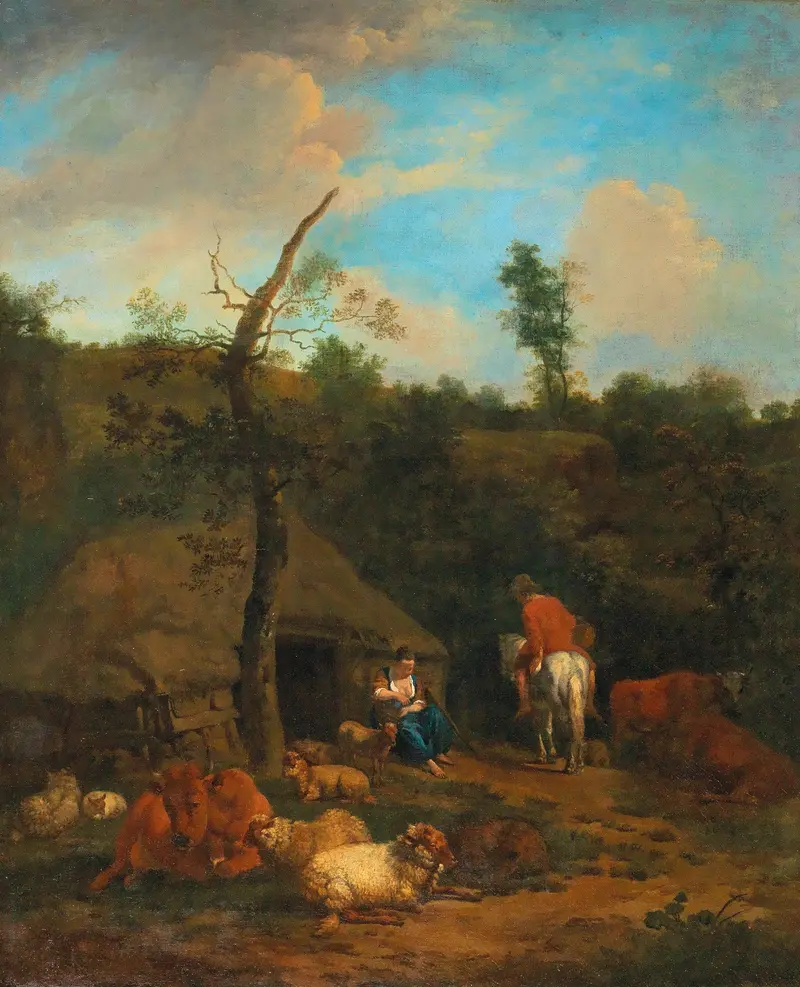
A herdsman and a shepherdess in front of a wooden farmhouse
Adriaen van de Velde
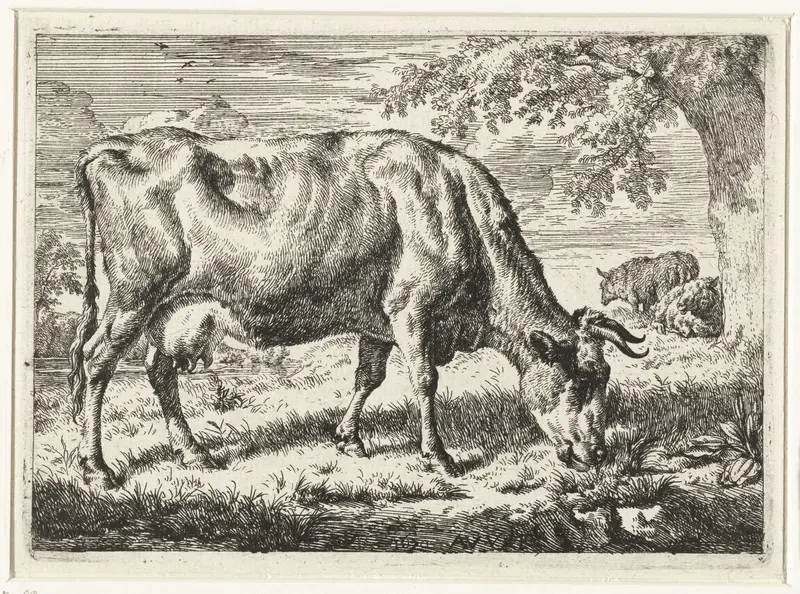
Grazende koe en twee schapen
Adriaen van de Velde
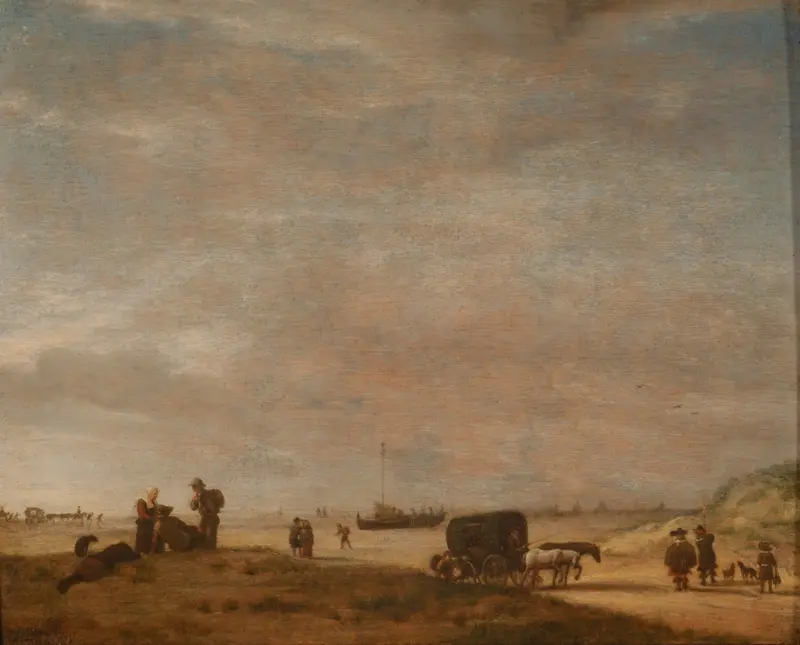
Scheveningen Beach
Adriaen van de Velde
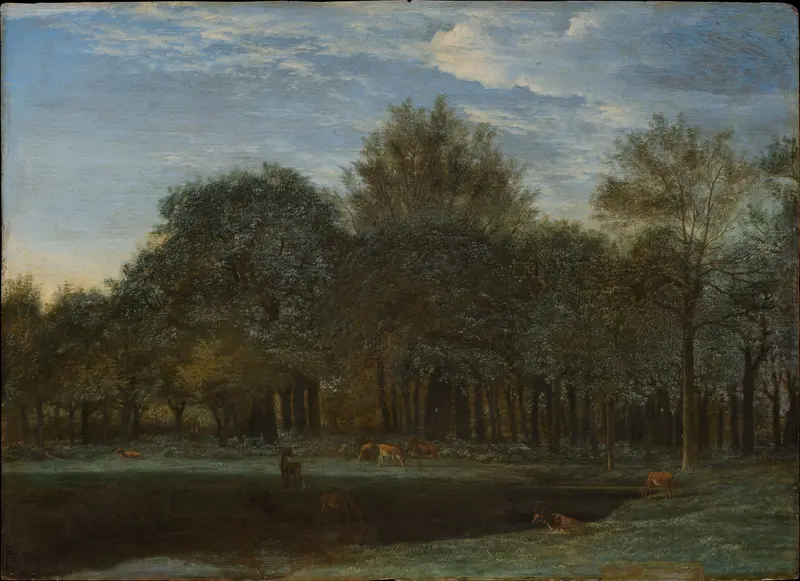
Forest Clearing with Grazing Deer
Adriaen van de Velde
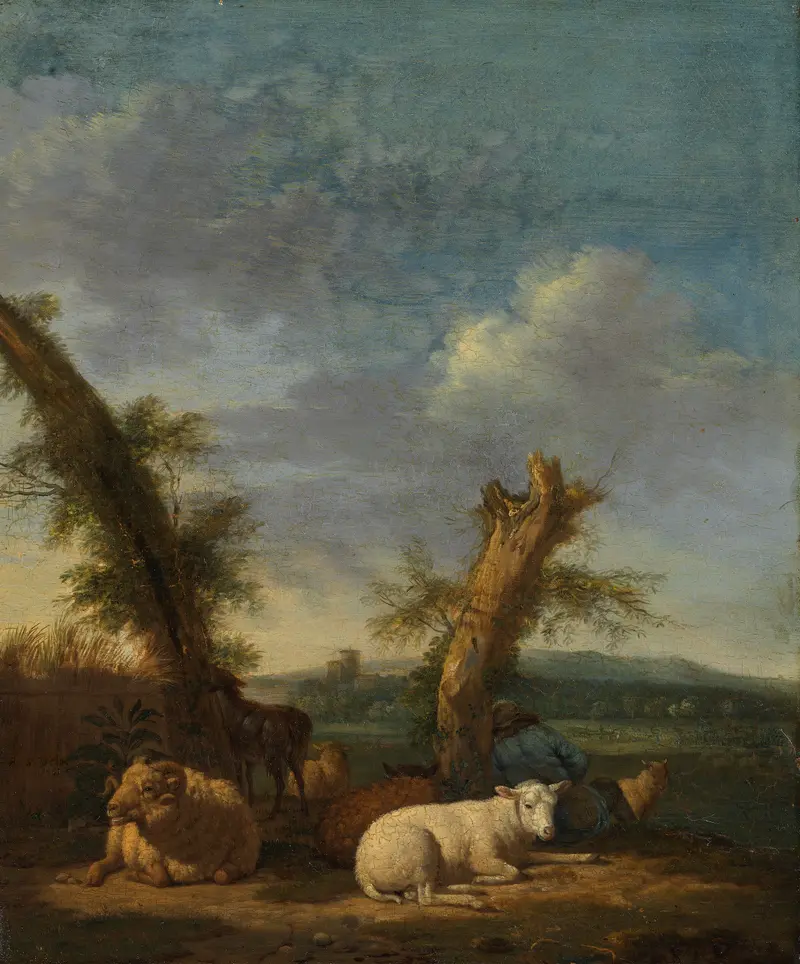
Landscape with Sheep and a Sleeping Shepherd
Adriaen van de Velde
More Landscape Art

The Starry Night
Vincent van Gogh

View of Delft
Johannes Vermeer

Water Lilies
Claude Monet

The Grand Canal, Venice, looking north-west from the Ca' Corner to the Ca' Contarini degli Scrigni, with the campanile of Santa Maria della Carità
Canaletto

Windsor Castle
Canaletto

The Grand Canal looking North-East from the Palazzo Dolfin-Manin to the Rialto Bridge
Canaletto