
Pastures at Graves near Villerville (Normandy) — History & Facts
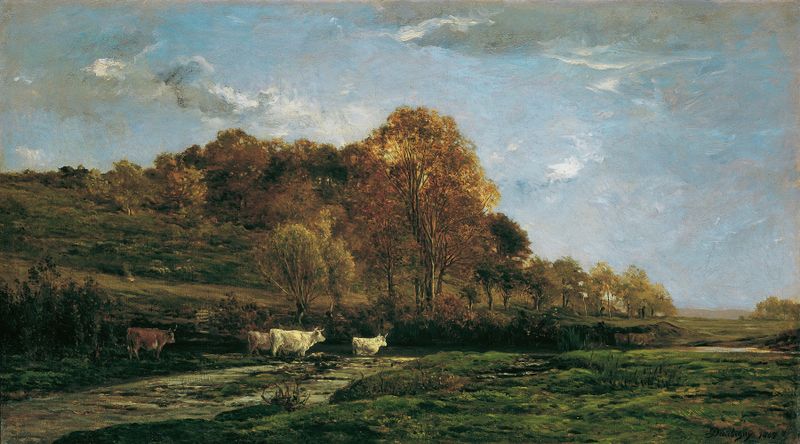
When did color learn to lie? In Pastures at Graves near Villerville, vibrant fields of green and gold beckon the eye with an unsettling allure, challenging our perception of nature’s truth. Look to the left where soft, rolling hills meet a sky awash in shades of blue and white. The brushstrokes dance, capturing the gentle sway of grass under the whisper of a breeze. Notice how the golden light spills across the canvas, illuminating the foreground while casting deeper, shadowed hues in the distance, creating a tension between warmth and coolness, familiarity and mystery. Beneath this idyllic surface lies a contrast of serenity and elusiveness.
The grazing cattle appear tranquil, yet their stillness hints at an underlying restlessness. The horizon, while enchanting, seems to recede indefinitely, suggesting dreams just out of reach. This duality evokes an emotional response, as the viewer is drawn into a scene that blurs the line between reality and illusion, leaving us to question the authenticity of such beauty. In 1875, Charles François Daubigny painted this piece during a pivotal moment in his career.
Living in France, he was immersed in the Impressionist movement, which was challenging traditional confines of representation. This work reflects his desire to capture fleeting moments in nature while showcasing the emotional resonance of color, as he explored the shifting light and seasonal changes that defined the landscapes he cherished.
More Artworks by Charles François Daubigny
Browse all →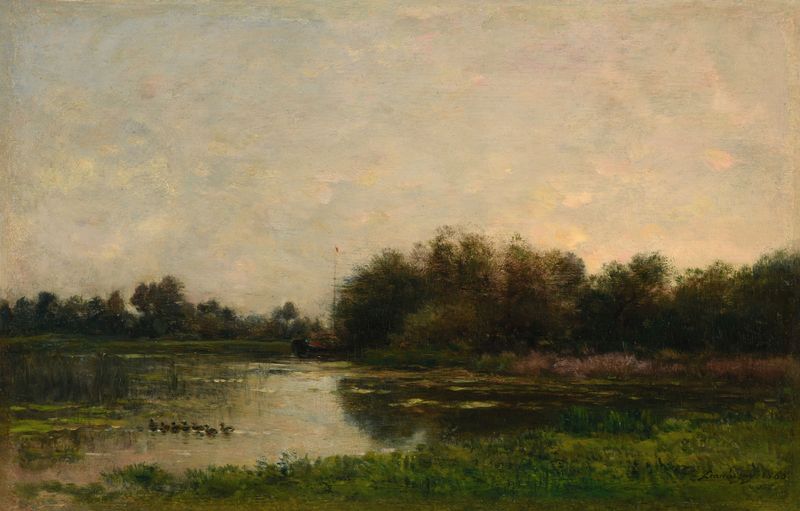
Bords de l’Oise
Charles François Daubigny
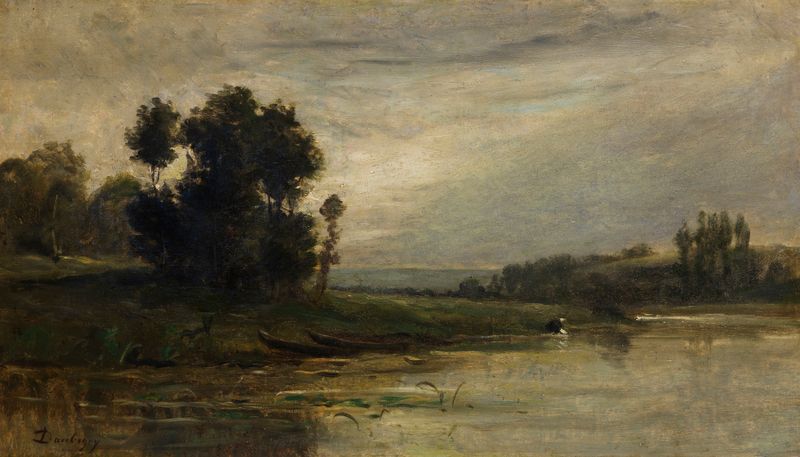
Bords de l’Oise
Charles François Daubigny
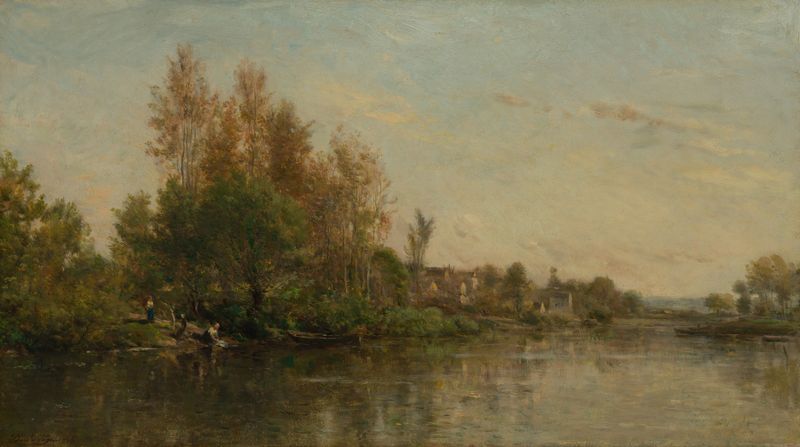
The Banks of the Oise
Charles François Daubigny
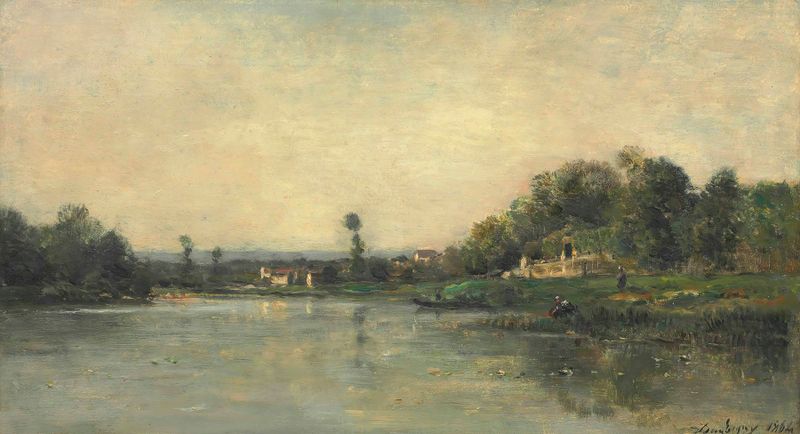
Les Bords De L’oise
Charles François Daubigny
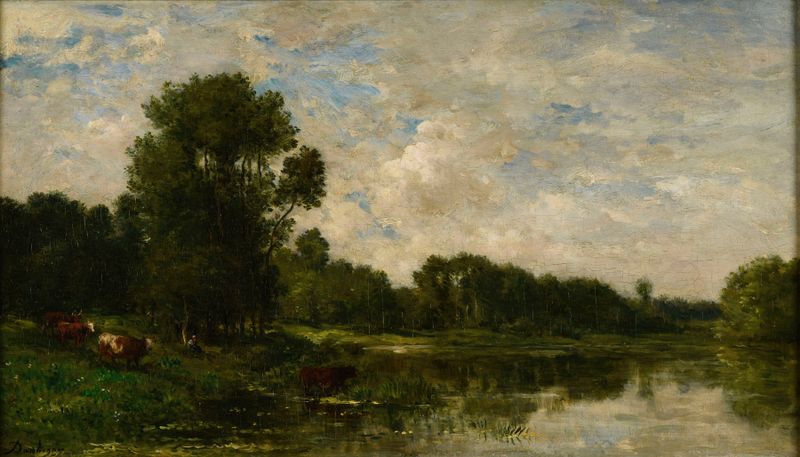
Bords de l’Oise
Charles François Daubigny
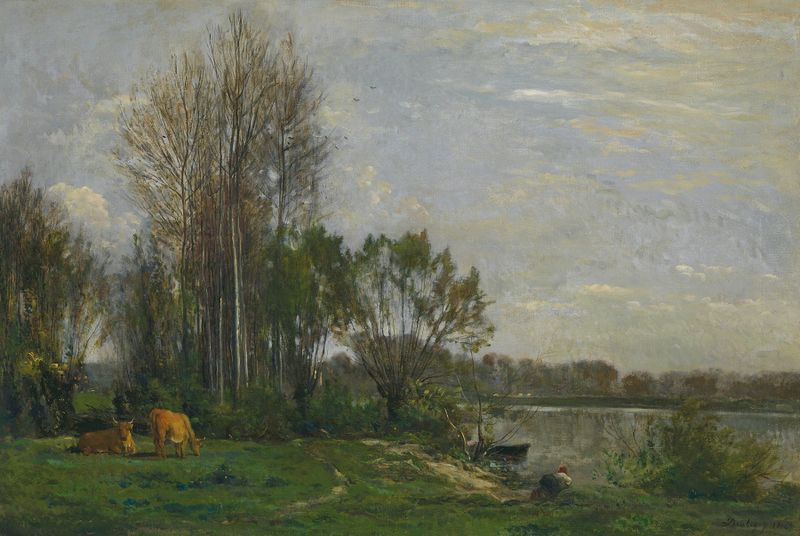
Les Bord De L’oise
Charles François Daubigny
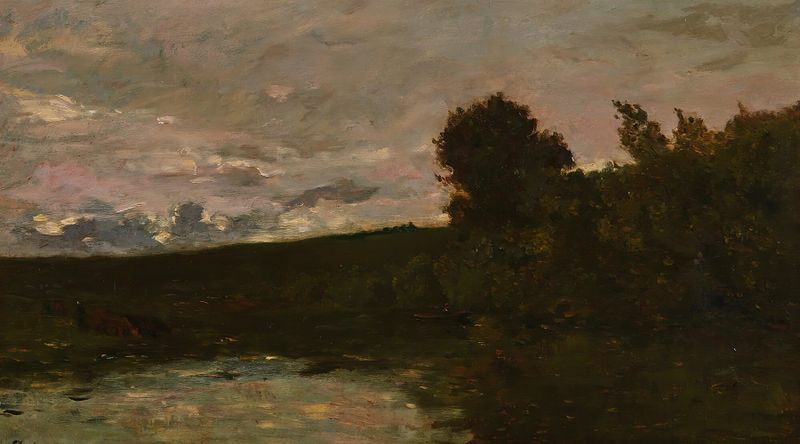
Bord De Riviére
Charles François Daubigny
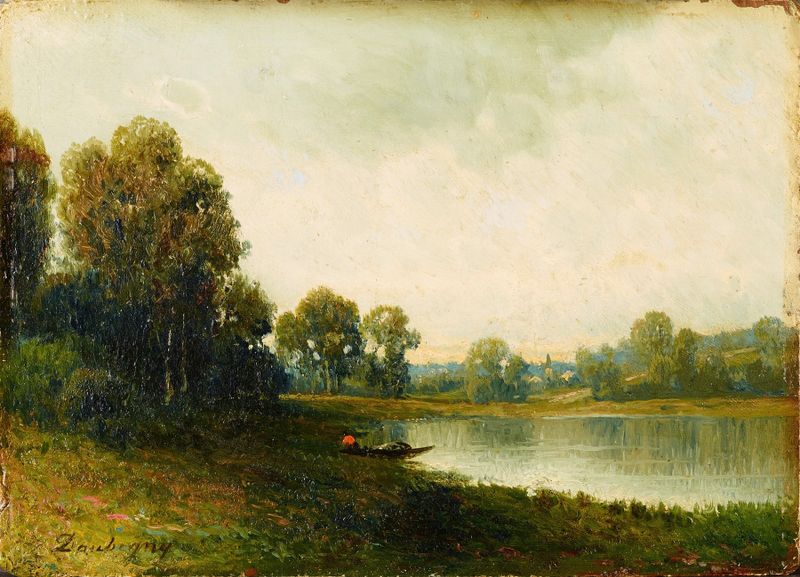
Landscape
Charles François Daubigny
Herbstliche Aulandschaft Abendstimmung
Charles François Daubigny
Landscape near Crémieu
Charles François Daubigny





