
Paysage avec cours d’eau — History & Facts
When did color learn to lie? In Paysage avec cours d’eau, the hues of nature blend seamlessly, inviting us to question the very essence of beauty. First, look to the left at the gentle curve of the river, its surface a shimmering mirror reflecting the soft blues and greens of the surrounding foliage. Notice how the light dances delicately across the water, highlighting the brushstrokes that bring the landscape to life. The trees stand tall, their earthy browns and vibrant greens contrasting beautifully with the serene sky, while wisps of cloud drift lazily overhead, creating a tranquil yet dynamic atmosphere. As you explore further, pay attention to the subtle interplay of textures and emotions.
The stillness of the water suggests peace, yet the lively brushwork hints at a hidden vibrancy beneath the surface. The play of light and shadow adds depth, evoking an unspoken narrative of nature's duality—its serene beauty and underlying chaos. The juxtaposition of the reflective water and robust trees captures the tension between calmness and movement, inviting contemplation on the transient nature of life itself. Created by Jules Dupré during a period when the Barbizon School was gaining prominence, this work reflects the artist's commitment to depicting the sublime beauty of nature.
Painted in the mid-19th century, Dupré was immersed in an era that celebrated the outdoors, capturing not only the landscape but also the shifting moods of light and atmosphere, which were pivotal in the evolution of landscape painting.
More Artworks by Jules Dupré
Browse all →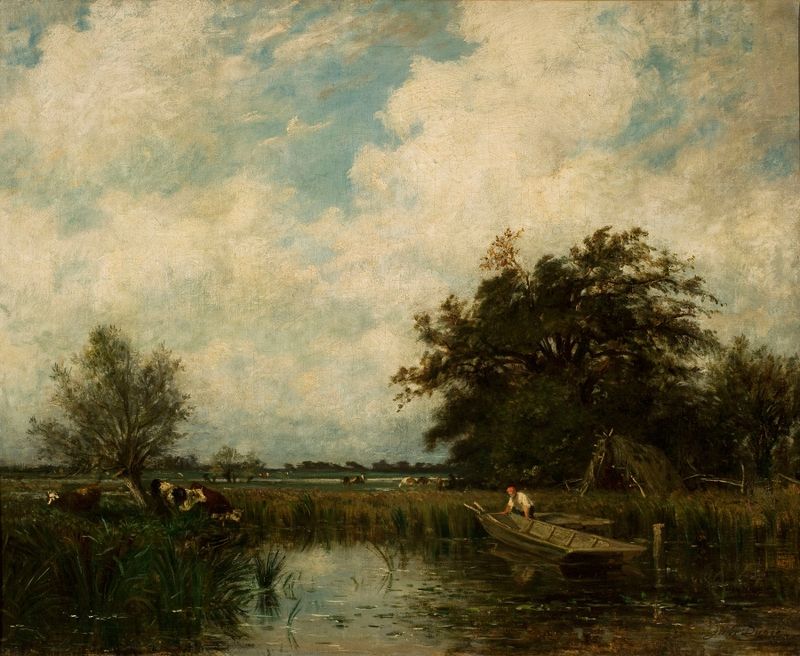
Landscape with a pond
Jules Dupré

The Cottage by the Roadside, Stormy Sky
Jules Dupré
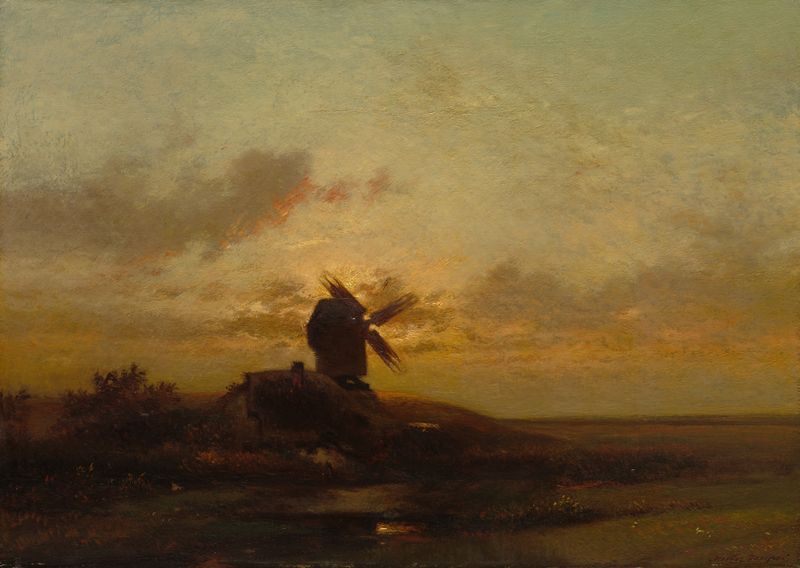
The Windmill
Jules Dupré

The Estuary Farm
Jules Dupré

Fontainebleau Oaks
Jules Dupré

Village Scene, Sunset
Jules Dupré

Barks Fleeing Before the Storm
Jules Dupré

Cows Crossing a Ford
Jules Dupré

The Old Oak
Jules Dupré

Weidelandschaft im Limousin
Jules Dupré





