
Paysage Jan van der Heyden Musée du Louvre — History & Facts
A patch of golden sky draws the eye first, its light pooling softly over a quiet rise where a handful of figures gather near a wayside cross. The path bends gently, leading us past the shadowed earth and up toward a modest chapel, its brick glowing against the cool hush of trees. The painter’s touch lingers on the play of light and air—notice how the clouds drift, their edges tinged with warmth, while the foreground remains in deep, mossy shade.
Every figure is absorbed in their own moment: a woman gestures, a child stands close, and a traveler kneels, perhaps in prayer or rest. The high horizon gives the sky the upper hand, making the land feel sheltered beneath its expanse. Works like this, painted in the decades between 1650 and 1725, speak to a Dutch world in love with its own countryside and the quiet rituals of daily life. Landscape painting had become a prized genre, collected by prosperous townsfolk who saw in these scenes both a reflection of their faith and a celebration of their land’s gentle order.
The artist, Adriaen van de Velde, was known for weaving figures and animals into his landscapes, giving them a lived-in intimacy. This particular painting, photographed in the Louvre collection in 2017, keeps its secrets—history has kept few traces of its early journey or patrons. Yet the scene invites us to linger, to follow the winding path and wonder what stories unfold just beyond the chapel door.
More Artworks by Adriaen van de Velde

Staande stier
Adriaen van de Velde
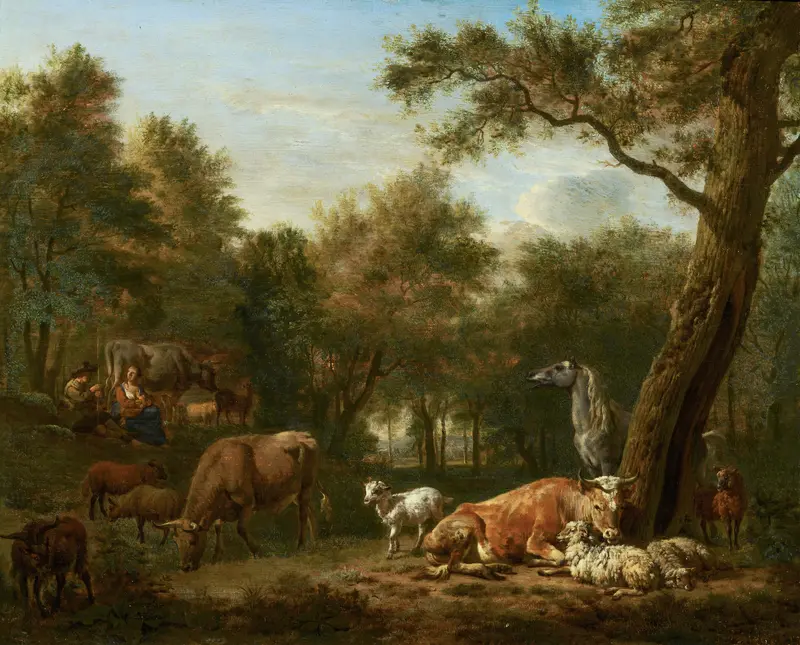
Wooded Landscape with Cattle
Adriaen van de Velde
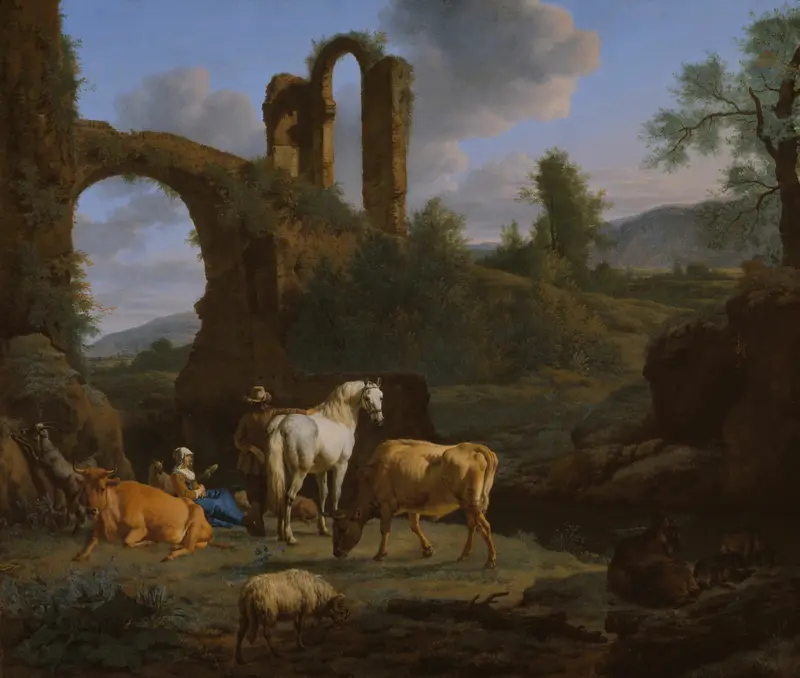
Pastoral Landscape with Ruins
Adriaen van de Velde
Pastoral Landscape with Ruins
Adriaen van de Velde
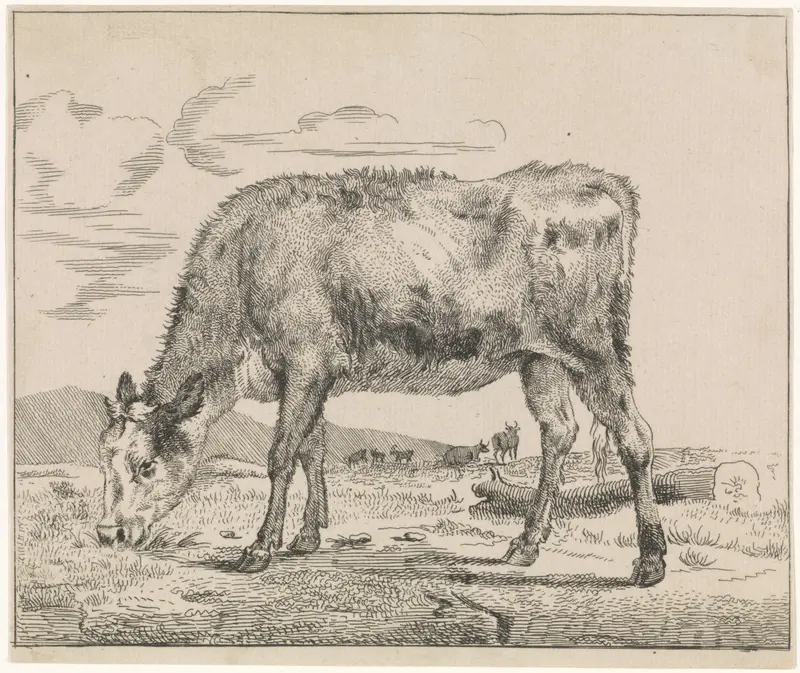
Grazend kalf
Adriaen van de Velde
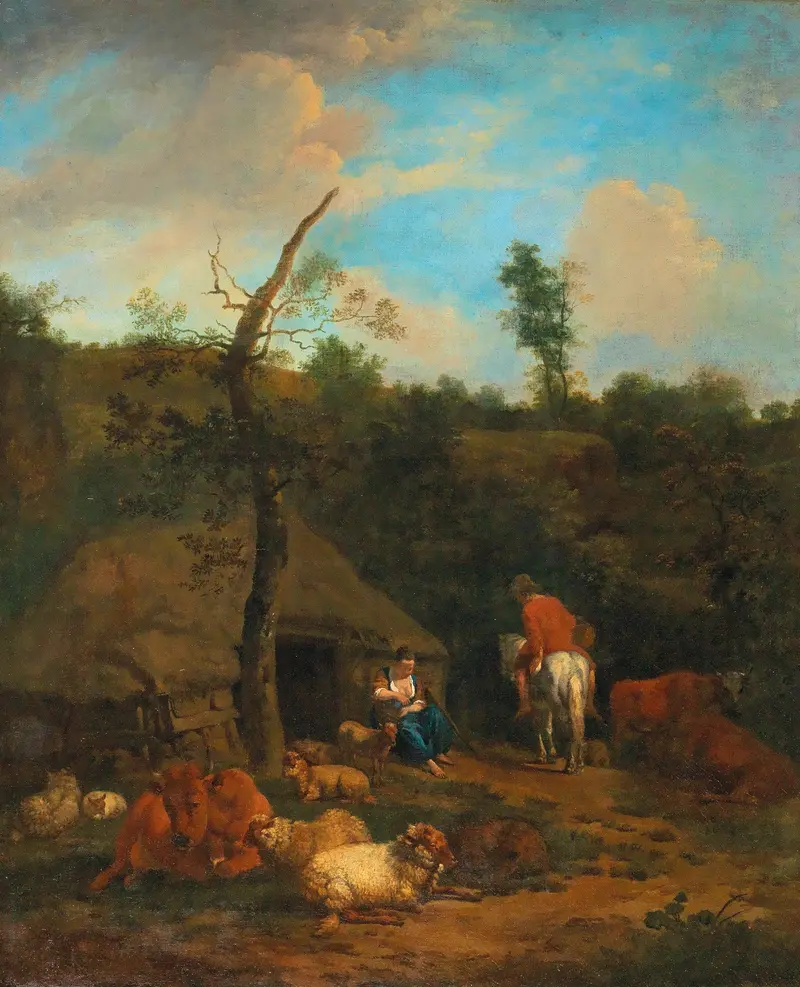
A herdsman and a shepherdess in front of a wooden farmhouse
Adriaen van de Velde
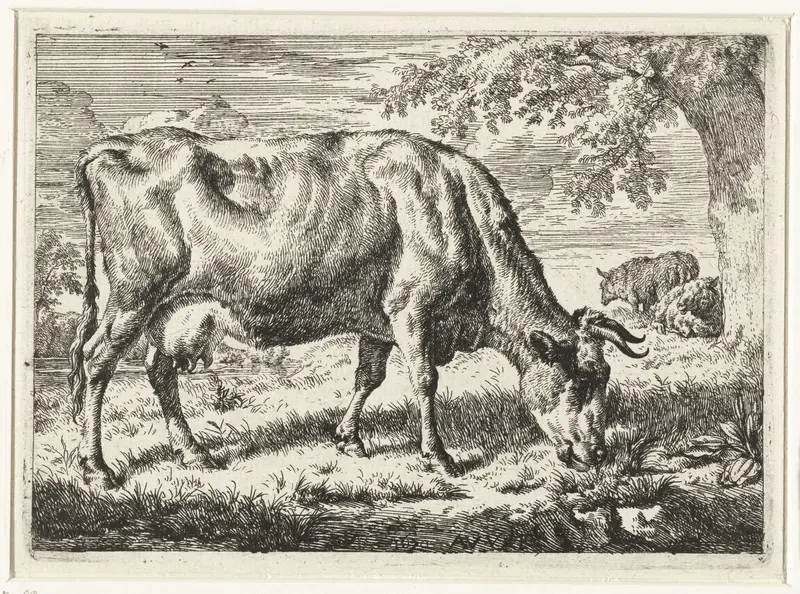
Grazende koe en twee schapen
Adriaen van de Velde
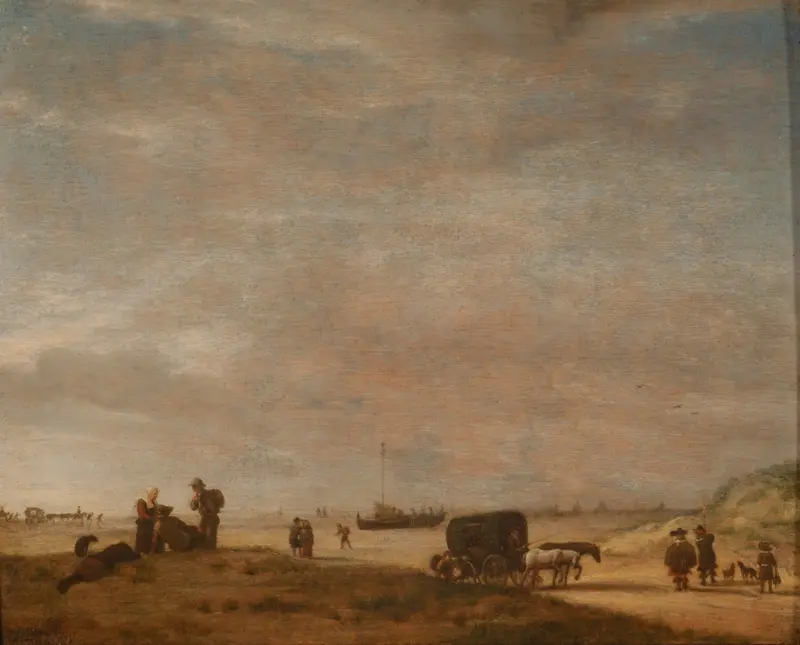
Scheveningen Beach
Adriaen van de Velde
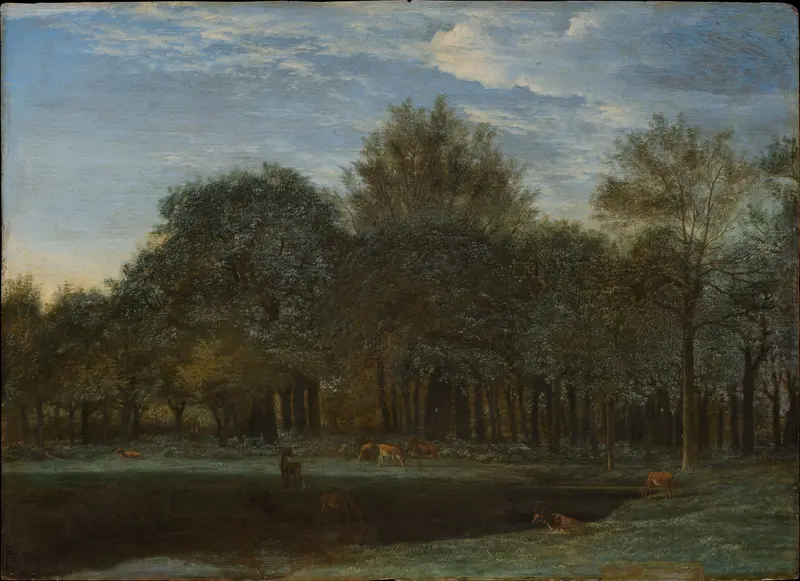
Forest Clearing with Grazing Deer
Adriaen van de Velde
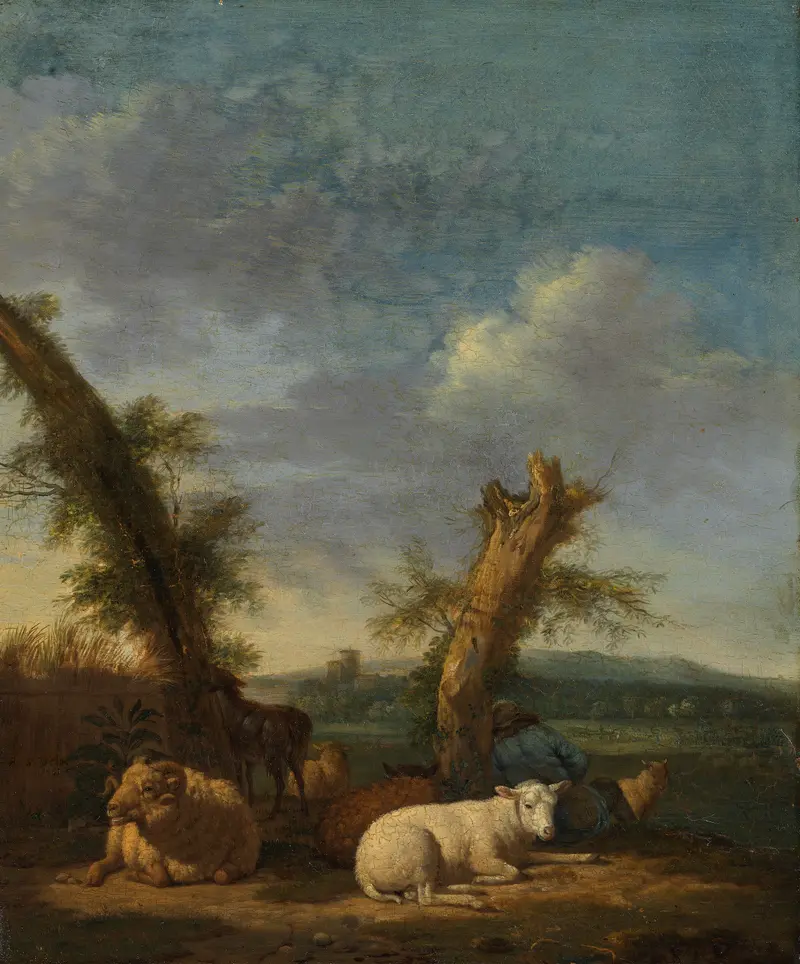
Landscape with Sheep and a Sleeping Shepherd
Adriaen van de Velde
More Landscape Art

The Starry Night
Vincent van Gogh

View of Delft
Johannes Vermeer

Water Lilies
Claude Monet

The Grand Canal, Venice, looking north-west from the Ca' Corner to the Ca' Contarini degli Scrigni, with the campanile of Santa Maria della Carità
Canaletto

Windsor Castle
Canaletto

The Grand Canal looking North-East from the Palazzo Dolfin-Manin to the Rialto Bridge
Canaletto