
Paysage, moutons et chèvres Musée du Louvre — History & Facts
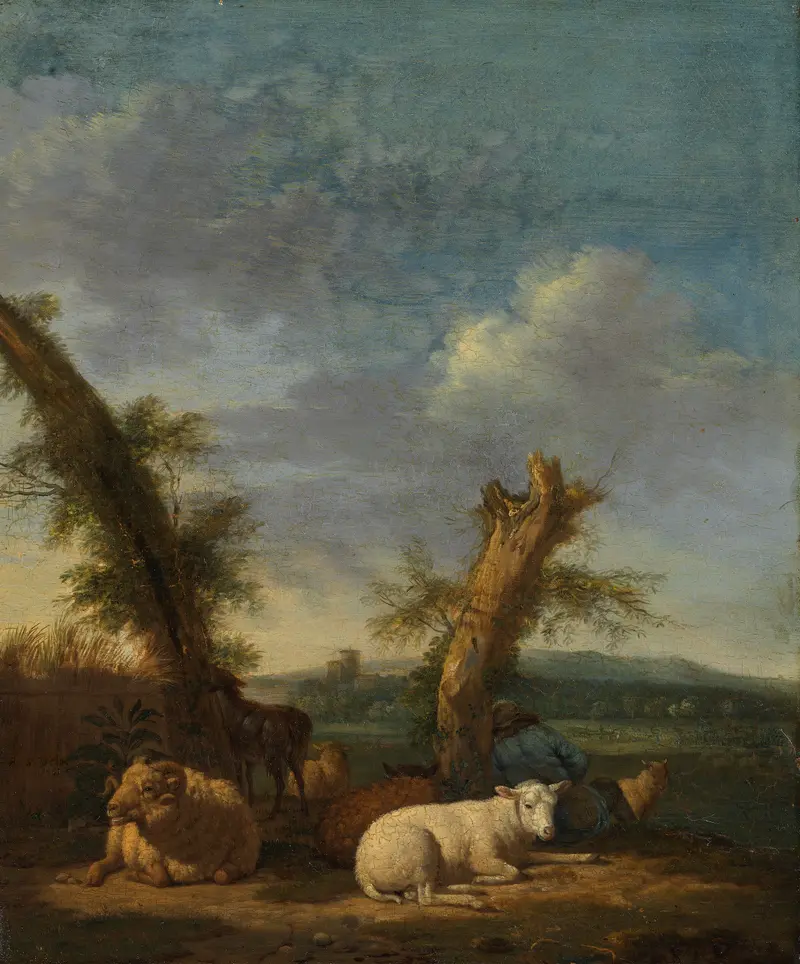
A single sheep stands alert, head lifted as if catching a distant sound, while the rest of the flock settles into the grass with the lazy calm of late afternoon. The sky above is dramatic—half brooding cloud, half gentle dusk—casting a shifting light that grazes the woolly backs and sets the landscape in soft relief. The painter, Adriaen van de Velde, draws the viewer into this quiet interval, where the animals’ postures speak of both vigilance and rest.
The low horizon lets the sky dominate, hinting at the vastness beyond this humble patch of earth, while the subtle blues and golds of the palette evoke a fleeting, almost private moment between day and night. Works like this, painted in 1659, belong to a Dutch tradition that found poetry in the everyday, celebrating the countryside not as a backdrop, but as a world in itself. In seventeenth-century Holland, such landscapes were prized by a rising class of urban collectors who longed for a vision of rural peace and order. Adriaen van de Velde was known for his sensitive treatment of animals and light, and here, every detail—the careful rendering of fleece, the distant shadow of a mountain—serves to heighten the sense of stillness and watchfulness.
Though the history of this particular work is little recorded beyond its presence in a modern collection, its quiet drama invites us to linger, searching the horizon for whatever has caught the sheep’s ear.
More Artworks by Adriaen van de Velde

Staande stier
Adriaen van de Velde
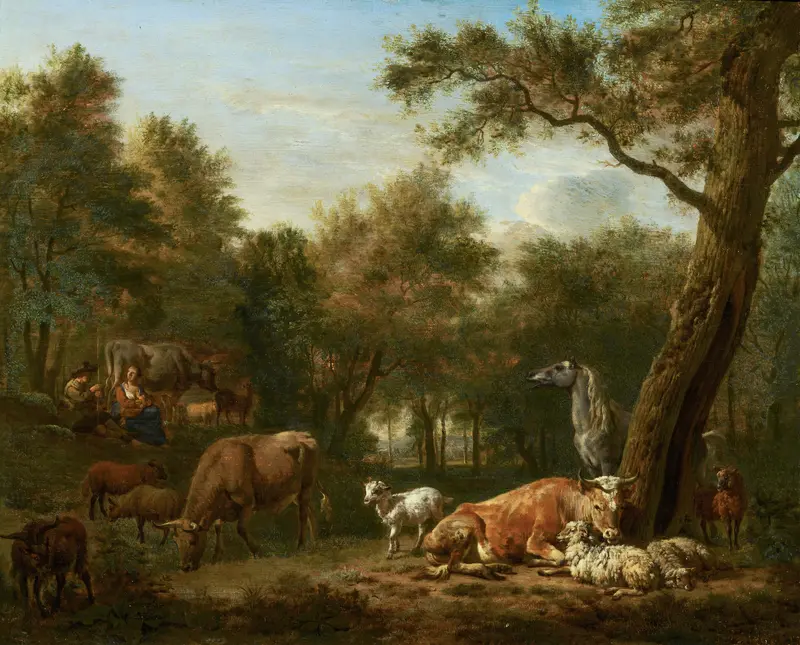
Wooded Landscape with Cattle
Adriaen van de Velde
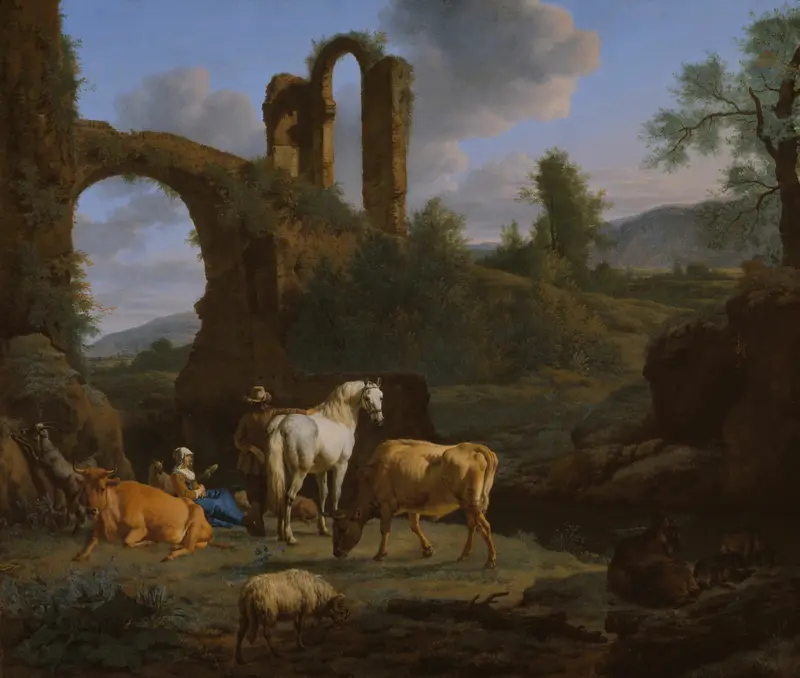
Pastoral Landscape with Ruins
Adriaen van de Velde
Pastoral Landscape with Ruins
Adriaen van de Velde
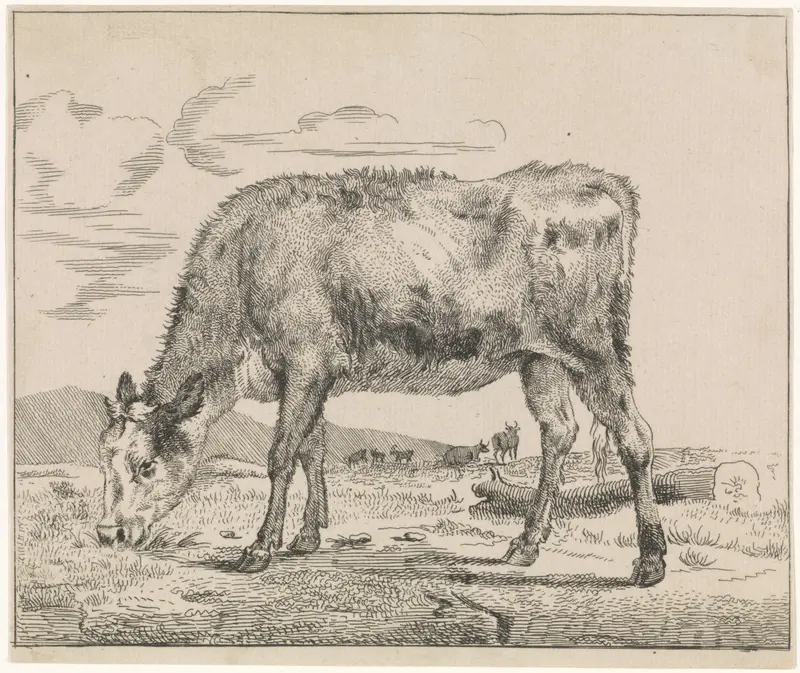
Grazend kalf
Adriaen van de Velde
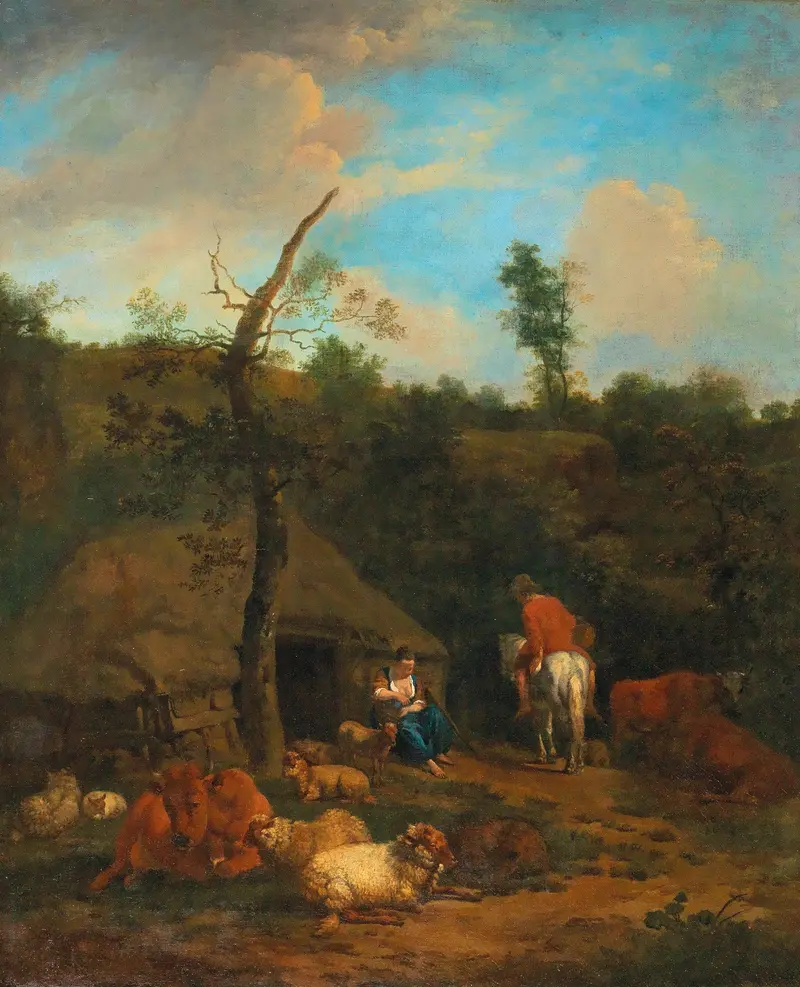
A herdsman and a shepherdess in front of a wooden farmhouse
Adriaen van de Velde
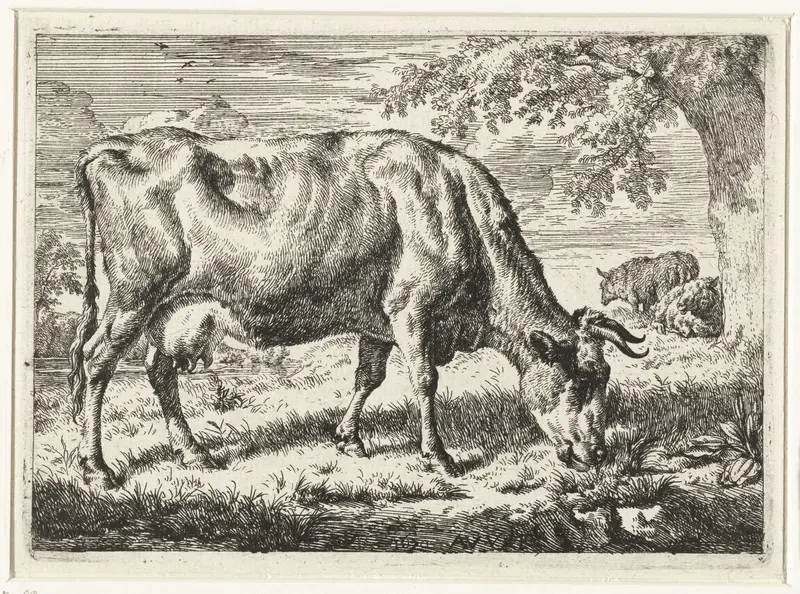
Grazende koe en twee schapen
Adriaen van de Velde
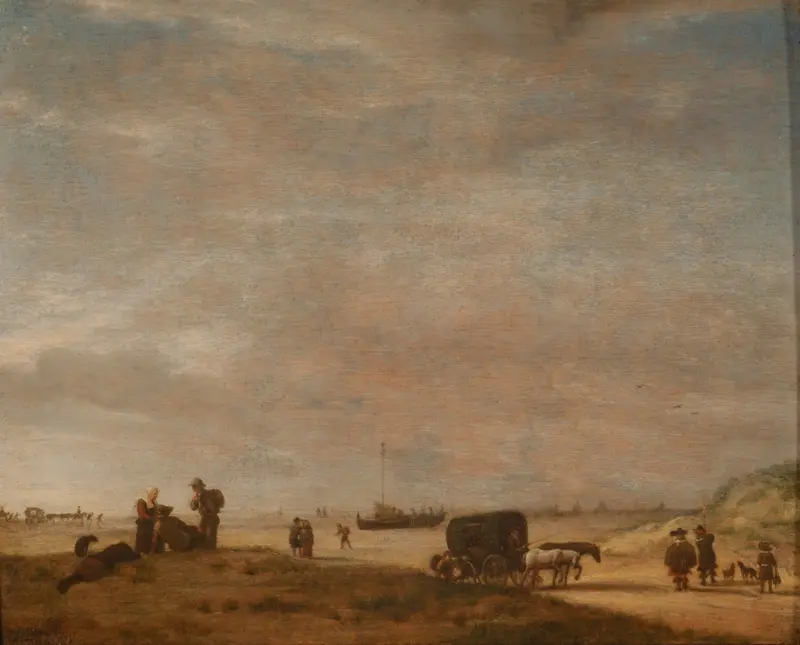
Scheveningen Beach
Adriaen van de Velde
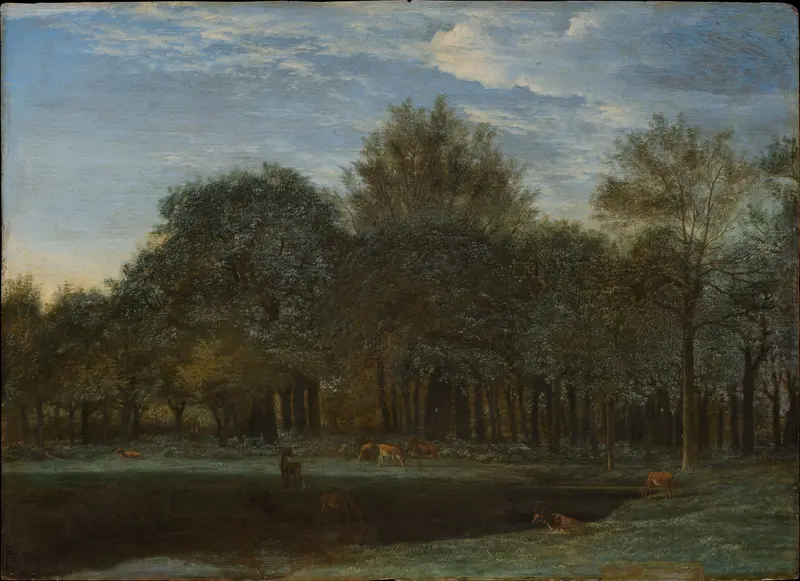
Forest Clearing with Grazing Deer
Adriaen van de Velde
Landscape with Sheep and a Sleeping Shepherd
Adriaen van de Velde
More Landscape Art

The Starry Night
Vincent van Gogh

View of Delft
Johannes Vermeer

Water Lilies
Claude Monet

The Grand Canal, Venice, looking north-west from the Ca' Corner to the Ca' Contarini degli Scrigni, with the campanile of Santa Maria della Carità
Canaletto

Windsor Castle
Canaletto

The Grand Canal looking North-East from the Palazzo Dolfin-Manin to the Rialto Bridge
Canaletto