
Peasant Dance by a Tavern — History & Facts
What draws the eye first is not the dance itself, but the laughter that ripples through the crowd—faces lit by the warm, golden light spilling from a low sun, their joy as tangible as the rough textures of their homespun clothes. Peasant Dance by a Tavern invites us into a world where everyday life is celebrated with music, movement, and community. The painter, Adriaen van Ostade, orchestrates the scene so that every gesture tells us something: a woman tugs a reluctant partner into the dance, a child crouches with a dog at the edge of the action, and a musician’s flute sets the rhythm for the swirling figures.
The thatched roof and gnarled tree arch over the gathering, sheltering this moment of festivity as if it were a precious secret. Painted in 1654, this work belongs to a Dutch Golden Age tradition that delighted in scenes of rural merrymaking. In a time when the Dutch Republic was both prosperous and deeply shaped by its rural roots, paintings like this served as both entertainment and gentle social commentary—commissioned by city dwellers who looked to the countryside for reminders of a simpler, earthier existence. Adriaen van Ostade was renowned for his ability to capture the rough humor and camaraderie of peasant life, and while history has kept few traces of this particular painting’s journey, its survival in a modern collection (as documented by Lempertz) lets us step into a world where the ordinary is worthy of celebration.
Look again at the faces in the crowd—their laughter bridges centuries.
More Artworks by Adriaen van Ostade

Dans in de herberg
Adriaen van Ostade
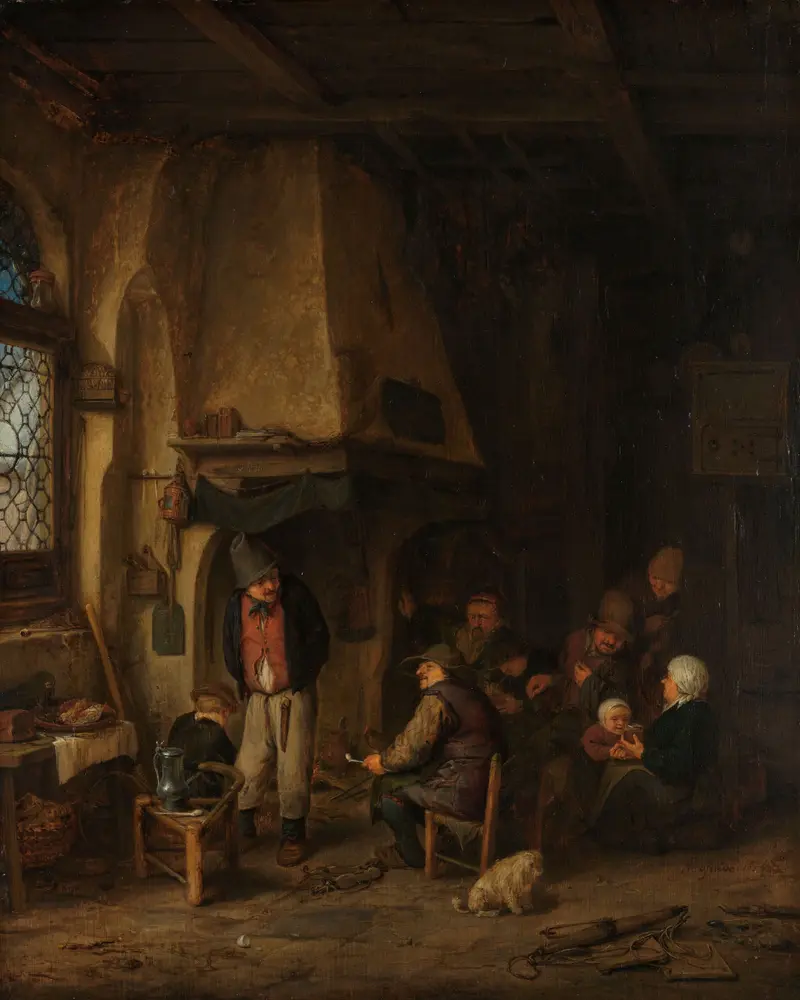
‘The Skaters’: Peasants in an Interior
Adriaen van Ostade
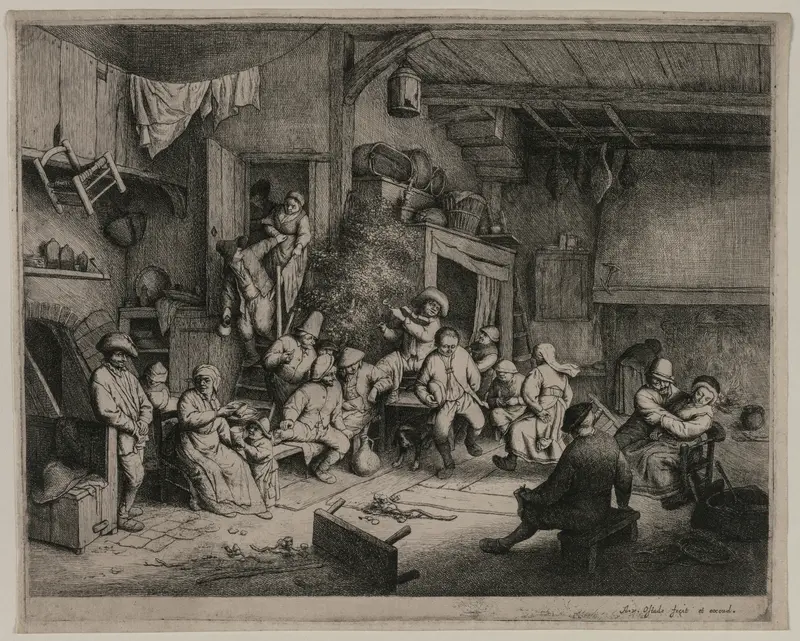
Dance at the Inn
Adriaen van Ostade
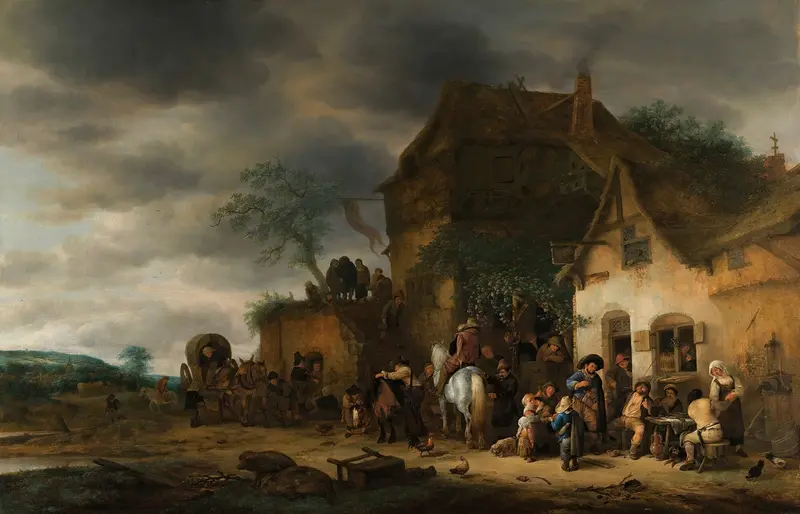
Travellers Halted At A Country Inn
Adriaen van Ostade
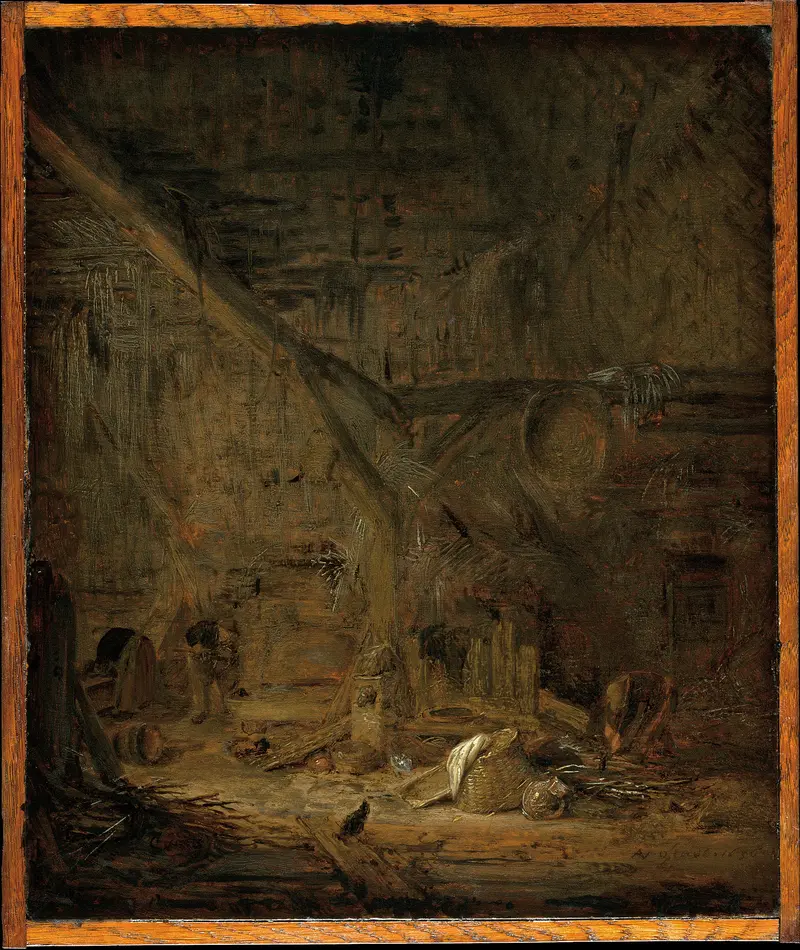
Interior of a Barn
Adriaen van Ostade
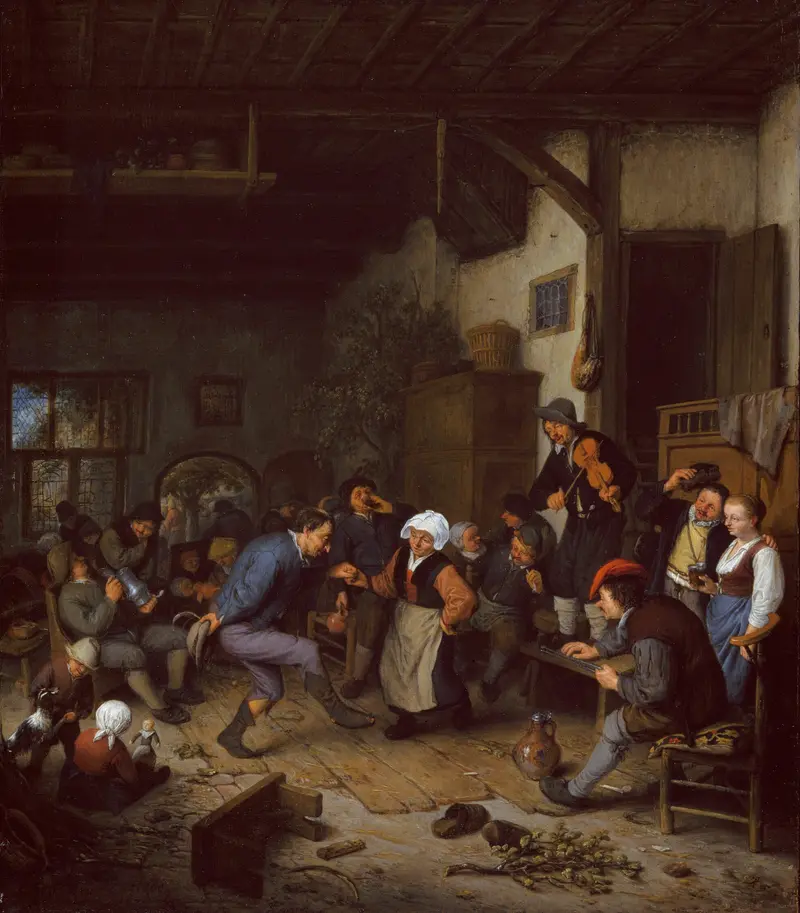
Merrymakers in an Inn
Adriaen van Ostade
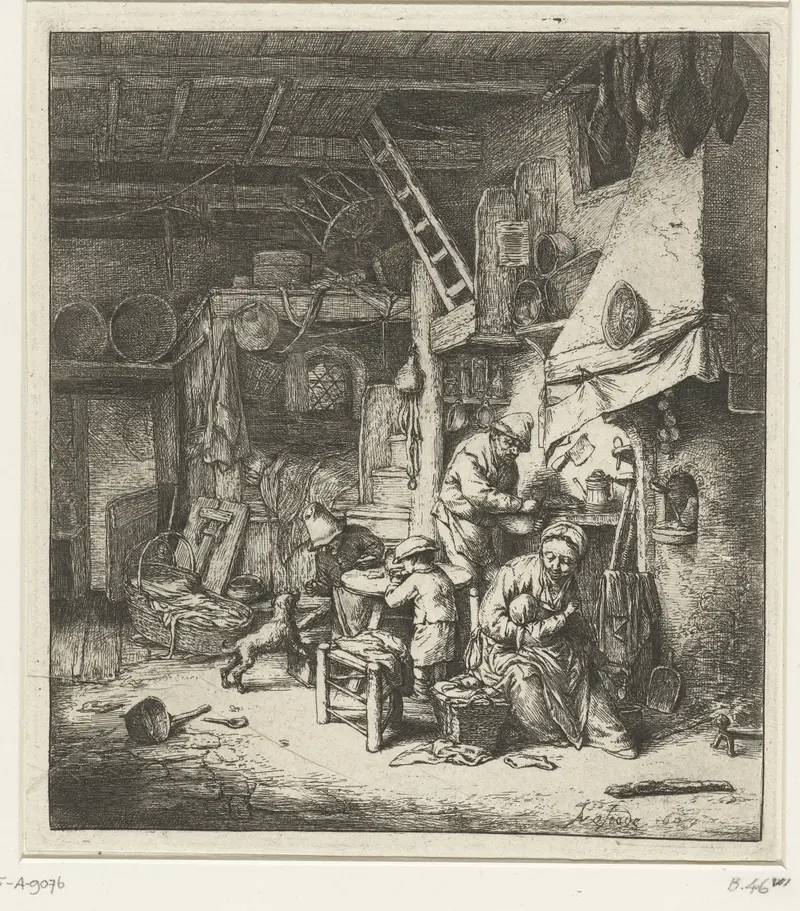
Boerengezin in interieur
Adriaen van Ostade
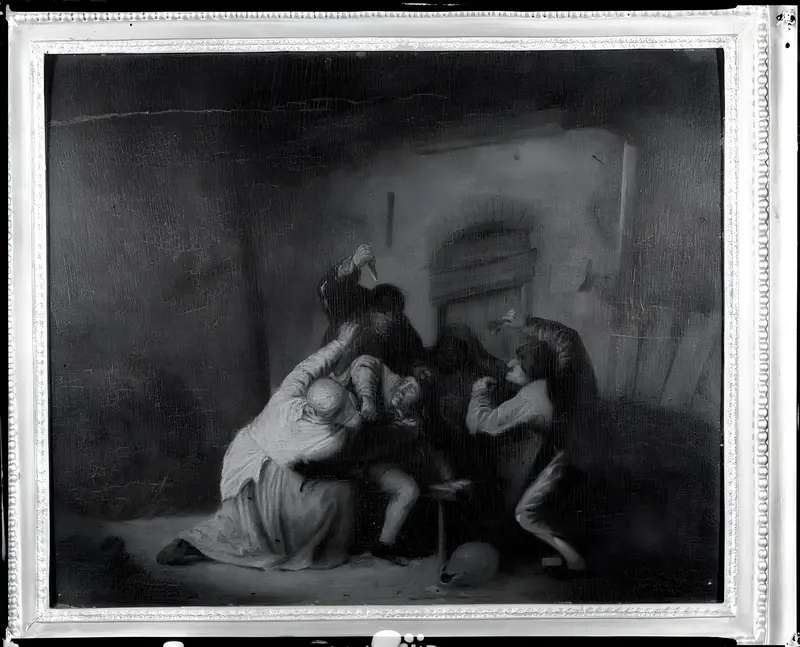
Peasants Brawling in a Tavern
Adriaen van Ostade
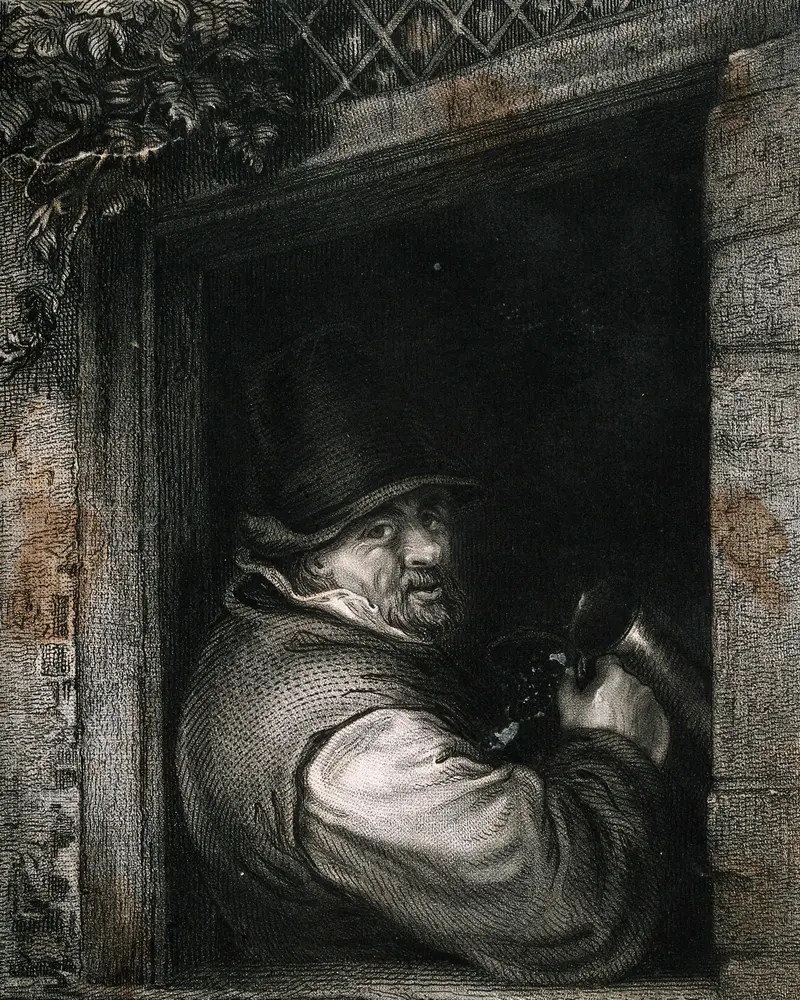
Man with a Tankard at a Window
Adriaen van Ostade
Dans in de herberg
Adriaen van Ostade
More Genre Scene Art

Banquet of the Officers of the St George Civic Guard
Frans Hals

Rembrandt and Saskia in the Scene of the Prodigal Son
Rembrandt van Rijn

Bal du moulin de la Galette
Pierre-Auguste Renoir

Quadrille at the Moulin Rouge
Henri de Toulouse-Lautrec

A Burial at Ornans
Gustave Courbet

When Will You Marry?
Paul Gauguin