
Peasant Family and a Dog beside a Hearth — History & Facts
What draws the eye first in Peasant Family and a Dog beside a Hearth is the warmth that radiates not just from the hearth, but from the faces gathered around the battered table. The painter, Adriaen van Ostade, has chosen a moment of quiet intimacy: a family paused in the dim glow of their home, absorbed in the simple ritual of sharing drink and company. The child’s mischievous smile, half-hidden behind the jug, bridges the gap between the adults, while the dog curled in the shadows hints at a world beyond the firelight.
Light falls from the left, catching the white of a sleeve and the shine of a jug, guiding us to the cluster of faces and hands—each gesture reinforcing the sense of closeness and routine. This scene belongs to the bustling world of seventeenth-century Dutch genre painting, where artists like van Ostade found poetry in the everyday. In 1649, when this work was created, such images were prized by a new class of urban collectors who saw their own lives reflected in these humble interiors. Unlike grand history paintings or portraits of the elite, works like this offered a window into the rhythms of ordinary existence—sometimes comic, sometimes affectionate, always grounded in observation.
The painting’s presence in a modern collection, as documented by its appearance in a Sotheby’s auction, is a reminder that history has kept few traces of its journey, but the scene itself remains as immediate as the day it was painted. Look again at the small details—the clay pipes, the battered spoon, the dog’s patient watchfulness—and the centuries seem to fall away.
More Artworks by Adriaen van Ostade

Dans in de herberg
Adriaen van Ostade
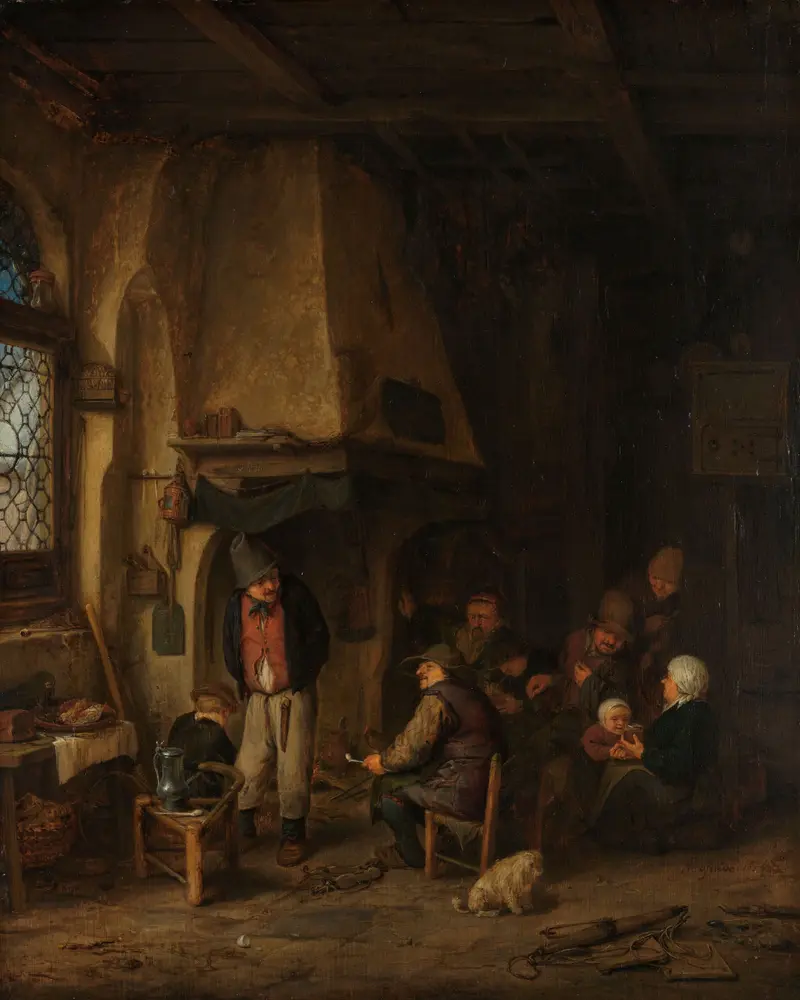
‘The Skaters’: Peasants in an Interior
Adriaen van Ostade
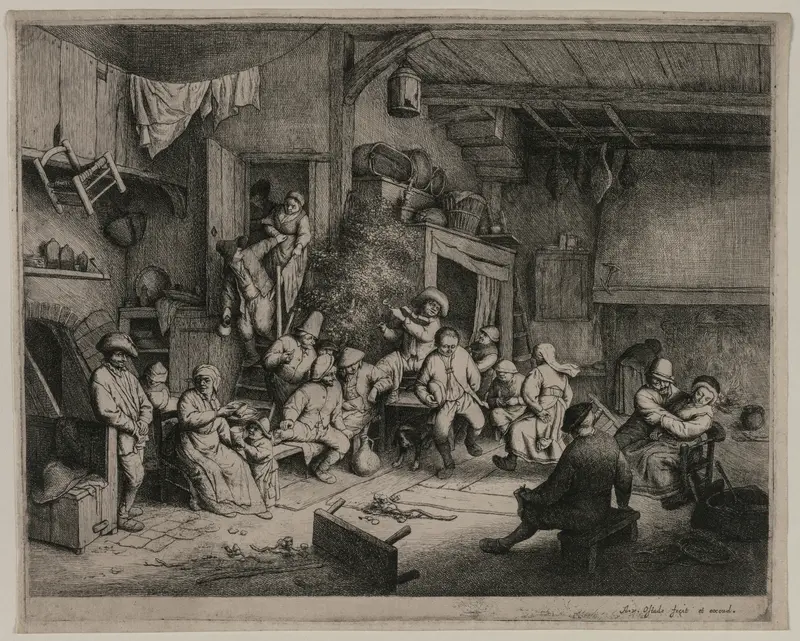
Dance at the Inn
Adriaen van Ostade
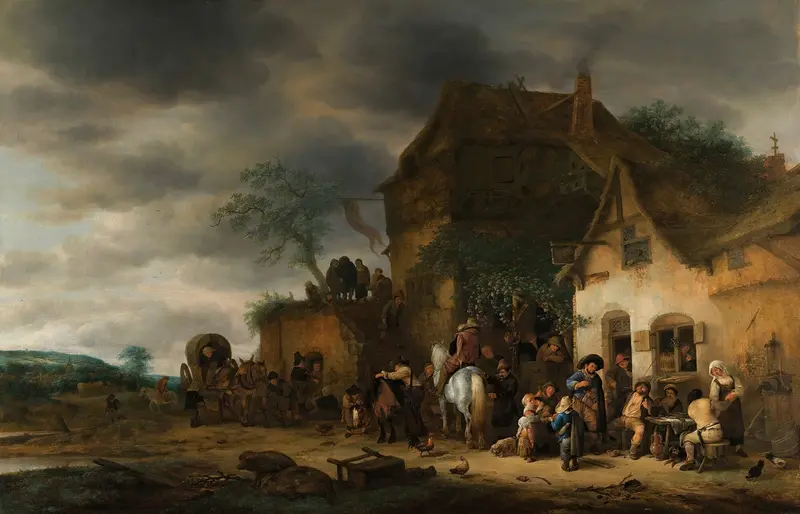
Travellers Halted At A Country Inn
Adriaen van Ostade
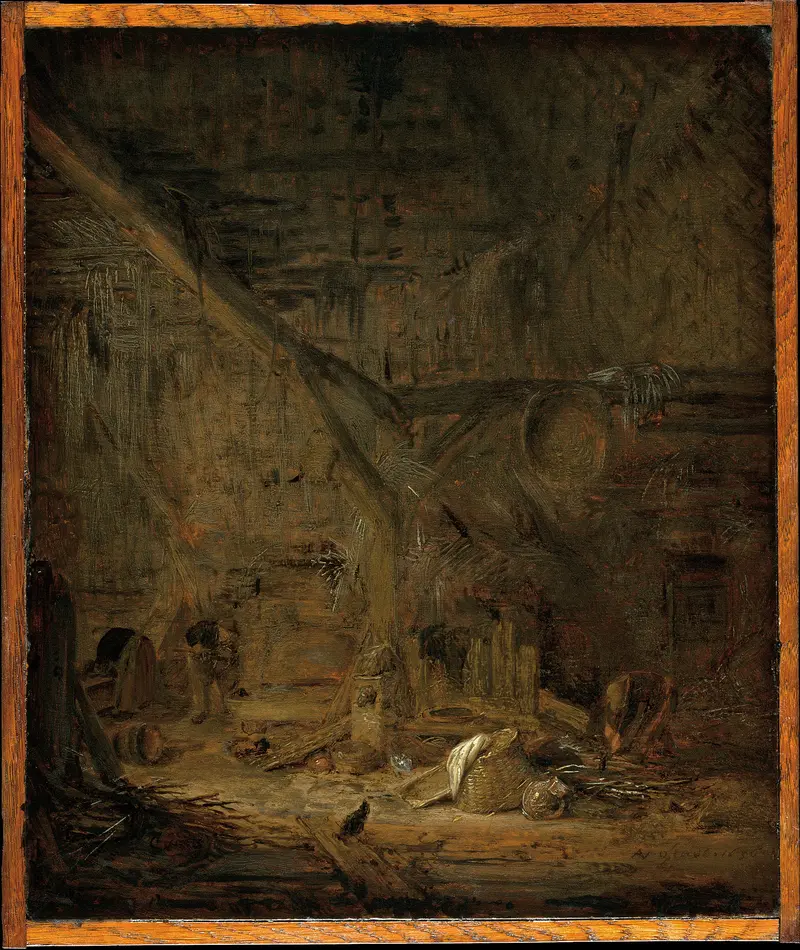
Interior of a Barn
Adriaen van Ostade
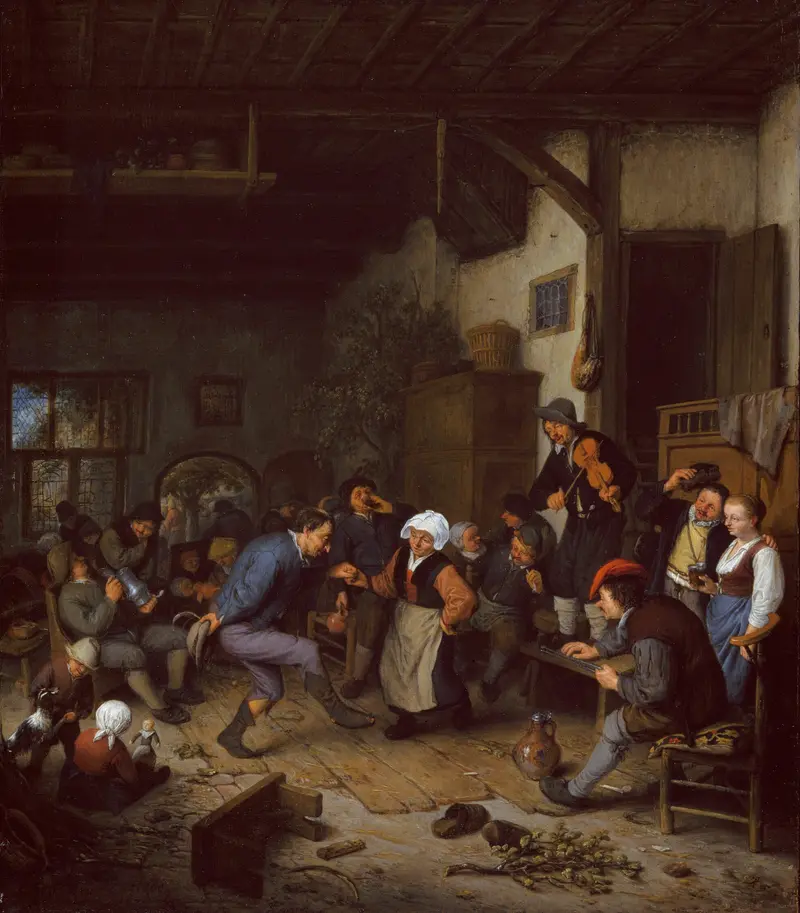
Merrymakers in an Inn
Adriaen van Ostade
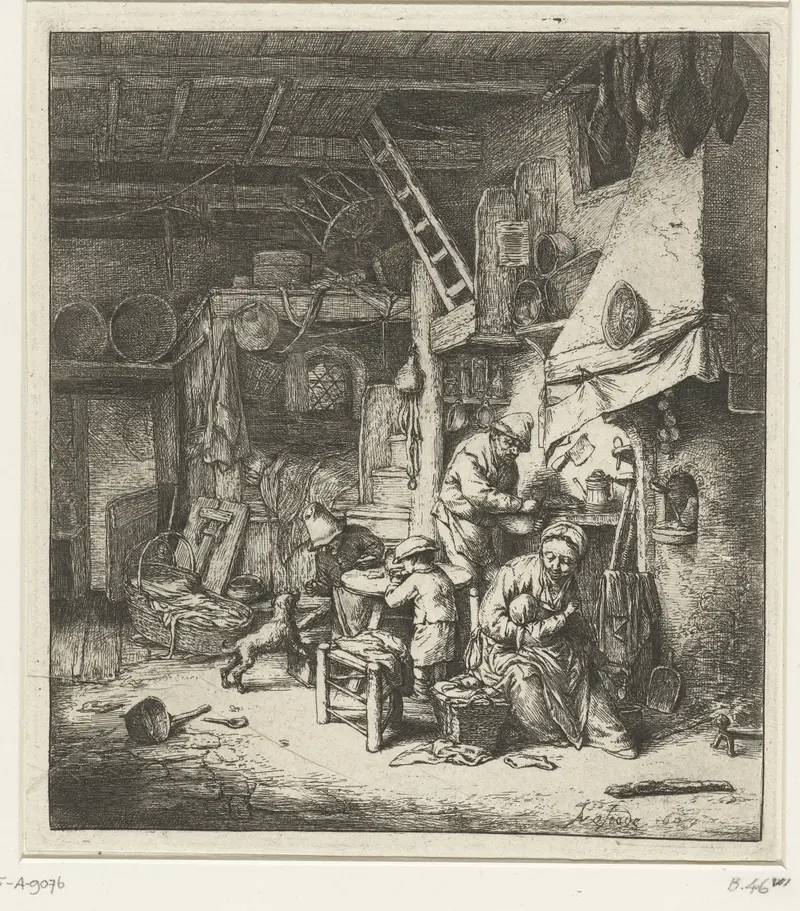
Boerengezin in interieur
Adriaen van Ostade
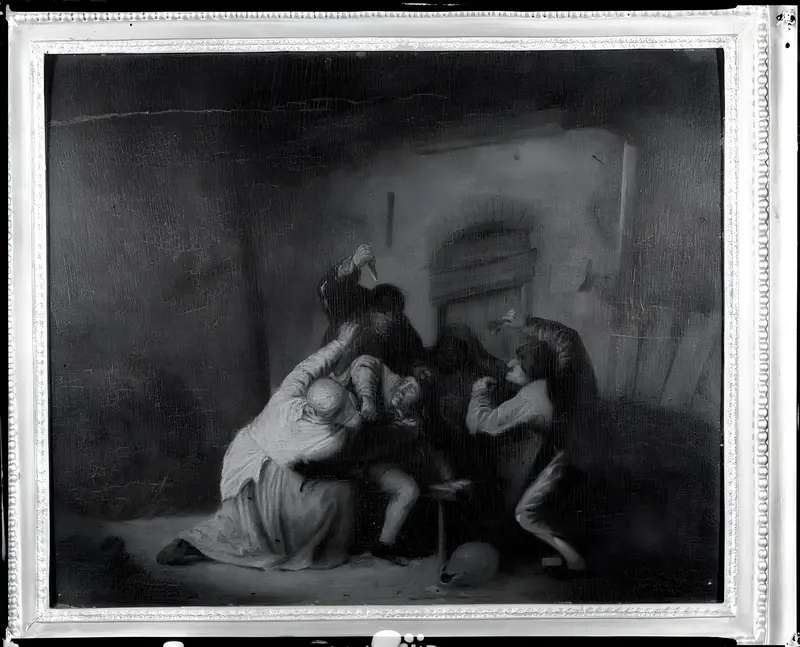
Peasants Brawling in a Tavern
Adriaen van Ostade
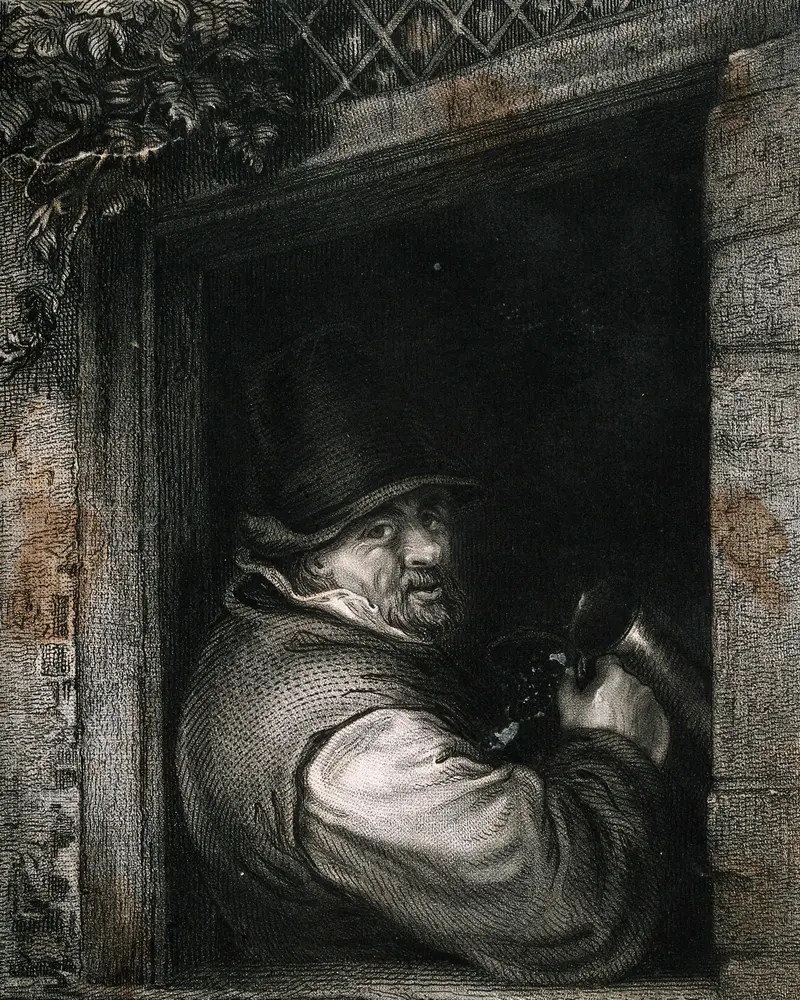
Man with a Tankard at a Window
Adriaen van Ostade
Dans in de herberg
Adriaen van Ostade
More Genre Scene Art

Banquet of the Officers of the St George Civic Guard
Frans Hals

Rembrandt and Saskia in the Scene of the Prodigal Son
Rembrandt van Rijn

Bal du moulin de la Galette
Pierre-Auguste Renoir

Quadrille at the Moulin Rouge
Henri de Toulouse-Lautrec

A Burial at Ornans
Gustave Courbet

When Will You Marry?
Paul Gauguin