
Peasant family indoors (In the kitchen). — History & Facts
What draws the eye first in this dimly lit interior is the quiet intimacy of daily life: three figures huddled together, their faces and gestures caught in a shaft of gentle light that breaks through the gloom. The central figure, with a pipe and a half-smile, presides over a humble meal, while another leans in, intent on the food or perhaps the conversation. In the shadows, a third figure reclines, wrapped in blankets, her presence more suggested than revealed.
The rough textures of their clothes and the battered furniture speak of hardship, yet there is a warmth in their closeness, a sense of shared endurance. The light is not just illumination—it is a kind of silent narrator, guiding the viewer from face to hand to the simple, battered objects that make up their world. Painted in the 1630s, this scene belongs to the world of Dutch genre painting, where artists like Adriaen van Ostade found poetry in the lives of peasants and tradesmen. Such works were prized by a new class of urban collectors who sought images of everyday virtue, humor, and resilience—pictures that reflected both the realities and ideals of a changing society.
The artist’s choice to focus on the kitchen, the heart of any home, is telling: here, history has kept few traces of names or commissions, but the painting itself survives as a window into the values and rhythms of its time. Step closer, and the shadows themselves seem to invite you in, asking what stories might still be whispered in the half-light.
More Artworks by Adriaen van Ostade

Dans in de herberg
Adriaen van Ostade
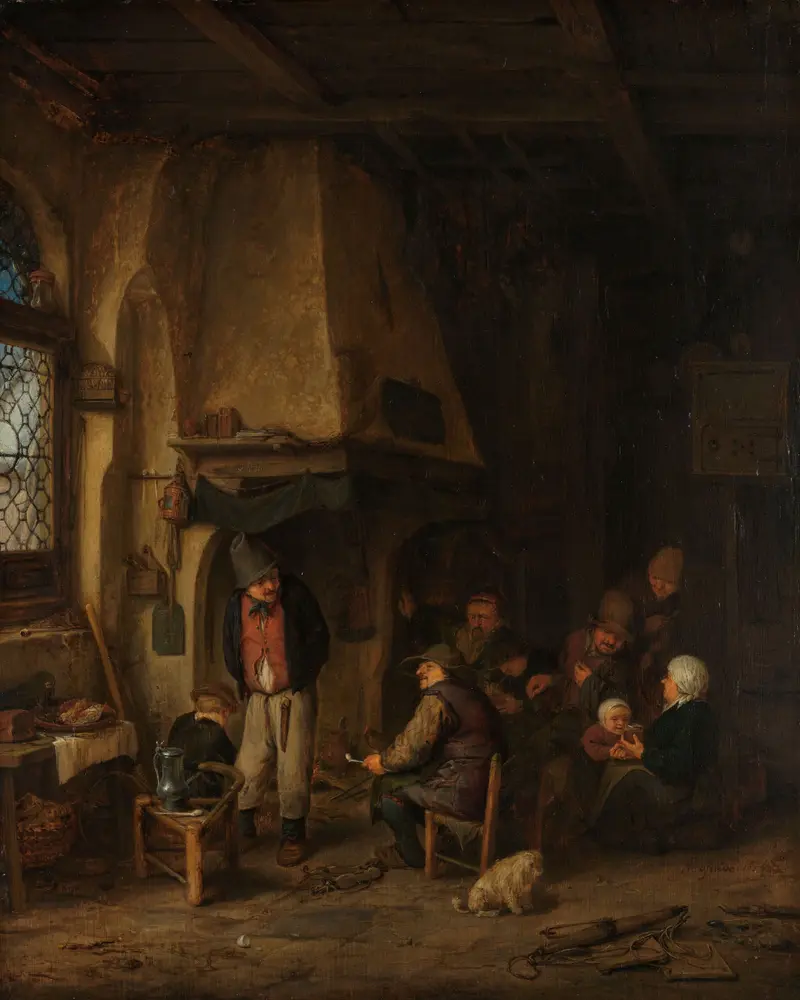
‘The Skaters’: Peasants in an Interior
Adriaen van Ostade
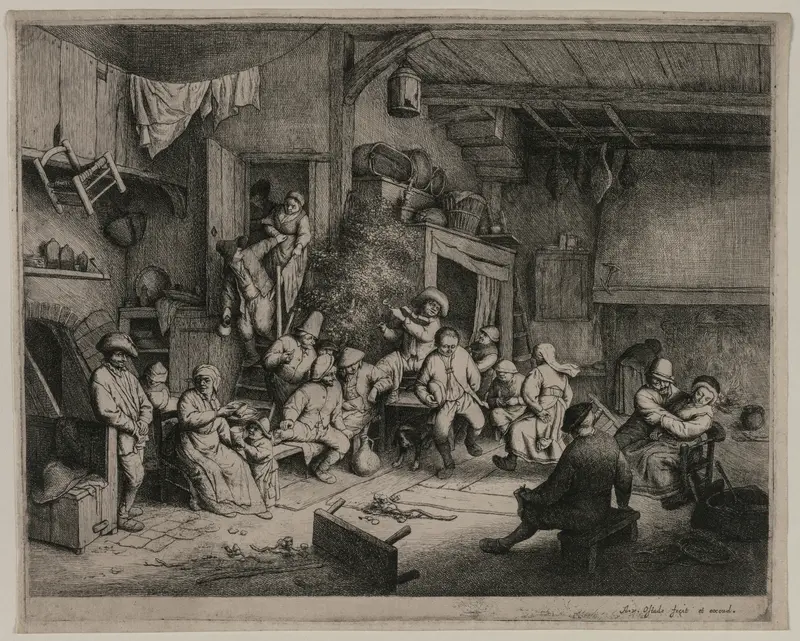
Dance at the Inn
Adriaen van Ostade
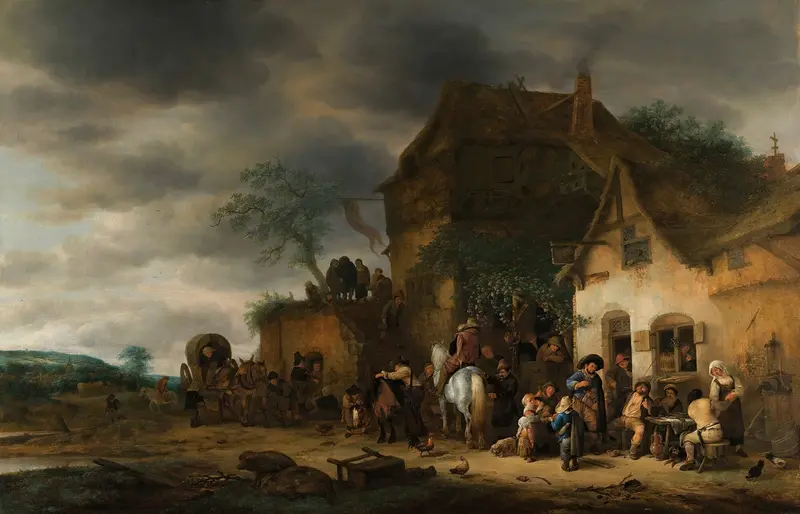
Travellers Halted At A Country Inn
Adriaen van Ostade
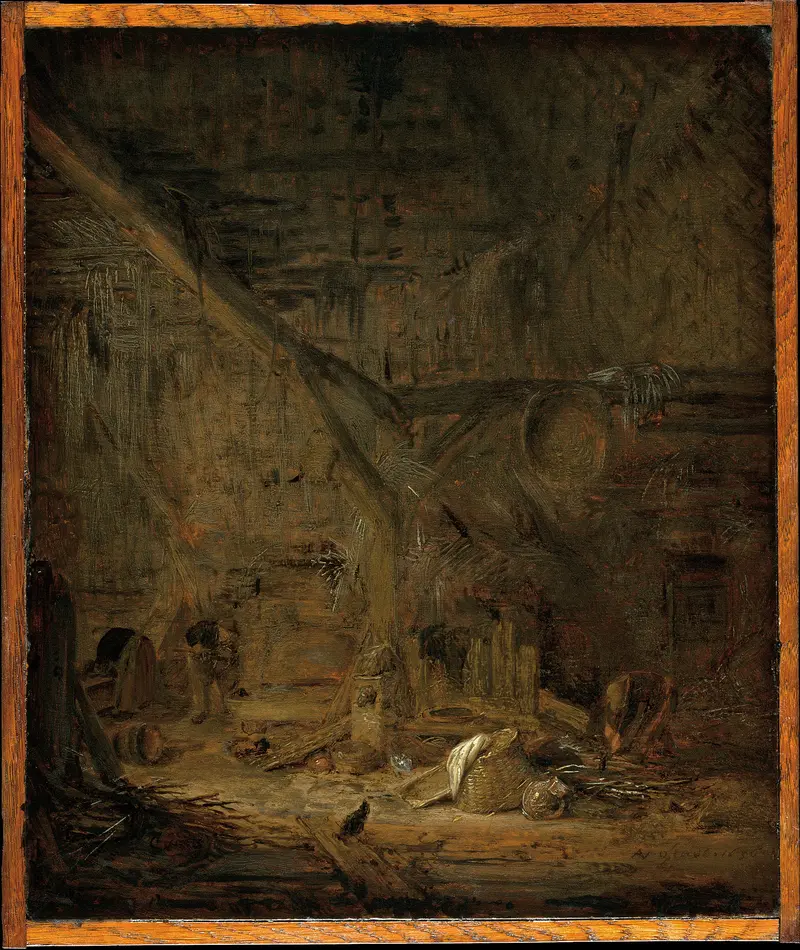
Interior of a Barn
Adriaen van Ostade
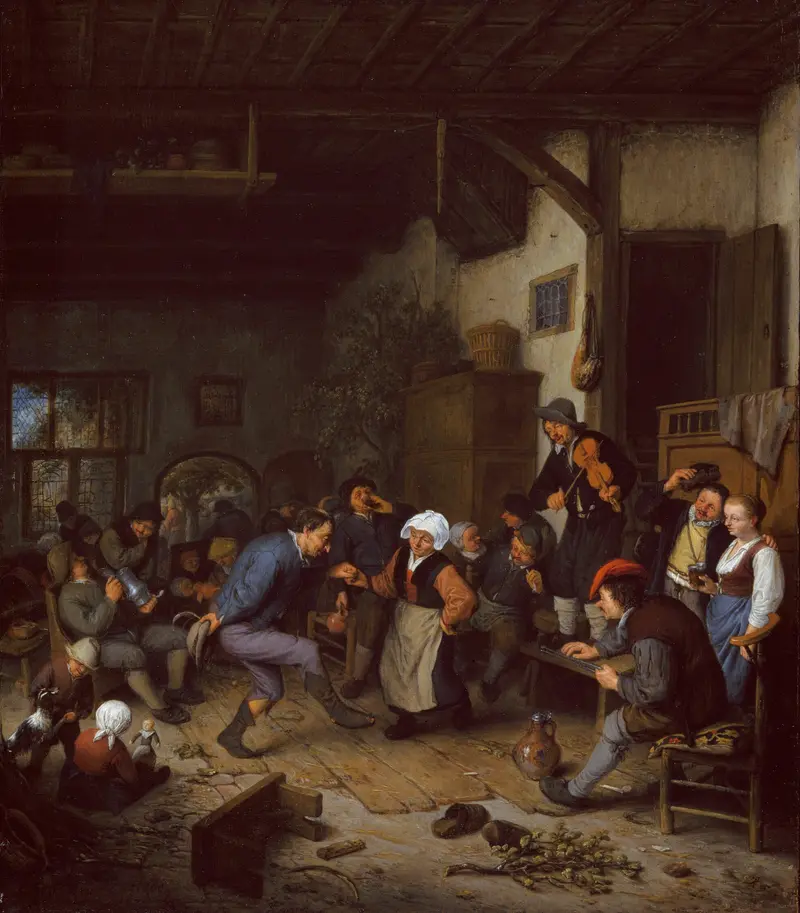
Merrymakers in an Inn
Adriaen van Ostade
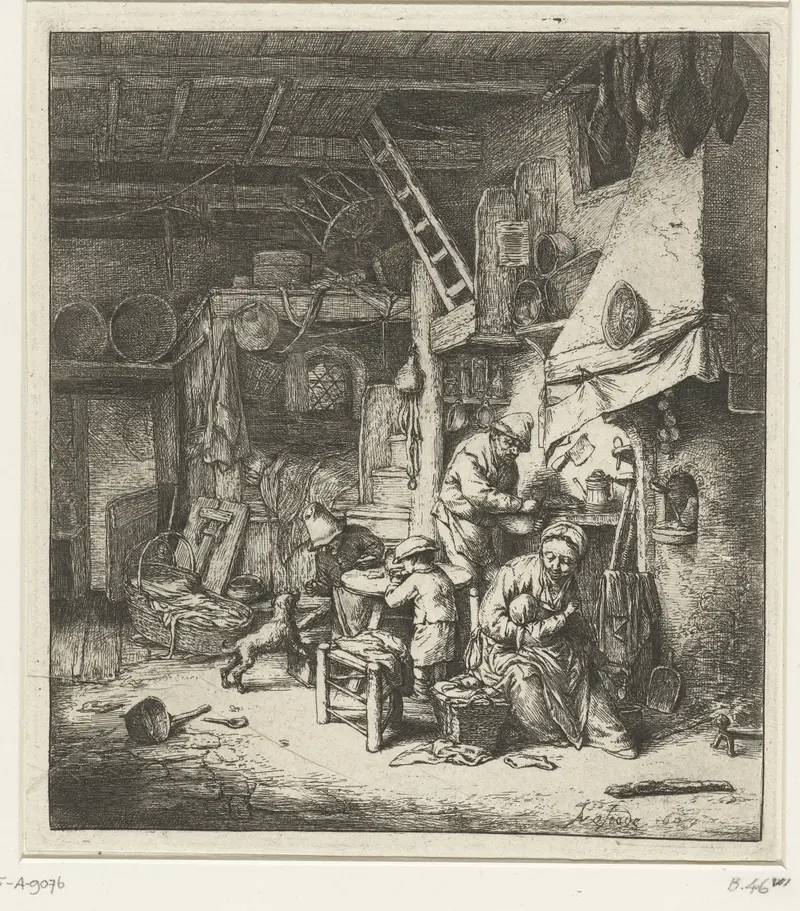
Boerengezin in interieur
Adriaen van Ostade
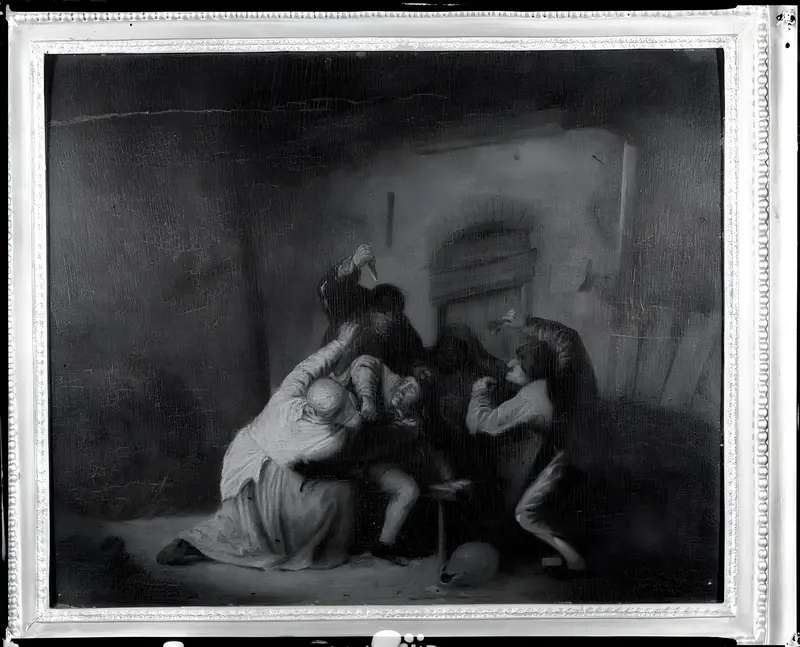
Peasants Brawling in a Tavern
Adriaen van Ostade
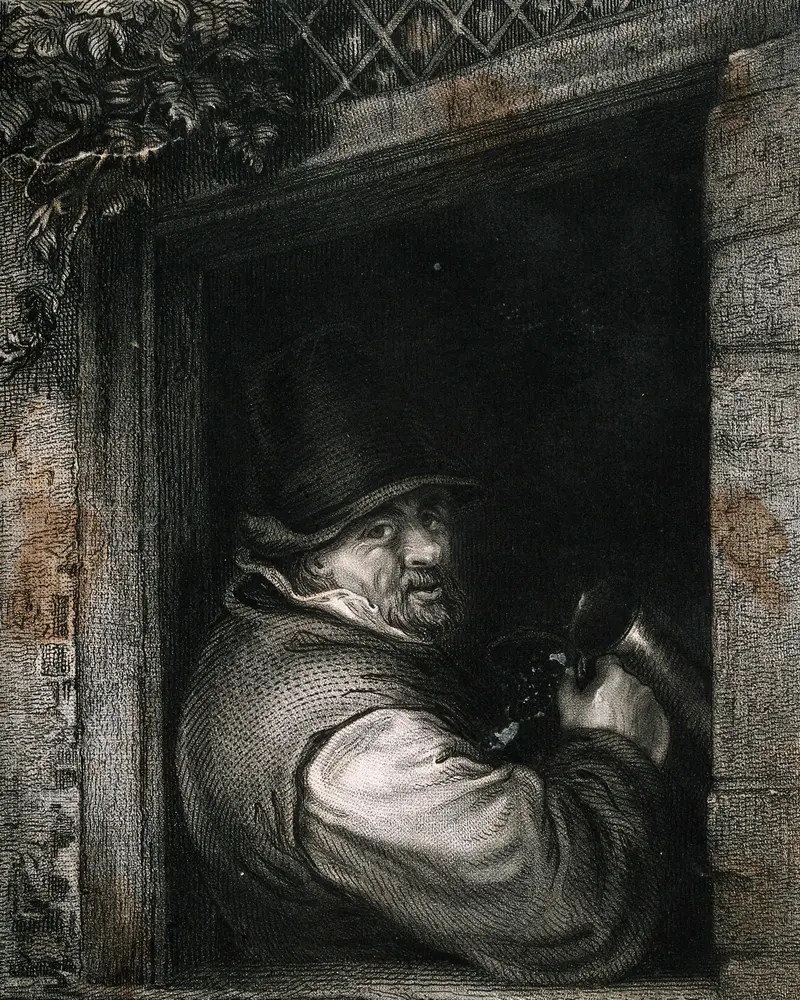
Man with a Tankard at a Window
Adriaen van Ostade
Dans in de herberg
Adriaen van Ostade
More Genre Scene Art

Banquet of the Officers of the St George Civic Guard
Frans Hals

Rembrandt and Saskia in the Scene of the Prodigal Son
Rembrandt van Rijn

Bal du moulin de la Galette
Pierre-Auguste Renoir

Quadrille at the Moulin Rouge
Henri de Toulouse-Lautrec

A Burial at Ornans
Gustave Courbet

When Will You Marry?
Paul Gauguin