
Peasant Woman — History & Facts
A riot of color greets the viewer: a woman sits at ease, her head wrapped in a bright yellow scarf spattered with red and blue, her blouse and skirt ablaze in red and black. The light, pouring in from a window behind her, catches the gleam of her cheek and the confident smile she wears. She pauses in the act of braiding her hair, her hands caught mid-motion, inviting us into a moment that feels both intimate and celebratory.
The loose, energetic brushwork animates the fabric and flesh alike, as if the painter wanted us to feel the weight of the cloth and the warmth of the sun. Every detail—the tilt of her head, the flush of her skin—signals a life lived with vigor and pride. Painted before 1922 by Abram Efimovich Arkhipov, this image belongs to a world in flux: post-revolutionary Russia, where the peasant class was both idealized and transformed in art. Works like this, often commissioned or collected to celebrate rural life, became a way for artists to explore the dignity and color of everyday existence.
Arkhipov, known for his vivid portrayals of Russian women in traditional dress, used bold color and free brushwork to elevate his subjects above mere genre scenes, giving them a presence that is almost monumental. Though little is recorded about the journey of this specific canvas, now in a private collection, it stands as a testament to a moment when the Russian countryside and its people were seen as the heart of a changing nation. The woman’s gaze, direct and knowing, asks us to look again—and to see her not as a symbol, but as an individual.
More Artworks by Abram Efimovich Arkhipov

The Boats
Abram Efimovich Arkhipov
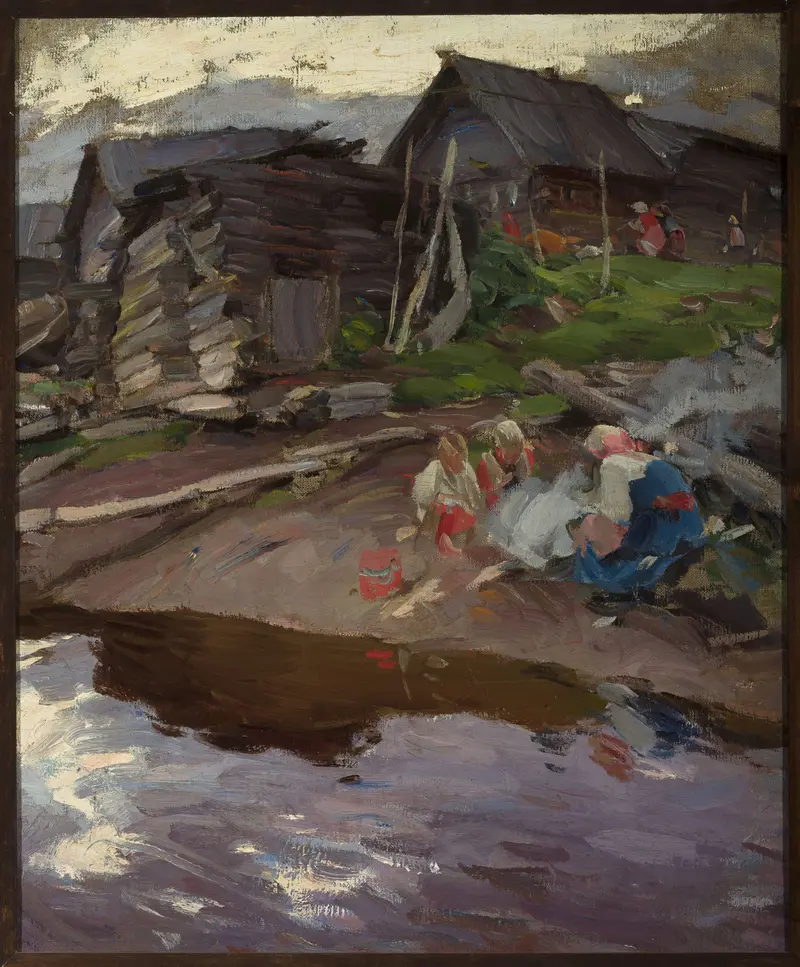
In the evening
Abram Efimovich Arkhipov
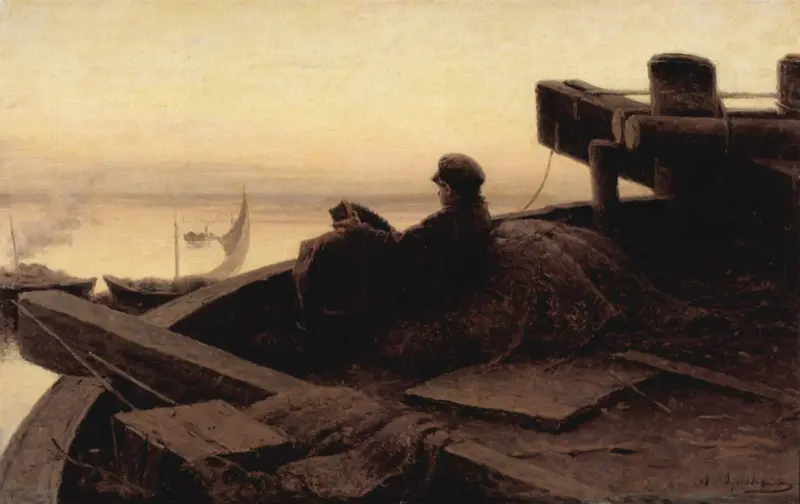
Abram Jefimowitsch Archipow 001
Abram Efimovich Arkhipov
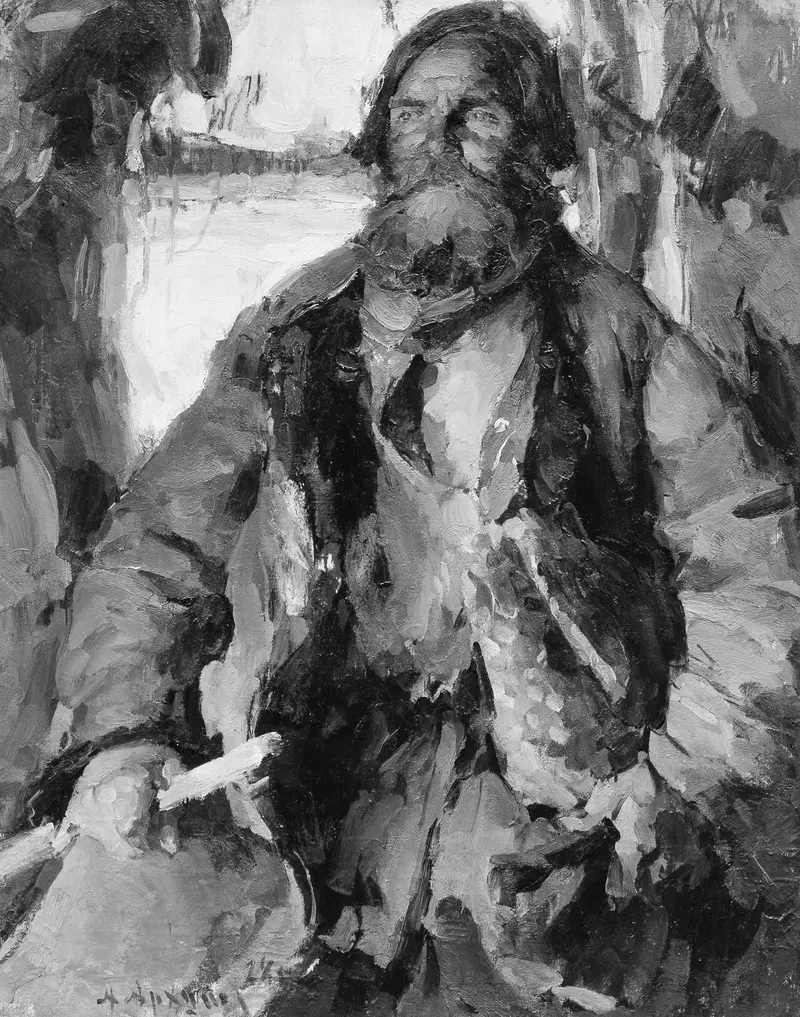
Ivan Rodin
Abram Efimovich Arkhipov
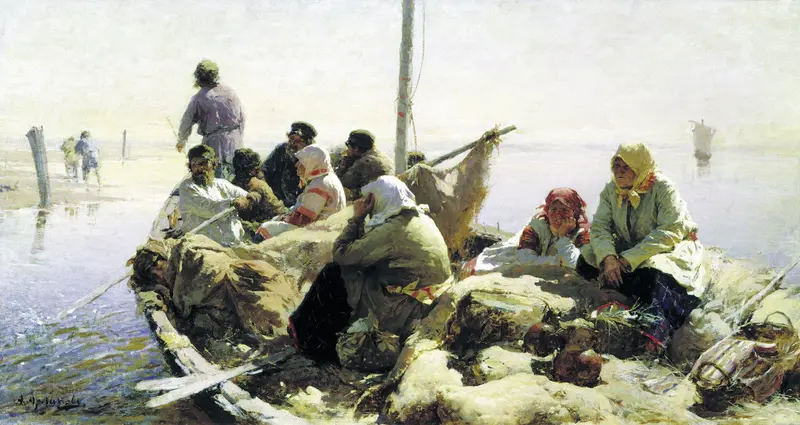
po reke oke
Abram Efimovich Arkhipov
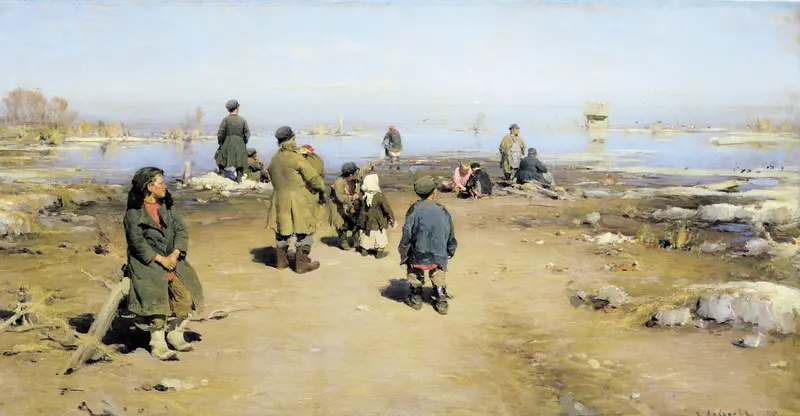
Waiting for the Boat
Abram Efimovich Arkhipov
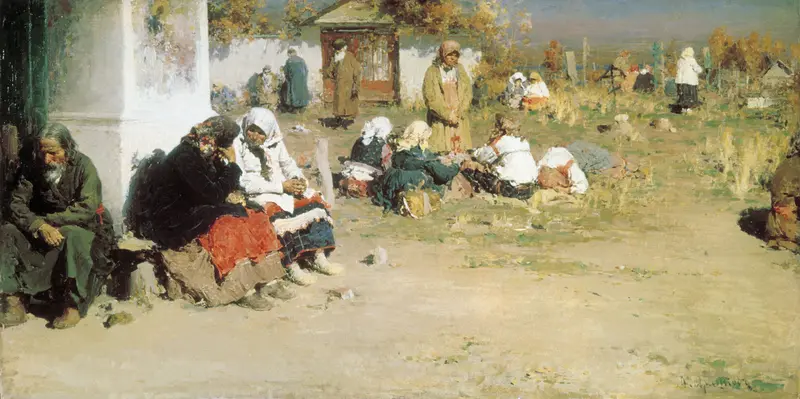
Arhipov radonica
Abram Efimovich Arkhipov
In the evening
Abram Efimovich Arkhipov
More Genre Scene Art

Banquet of the Officers of the St George Civic Guard
Frans Hals

Rembrandt and Saskia in the Scene of the Prodigal Son
Rembrandt van Rijn

Bal du moulin de la Galette
Pierre-Auguste Renoir

Quadrille at the Moulin Rouge
Henri de Toulouse-Lautrec

A Burial at Ornans
Gustave Courbet

When Will You Marry?
Paul Gauguin