
Waiting for the Boat — History & Facts
What draws the eye first in Waiting for the Boat is not the wide, pale sweep of the river, but the scattered, patient figures who dot the muddy bank—each one a small story of anticipation. The painter, Abram Efimovich Arkhipov, arranges these villagers with a quiet choreography: a girl in white boots sits apart, her gaze turned away, while children and adults cluster in loose knots, their attention fixed on the distant water. The low horizon and cool, clear light give the sky a commanding presence, making the land feel exposed and the wait seem endless.
The palette, all thawing earth and washed-out blue, sets a mood of early spring, when the ice is breaking and the world is full of restless possibility. Works like this, painted in Russia in the late nineteenth or early twentieth century, belong to a tradition of social realism that sought to show ordinary people in their daily lives—often with a sympathy that was new to art of the period. Artists such as Arkhipov, associated with the Peredvizhniki (the Wanderers), traveled the countryside to capture scenes far from the city’s salons, sometimes for public exhibitions, sometimes simply to record the changing rhythms of rural life. The date of this painting is unknown, and history has kept few traces of its journey, but its presence in an online collection today speaks to the enduring power of these quiet, communal moments.
Look again at the figures: each one, absorbed in waiting, holds a world of feeling just beneath the surface.
More Artworks by Abram Efimovich Arkhipov

The Boats
Abram Efimovich Arkhipov
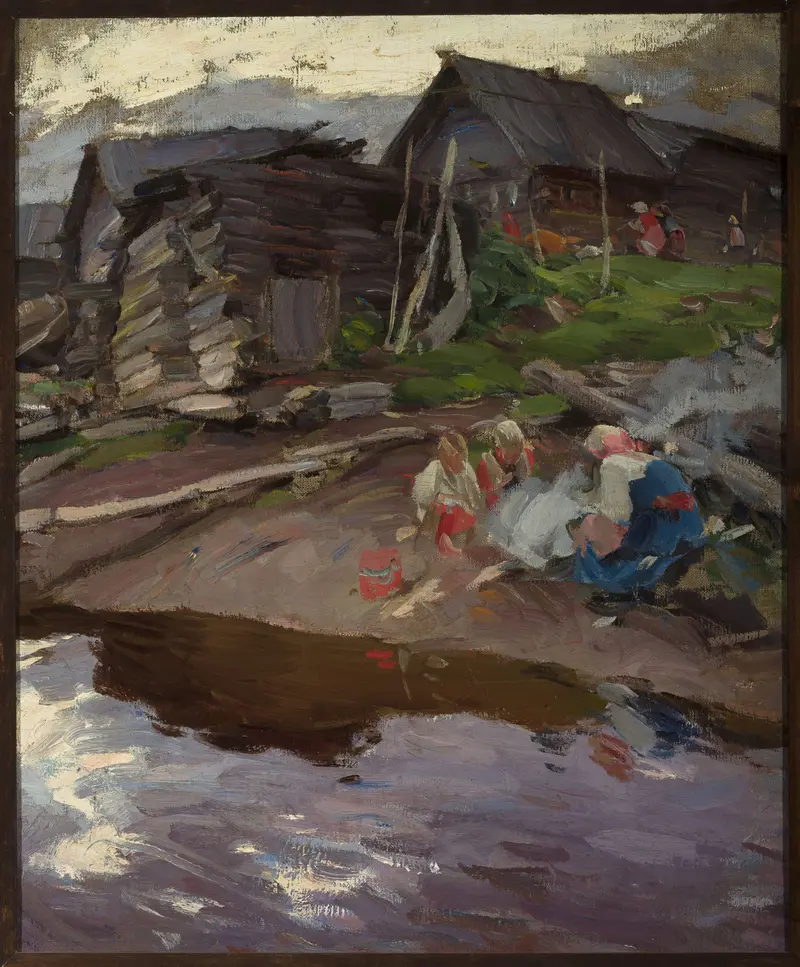
In the evening
Abram Efimovich Arkhipov
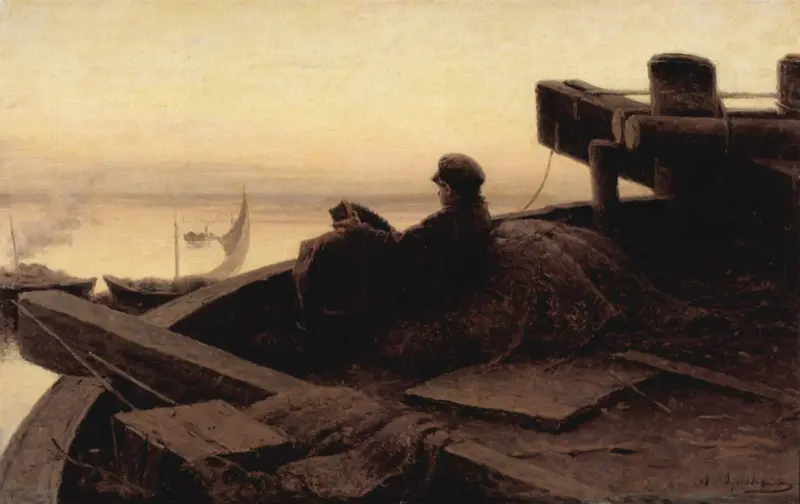
Abram Jefimowitsch Archipow 001
Abram Efimovich Arkhipov
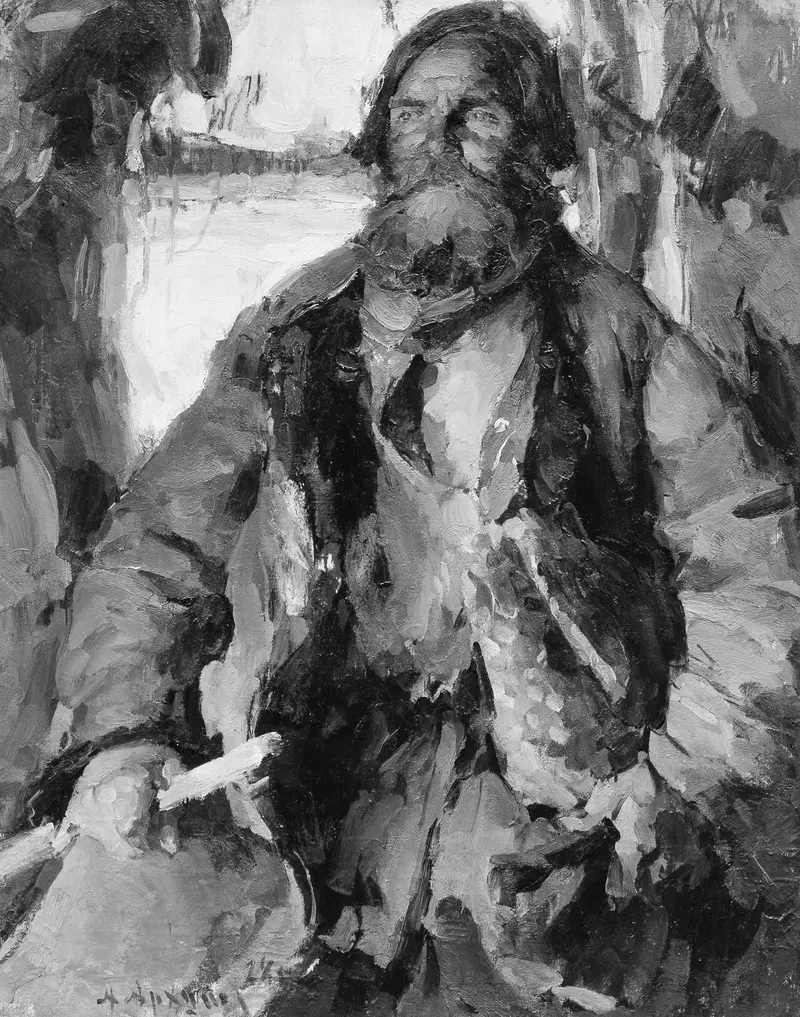
Ivan Rodin
Abram Efimovich Arkhipov
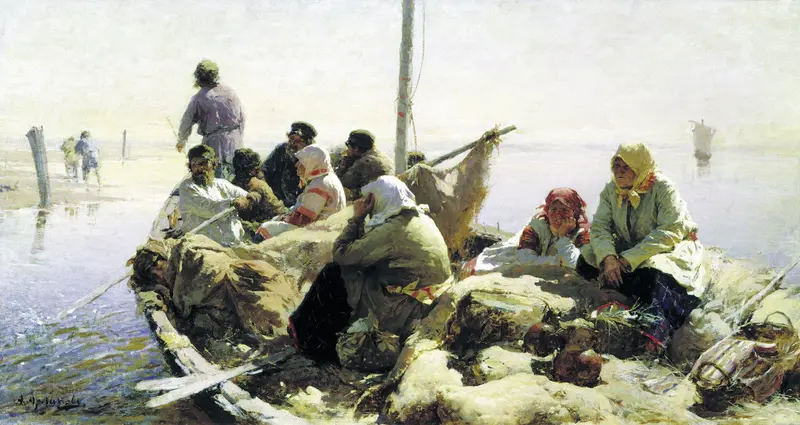
po reke oke
Abram Efimovich Arkhipov
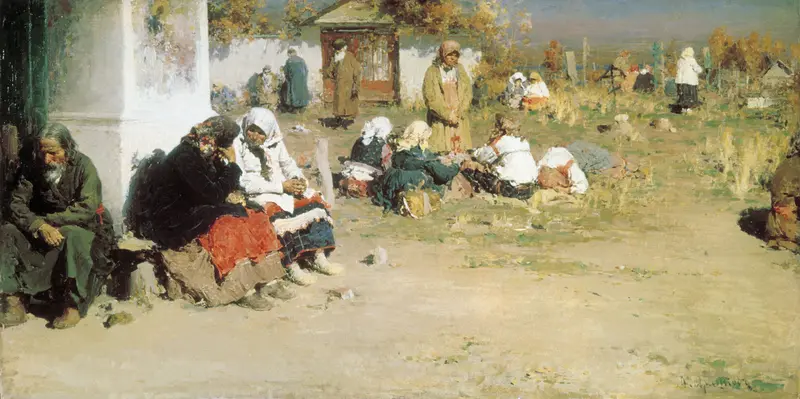
Arhipov radonica
Abram Efimovich Arkhipov
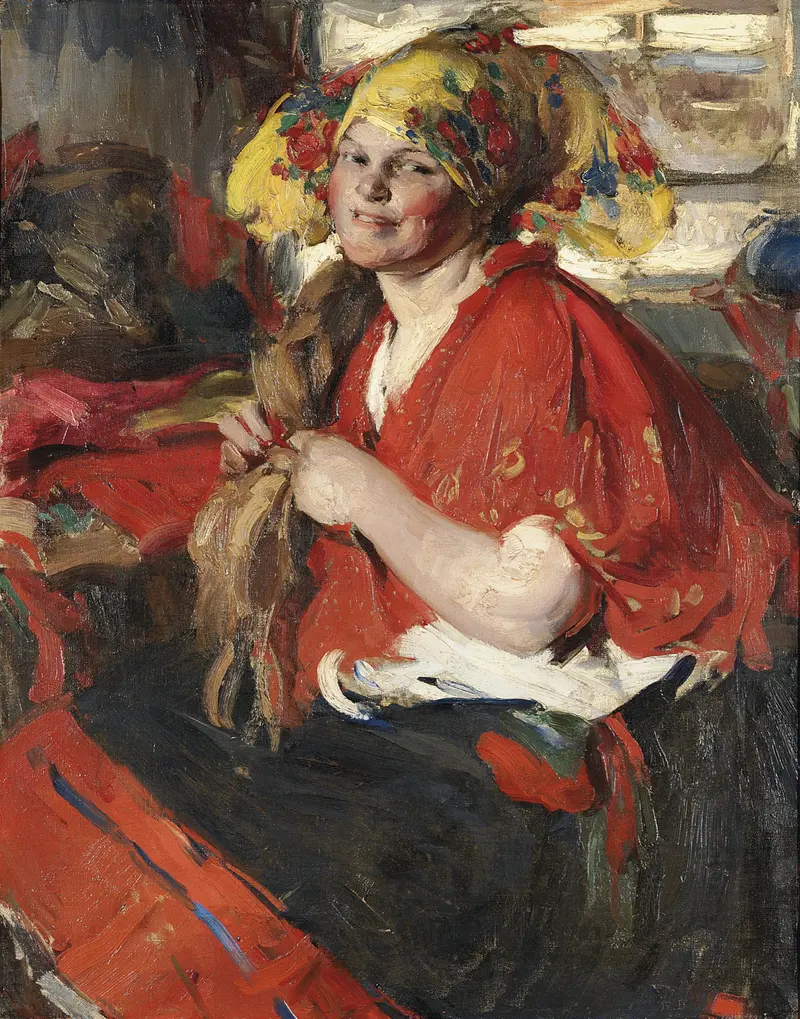
Peasant Woman
Abram Efimovich Arkhipov
In the evening
Abram Efimovich Arkhipov
More Genre Scene Art

Banquet of the Officers of the St George Civic Guard
Frans Hals

Rembrandt and Saskia in the Scene of the Prodigal Son
Rembrandt van Rijn

Bal du moulin de la Galette
Pierre-Auguste Renoir

Quadrille at the Moulin Rouge
Henri de Toulouse-Lautrec

A Burial at Ornans
Gustave Courbet

When Will You Marry?
Paul Gauguin