
po reke oke — History & Facts
What first catches the eye in po reke oke is the hush that hangs over the boat, as if the river itself has stilled to listen to the thoughts of its passengers. Sunlight pours across the scene, bleaching the sky and softening the outlines of bundled figures, while the water at the prow glimmers with movement. The faces—some turned away, some lost in reverie—are marked by fatigue and the long patience of waiting.
Each gesture speaks: a woman’s chin rests on her hand, her elbow propped on a sack; another sits upright, her gaze fixed on the far shore. The composition draws the viewer’s attention from the clustered, earth-toned foreground to the pale, limitless distance, where a lone sail drifts on the horizon, hinting at journeys still to come. Works like this by Abram Efimovich Arkhipov belong to a moment in Russian art when painters turned their eyes to the lives of ordinary people, often in the countryside or on the move. The late nineteenth and early twentieth centuries saw the rise of the Peredvizhniki, or Wanderers, a group committed to realism and social commentary.
Their paintings were not just for the elite—they were carried from city to city, shown to audiences who recognized themselves in the scenes. The date and medium of po reke oke remain undocumented, and its full history is shadowed, as is often the case with works outside the main canon. Yet, in this quiet assembly of travelers, Arkhipov’s brush preserves a fleeting moment of Russian rural life, inviting us to linger and look again.
More Artworks by Abram Efimovich Arkhipov

The Boats
Abram Efimovich Arkhipov
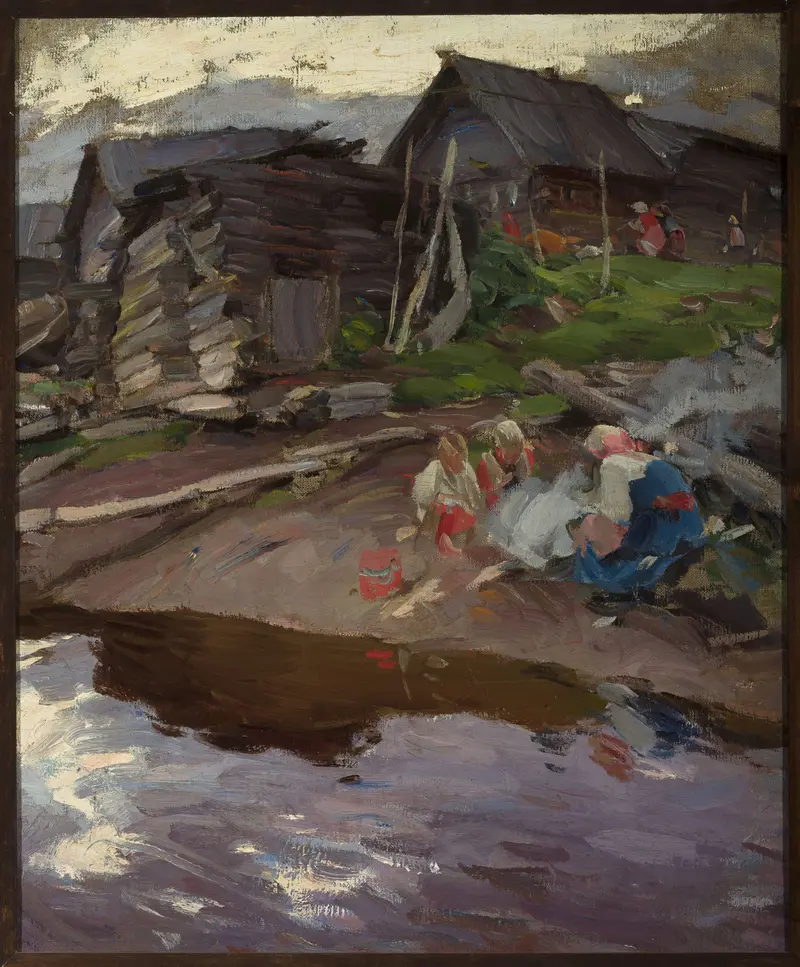
In the evening
Abram Efimovich Arkhipov
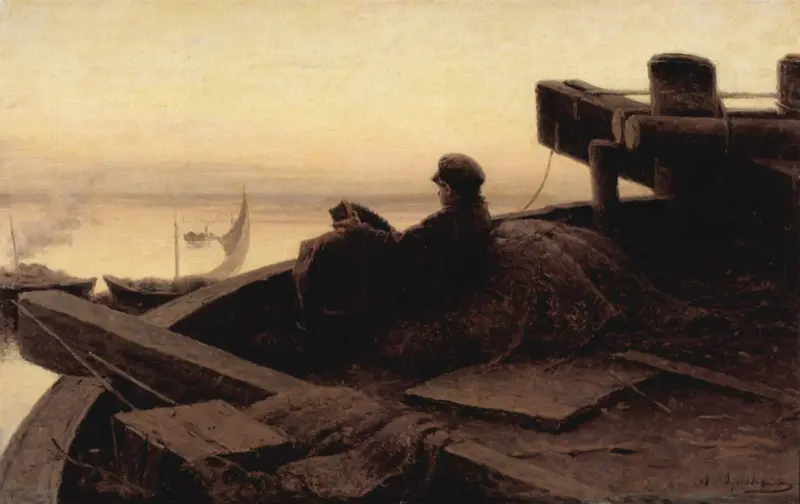
Abram Jefimowitsch Archipow 001
Abram Efimovich Arkhipov
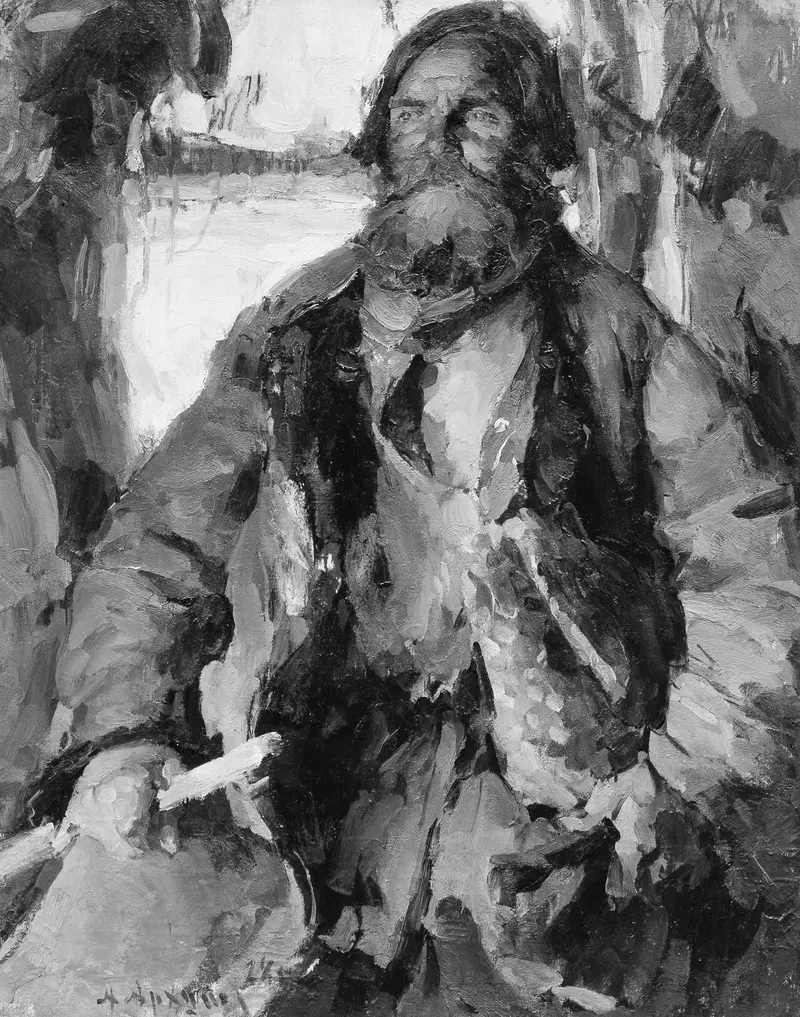
Ivan Rodin
Abram Efimovich Arkhipov
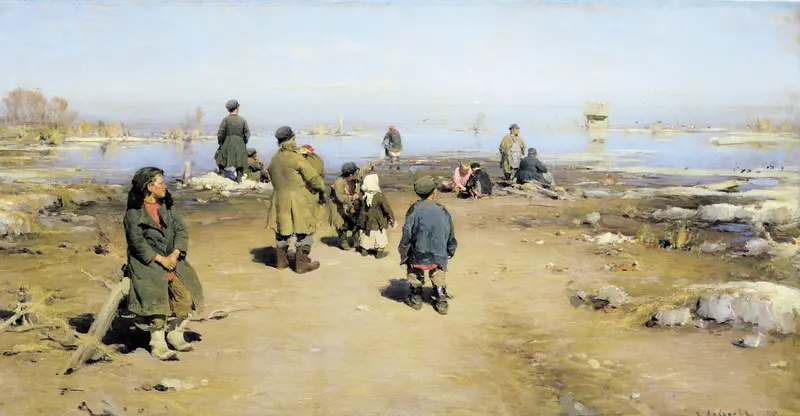
Waiting for the Boat
Abram Efimovich Arkhipov
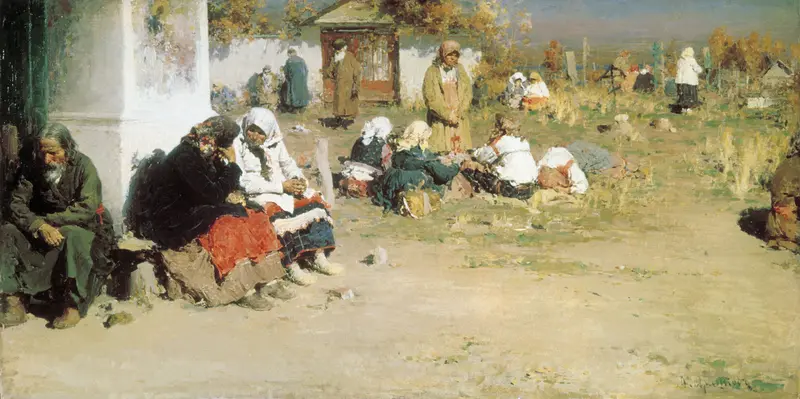
Arhipov radonica
Abram Efimovich Arkhipov
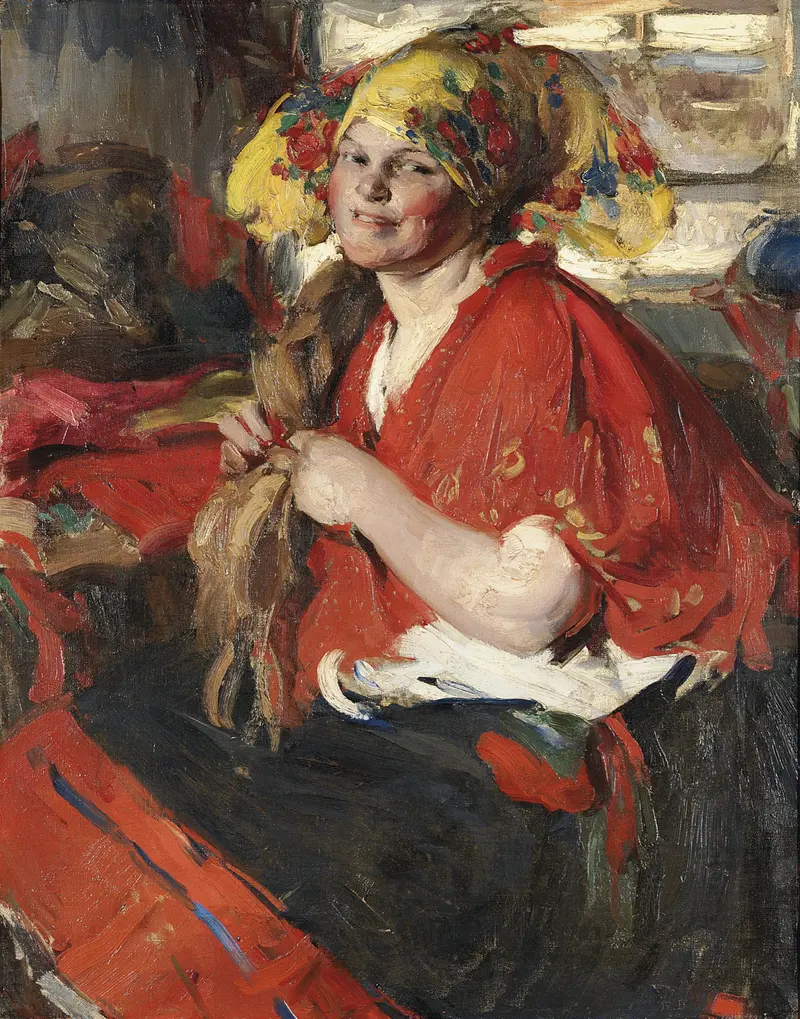
Peasant Woman
Abram Efimovich Arkhipov
In the evening
Abram Efimovich Arkhipov
More Genre Scene Art

Banquet of the Officers of the St George Civic Guard
Frans Hals

Rembrandt and Saskia in the Scene of the Prodigal Son
Rembrandt van Rijn

Bal du moulin de la Galette
Pierre-Auguste Renoir

Quadrille at the Moulin Rouge
Henri de Toulouse-Lautrec

A Burial at Ornans
Gustave Courbet

When Will You Marry?
Paul Gauguin