
Peasants at an Inn — History & Facts
A shaft of warm, golden light slices through the gloom, catching on the battered table where peasants lean in, pipes in hand, faces alive with the rough camaraderie of a shared game. The eye is drawn first to this huddle, where laughter and rivalry seem to hang in the tobacco-thick air, then outwards to the quieter dramas: a dog snuffling for scraps, a figure tending the fire, another lost in thought by the hearth. Every detail in Peasants at an Inn by Adriaen van Ostade is a deliberate invitation to linger—notice how the clutter of mugs, cards, and battered shoes grounds the scene in lived-in reality, while the low, timbered ceiling presses the space close, intensifying the sense of intimacy.
The palette—earthy browns and ochres, punctuated by the flash of a red cap—evokes the warmth and wear of daily life, and the light, carefully rationed, turns ordinary gestures into small revelations. Scenes like this were the lifeblood of Dutch genre painting in the 1650s, when artists such as van Ostade found both humor and humanity in the taverns and cottages of the rural poor. These paintings were not grand commissions for palaces, but sought-after treasures for the burgeoning middle class, who delighted in their wit and sometimes cautionary tales. Peasants at an Inn, now in the Staatliche Museen zu Berlin, belongs to this world—a world where the everyday was worthy of close observation and artistic care.
History has kept few traces of the people in this room, but the artist’s eye for gesture and atmosphere ensures their moment endures, asking us to look again at the ordinary, and find the story within.
More Artworks by Adriaen van Ostade

Dans in de herberg
Adriaen van Ostade
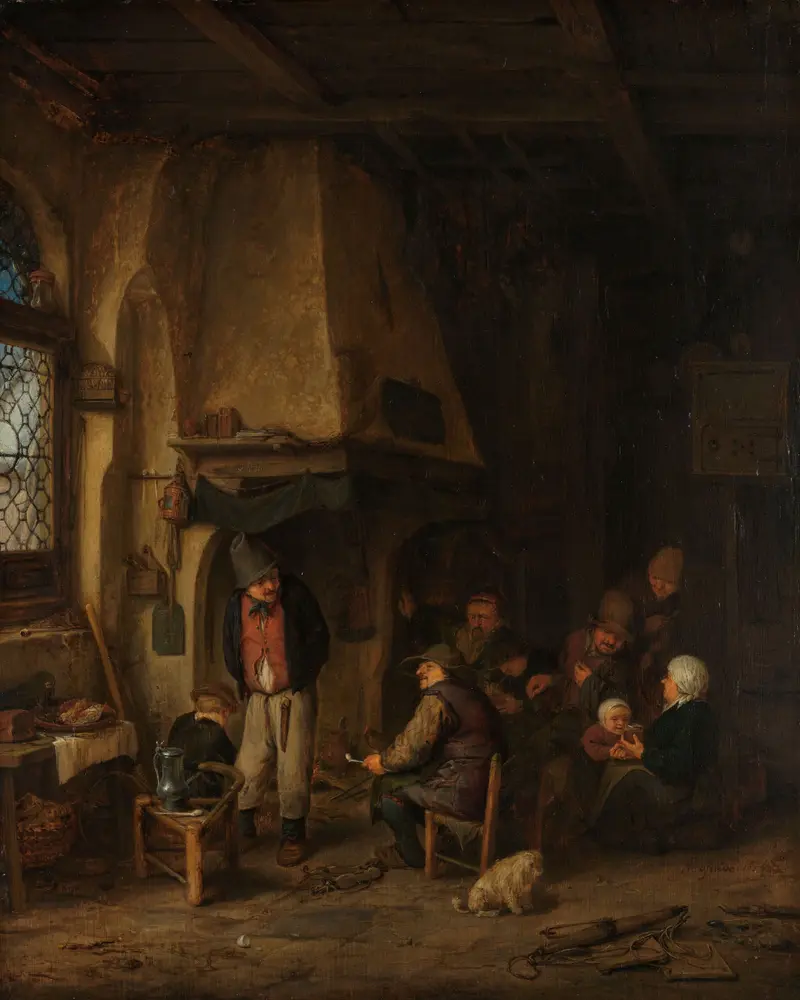
‘The Skaters’: Peasants in an Interior
Adriaen van Ostade
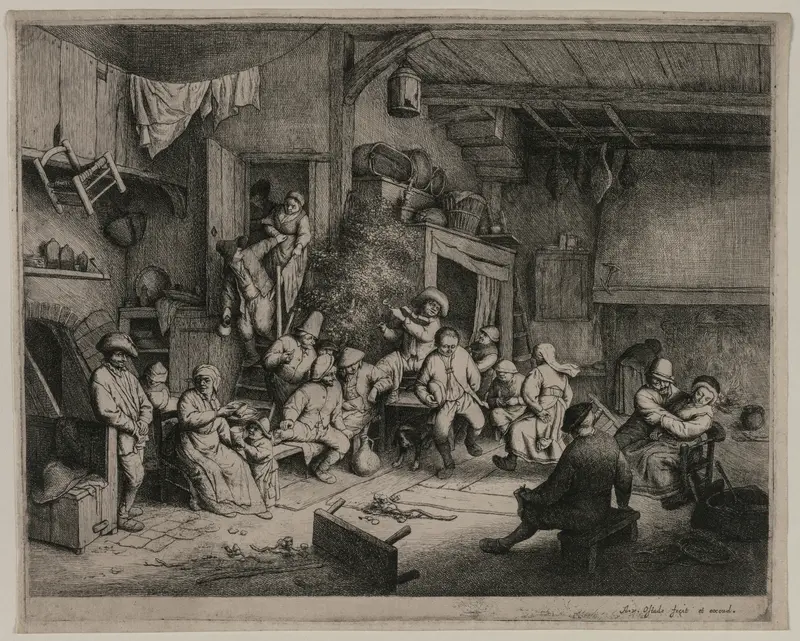
Dance at the Inn
Adriaen van Ostade
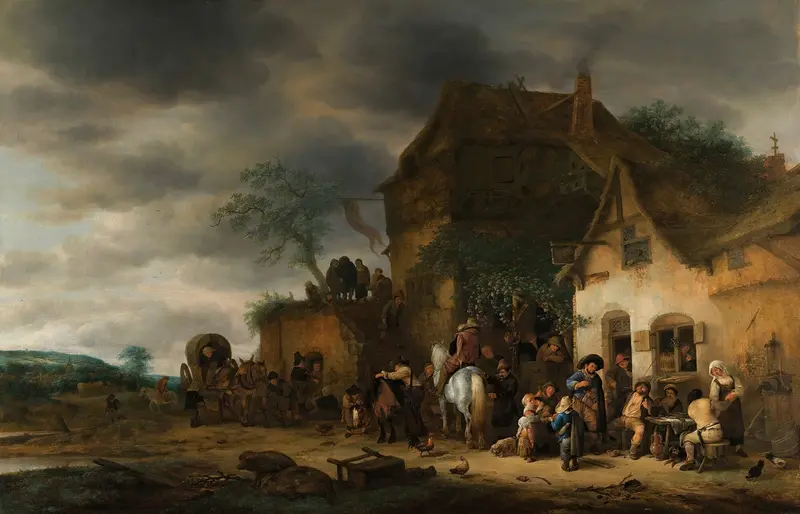
Travellers Halted At A Country Inn
Adriaen van Ostade
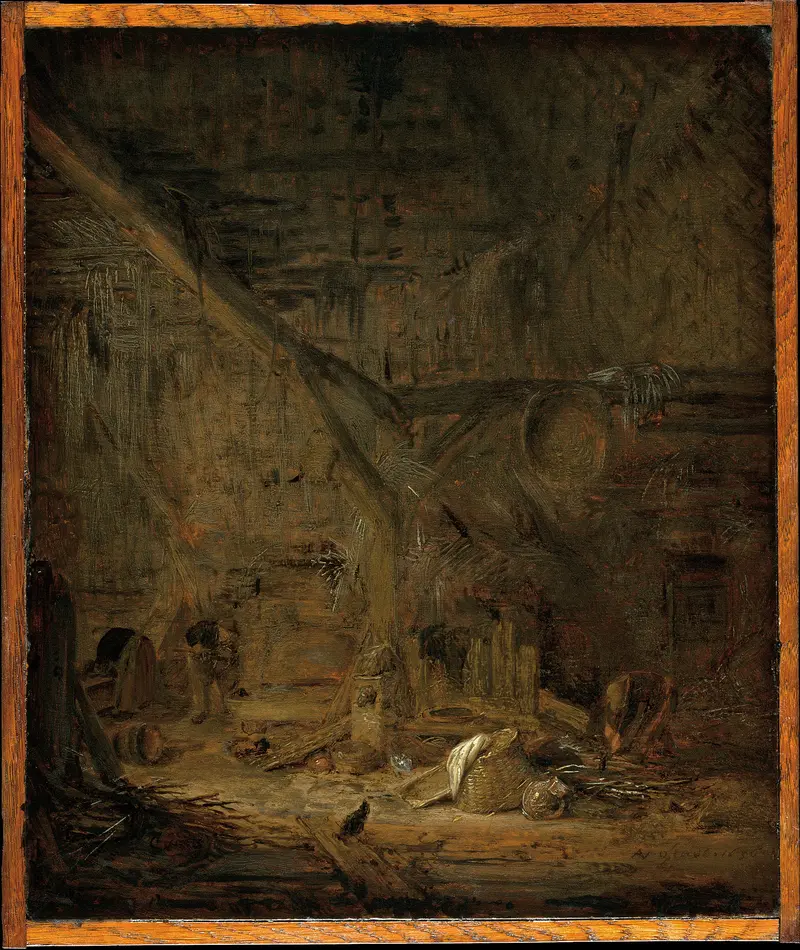
Interior of a Barn
Adriaen van Ostade
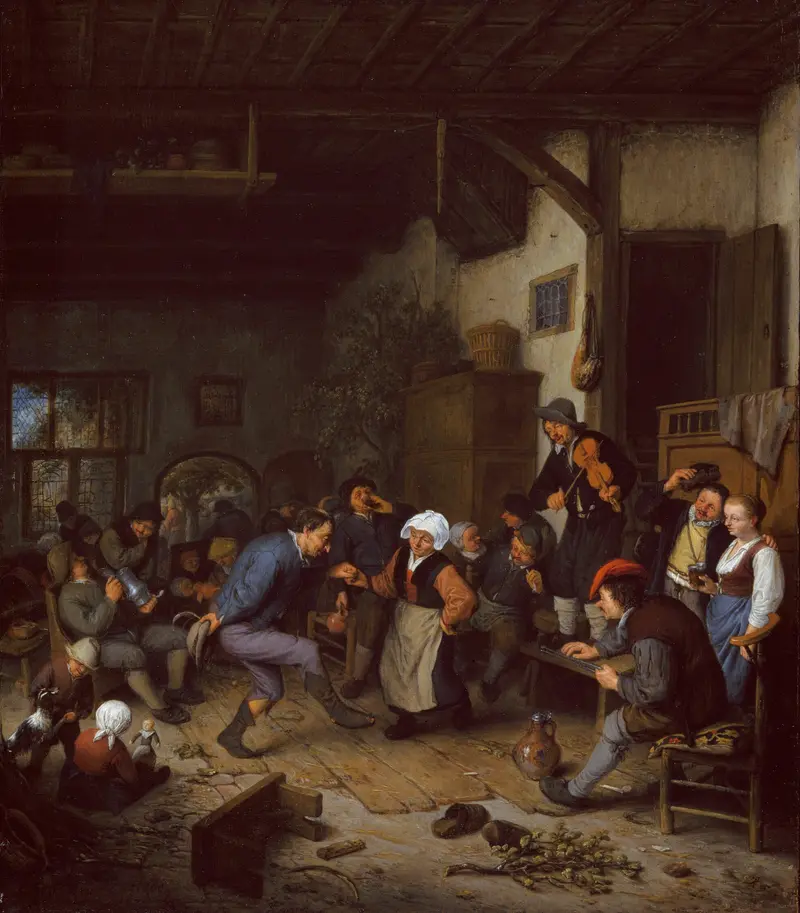
Merrymakers in an Inn
Adriaen van Ostade
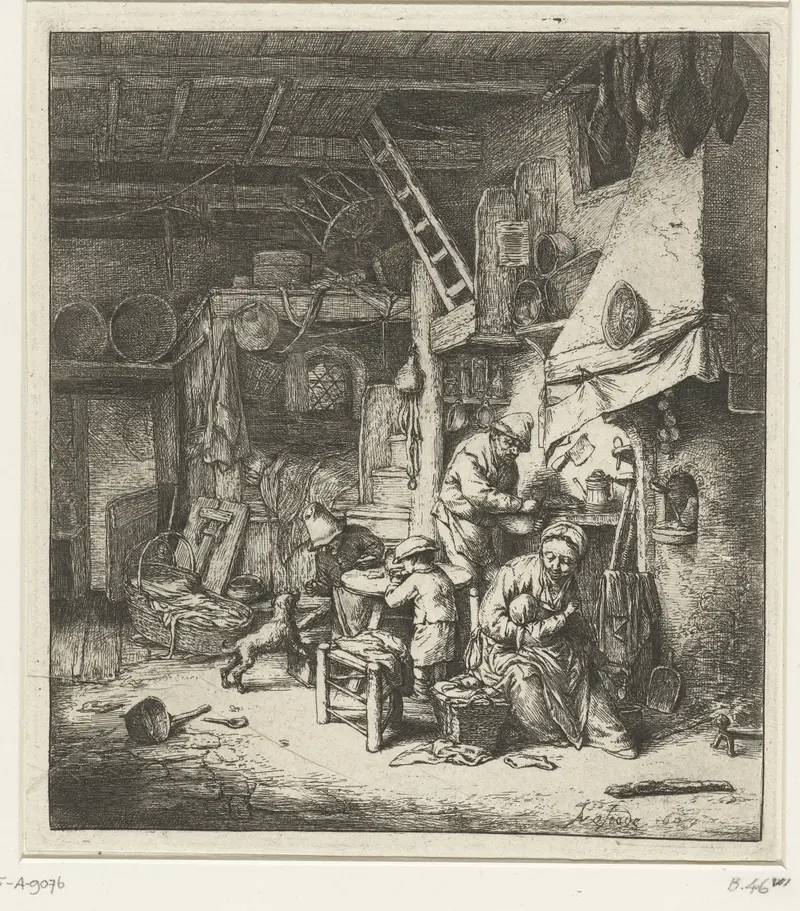
Boerengezin in interieur
Adriaen van Ostade
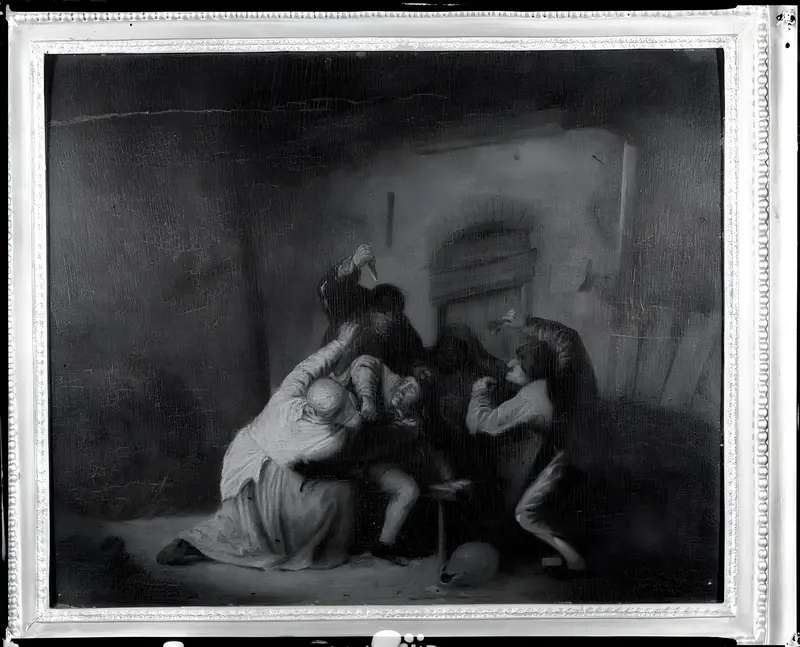
Peasants Brawling in a Tavern
Adriaen van Ostade
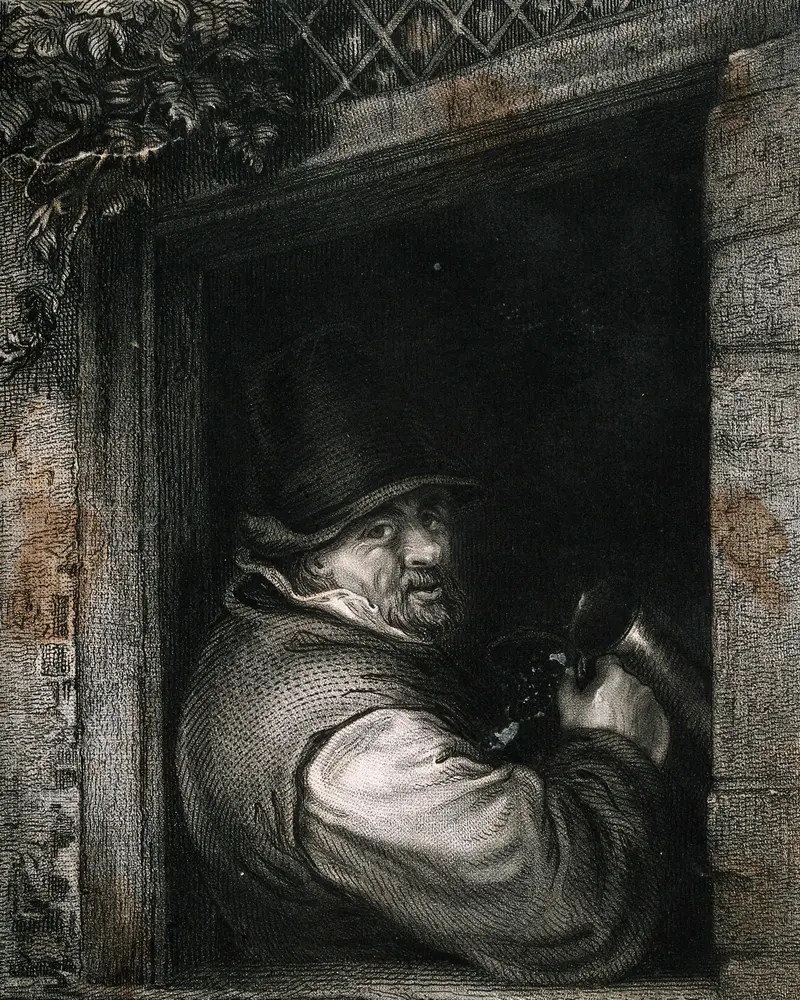
Man with a Tankard at a Window
Adriaen van Ostade
Dans in de herberg
Adriaen van Ostade
More Genre Scene Art

Banquet of the Officers of the St George Civic Guard
Frans Hals

Rembrandt and Saskia in the Scene of the Prodigal Son
Rembrandt van Rijn

Bal du moulin de la Galette
Pierre-Auguste Renoir

Quadrille at the Moulin Rouge
Henri de Toulouse-Lautrec

A Burial at Ornans
Gustave Courbet

When Will You Marry?
Paul Gauguin