
Peasants drinking before an inn — History & Facts
A curl of smoke rises from the thatched roof, catching the last light of the day, while a cluster of figures gathers in the shadowed foreground, their faces lit by an unseen glow. The real drama here is not grand or heroic, but found in the easy gestures of rural life: a man tips his jug, another leans in, laughter or song half-formed on his lips. The eye is drawn first to the warm brick and ochre wall, where the group’s activity pulses with quiet energy, before wandering outward to the cool, open sky that dwarfs their gathering.
The palette is earthy and restrained, holding the scene in a gentle dusk, while the careful placement of figures and the play of light and shadow invite the viewer to linger, as if eavesdropping on a familiar ritual. Works like Peasants drinking before an inn, painted by Adriaen van Ostade in 1650, belong to a world where the everyday was newly worthy of art. In the Dutch Republic of the seventeenth century, scenes of village merrymaking and rustic leisure became prized by a rising middle class, eager for images that reflected their own lives and values. Painters of Ostade’s generation, shaped by the tastes of urban collectors, found poetry in the ordinary, and their works circulated in private homes as much as in public halls.
This painting, now preserved in a Dutch collection, is part of that tradition—a fragment of a vanished world, inviting us to step into the smoky twilight and share, for a moment, in the company of strangers.
More Artworks by Adriaen van Ostade

Dans in de herberg
Adriaen van Ostade
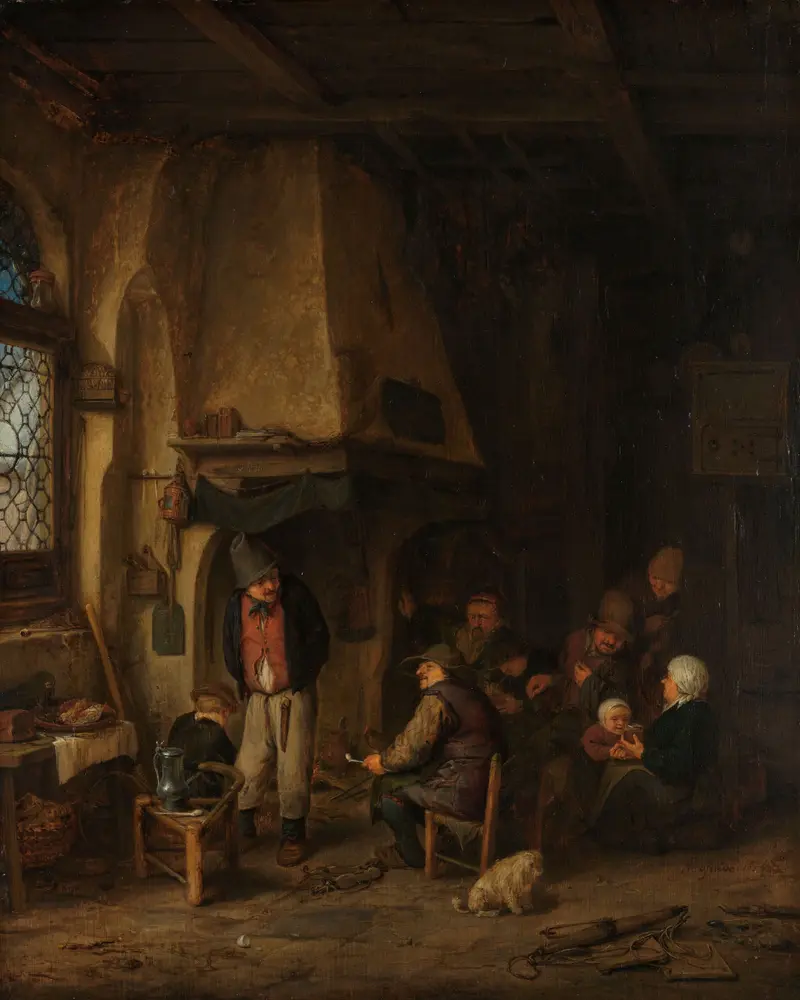
‘The Skaters’: Peasants in an Interior
Adriaen van Ostade
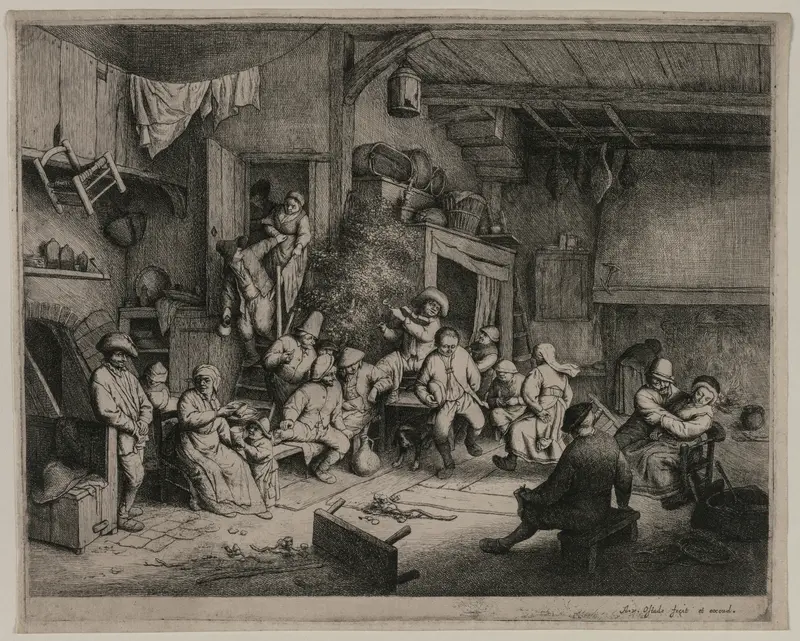
Dance at the Inn
Adriaen van Ostade
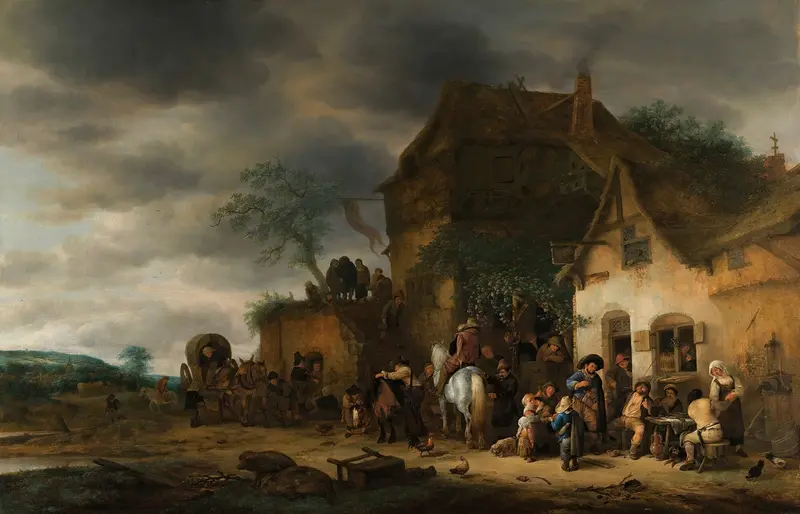
Travellers Halted At A Country Inn
Adriaen van Ostade
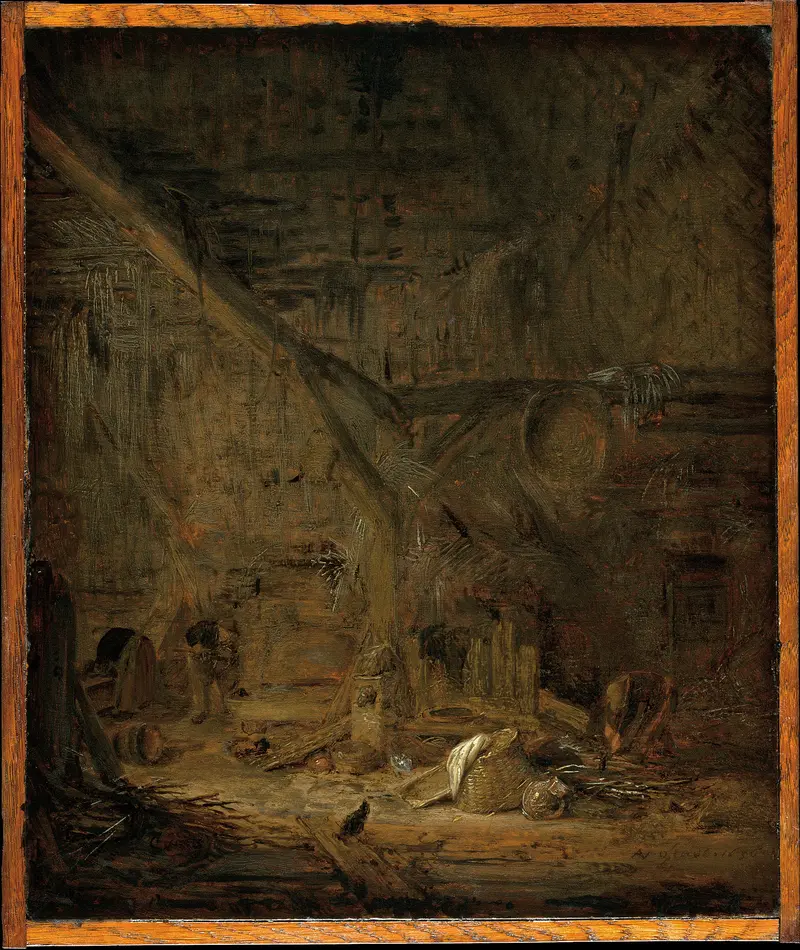
Interior of a Barn
Adriaen van Ostade
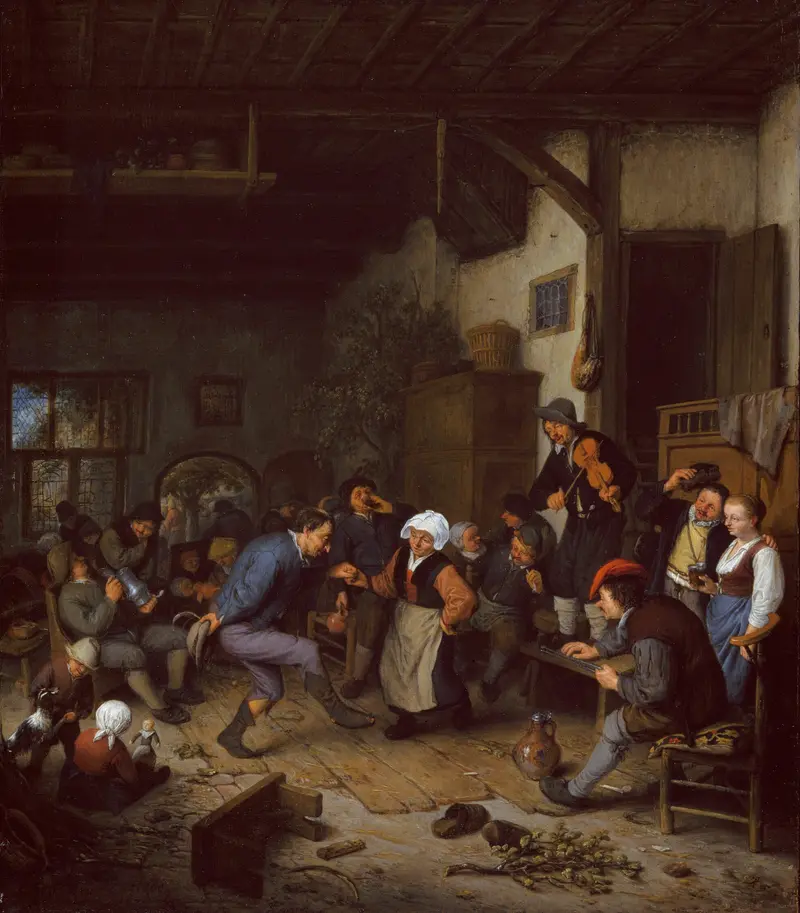
Merrymakers in an Inn
Adriaen van Ostade
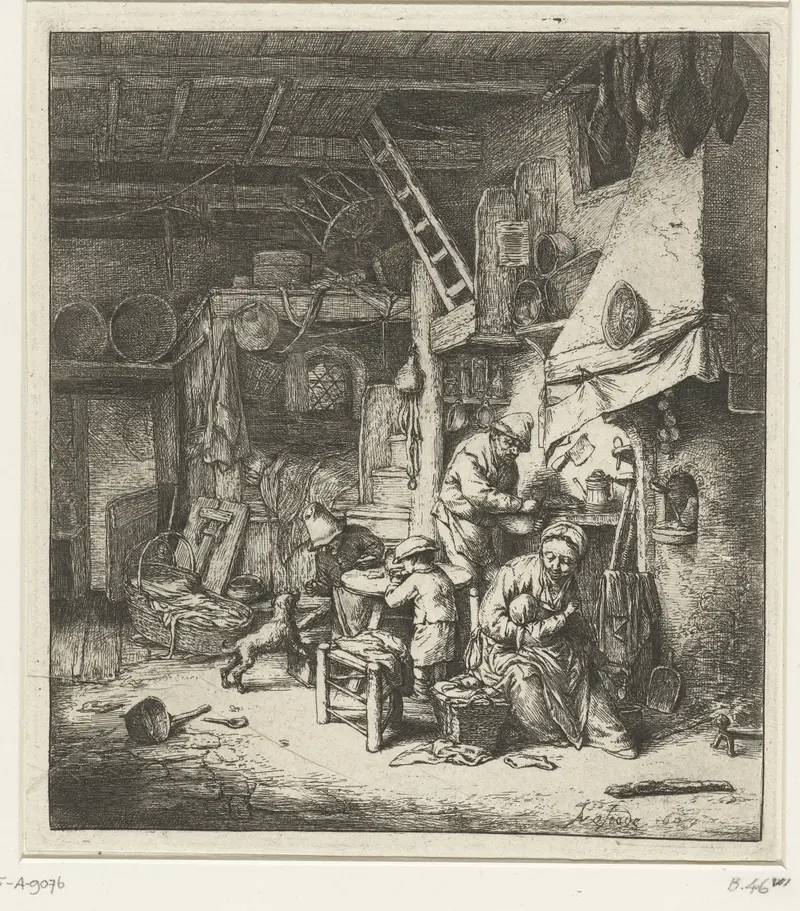
Boerengezin in interieur
Adriaen van Ostade
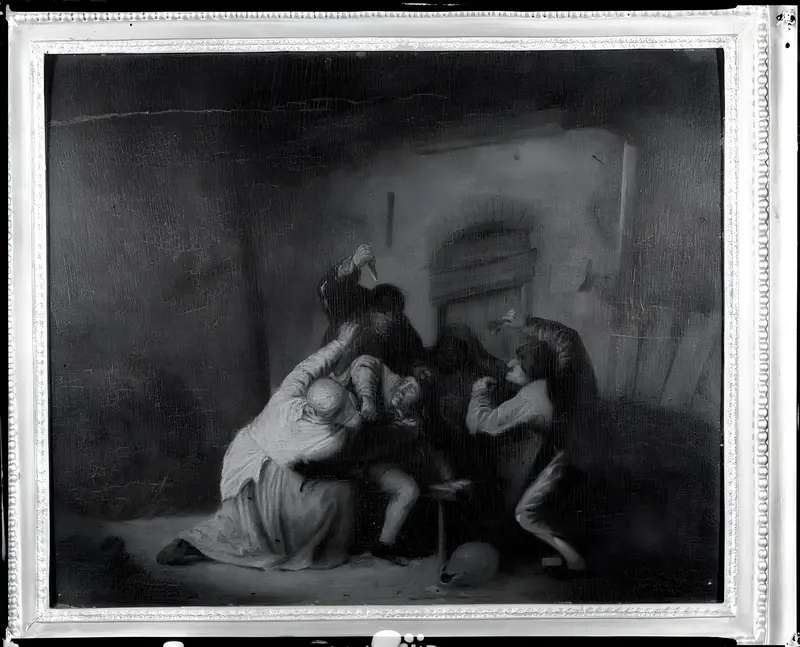
Peasants Brawling in a Tavern
Adriaen van Ostade
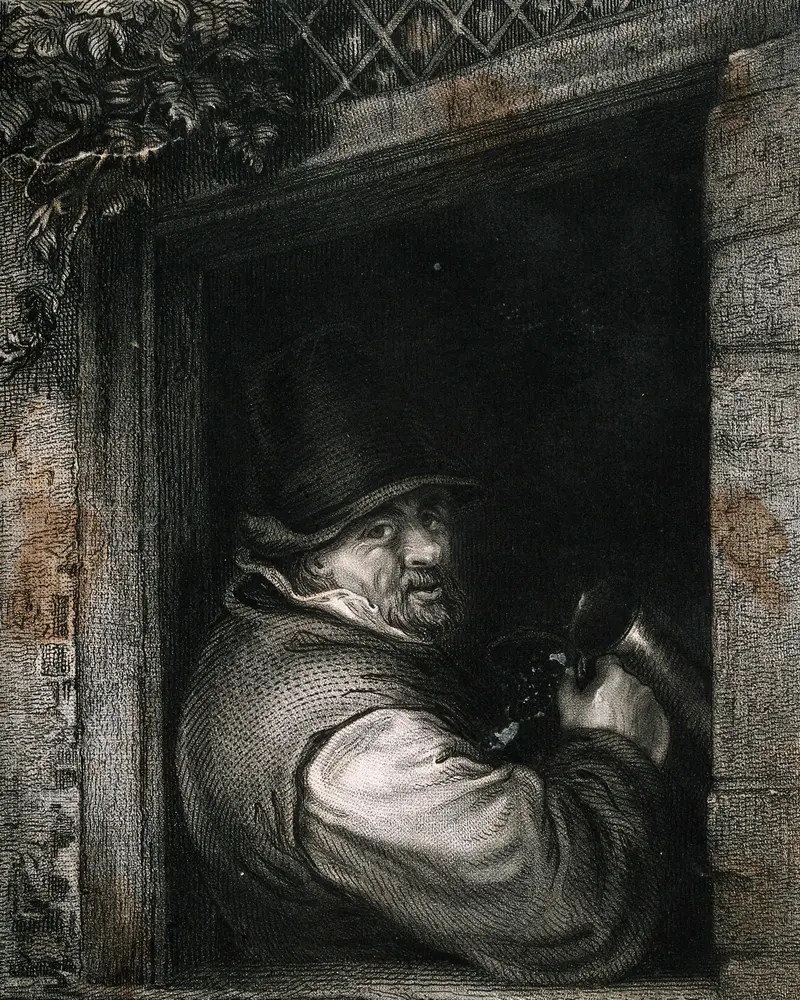
Man with a Tankard at a Window
Adriaen van Ostade
Dans in de herberg
Adriaen van Ostade
More Genre Scene Art

Banquet of the Officers of the St George Civic Guard
Frans Hals

Rembrandt and Saskia in the Scene of the Prodigal Son
Rembrandt van Rijn

Bal du moulin de la Galette
Pierre-Auguste Renoir

Quadrille at the Moulin Rouge
Henri de Toulouse-Lautrec

A Burial at Ornans
Gustave Courbet

When Will You Marry?
Paul Gauguin