
Peasants Fighting at an Inn — History & Facts
What first strikes the eye in Peasants Fighting at an Inn is the sudden, chaotic energy that erupts in the cramped, dimly lit room. The painter’s brush freezes a moment of raw conflict: limbs tangle, faces contort, and a knife flashes in the hand of a man on the ground. The light, warm and directional, pours in from the left, catching the alarm on the central figure’s face and the desperate grip of those around him.
The scattered objects—a toppled bench, a barrel, a stool—are not mere background but evidence of the violence that has just unfolded. The palette, dominated by earthen browns and ochres, roots the scene in the world of the everyday, yet the drama is anything but ordinary. This kind of painting flourished in the Dutch Republic of the 17th century, when artists like Adriaen van Ostade turned their gaze on the lives of ordinary people. Scenes of tavern brawls, rustic merriment, and daily struggle were collected by prosperous townsfolk who saw both a mirror and a warning in such images.
Painted around the 1650s, and now held in DAMS Antwerpen, this work belongs to a tradition that prized both moral lesson and lively storytelling. History has kept few traces of the specific lives behind these faces, but the world they inhabit—a world of rough justice and sudden tempers—remains vividly present in every brushstroke. Look again, and you may find yourself drawn into the fray.
More Artworks by Adriaen van Ostade

Dans in de herberg
Adriaen van Ostade
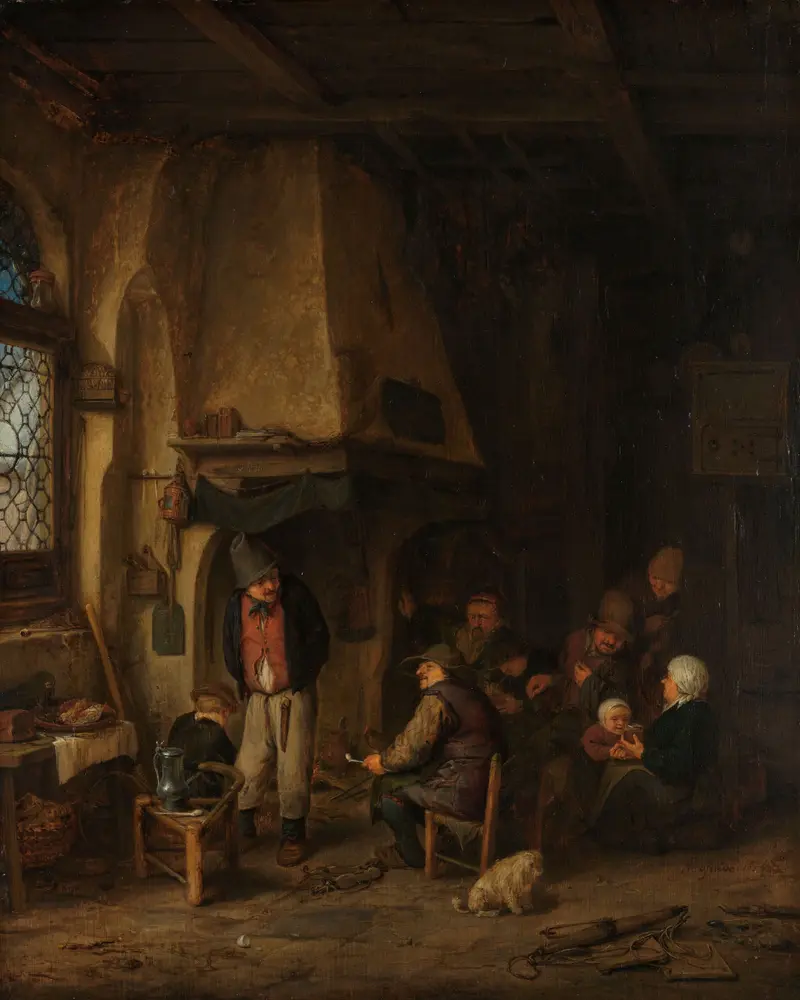
‘The Skaters’: Peasants in an Interior
Adriaen van Ostade
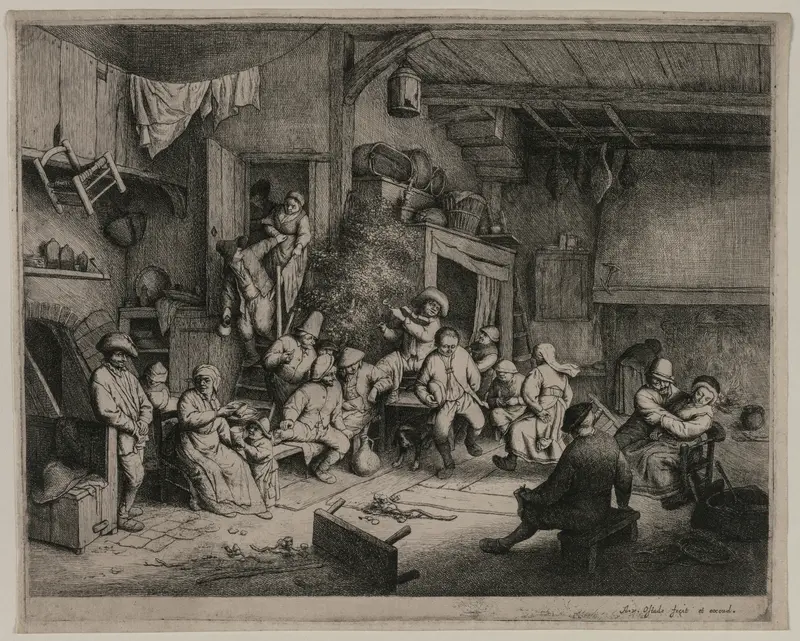
Dance at the Inn
Adriaen van Ostade
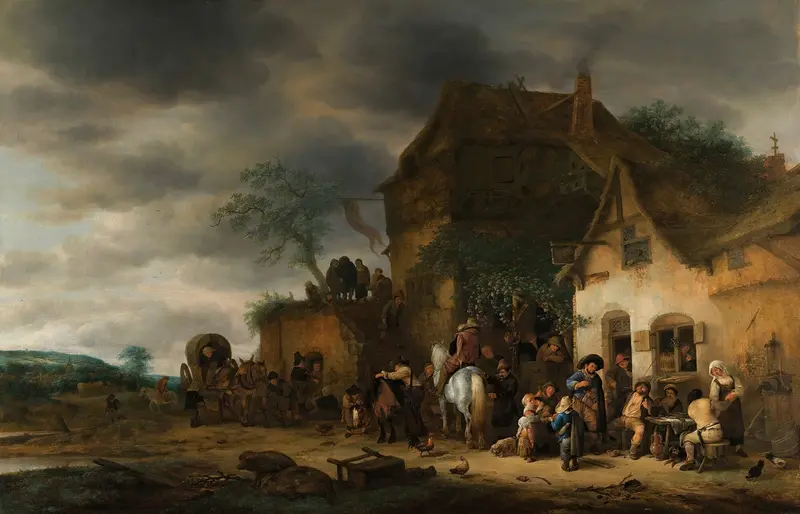
Travellers Halted At A Country Inn
Adriaen van Ostade
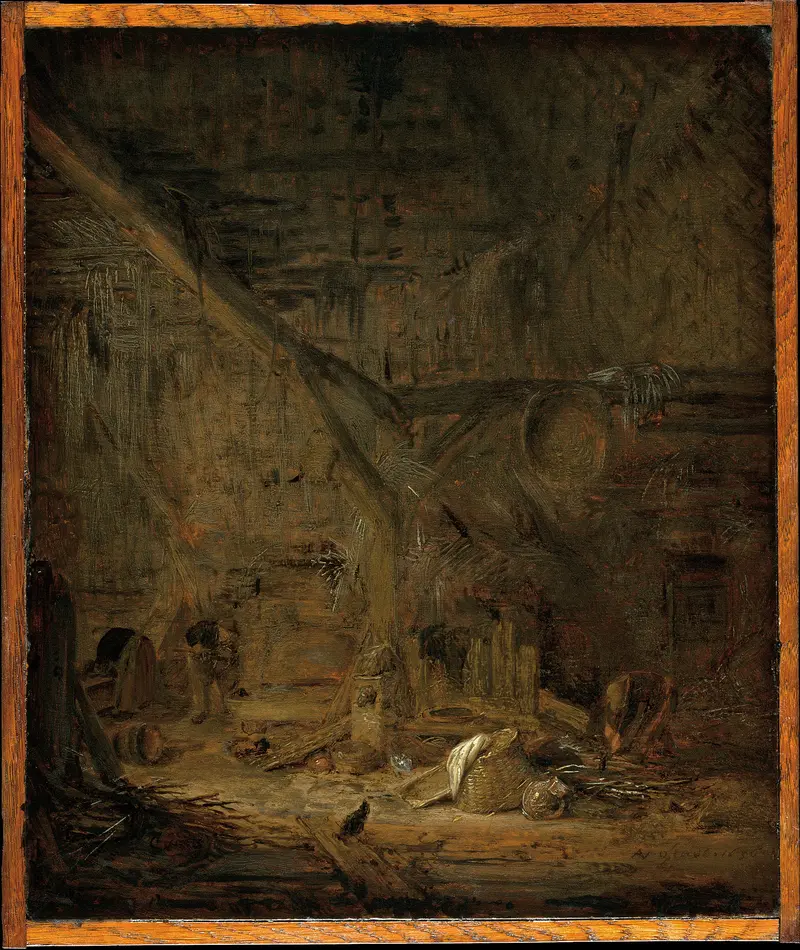
Interior of a Barn
Adriaen van Ostade
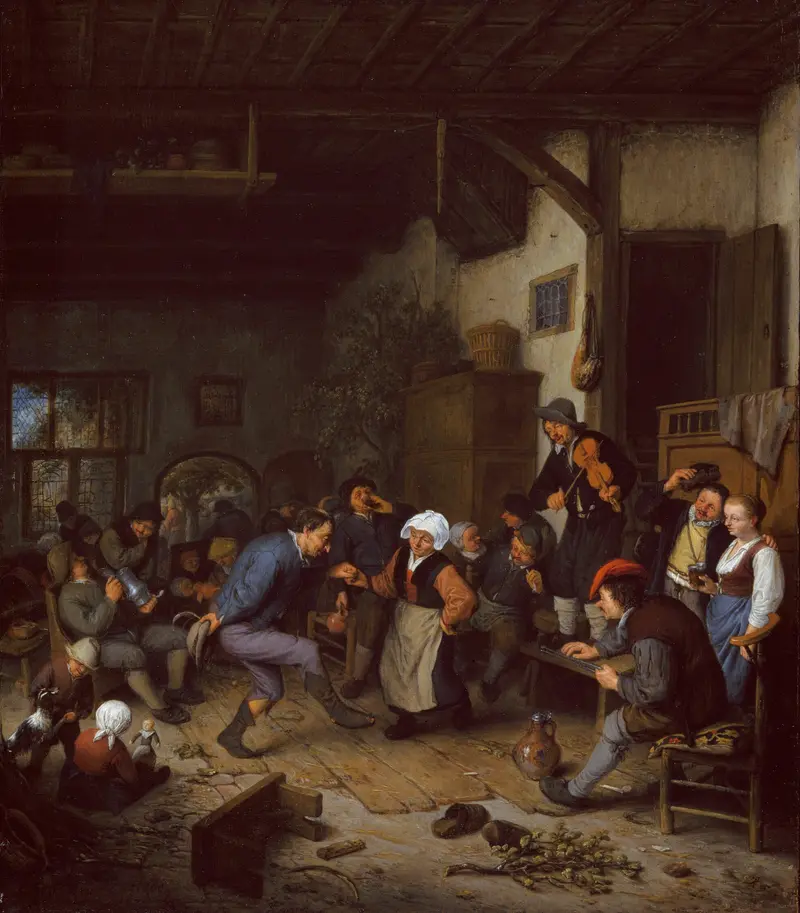
Merrymakers in an Inn
Adriaen van Ostade
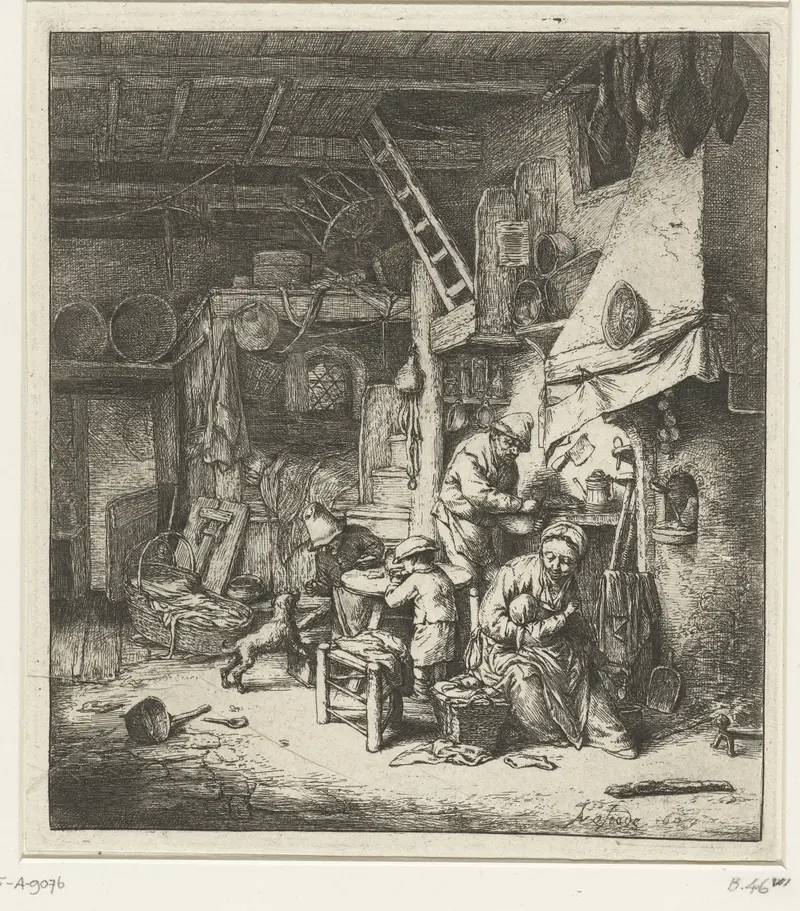
Boerengezin in interieur
Adriaen van Ostade
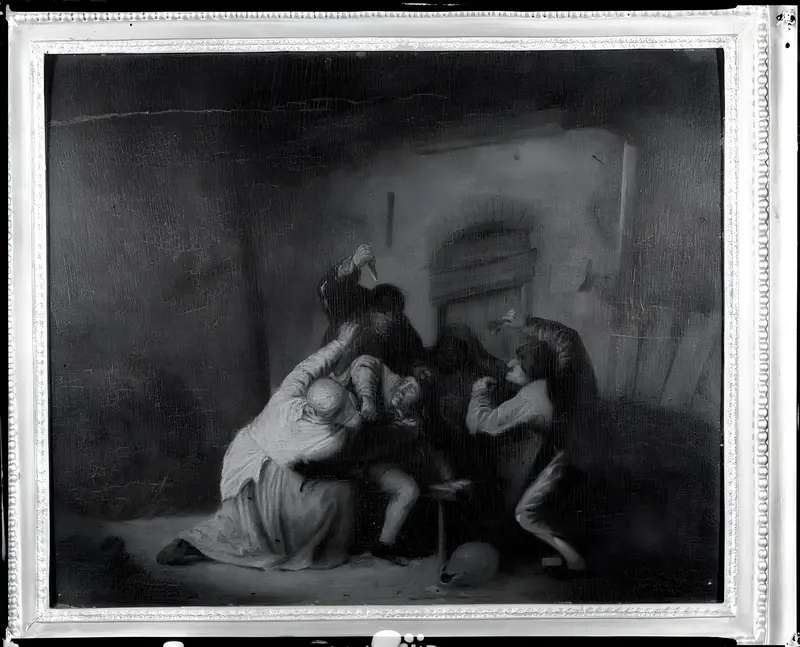
Peasants Brawling in a Tavern
Adriaen van Ostade
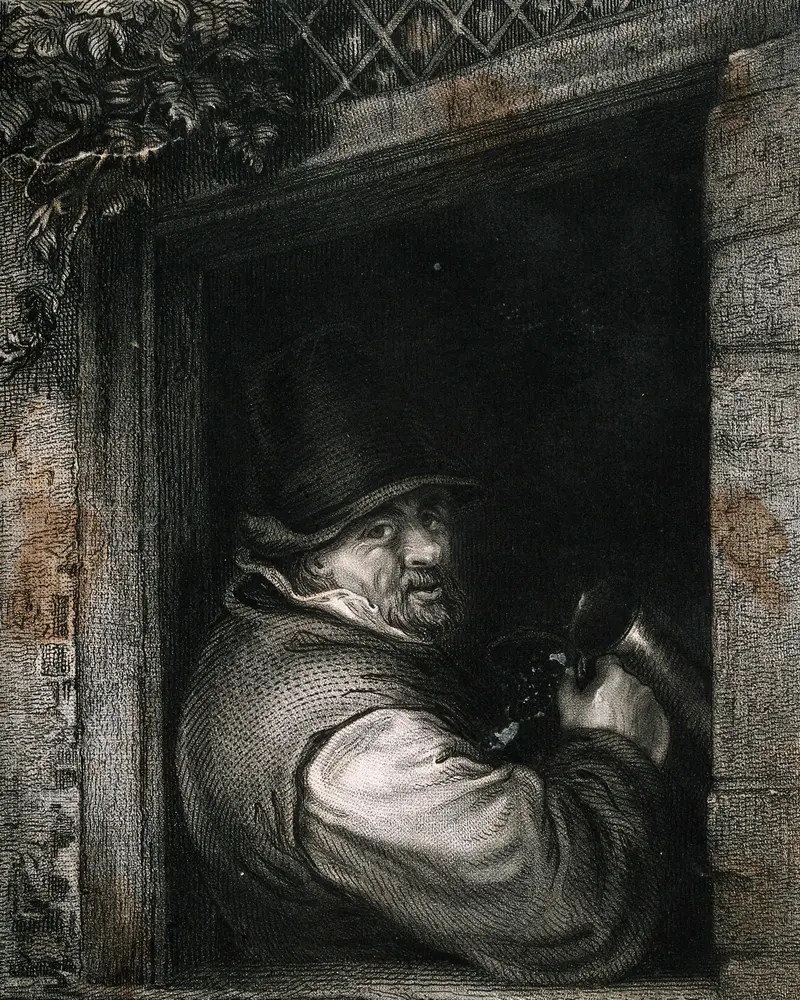
Man with a Tankard at a Window
Adriaen van Ostade
Dans in de herberg
Adriaen van Ostade
More Genre Scene Art

Banquet of the Officers of the St George Civic Guard
Frans Hals

Rembrandt and Saskia in the Scene of the Prodigal Son
Rembrandt van Rijn

Bal du moulin de la Galette
Pierre-Auguste Renoir

Quadrille at the Moulin Rouge
Henri de Toulouse-Lautrec

A Burial at Ornans
Gustave Courbet

When Will You Marry?
Paul Gauguin