
Peasants in a Rustic Interior — History & Facts
The raucous energy of a village tavern bursts from the shadows in Peasants in a Rustic Interior, where a single figure at center stage throws his arm high, drink in hand, as if to toast or challenge the world. The painter, Adriaen van Ostade, draws the viewer in with a shaft of warm light that slices through the gloom, picking out faces, gestures, and the battered timbers of the low-ceilinged room. Every detail is a clue: the slouch of the men huddled around the table, the jug cradled by the seated figure, the rough-hewn beams above that seem to press down on the revelers.
Light and shadow do more than describe the space—they orchestrate the mood, turning a humble gathering into a small stage for human folly and camaraderie. This kind of scene was the lifeblood of Dutch genre painting in the 17th century, when artists like van Ostade made their names chronicling the everyday lives of peasants and townsfolk. Painted in 1634, this work belongs to a world fascinated by the rhythms of ordinary existence—where laughter, drink, and rough company were as worthy of depiction as the grandest historical events. Such paintings were often snapped up by prosperous burghers eager to decorate their homes with lively, relatable images, sometimes as a gentle warning against excess, sometimes as a celebration of simple pleasures.
Little is recorded about the specific journey of this painting before it entered the collection of the Detroit Institute of Arts, but its subject and style place it firmly in the heart of the Dutch Golden Age. Let your eye linger on the interplay of gesture and gaze, and you may catch the echo of laughter that first filled this rustic room.
More Artworks by Adriaen van Ostade

Dans in de herberg
Adriaen van Ostade
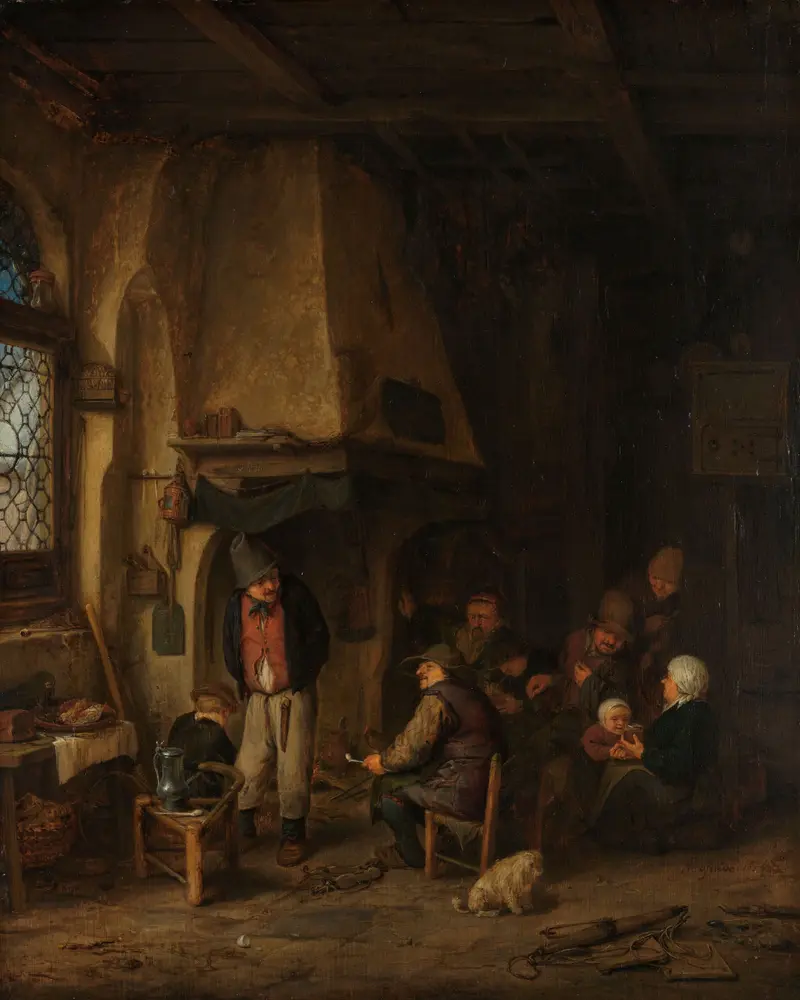
‘The Skaters’: Peasants in an Interior
Adriaen van Ostade
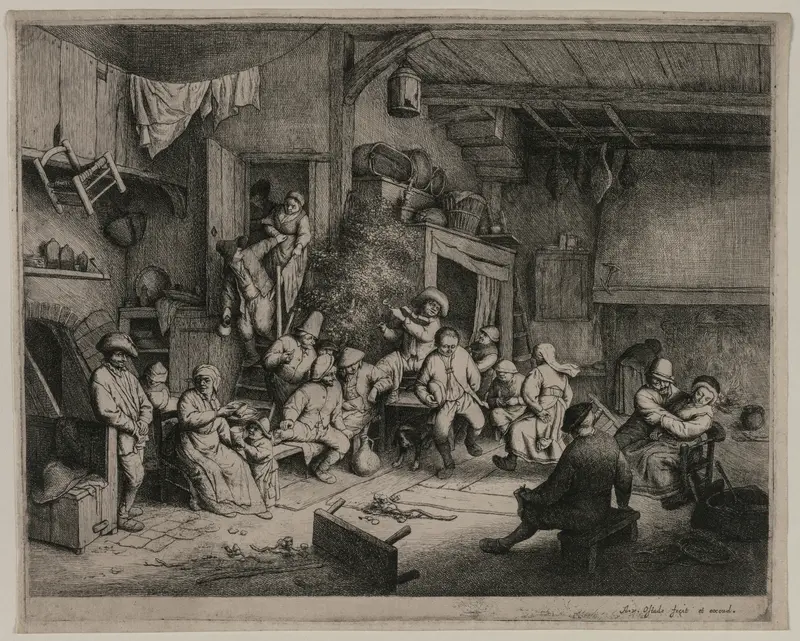
Dance at the Inn
Adriaen van Ostade
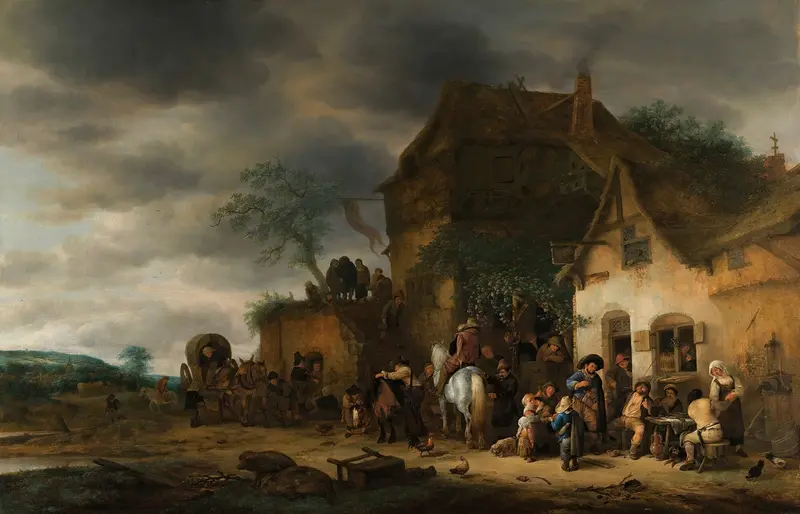
Travellers Halted At A Country Inn
Adriaen van Ostade
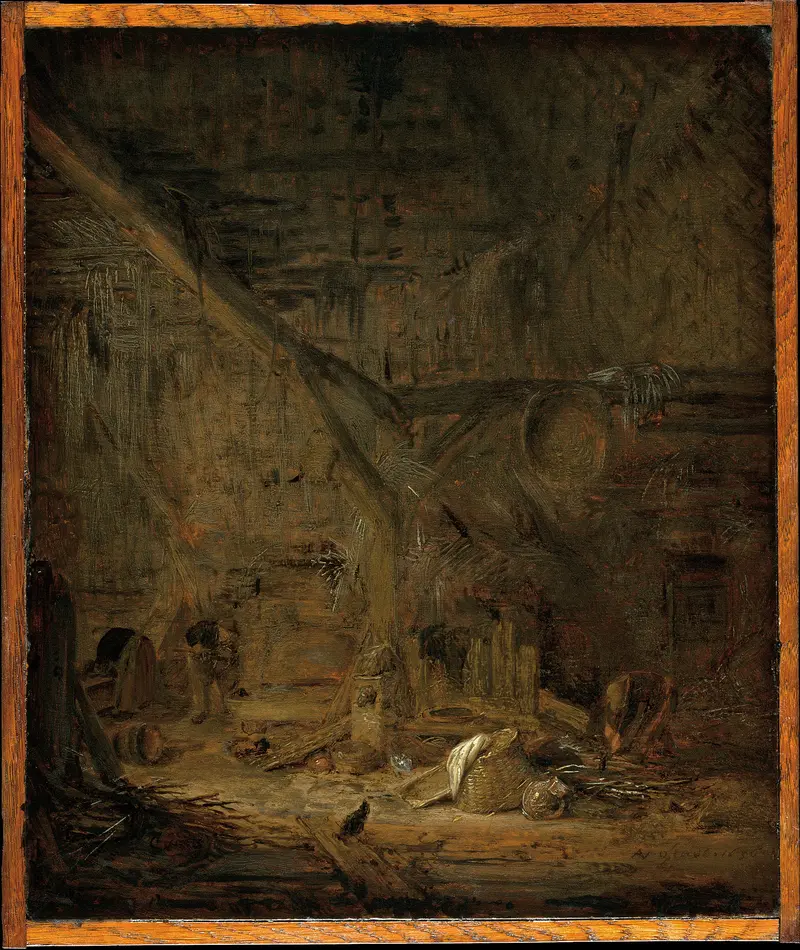
Interior of a Barn
Adriaen van Ostade
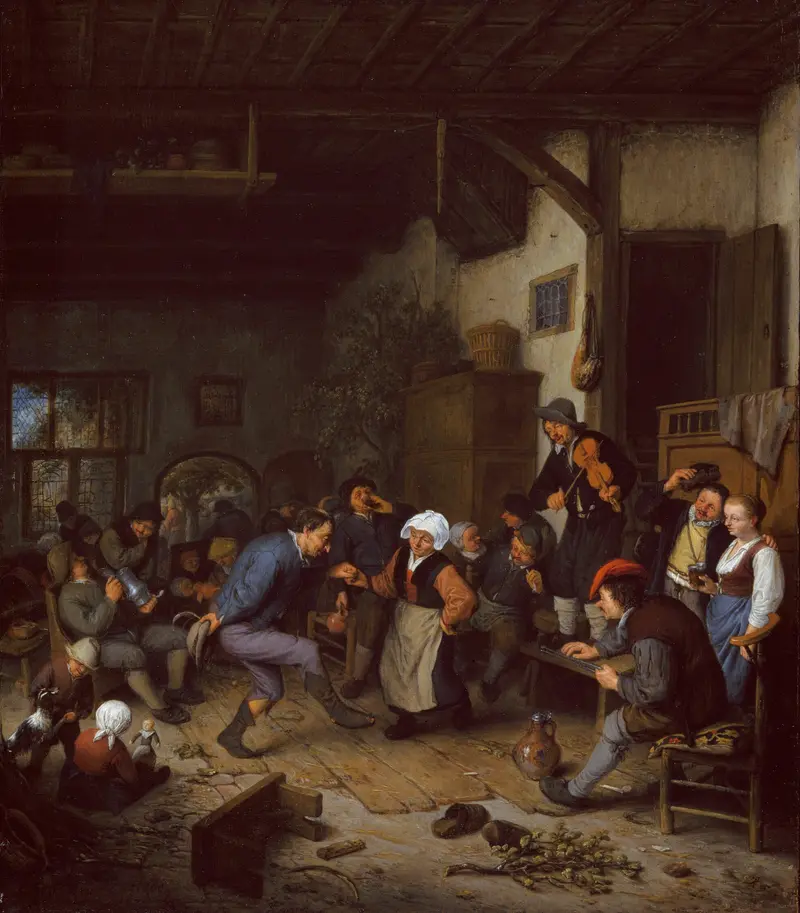
Merrymakers in an Inn
Adriaen van Ostade
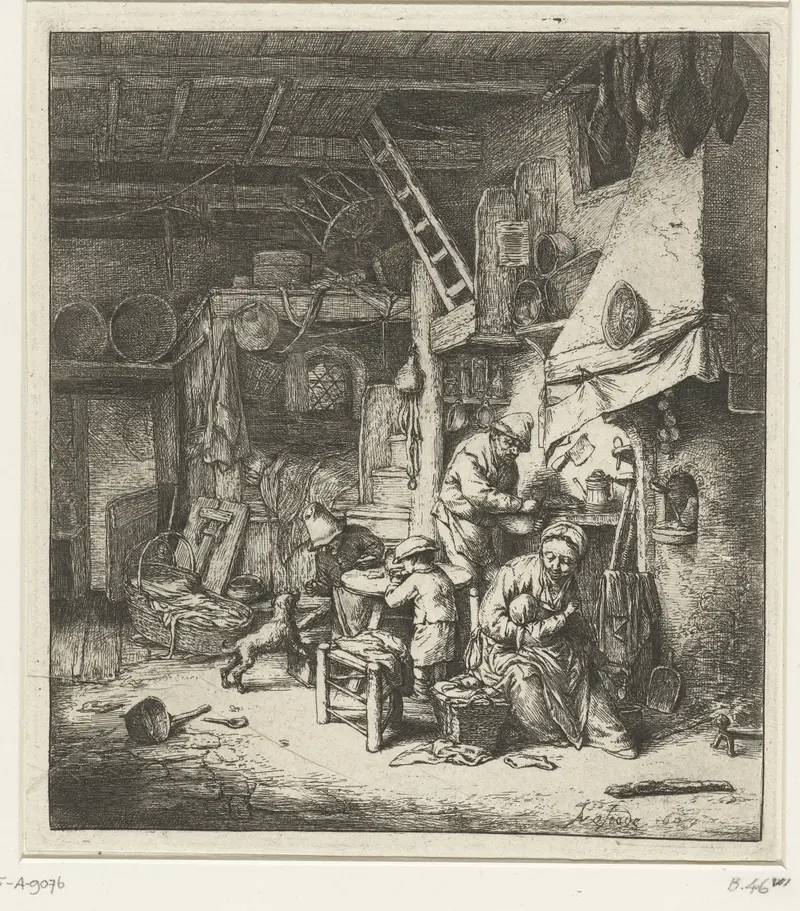
Boerengezin in interieur
Adriaen van Ostade
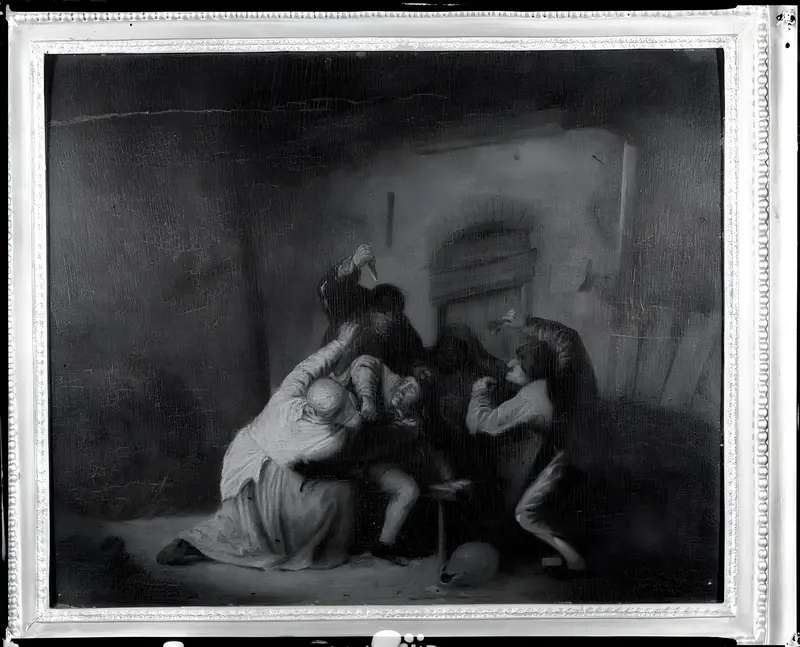
Peasants Brawling in a Tavern
Adriaen van Ostade
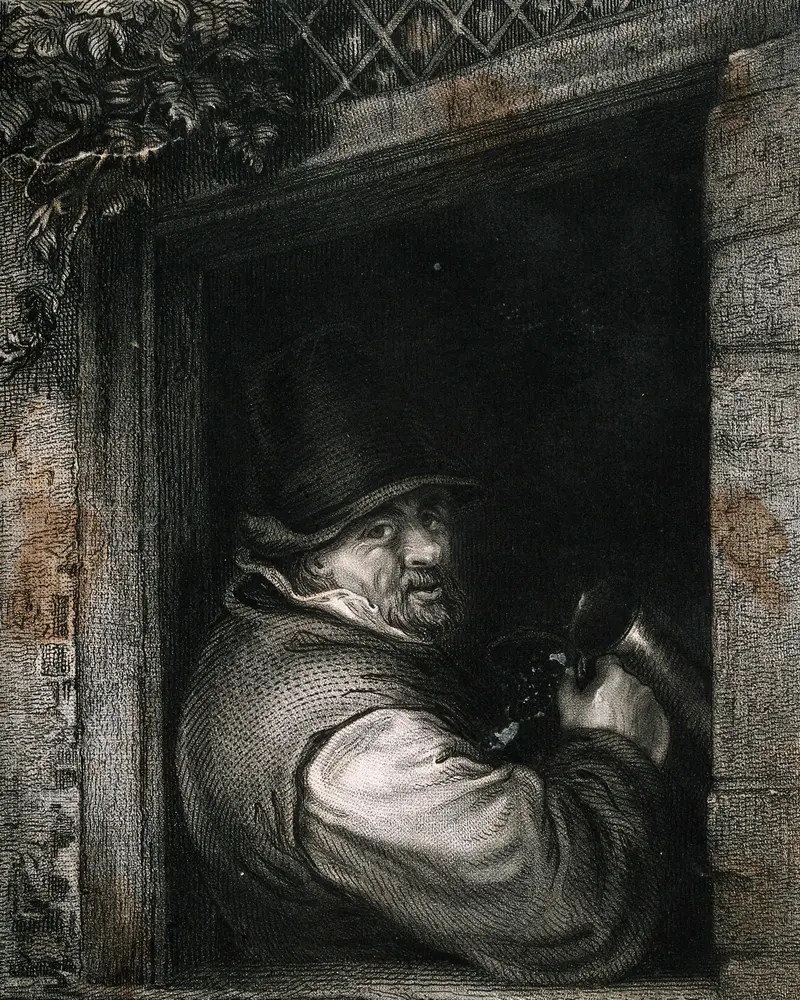
Man with a Tankard at a Window
Adriaen van Ostade
Dans in de herberg
Adriaen van Ostade
More Genre Scene Art

Banquet of the Officers of the St George Civic Guard
Frans Hals

Rembrandt and Saskia in the Scene of the Prodigal Son
Rembrandt van Rijn

Bal du moulin de la Galette
Pierre-Auguste Renoir

Quadrille at the Moulin Rouge
Henri de Toulouse-Lautrec

A Burial at Ornans
Gustave Courbet

When Will You Marry?
Paul Gauguin