
Peasants sitting and drinking in a barn with a dog — History & Facts
What first catches the eye is the hush of companionship: three peasants gathered in a rough barn, their bodies slouched and easy, a dog curled at their feet, as if time itself has slowed to match the rhythm of their drinking. The painter, Adriaen van Ostade, draws you into the heart of this dim interior not with spectacle, but with the warm, golden pool of light that falls on the men and their makeshift table—a barrel pressed into service for the evening. Each gesture is a clue: the man at left, slumped and heavy-lidded, seems lost in his cups; the central figure leans in, elbow on knee, mouth open as if mid-story or jest; the third, more upright, listens with a half-smile, jug in hand.
The dog, a silent observer, anchors the scene in the everyday, while the fourth figure at right, half in shadow and turned away, hints at the unspoken stories that linger at the edges of such gatherings. This is the world of mid-seventeenth-century Dutch genre painting, where artists like van Ostade found poetry in the humble rituals of peasant life. Painted in 1650, this work belongs to a tradition that flourished in the bustling towns of the Dutch Republic, where a new class of urban collectors hung such scenes in their homes, delighting in the familiar and the comic. These paintings were not grand commissions for palaces, but intimate glimpses into the pleasures and hardships of ordinary folk—sometimes moralizing, sometimes affectionate, always attentive to the textures of daily existence.
History has kept few traces of this specific painting’s journey, but its survival in a modern collection invites us to linger in that patch of golden light, to share for a moment in the laughter and weariness of a vanished world.
More Artworks by Adriaen van Ostade

Dans in de herberg
Adriaen van Ostade
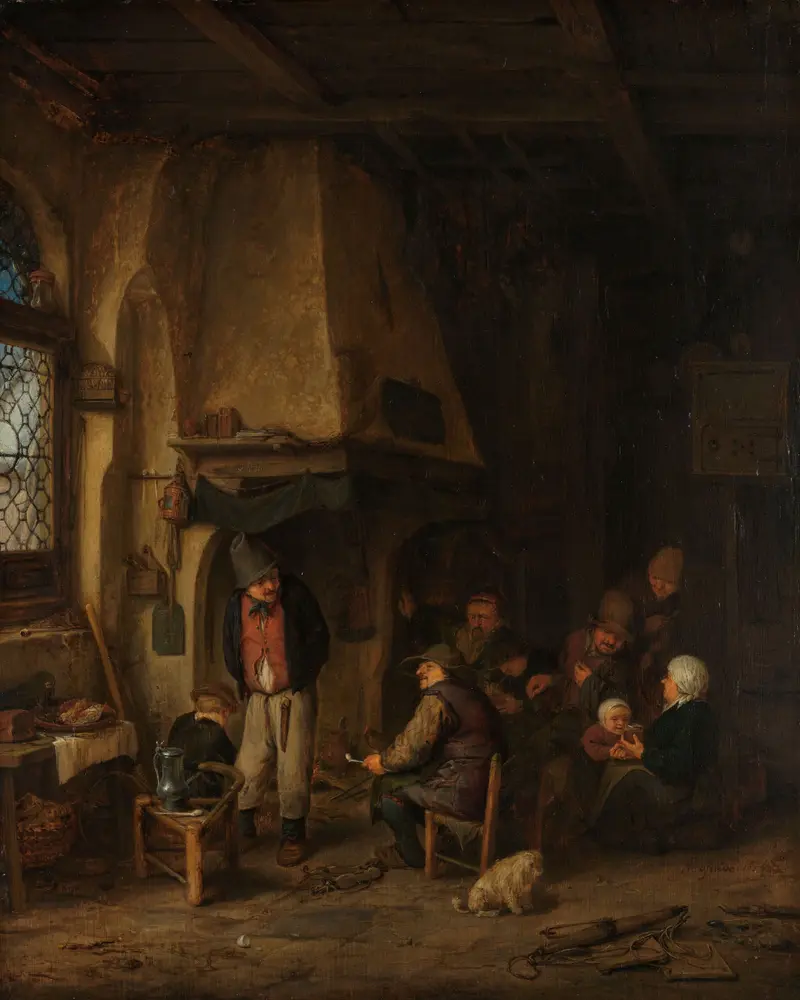
‘The Skaters’: Peasants in an Interior
Adriaen van Ostade
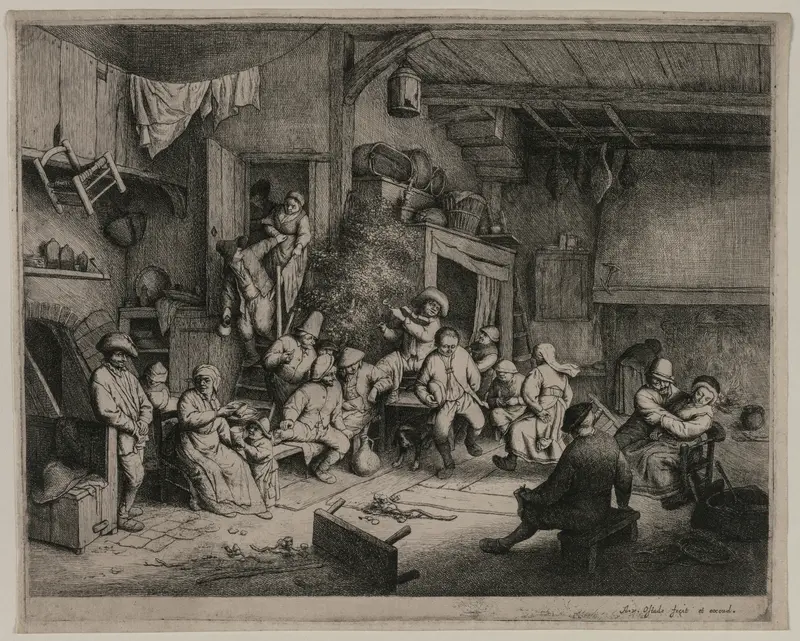
Dance at the Inn
Adriaen van Ostade
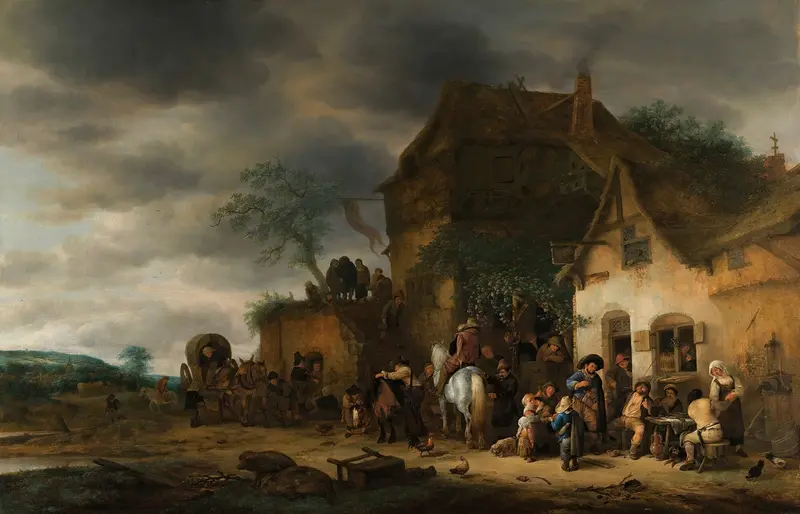
Travellers Halted At A Country Inn
Adriaen van Ostade
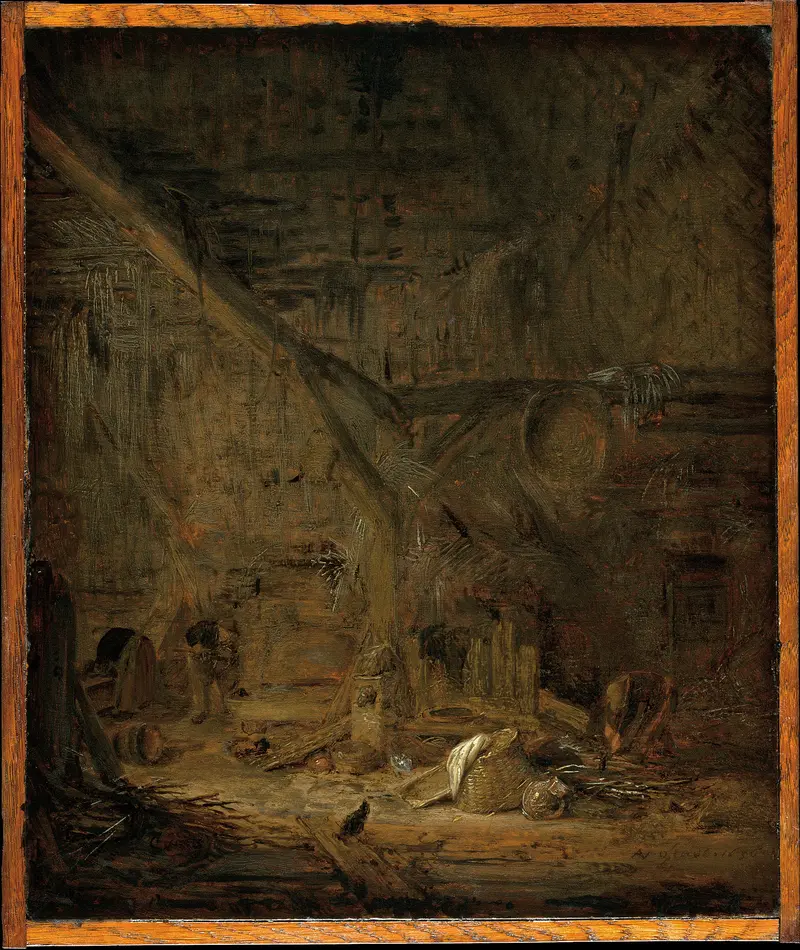
Interior of a Barn
Adriaen van Ostade
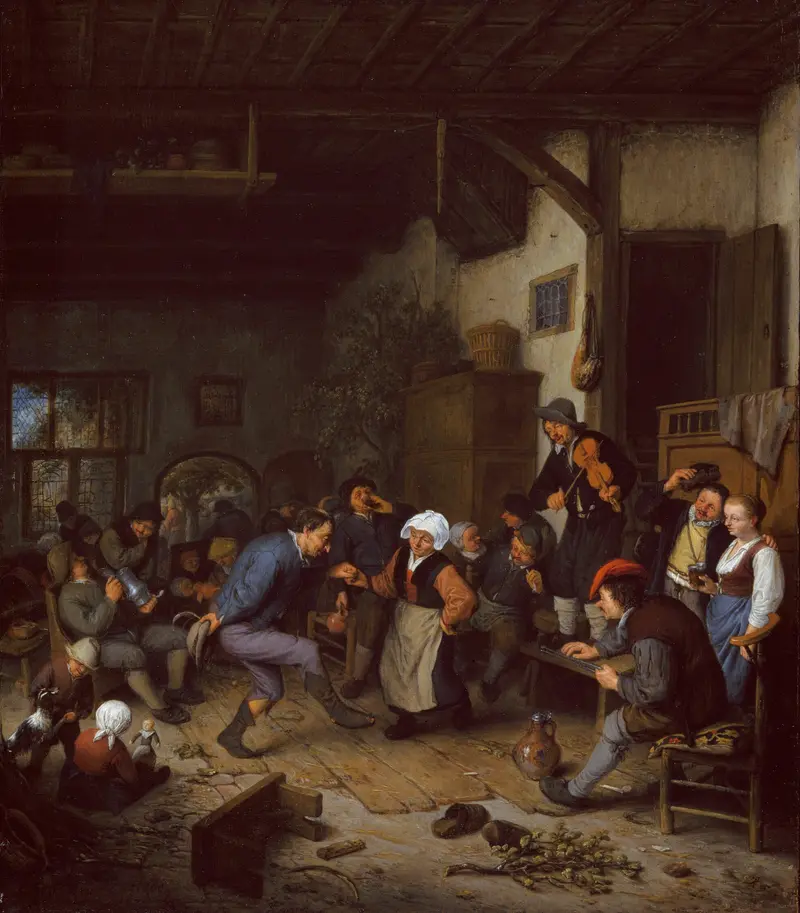
Merrymakers in an Inn
Adriaen van Ostade
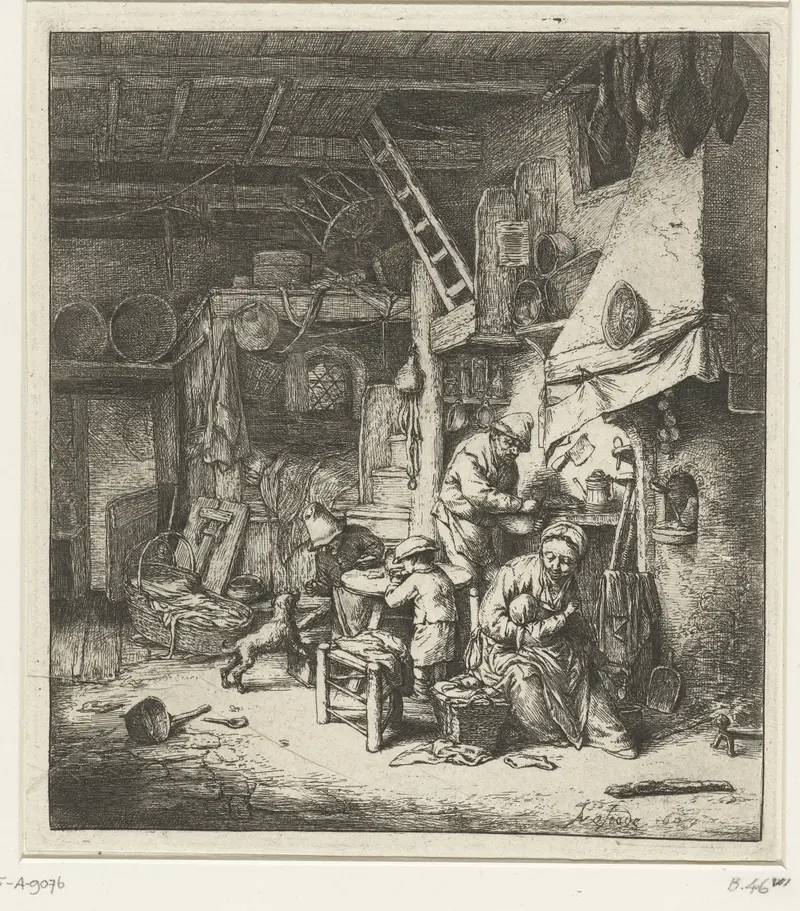
Boerengezin in interieur
Adriaen van Ostade
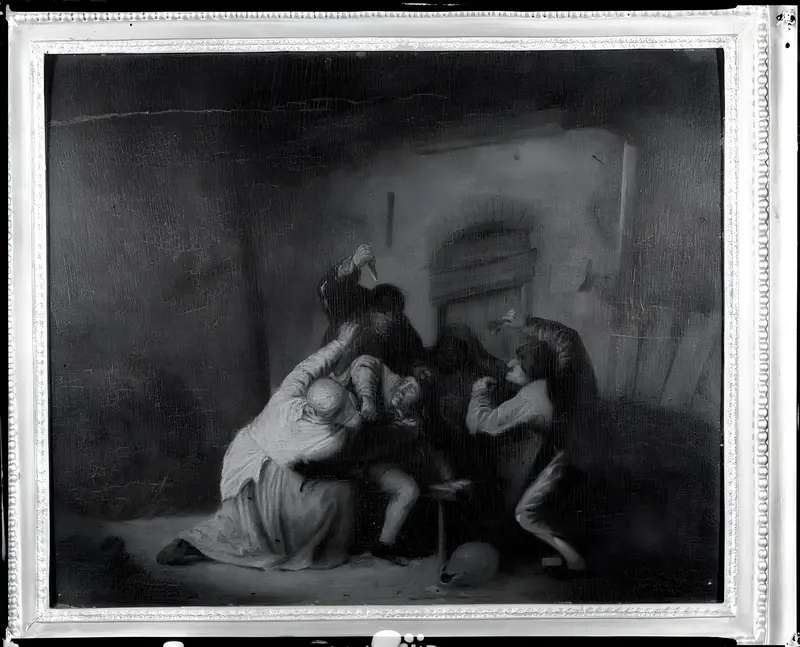
Peasants Brawling in a Tavern
Adriaen van Ostade
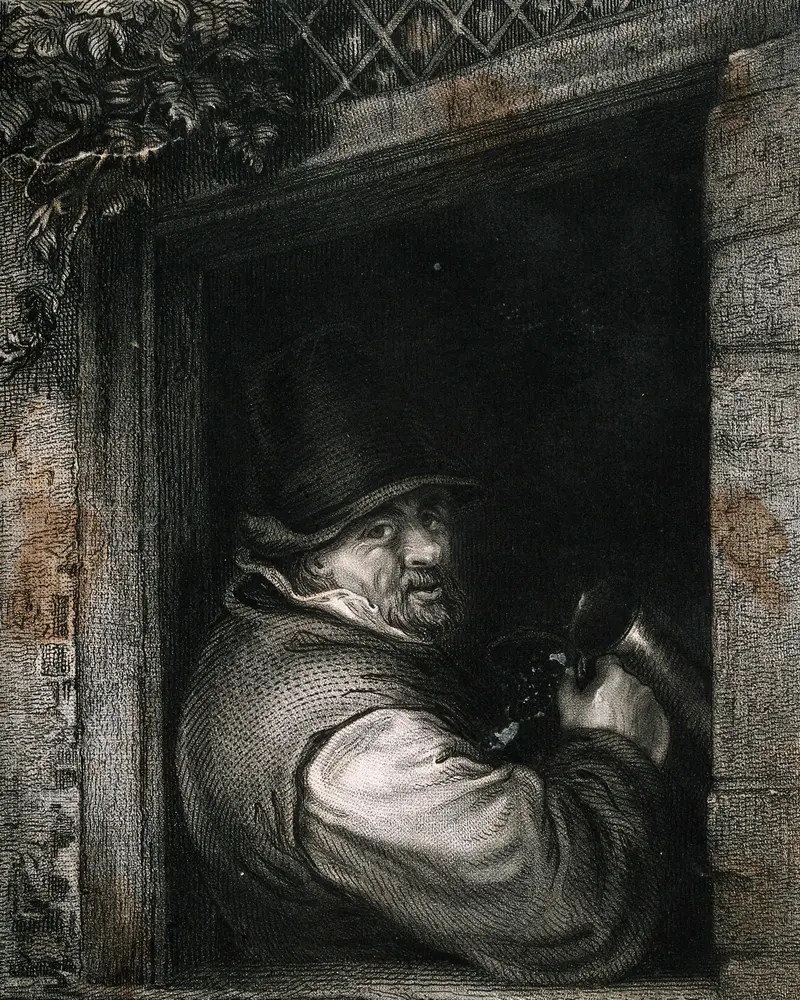
Man with a Tankard at a Window
Adriaen van Ostade
Dans in de herberg
Adriaen van Ostade
More Genre Scene Art

Banquet of the Officers of the St George Civic Guard
Frans Hals

Rembrandt and Saskia in the Scene of the Prodigal Son
Rembrandt van Rijn

Bal du moulin de la Galette
Pierre-Auguste Renoir

Quadrille at the Moulin Rouge
Henri de Toulouse-Lautrec

A Burial at Ornans
Gustave Courbet

When Will You Marry?
Paul Gauguin