
Peasants with Cattle by a Ruin — History & Facts
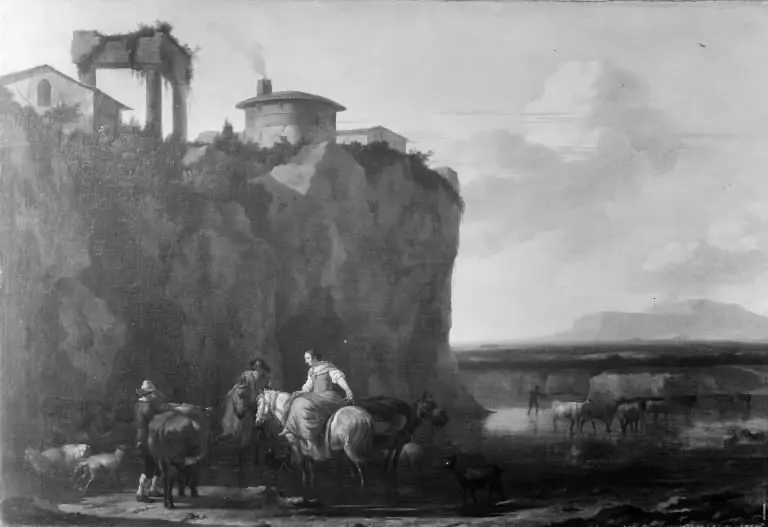
A shaft of late afternoon light cuts across the scene, drawing your eye to the quiet conversation between two peasants and their patient animals. The ruined arches behind them, half-swallowed by shadow and creeping ivy, speak of a world that has passed, yet life continues in the foreground: a woman stands with her back to us, skirt bright against the earth, while a man crouches to tend a flock of sheep. Every animal, from the resting cow to the alert goat, seems to have its own small story, their calm presence anchoring the mood.
The sky, heavy with clouds, presses down and yet opens into a distant blue, hinting at a wider world beyond the crumbling stone and tangled branches. The bare tree on the right, its limbs reaching into the air, echoes the ruins’ lost grandeur, while the animals’ soft forms promise warmth and continuity. Painted between around 1665 and 1690, this work belongs to a moment when Dutch and Flemish artists delighted in scenes of rural life, blending observation with a touch of the theatrical. Such landscapes were prized by city dwellers who longed for the imagined peace of the countryside, and collectors hung them in homes as reminders of nature’s rhythms and the dignity of humble labor.
Abraham Jansz. Begeyn was known for weaving Italianate light and classical ruins into his northern scenes, a fashion that reflected both nostalgia and curiosity about the ancient world. Today, the painting resides in the National Gallery, its quiet drama inviting viewers to step into a world where the ruins of history and the routines of daily life meet beneath a restless sky.
More Artworks by Abraham Jansz. Begeyn

Landscape with people and cattle
Abraham Jansz. Begeyn
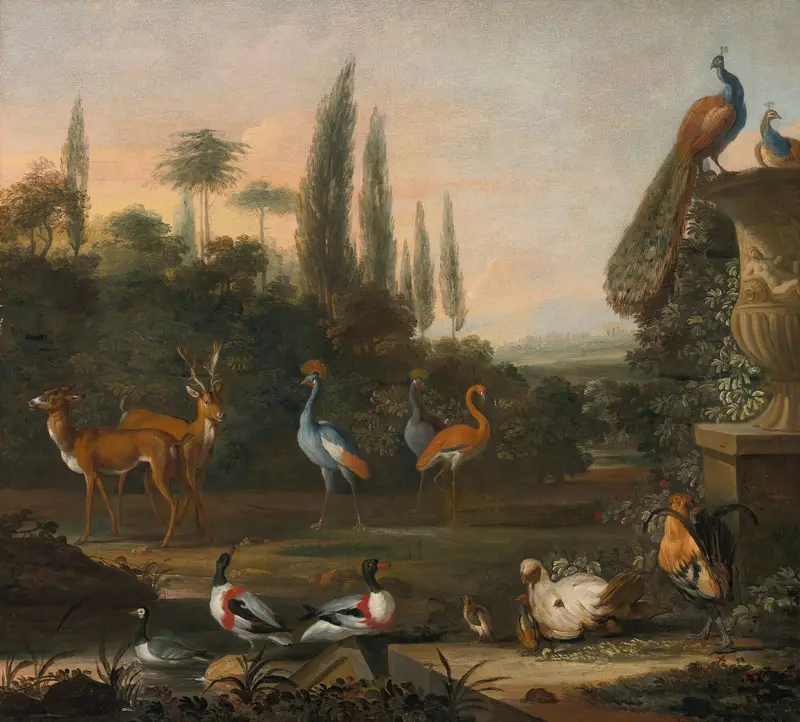
Landscape with deer and exotic birds
Abraham Jansz. Begeyn
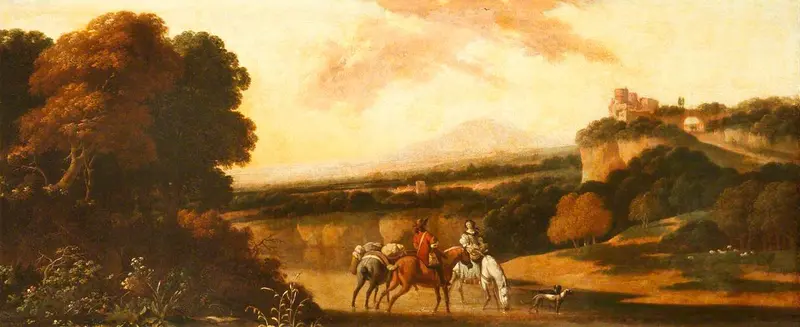
Landscape with Travellers
Abraham Jansz. Begeyn
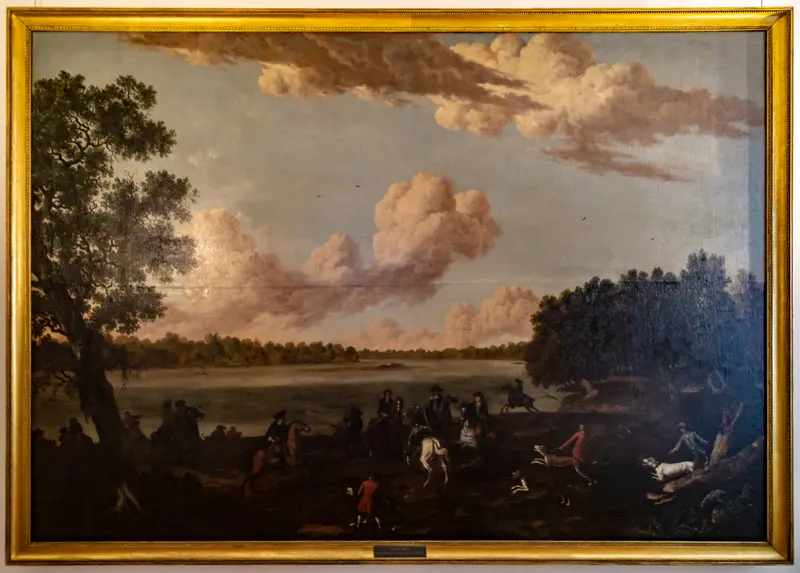
Prince Elector Frederick III of Prussia hunting at the Havel
Abraham Jansz. Begeyn
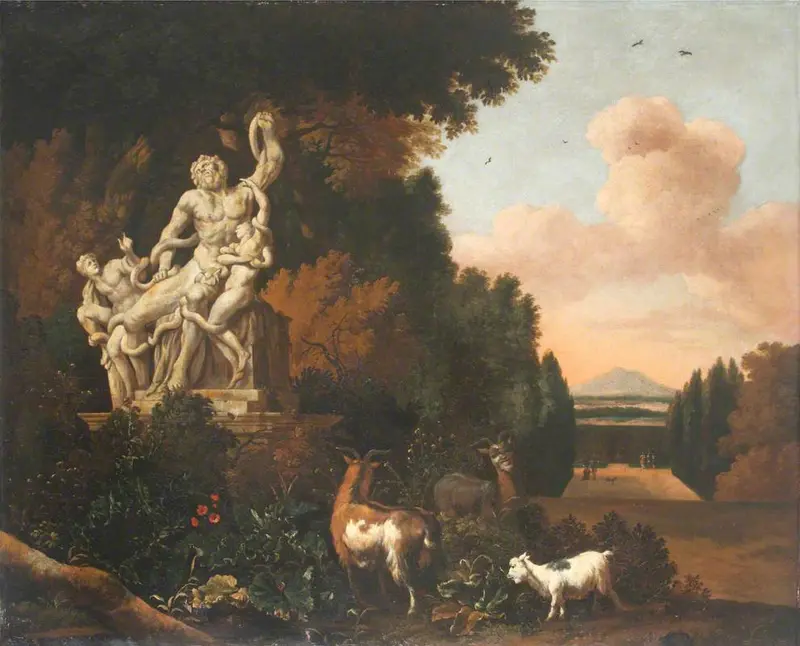
Landscape with Goats and a Statue of Laocoön
Abraham Jansz. Begeyn
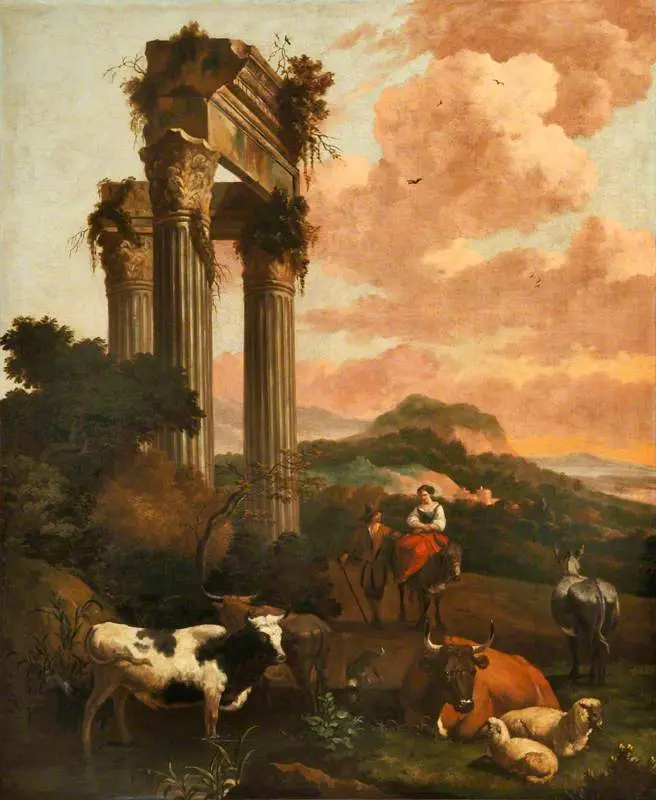
Landscape with Figures, Cattle and Sheep among Classical Ruins
Abraham Jansz. Begeyn
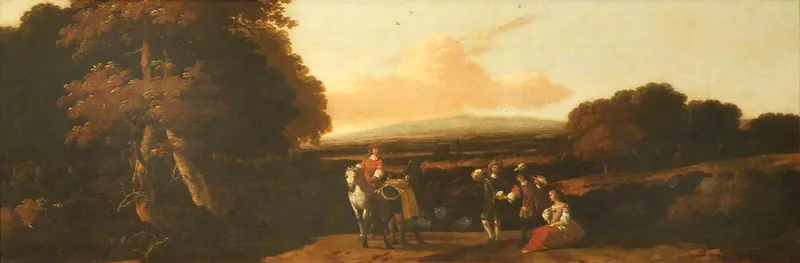
Landscape with Figures on a Road
Abraham Jansz. Begeyn
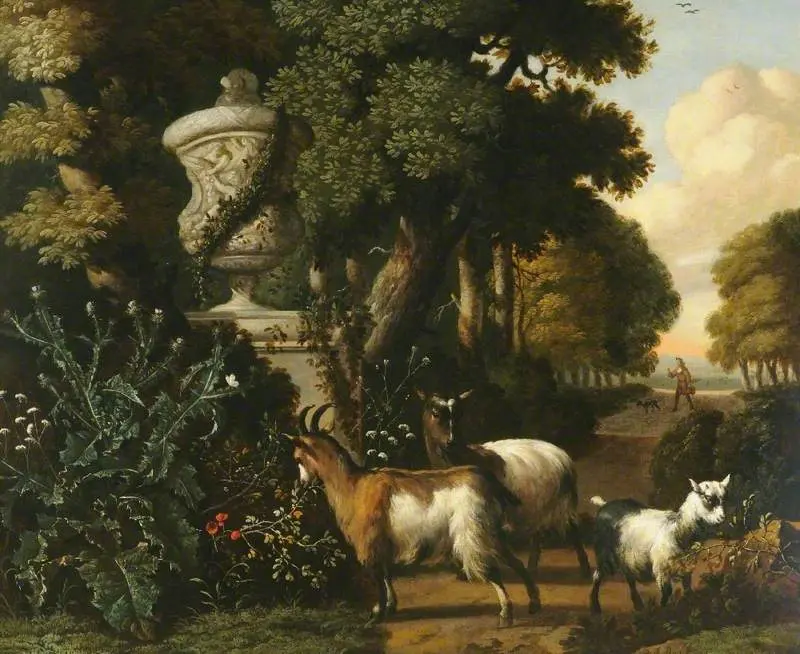
Landscape with Goats
Abraham Jansz. Begeyn
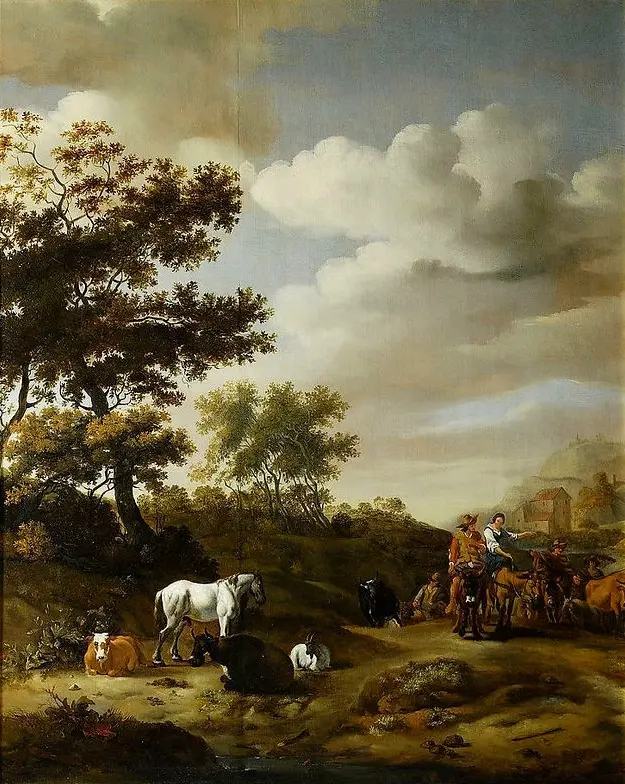
Landscape with travelers and cattle.
Abraham Jansz. Begeyn
The Ford
Abraham Jansz. Begeyn
More Genre Scene Art

Banquet of the Officers of the St George Civic Guard
Frans Hals

Rembrandt and Saskia in the Scene of the Prodigal Son
Rembrandt van Rijn

Bal du moulin de la Galette
Pierre-Auguste Renoir

Quadrille at the Moulin Rouge
Henri de Toulouse-Lautrec

A Burial at Ornans
Gustave Courbet

When Will You Marry?
Paul Gauguin