
Picture with Pince-nez — History & Facts
A single, searching eye dominates the swirling chaos of Picture with Pince-nez, pulling the viewer into a world where forms seem to invent themselves as you look. The painting’s energy is restless: lines dart and spiral, colors bleed and collide, and the suggestion of a pince-nez—a pair of spectacles—floats amid the tumult, half-concealed, half-revealed. Kandinsky’s marks are both playful and anxious, as if he is mapping the interior of a mind at the very instant of seeing.
The eye, ringed with yellow and black, becomes a vortex, drawing the surrounding fragments—faces, hands, and architectural hints—into its orbit. Every detail seems to flicker between abstraction and recognition, inviting the viewer to complete the story. Created in 1912, this work belongs to a moment when artists like Wassily Kandinsky were pushing painting to its limits, searching for a visual language that could rival music in its power to express the invisible. The early 20th century was a time of upheaval and invention, and Kandinsky, working in the ferment of pre-war Europe, helped pioneer abstract art.
Paintings like this were rarely made for grand salons or aristocratic patrons; instead, they were acts of personal exploration, often shared among a small circle of avant-garde peers. History has kept few traces of the specific journeys of works like Picture with Pince-nez, but its restless forms and colors still speak directly to the uncertainties and possibilities of its age—urging us, even now, to look again.
More Artworks by Wassily Kandinsky

Improvisation 35
Wassily Kandinsky
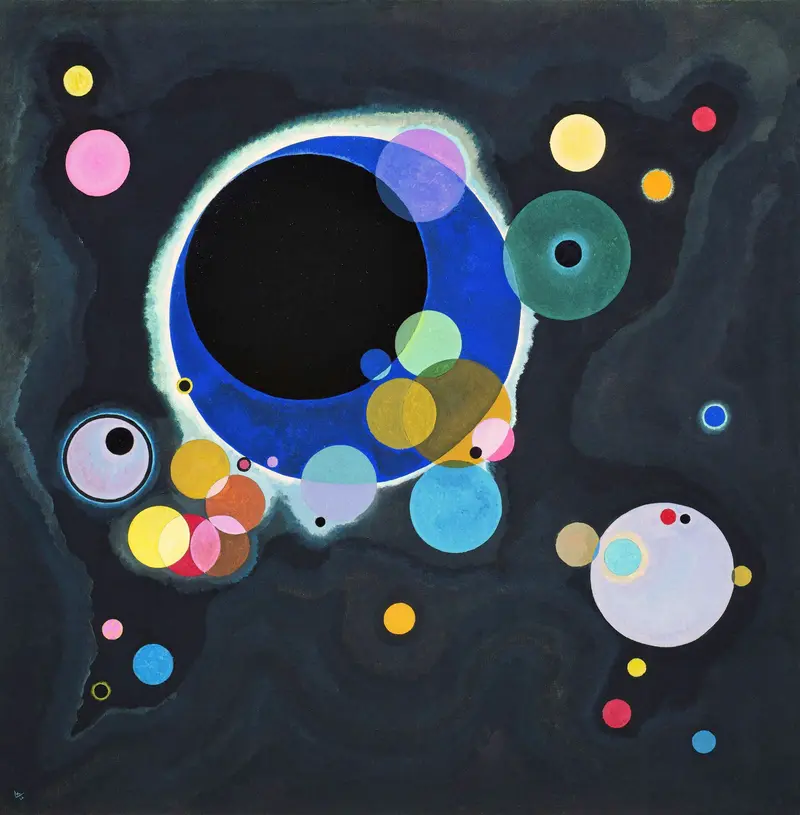
Several Circles
Wassily Kandinsky
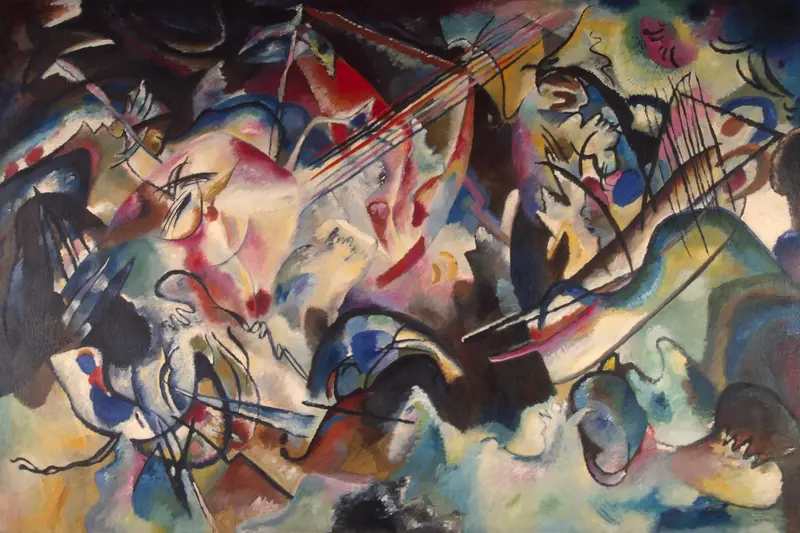
Composition VI
Wassily Kandinsky
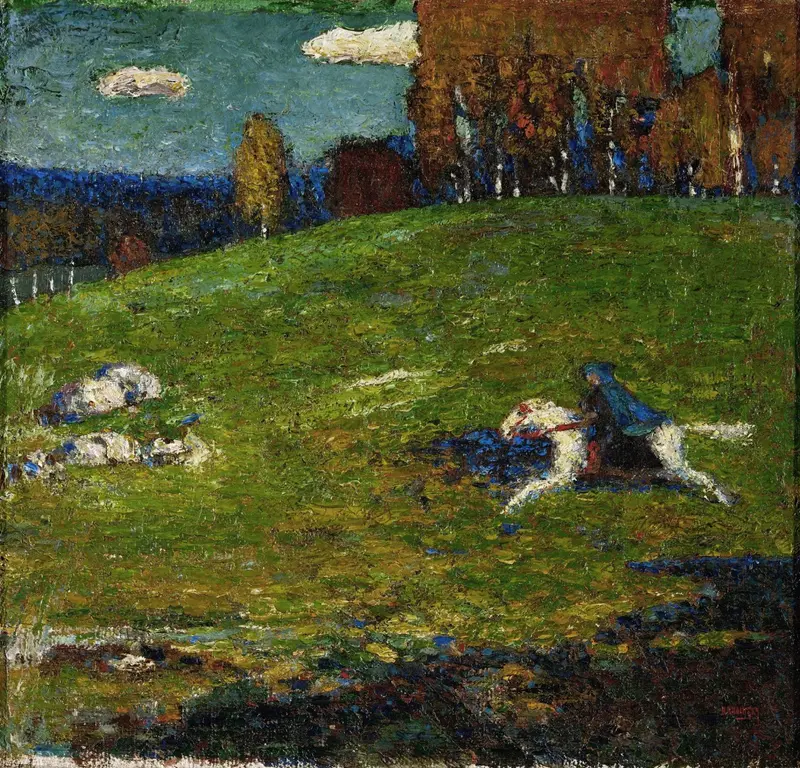
The Blue Rider
Wassily Kandinsky

Murnau
Wassily Kandinsky
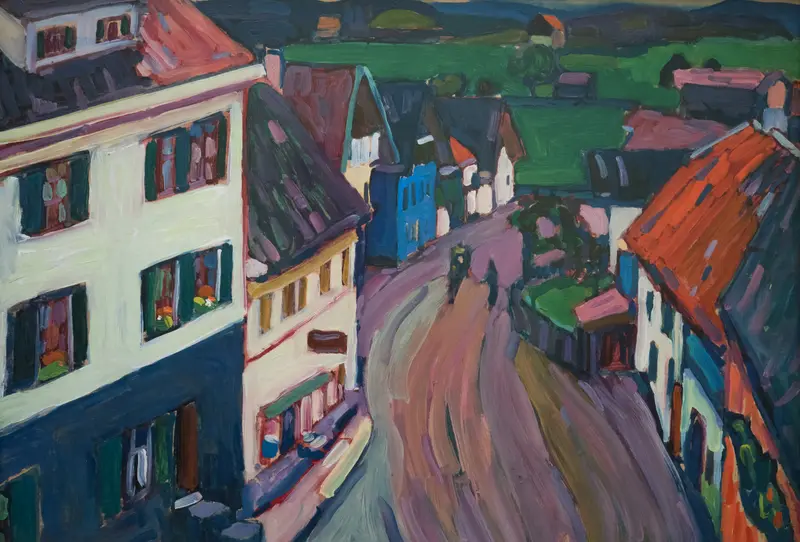
Murnau – View from the window of the Griesbräu
Wassily Kandinsky
Green Lane in Murnau
Wassily Kandinsky
Jocular Sounds
Wassily Kandinsky

Zubovsky Platz
Wassily Kandinsky

Landscape with a yellow field
Wassily Kandinsky




