
Pier of Bercy (Embarcadere, quai de Bercy) — History & Facts
What first draws the eye in Pier of Bercy (Embarcadere, quai de Bercy) is the gentle choreography of daily life along the river’s edge. The artist, Auguste Lepère, invites us to linger with the figures clustered on the bench under the shade of a tree, some lost in thought, others in conversation, and a mother sheltering her child beneath an umbrella. The composition pulls us onward, past the bustling pier where passengers gather, to the riverboat poised for departure.
The delicate, almost tactile lines of the etching lead the gaze from the textured water to the distant bridge, where the city recedes into a haze, giving the scene both intimacy and breadth. Every gesture—a figure leaning forward, a child perched at the water’s edge—signals a moment suspended between leisure and movement, the ordinary rendered quietly luminous. Created in 1891, this work belongs to a period when artists across France turned their attention to the changing rhythms of urban life and the riverbanks that shaped it. The late nineteenth century saw the rise of the modern city, and with it, a fascination for scenes of public gathering and fleeting encounters.
Lepère, known for his sensitive prints and views of Paris, captures not just a place but a mood—one shaped by both the promise of industrial progress and the enduring pleasures of riverside repose. While little is recorded about the specific journey of this sheet, its presence today in the National Gallery of Art’s collection is a testament to the enduring appeal of such scenes, which invite us to step into the flow of another era and watch the world go by.
More Artworks by Auguste Lepère

Le Pont-Neuf (Paris)
Auguste Lepère
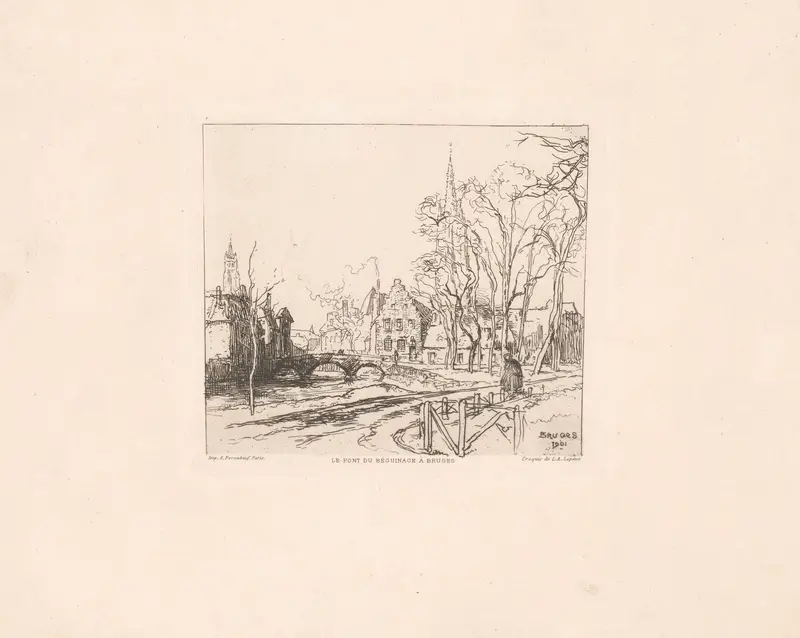
Le pont du Beguinage à Bruges
Auguste Lepère
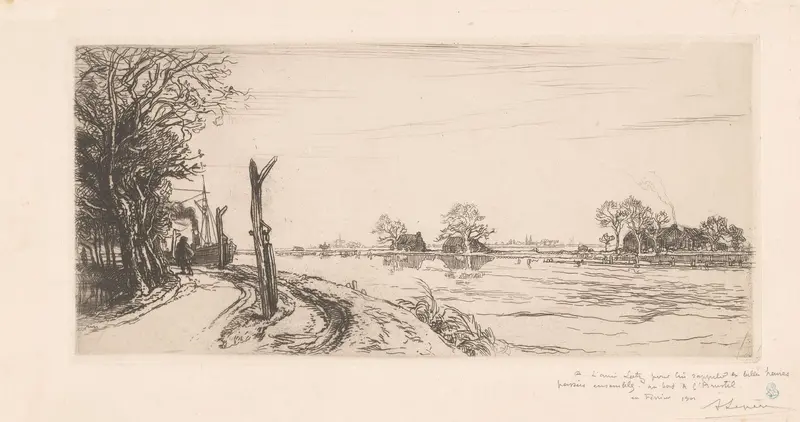
Au bord de l’Amstel
Auguste Lepère
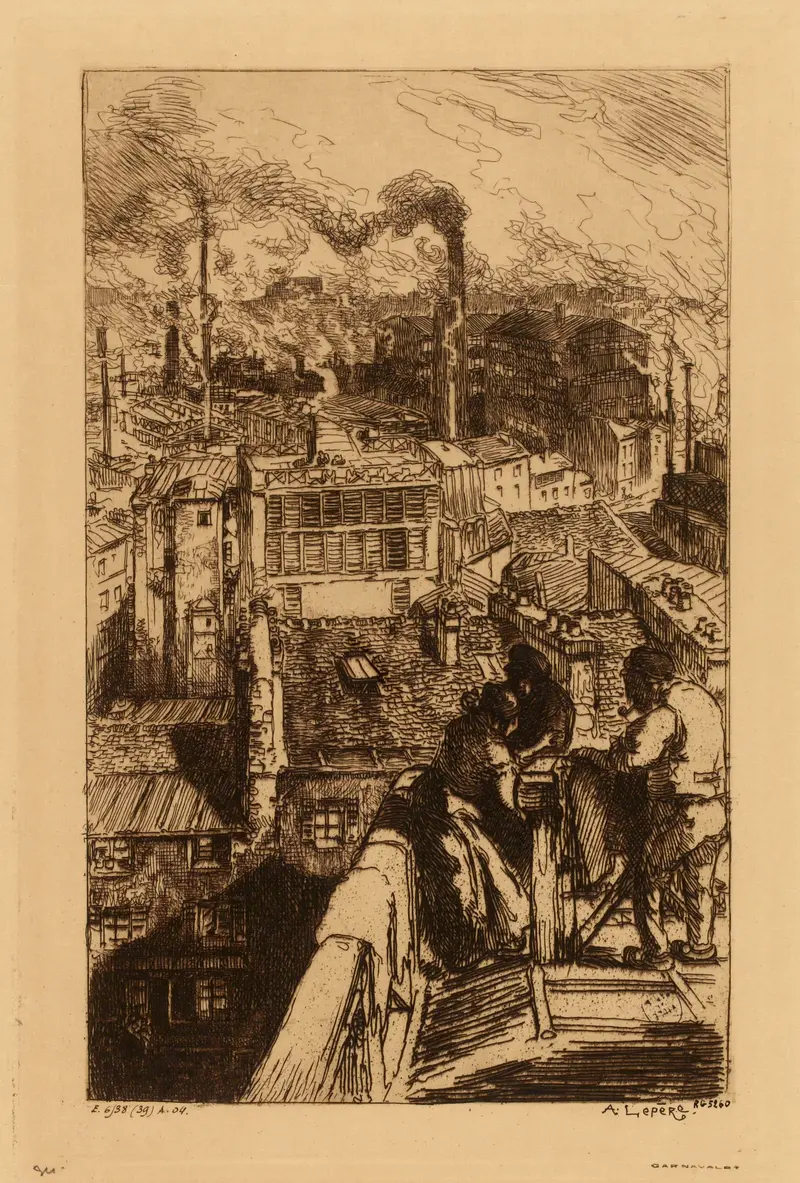
Le quartier des Gobelins
Auguste Lepère
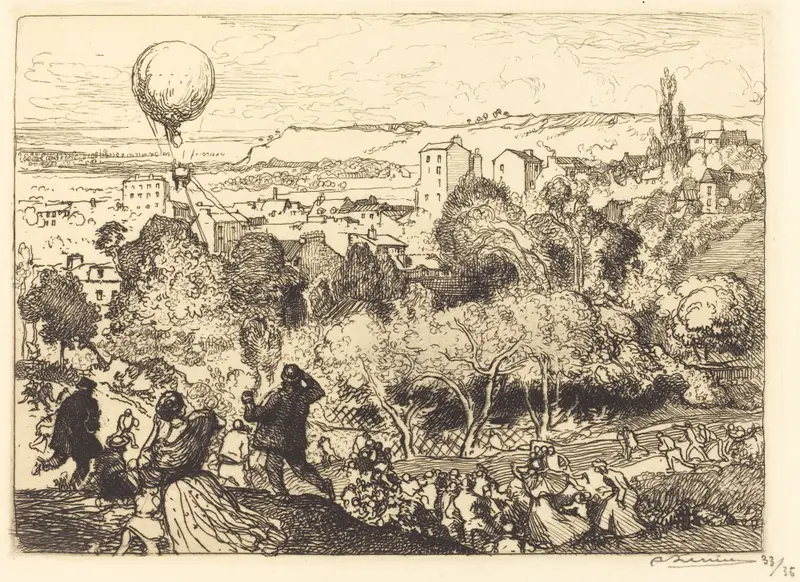
The Falling Balloon, in Pre-Saint-Gervais (Lebaloon qui tombe, au Pre-Saint-Gervais)
Auguste Lepère
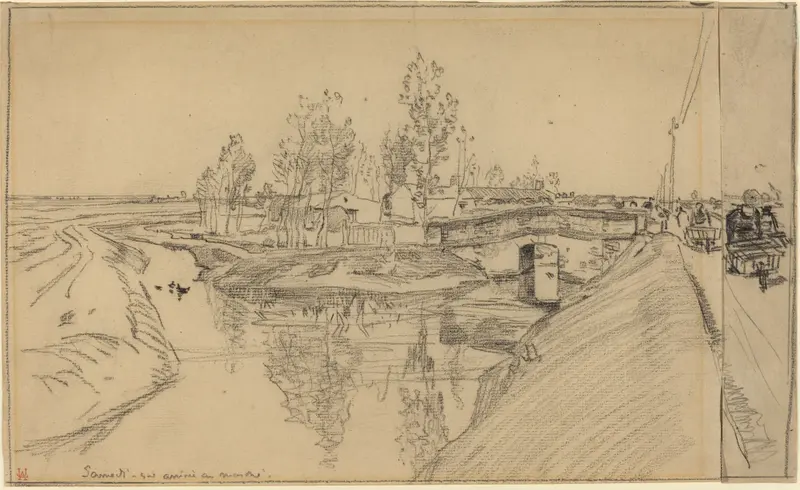
Arrivee au Marche
Auguste Lepère
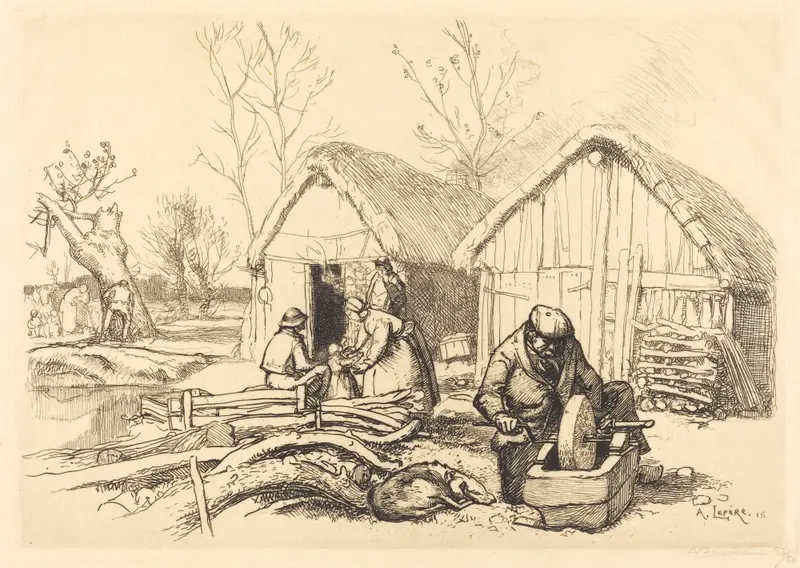
The House of the Woodcutter, Vendee (La maison du bucheron, Vendee)
Auguste Lepère
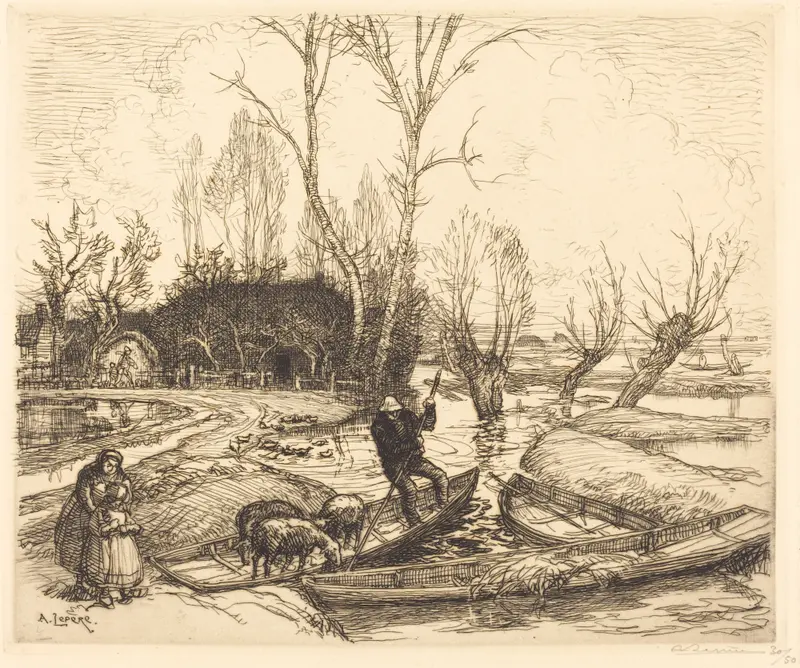
In the Deluged Marsh - The Shepherd (Au marais inonde - Le berger)
Auguste Lepère
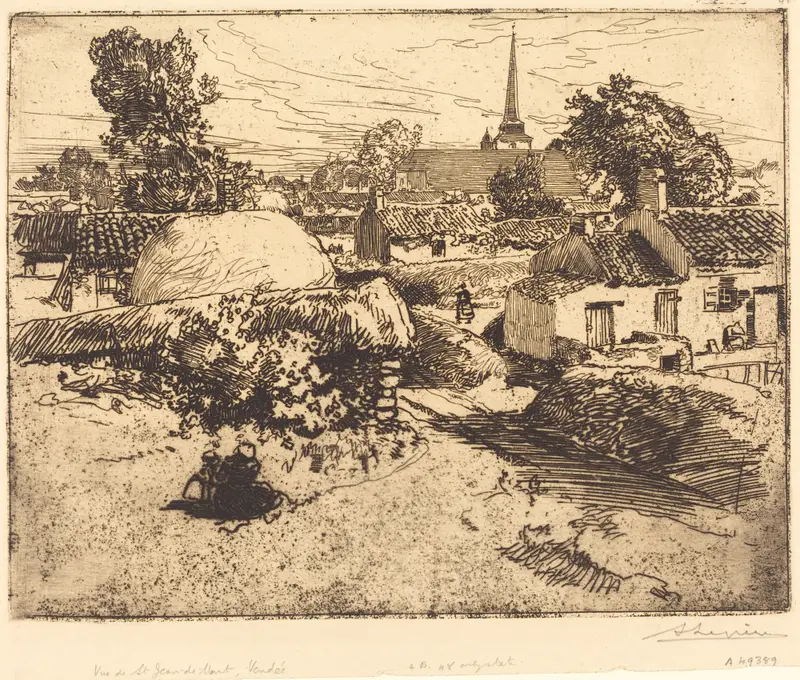
View of St.-Jean-de-Mont, Vendee (Vue de St.-Jean-de-Mont, Vendee)
Auguste Lepère
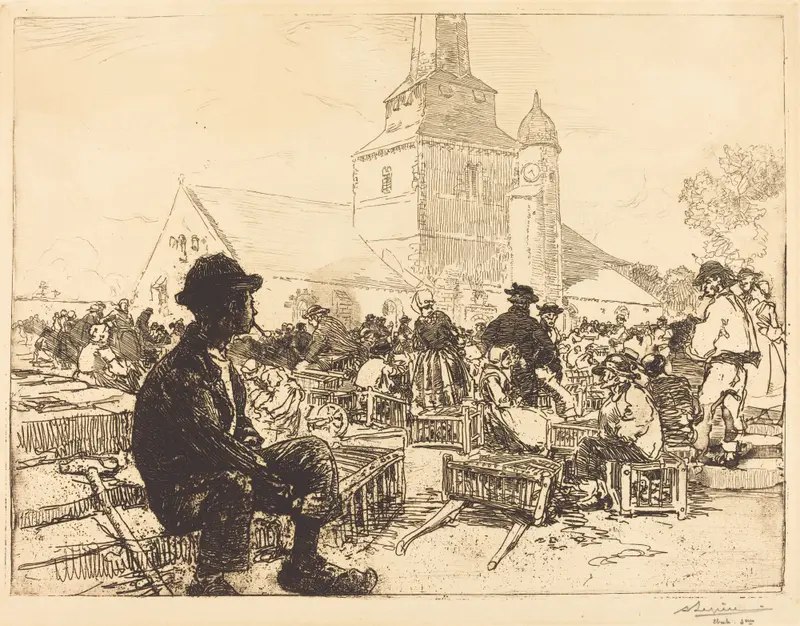
Poultry Market at St.-Jean-de-Mont (Marche a la volaille, a St.-Jean-de-Mont)
Auguste Lepère
More Genre Scene Art

Banquet of the Officers of the St George Civic Guard
Frans Hals

Rembrandt and Saskia in the Scene of the Prodigal Son
Rembrandt van Rijn

Bal du moulin de la Galette
Pierre-Auguste Renoir

Quadrille at the Moulin Rouge
Henri de Toulouse-Lautrec

A Burial at Ornans
Gustave Courbet

When Will You Marry?
Paul Gauguin