
Pissende ooi en schaap — History & Facts
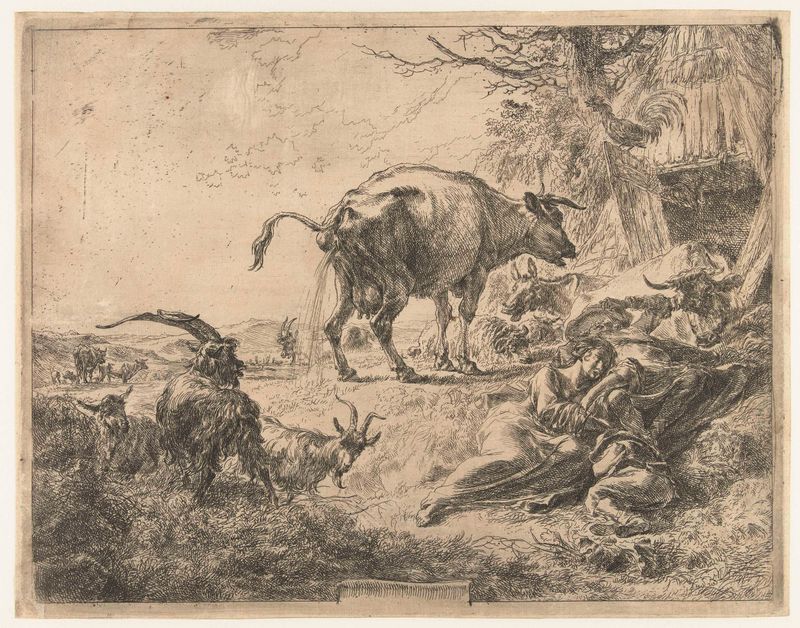
What if silence could speak through light? In the delicate interplay between shadow and illumination, the essence of rebirth emerges, echoing the quiet transformations of nature. Look to the center of the canvas, where soft hues of green and golden browns intertwine like whispers in the wind. The sheep, seemingly unaware of their surroundings, embody a tranquil elegance, while the pastoral landscape unfolds around them, inviting the eye to wander. Notice how the gentle light filters through the delicate foliage, casting a serene glow on the woolly coats, emphasizing their purity and innocence. Yet beneath this serene surface lies a rich tapestry of contrasts.
The placid animals, set against the backdrop of burgeoning life, evoke themes of fertility and renewal. The juxtaposition of the robust, solid sheep with the ethereal quality of the light suggests a deeper dialogue about the cyclical nature of existence. One can almost sense the promise of new beginnings in the quietude of this moment. During the years 1646 to 1652, Berchem produced Pissende ooi en schaap amidst a flourishing art scene in the Netherlands, characterized by its celebration of pastoral beauty.
Influenced by the rise of landscape painting and a burgeoning interest in naturalism, he found himself at the intersection of tradition and innovation. This work not only reflects his mastery of light and color but also his ability to capture the profound simplicity of life’s quiet moments.
More Artworks by Nicolaes Pietersz Berchem
Browse all →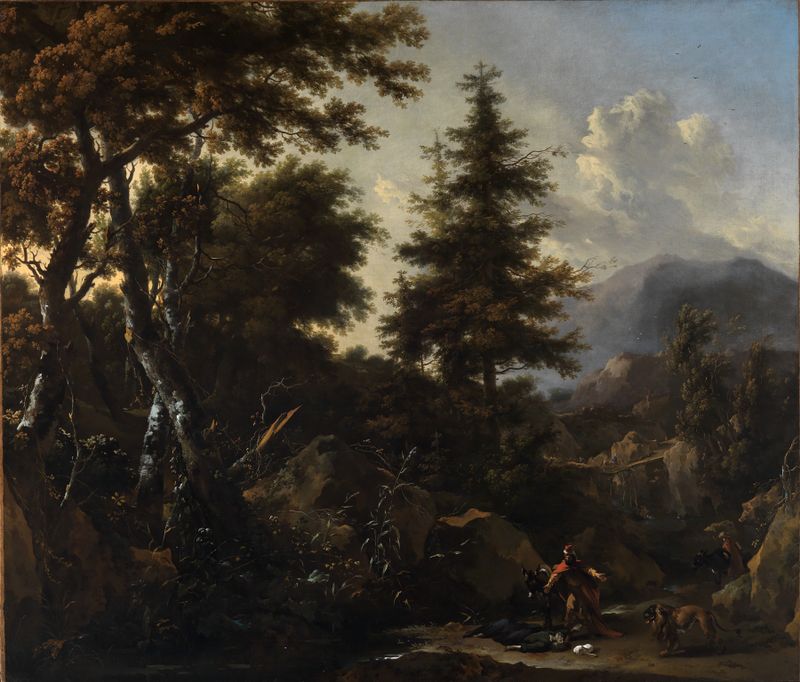
Schlucht im Bergwald mit alttestamentlicher Staffage
Nicolaes Pietersz Berchem
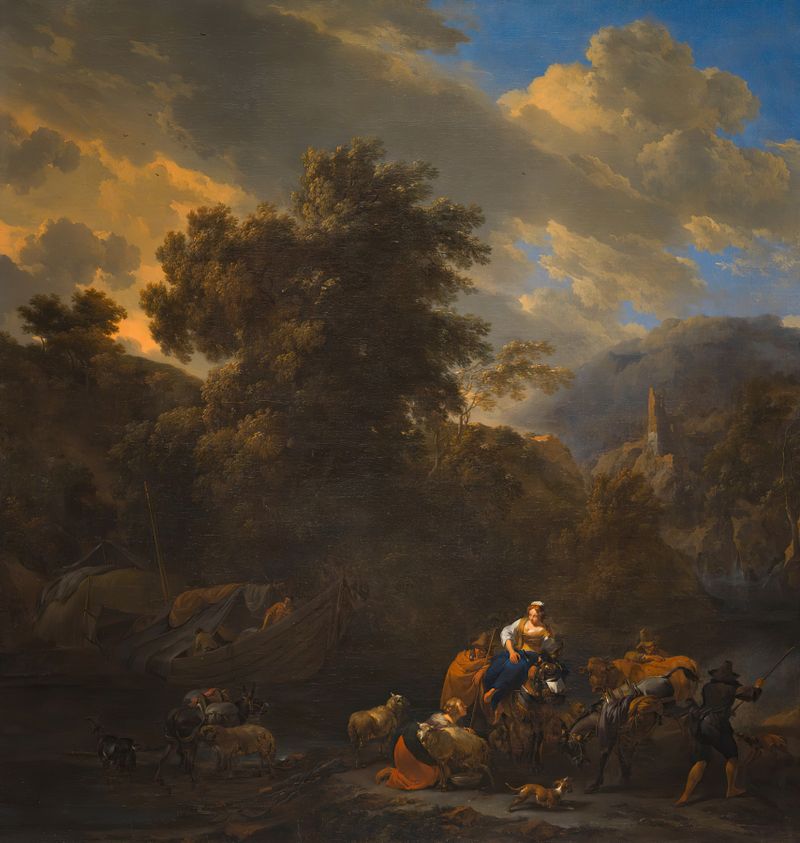
Italianate Landscape with Figures and Pack Animals on the Banks of a River
Nicolaes Pietersz Berchem
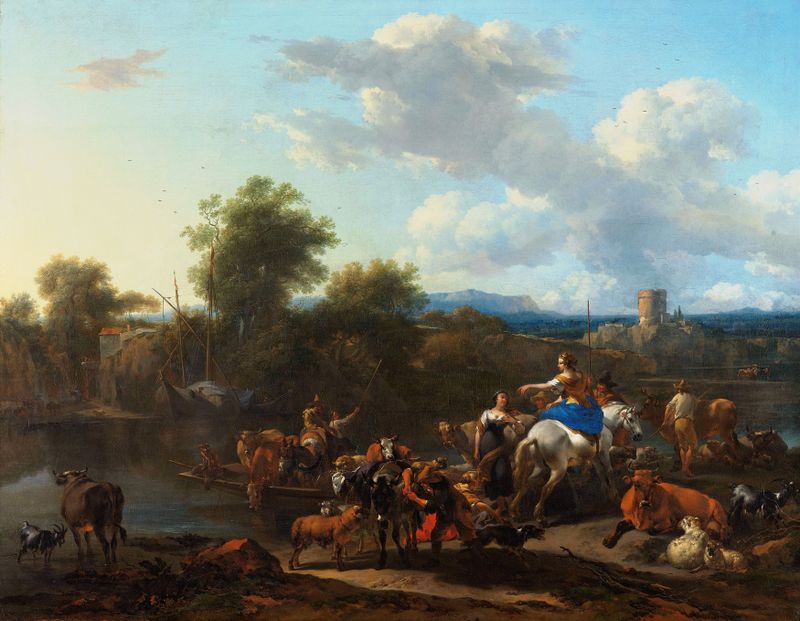
The Cattle Ferry
Nicolaes Pietersz Berchem
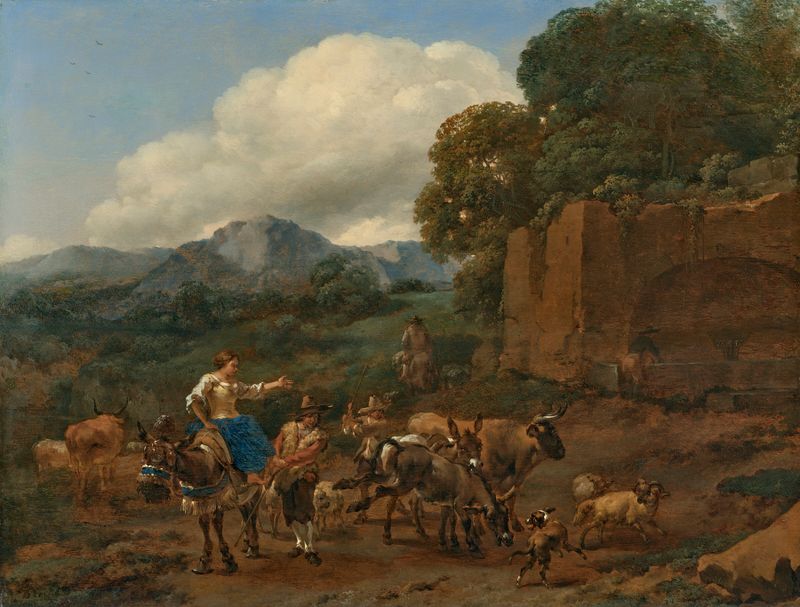
An Italianate landscape with a shepherdess on a mule and a shepherd, herding cattle, sheep, donkeys and dogs on a mountain track next to ruins
Nicolaes Pietersz Berchem
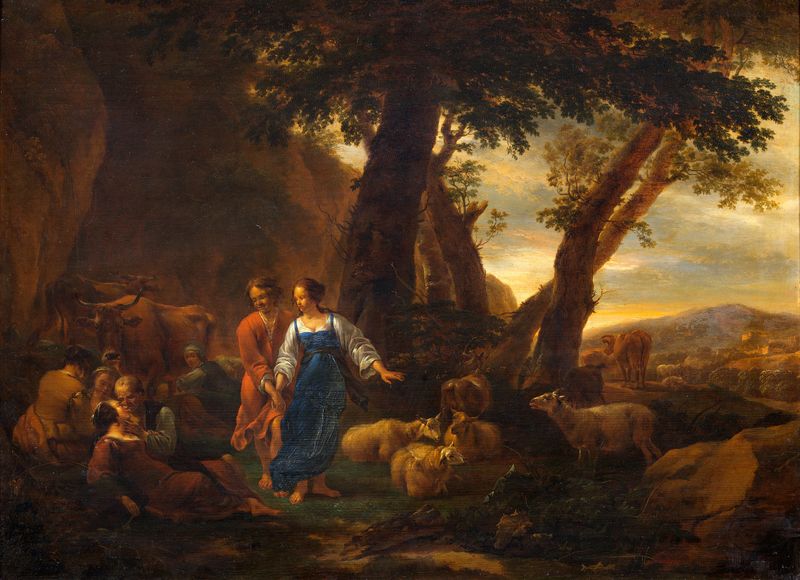
Landscape with Peasants and Cattle
Nicolaes Pietersz Berchem
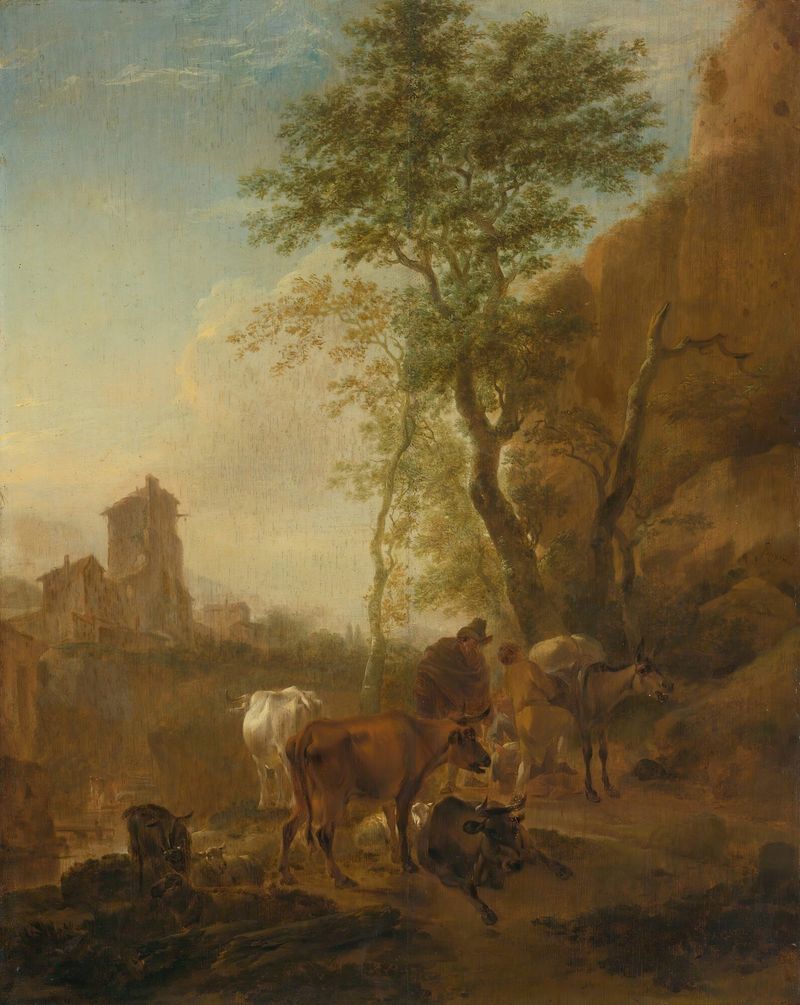
Italianate Landscape With Cows
Nicolaes Pietersz Berchem
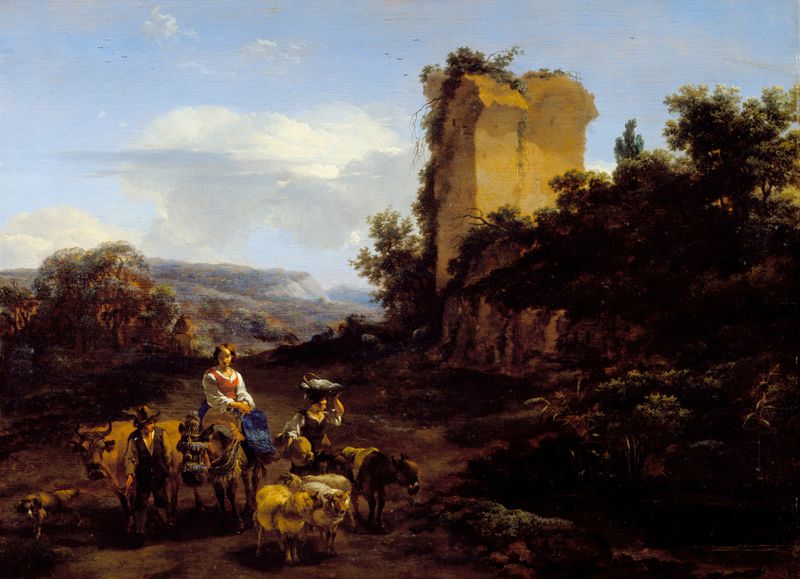
Landscape with Ruins and Travelers
Nicolaes Pietersz Berchem
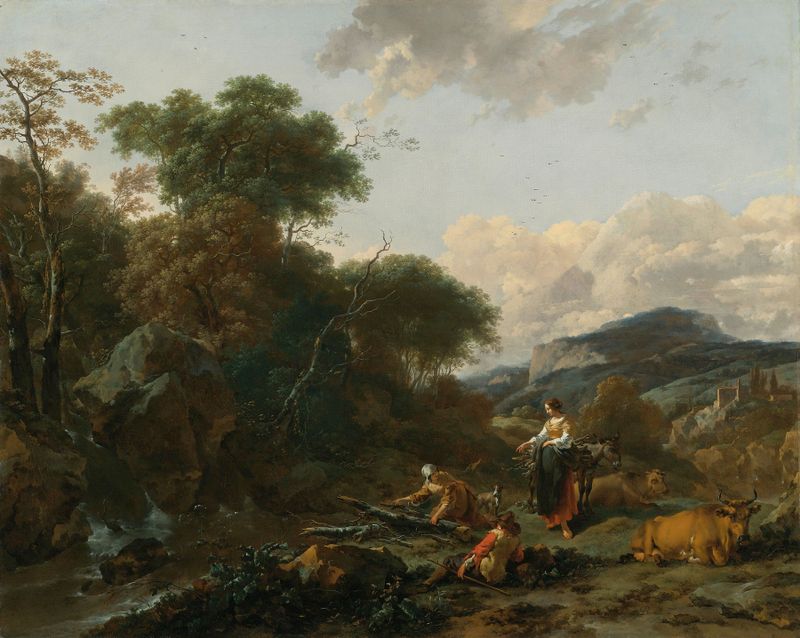
A Landscape With Figures
Nicolaes Pietersz Berchem
Slapende herdersfamilie en rustend vee
Nicolaes Pietersz Berchem
Ruins in Italy
Nicolaes Pietersz Berchem





