
Place du marché neuf. — History & Facts
Can beauty exist without sorrow? In Place du marché neuf, a vibrant marketplace reveals the delicate illusion of joy amidst the weight of unspoken narratives. Each figure, adorned in their daily garb, appears to dance through the scene, yet a subtle tension lingers just below the surface. Focus on the bustling center, where the warmth of natural light spills across the cobblestones, illuminating the lively interaction of vendors and customers. Notice how the artist employs soft brushwork to create a sense of movement, almost as if the figures could step out of the canvas.
The rich palette of colors invites your gaze to explore the harmonious composition, while the careful arrangement of stalls and people evokes the very essence of community life. Yet, within this lively tableau lies a poignant contrast. The vibrancy of the marketplace stands in stark relief against the shadowy corners, hinting at the struggles of those who participate in such commerce. The expressions on the faces may seem cheerful, but an undercurrent of fatigue weaves through their postures, suggesting that beneath the surface joy, there are lives burdened with unfulfilled hopes and dreams. Painted in Paris in 1810, this work embodies a transitional moment in Bénard's career as he navigated the evolving art scene following the upheaval of the French Revolution.
As neoclassicism gave way to romanticism, he sought to capture the everyday beauty of life while reflecting the complexities of existence. This piece not only showcases his technical prowess but also serves as a testament to the shared human experience—a dance between vibrant beauty and hidden sorrow.
More Artworks by Auguste-Sébastien Bénard
Browse all →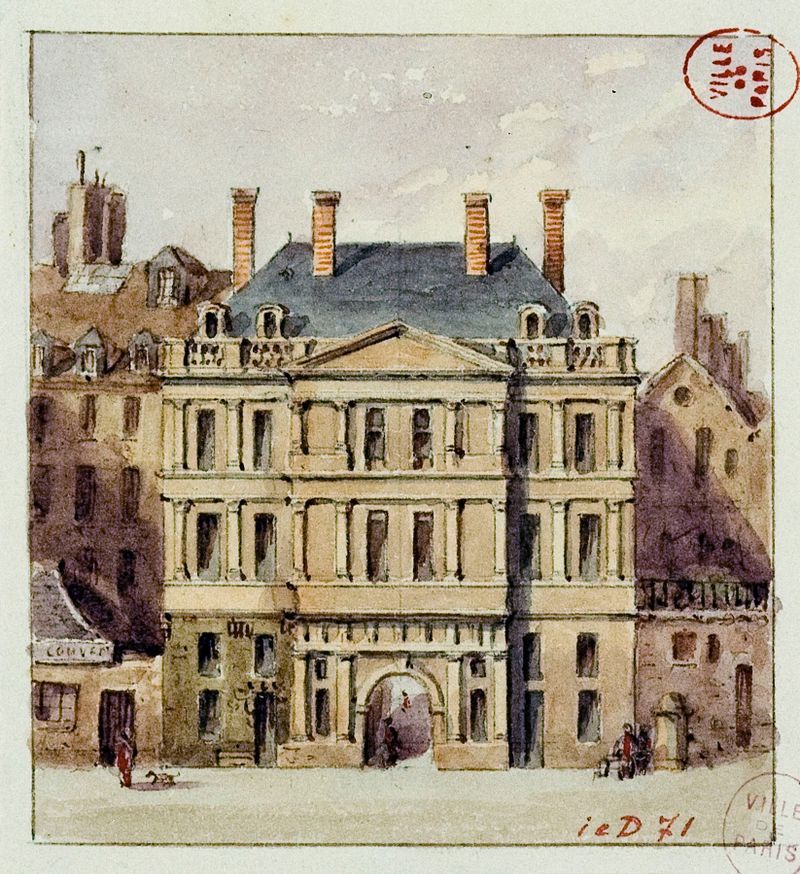
Cour de la Sainte Chapelle.
Auguste-Sébastien Bénard
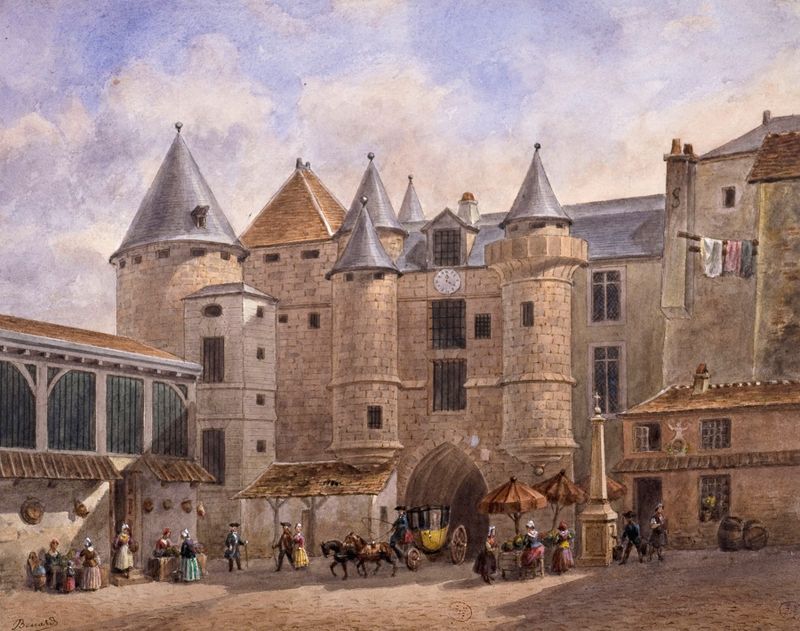
Le Grand Châtelet du XVIIIème siècle.
Auguste-Sébastien Bénard

Place de l’Hôtel de Ville.
Auguste-Sébastien Bénard

Salle souterraine du Palais de Justice.
Auguste-Sébastien Bénard

Voûtes du quai de Gesvres
Auguste-Sébastien Bénard

Monument expiatoire élevé à la mémoire du duc de Berry, à l’emplacement de l’ancien Opéra
Auguste-Sébastien Bénard
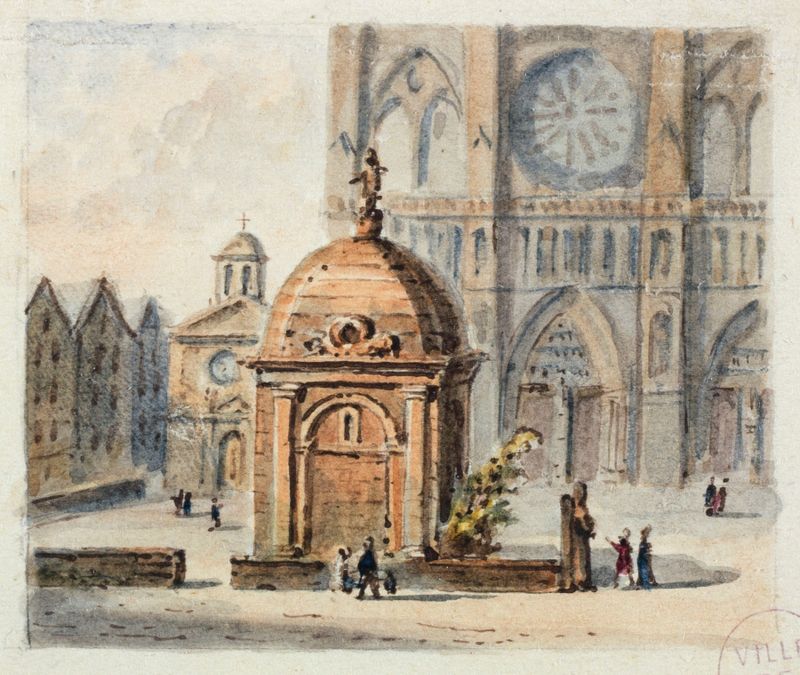
Le parvis de Notre-Dame de Paris
Auguste-Sébastien Bénard

Rue des chantres (entre le quai aux fleurs et la rue Chanoinesse).
Auguste-Sébastien Bénard

L’entrée de l’ancienne forteresse du Grand Châtelet, un jour de Carnaval
Auguste-Sébastien Bénard
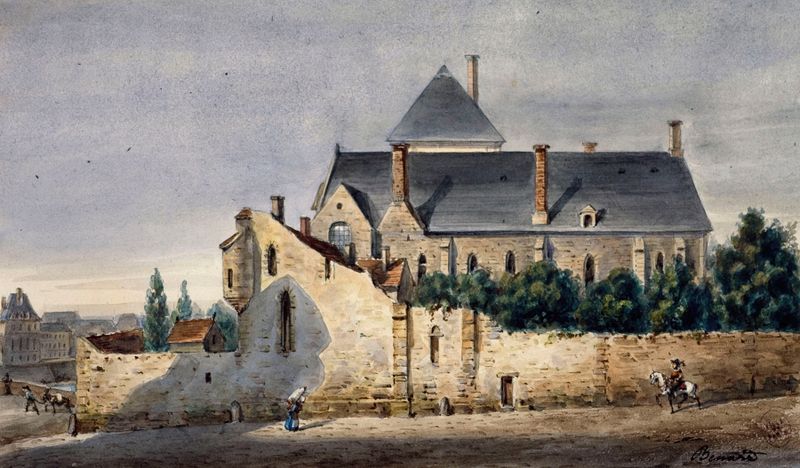
Les restes des bâtiments de l’hôtel du Petit Bourbon.
Auguste-Sébastien Bénard





