
Plage de Berck à marée basse — History & Facts
Could beauty survive in a century of chaos? This question echoes through the gentle waves and serene sands of a coastal tableau that feels both timeless and fleeting. Look to the horizon where pale blue skies meet the calm sea, punctuated by soft, fluffy clouds. Notice how the light dances on the water’s surface, casting shimmering reflections that invite the viewer to breathe deeply and embrace the tranquility. The muted palette of blues and beige offers a sense of warmth, while delicate brush strokes convey the fluidity of the tide, emphasizing a moment frozen in time. As you explore the painting, consider the contrast between the stillness of the shore and the dynamic energy of the water.
The distant figures walking along the beach hint at humanity’s presence, searching for solace against nature’s vastness. This juxtaposition evokes a yearning for connection and peace amidst life's turmoil, illustrating a universal quest for beauty even in uncertain times. The gentle undulations of the sand suggest the passage of time, reminding us that moments of respite are both precious and transitory. Eugène Boudin painted Plage de Berck à marée basse in 1877, during a period of personal triumph and artistic exploration.
Living in Normandy, he was at the forefront of the Impressionist movement, capturing the ephemeral qualities of light and color. This work reflects his commitment to plein air painting, a style that emphasized capturing landscapes directly from nature, and it further established him as a significant influence on many artists, including the later works of Claude Monet.
More Artworks by Eugène Boudin
Browse all →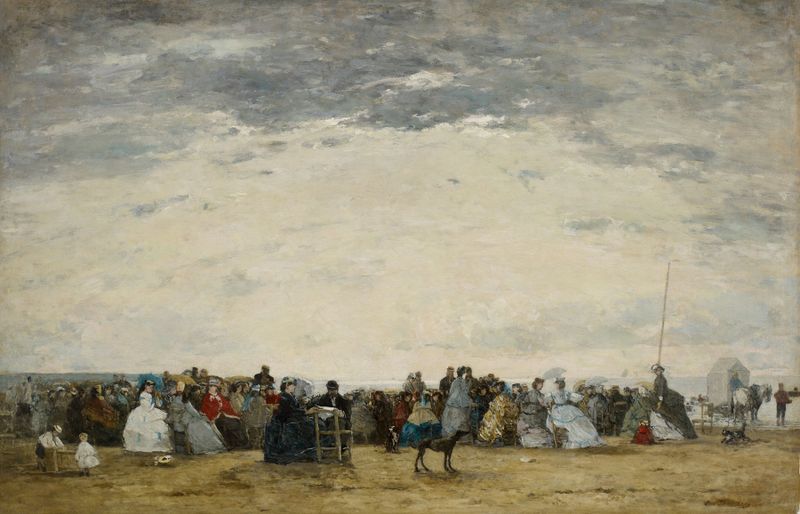
Vacationers on the Beach at Trouville
Eugène Boudin

Washerwoman near Trouville
Eugène Boudin
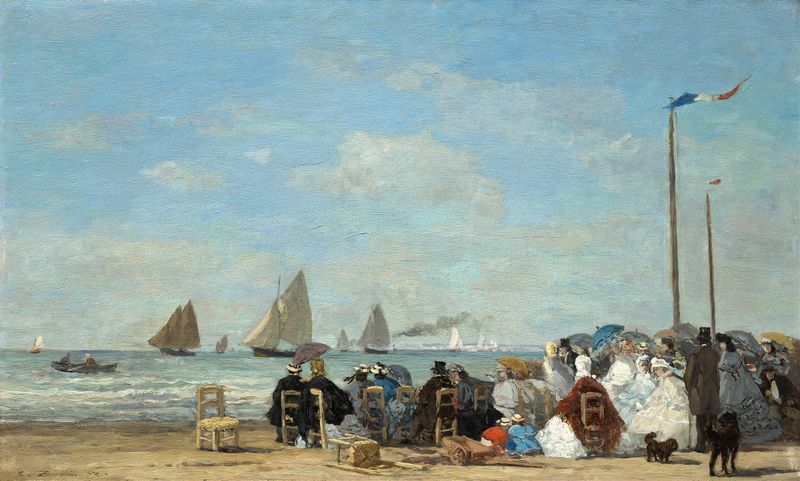
Beach Scene at Trouville
Eugène Boudin

Port aux environs d’Honfleur
Eugène Boudin

Le Faou, un coin du village
Eugène Boudin
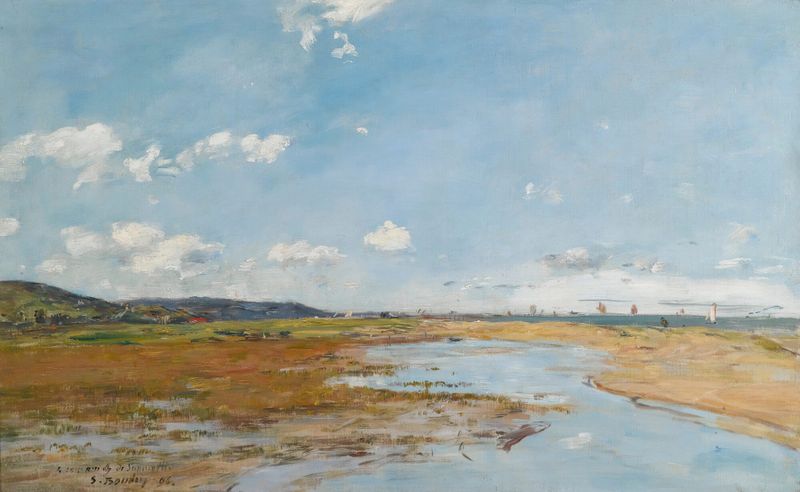
Deauville. Le Rivage
Eugène Boudin
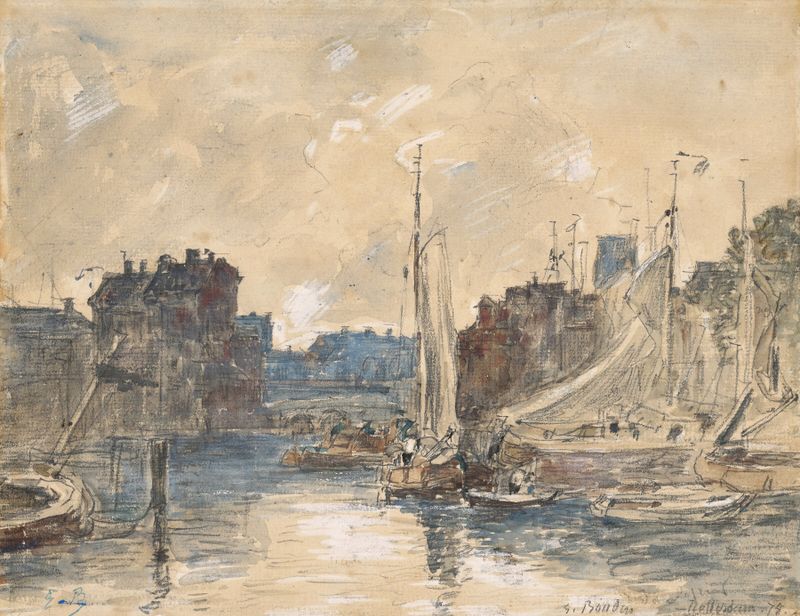
Port de Rotterdam
Eugène Boudin

View of Bordeaux, from the Quai des Chartrons
Eugène Boudin

Trouville, Scène De Plage
Eugène Boudin

Trouville, Le Port
Eugène Boudin





