
Plages Echouees — History & Facts
Did the painter know this moment would outlive them? Time, like the tide, ebbs and flows, carrying with it the whispers of those who dare to capture its fleeting beauty. Look to the horizon in Plages Echouées, where the soft blues of the sea merge with the ochres of the sand. Boudin’s brushstrokes dance lightly across the canvas, evoking the gentle rustle of waves and the cool caress of the ocean breeze. Notice how the sunlight spills across the scene, illuminating the delicate forms of boats stranded on the shore, beckoning the viewer's gaze to wander through this coastal reverie. Amidst the calm, there exists an undercurrent of stillness—a hint of nostalgia wrapped in the warmth of the sun.
The juxtaposition of vibrant colors against the muted tones of the sand emphasizes the transient nature of the moment. The boats, firmly anchored yet seemingly abandoned, evoke deeper reflections on life’s impermanence, suggesting a story of journeys unfulfilled and the passage of time that waits for no one. Eugène Boudin painted Plages Echouées between 1875 and 1877 in the coastal town of Trouville, France, during a period marked by the rise of plein air painting. At this time, Boudin was establishing himself as a key figure in the Impressionist movement, championing the beauty of nature through his landscapes.
The world was witnessing a shift in artistic expression, where capturing light and ephemeral moments became paramount, paving the way for future generations of artists.
More Artworks by Eugène Boudin
Browse all →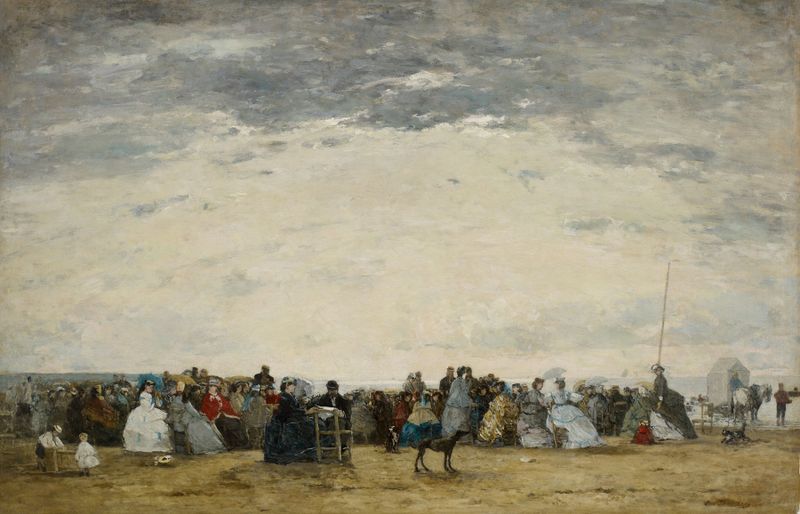
Vacationers on the Beach at Trouville
Eugène Boudin

Washerwoman near Trouville
Eugène Boudin
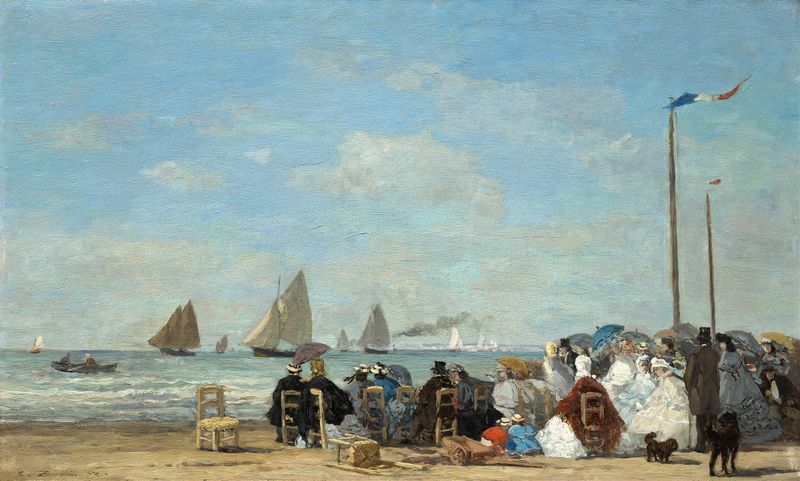
Beach Scene at Trouville
Eugène Boudin

Port aux environs d’Honfleur
Eugène Boudin

Le Faou, un coin du village
Eugène Boudin
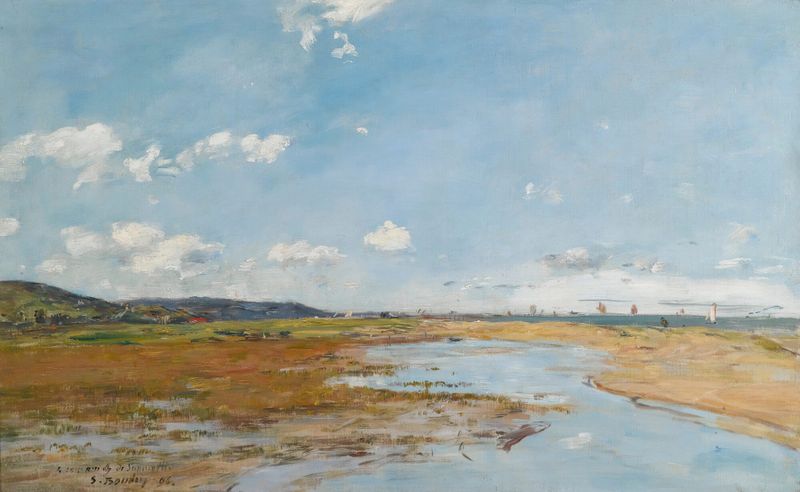
Deauville. Le Rivage
Eugène Boudin
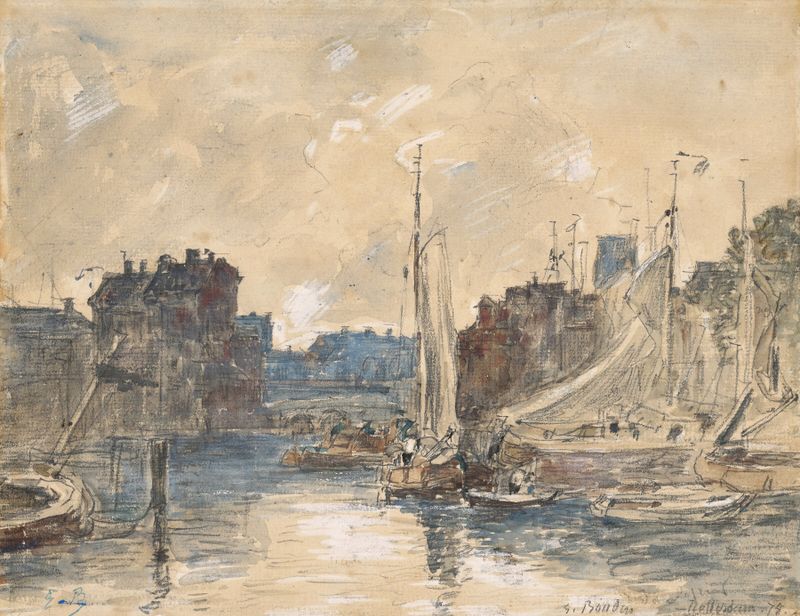
Port de Rotterdam
Eugène Boudin

View of Bordeaux, from the Quai des Chartrons
Eugène Boudin

Trouville, Scène De Plage
Eugène Boudin

Trouville, Le Port
Eugène Boudin





