
Plougastel. Le passage du bac — History & Facts
What secret hides in the quiet of the canvas? Beneath the serene depiction of a riverside scene, a whisper of grief lingers, inviting deeper contemplation. Look to the left at the gently lapping waters, where the reflections shimmer like fragmented memories. A ferry, small yet resolute, traverses the river, its moored craft a reminder of journeys interrupted. The muted palette — blues, grays, and subtle earth tones — harmonizes with the soft strokes that suggest movement, inviting the viewer to linger in this transitional space between two shores. The emotional tension in *Plougastel.
Le passage du bac* lies in the juxtaposition of the vessel's steadfast purpose and the untroubled landscape. While the scene appears tranquil, there’s an underlying current; the ferry’s isolation hints at stories of separation, longing, or loss. The quietness of the moment paradoxically amplifies the presence of absence, encouraging a contemplation of what remains unspoken between those who move and those left behind. Eugène Boudin painted this work in 1871, during a time when he was becoming increasingly recognized for his innovative approach to plein air painting.
Living in France amidst the evolving art world, he sought to capture fleeting moments of nature, establishing a bridge between realism and impressionism. This period marked a significant transition in his career, as he began to embrace the interplay of light and atmosphere, reflecting a world on the cusp of modernity.
More Artworks by Eugène Boudin
Browse all →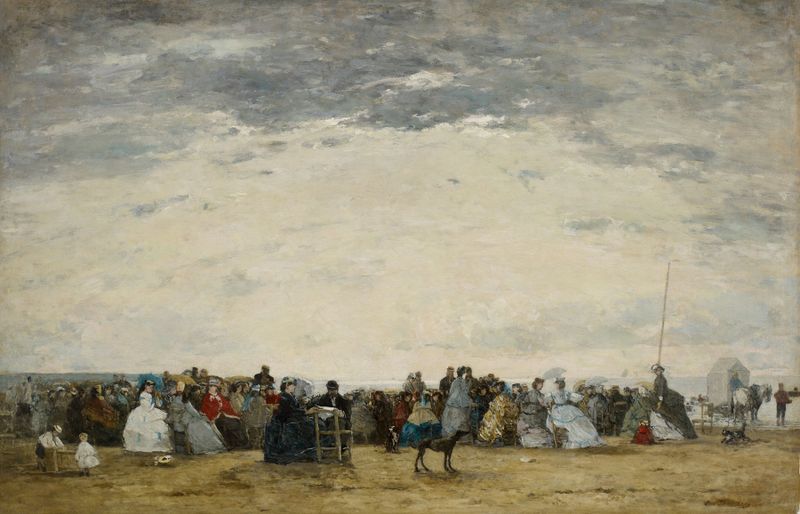
Vacationers on the Beach at Trouville
Eugène Boudin

Washerwoman near Trouville
Eugène Boudin
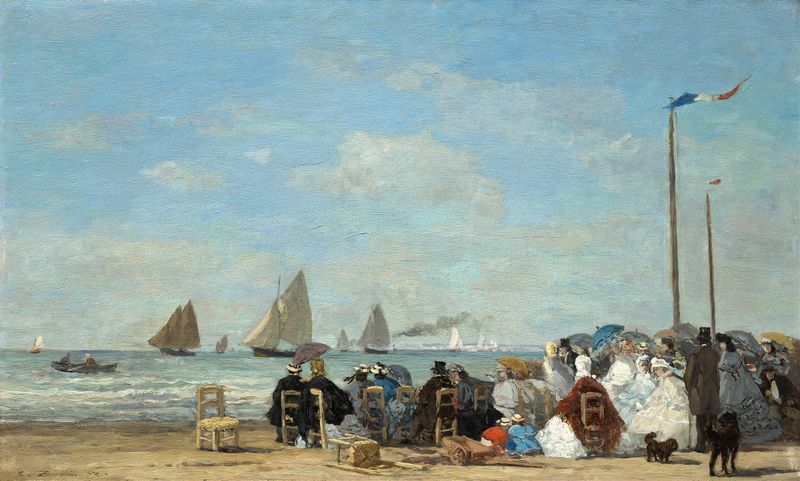
Beach Scene at Trouville
Eugène Boudin

Port aux environs d’Honfleur
Eugène Boudin

Le Faou, un coin du village
Eugène Boudin
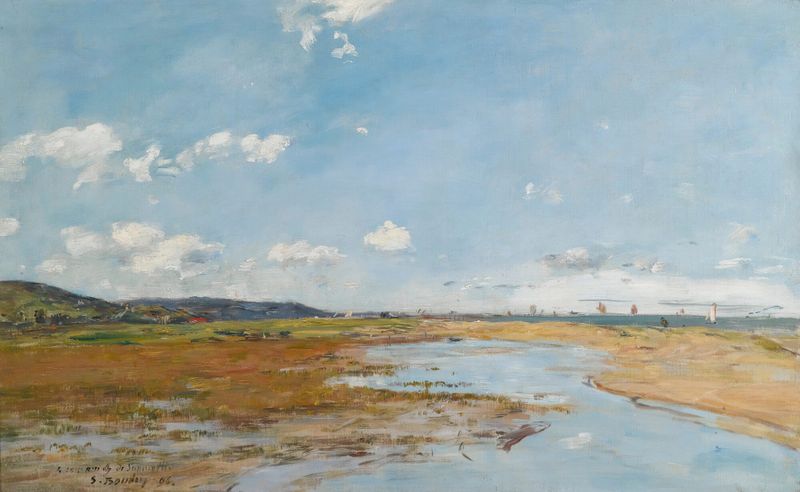
Deauville. Le Rivage
Eugène Boudin
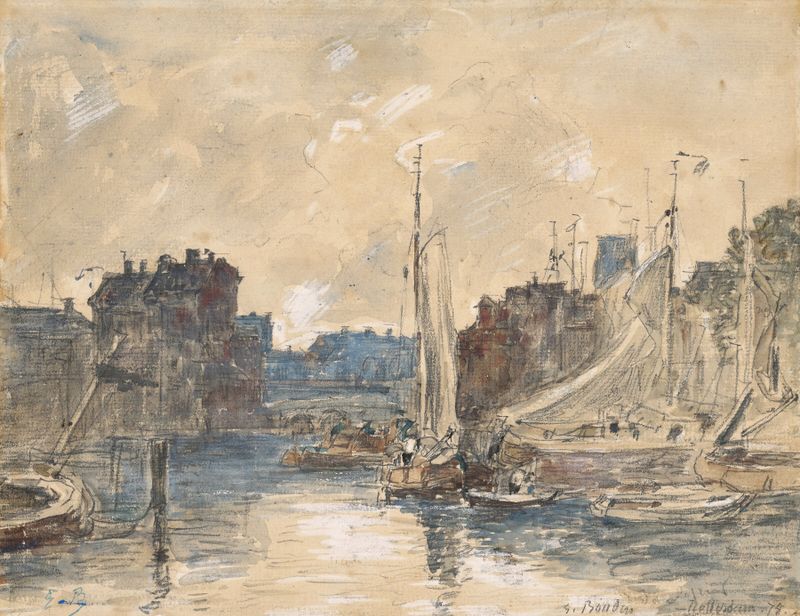
Port de Rotterdam
Eugène Boudin

View of Bordeaux, from the Quai des Chartrons
Eugène Boudin

Trouville, Scène De Plage
Eugène Boudin

Trouville, Le Port
Eugène Boudin





