
Plougastel, le passage à l’embouchure de la rivière de Landerneau — History & Facts
When did color learn to lie? In the depths of innocence, hues weave tales that often betray the heart’s true whisper. Look to the left at the gentle curve of the river, where the vibrant blues of the water collide harmoniously with the soft brushstrokes of verdant greens and golden yellows on the shore. The play of light is mesmerizing, illuminating the scene with a warm, inviting glow that renders the landscape almost ethereal. Notice how the clouds drift lazily above, their reflections mingling with the ripples below, creating a canvas of tranquility that invites contemplation. Yet beneath this serene surface lies a tension—a contrast between the untouched beauty of nature and the encroaching forces of modernity.
The fishermen’s small boats, painted in warm ochres, suggest human presence and industriousness, yet they remain mere silhouettes against the vastness of the river. This juxtaposition evokes a sense of fleeting innocence, as the idyllic scene hints at the inevitable changes that lie ahead for both the land and those who inhabit it. Eugène Boudin painted this scene during a transformative period in the late 19th century, around 1870-73, likely while living in Normandy. This era marked a shift in the art world as Impressionism began to blossom, challenging traditional depictions of nature.
Boudin, often revered as a precursor to the movement, sought to capture the fleeting moments of light and atmosphere, solidifying his role as a pivotal figure in the evolution of landscape painting.
More Artworks by Eugène Boudin
Browse all →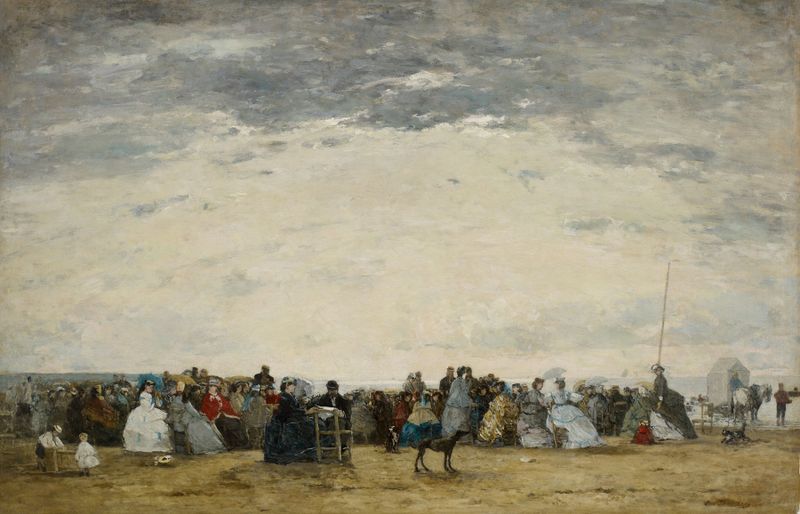
Vacationers on the Beach at Trouville
Eugène Boudin

Washerwoman near Trouville
Eugène Boudin
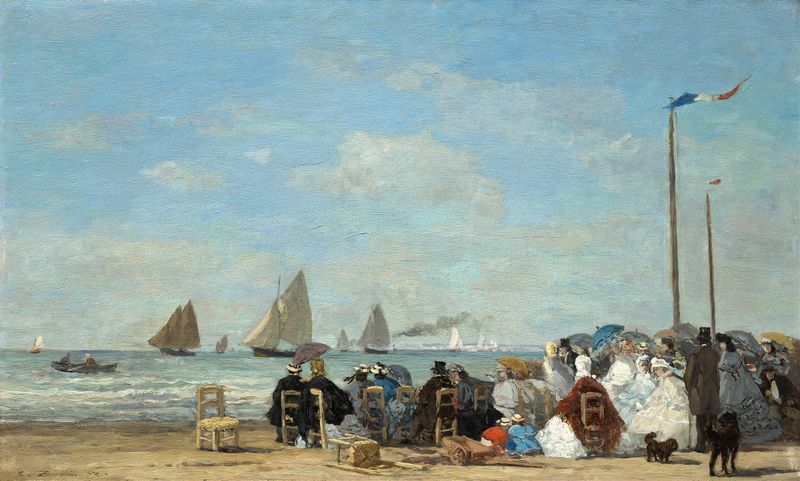
Beach Scene at Trouville
Eugène Boudin

Port aux environs d’Honfleur
Eugène Boudin

Le Faou, un coin du village
Eugène Boudin
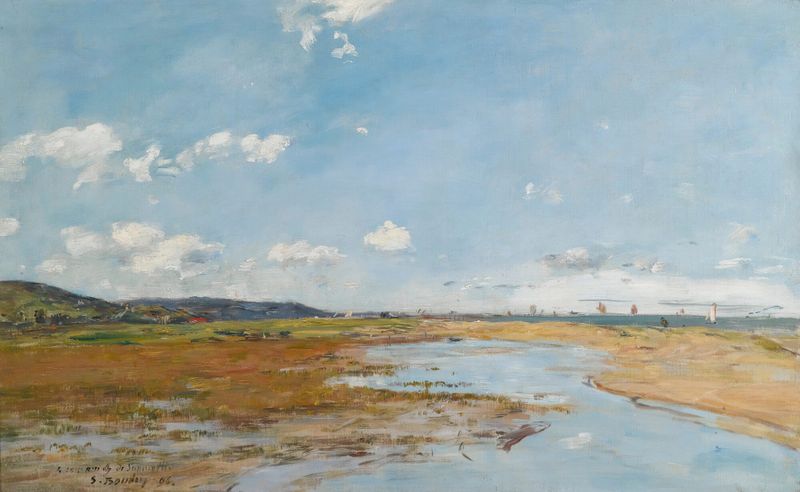
Deauville. Le Rivage
Eugène Boudin
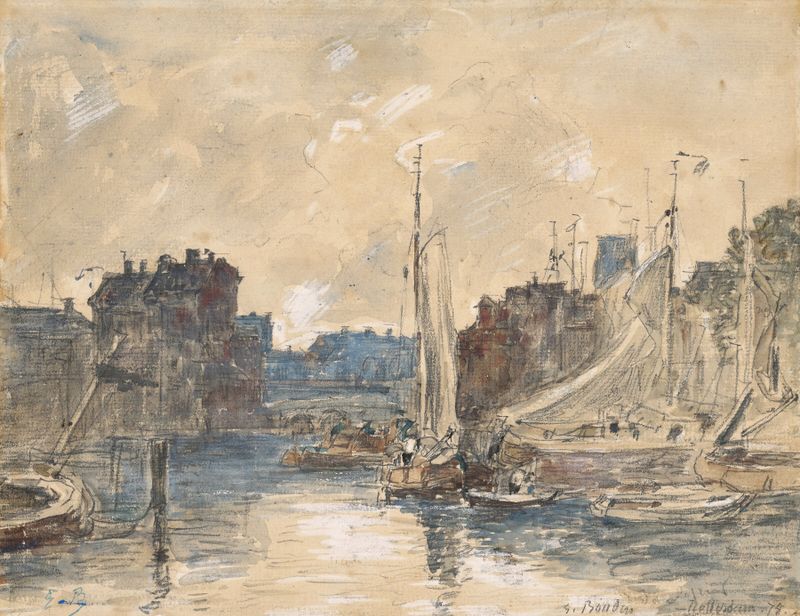
Port de Rotterdam
Eugène Boudin

View of Bordeaux, from the Quai des Chartrons
Eugène Boudin

Trouville, Scène De Plage
Eugène Boudin

Trouville, Le Port
Eugène Boudin





