Polperro no. 1 — History & Facts
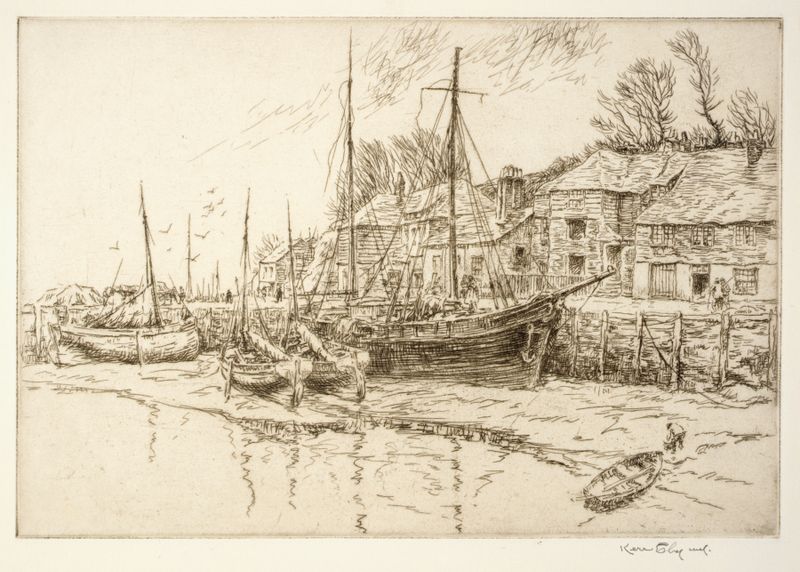
What secret hides in the quiet of the canvas? In Polperro no. 1, the tranquility of the scene conceals a deeper ecstasy, beckoning the viewer into a world that holds both stillness and joy. Look to the bottom right where the delicate strokes of blue and green intertwine, capturing the shimmering waters of the harbor. The soft hues invite your gaze to follow the gentle curve of the shoreline, drawn upward by the white-washed cottages that cling to the cliffs.
Notice how the light dances upon the water's surface, creating a luminous quality that contrasts with the earthy tones of the land, suggesting a harmonious balance between nature and human habitation. Delve deeper into the subtleties of the composition; the way the diagonal lines of the hills lead the eye towards the horizon hints at a journey or an escape, mirroring the emotional highs and lows of life. The juxtaposition of the serene landscape against the vibrancy of the scattered boats evokes a sense of fleeting tranquility, a moment caught between stability and movement. Each brushstroke resonates with the ecstasy of the landscape, inviting contemplation of what lies beneath the surface of this idyllic scene. Kerr Eby painted *Polperro no.
1* in 1925, during his time immersed in the coastal beauty of Cornwall. This period marked a significant transition in his career as he sought to blend the influences of realism with the emotional richness of impressionism. As the world emerged from the shadow of war, Eby's exploration of landscape reflected a longing for peace, mirroring broader artistic movements that sought solace in the natural world.