
Polycyttaria (Radiolaria) — History & Facts
What first seizes the eye in Polycyttaria (Radiolaria) is the sense of organized exuberance—each form radiates outward with a balance of geometry and riot, as if the cosmos itself had been drafted by a meticulous hand. The artist, Ernst Haeckel, arranges these marine micro-organisms in a way that feels both scientific and ornamental: golden halos and blue spheres pulse from the center of each structure, their radiating lines suggesting energy and life. The intricate networks and branching forms guide the viewer’s gaze inwards and outwards, echoing both the microscopic world and the patterns of a stained-glass window.
Each detail—the honeycomb lattices, the spiny projections, the clustered nuclei—serves to highlight the astonishing diversity and symmetry found in nature’s smallest architects. Works like this emerged from a world where science and art were not rivals but partners, and Kunstformen der Natur (1904) stands as a testament to that union. In the late nineteenth and early twentieth centuries, naturalists and artists alike were captivated by the invisible realms revealed by the microscope. Haeckel’s illustrations were not just scientific documentation; they were invitations to wonder, intended for both the lecture hall and the drawing room wall.
History has kept few traces of the individual radiolarians themselves, but their forms—rendered here with such clarity and imagination—became icons of a new way of seeing life. To look at this plate is to glimpse the moment when the boundaries between observation and admiration dissolved, and the hidden beauty of the ocean’s plankton was set aglow for all to see.
More Artworks by Ernst Haeckel
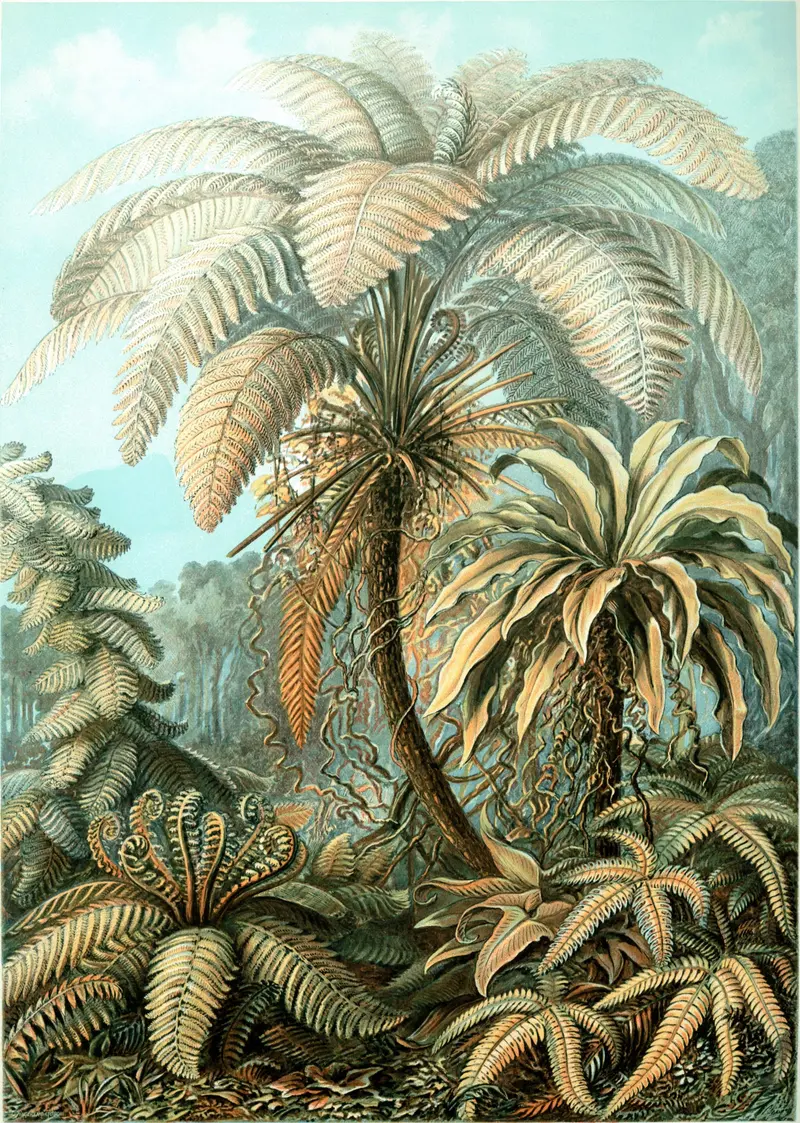
Filicinae (Ferns)
Ernst Haeckel
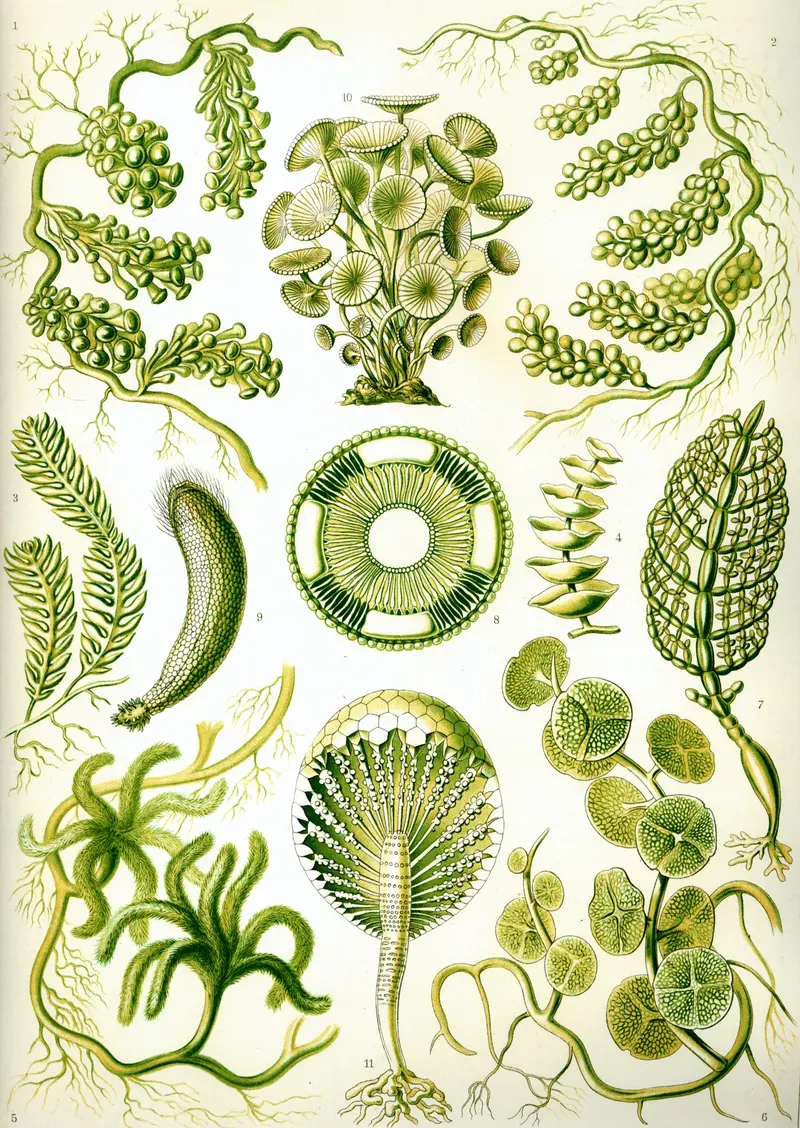
Siphoneae (Green Algae)
Ernst Haeckel

Cirripedia (Barnacles)
Ernst Haeckel

Actiniae (Sea Anemones)
Ernst Haeckel
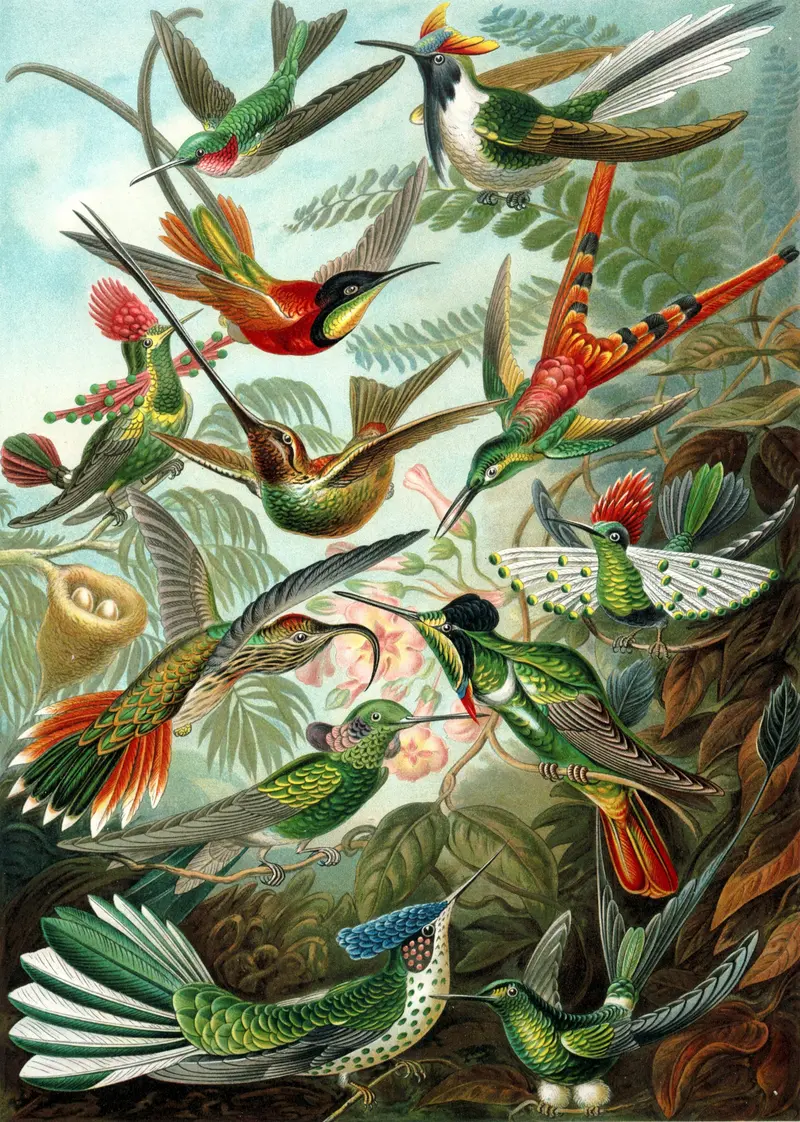
Trochilidae (Hummingbirds)
Ernst Haeckel
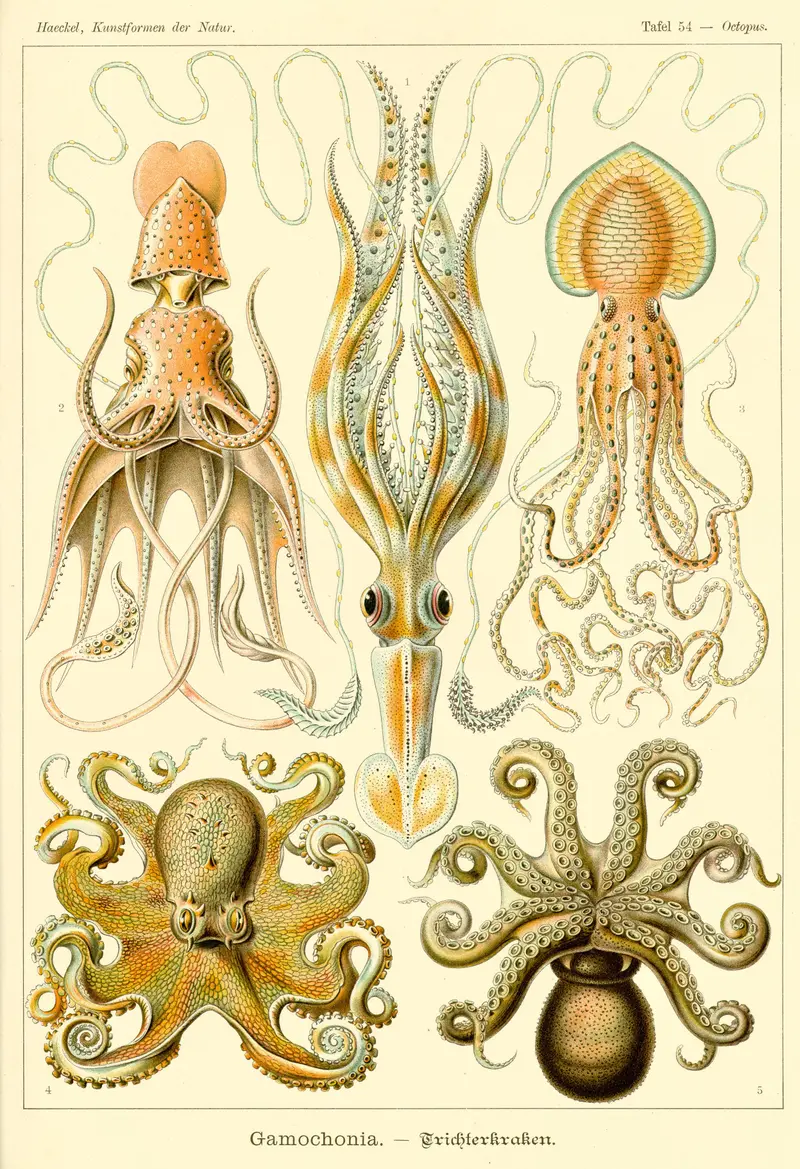
Gamochonia (Cephalopods)
Ernst Haeckel
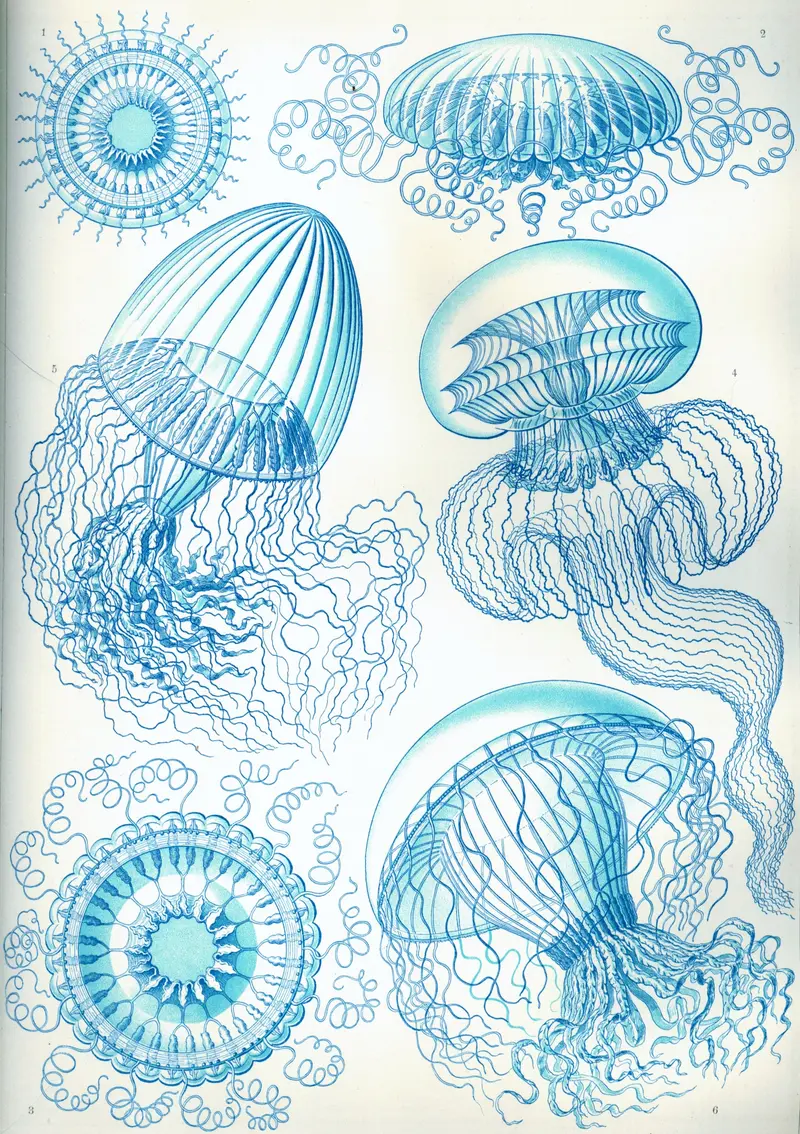
Leptomedusae (Jellyfish)
Ernst Haeckel
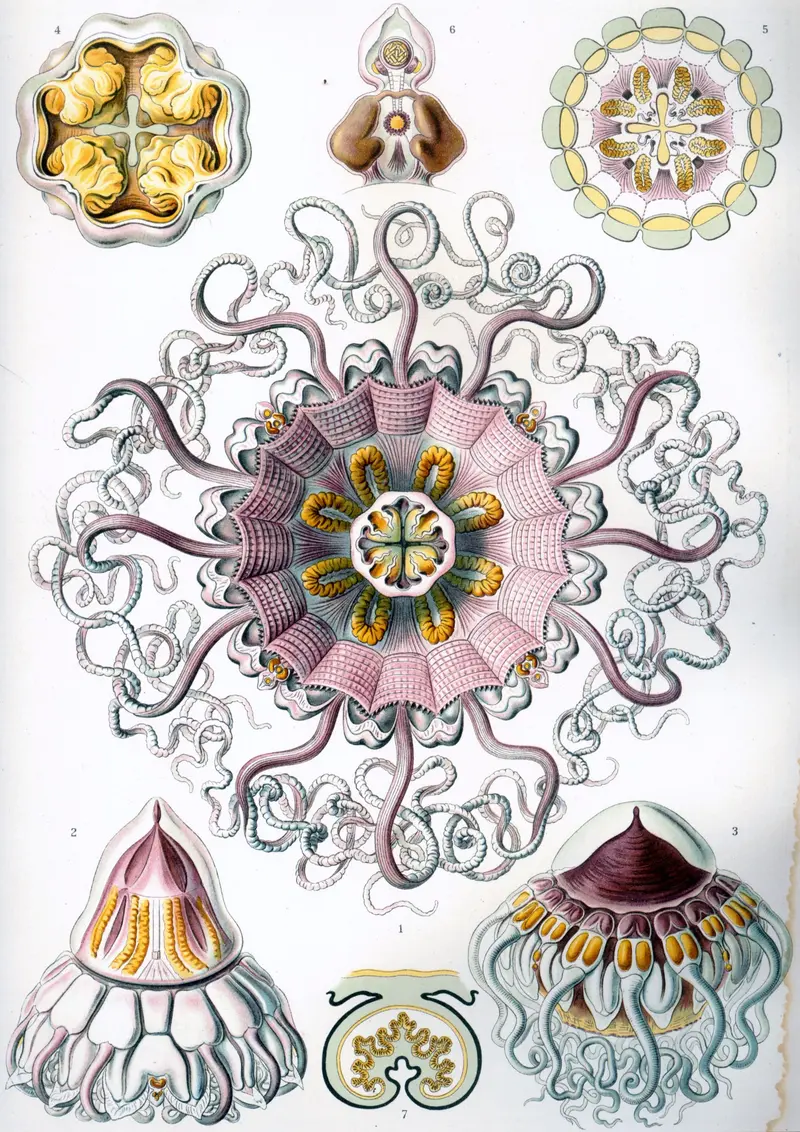
Peromedusae (Jellyfish)
Ernst Haeckel
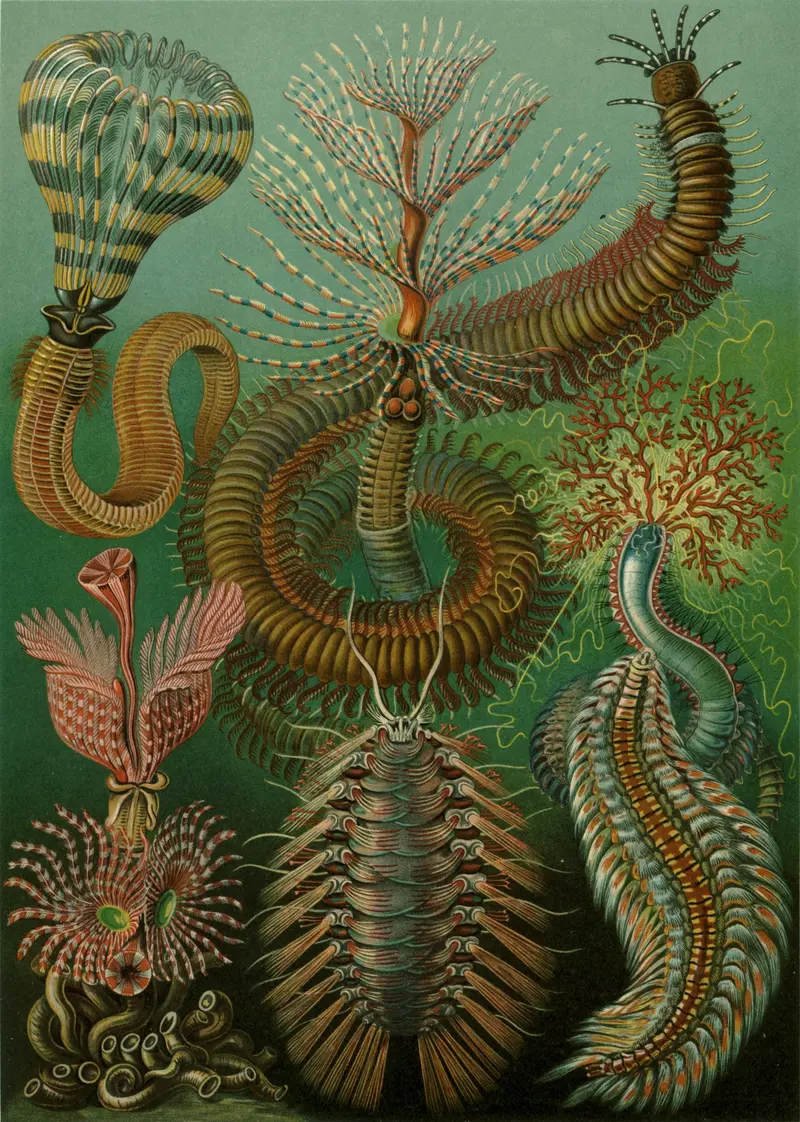
Chaetopoda (Bristle Worms)
Ernst Haeckel
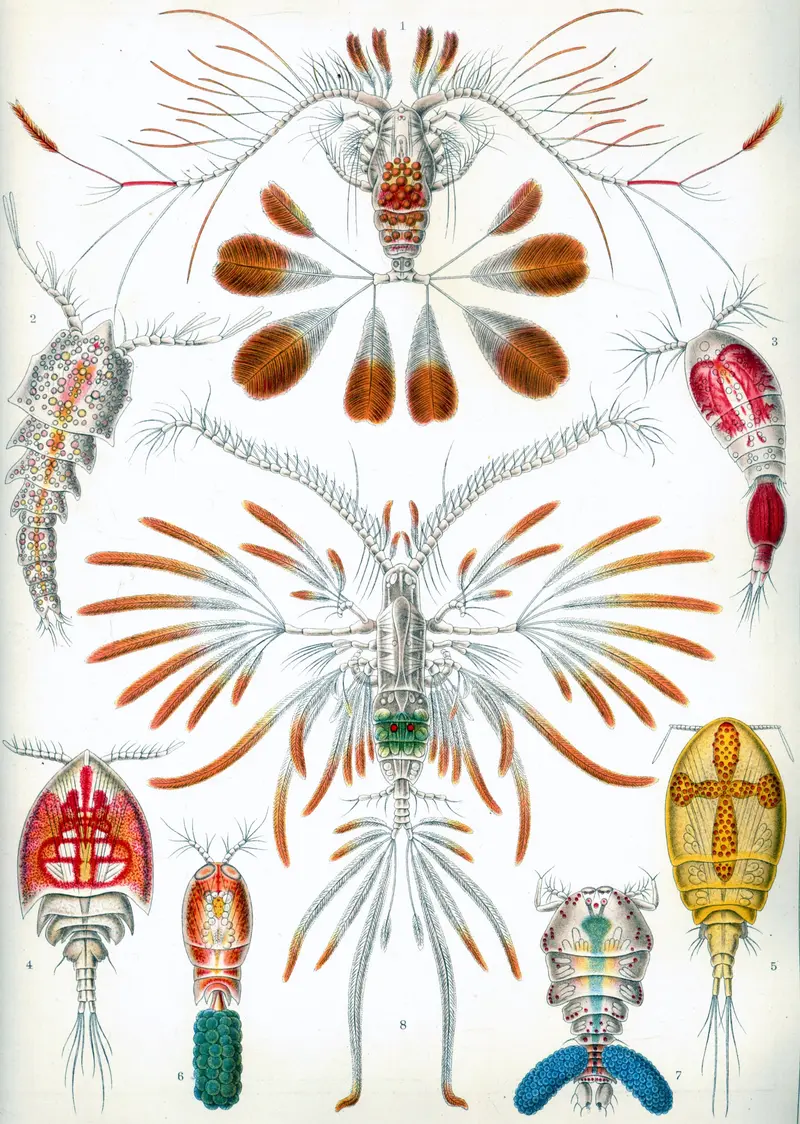
Copepoda (Copepods)
Ernst Haeckel





