
Pont-Neuf au soleil — History & Facts
A single horse-drawn carriage, rendered in swift, blocky strokes, seems to float across a pale expanse that flickers with the memory of sunlight. The shadows are not black but blue, violet, and green, their coolness setting off the warmth of the carriage’s ochre body. The Pont-Neuf rises in the background, its arches dissolving into a haze where the city and sky merge.
Figures are reduced to silhouettes—anonymous, almost abstract—yet each is carefully placed to suggest the gentle bustle of a Paris morning. The eye is drawn from the foreground’s crisp geometry to the leafy mass of trees, then out across the river, following the sweep of the bridge as it disappears into the light. Painted in 1906, Pont-Neuf au soleil belongs to a moment when artists like Albert Marquet were reimagining what a cityscape could be. The loose, expressive brushwork and bold color planes speak to the influence of the Fauves, a group that prized sensation over strict description.
These paintings were not made for grand salons or official commissions, but for a new public eager for scenes of modern life—views that felt immediate, lived-in, and true to the fleeting moods of the city. Now in the collection of Museum Boijmans Van Beuningen, this work stands as a record of both a place and a way of seeing, inviting us to linger in the half-light where Paris is forever being painted anew.
More Artworks by Albert Marquet
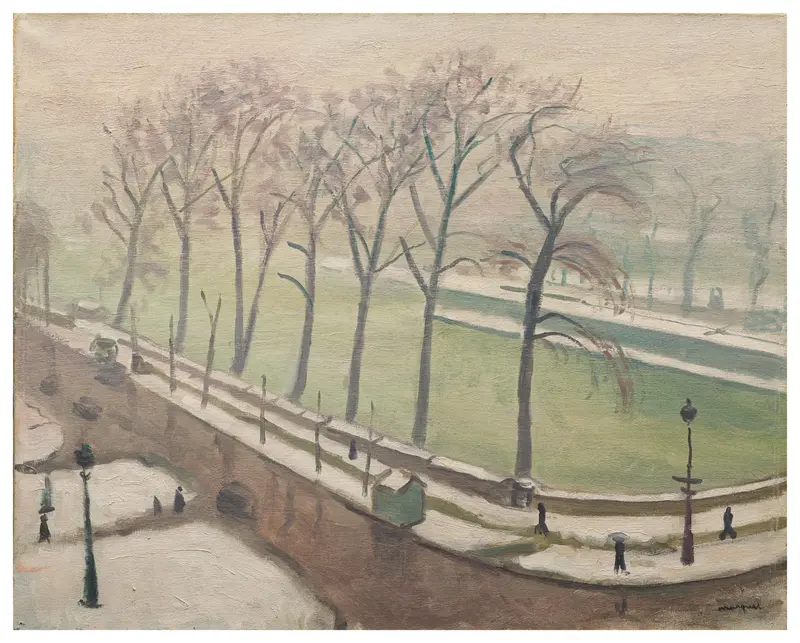
Pont-Neuf sous la neige
Albert Marquet

Le Port d’Alger
Albert Marquet
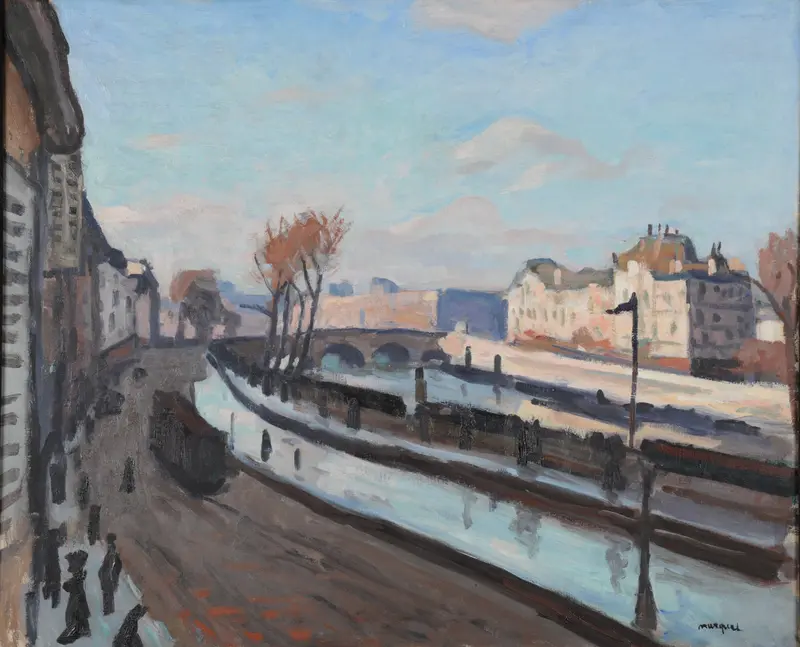
Le quai des Grands Augustins
Albert Marquet

Le jardin à l’Estaque
Albert Marquet
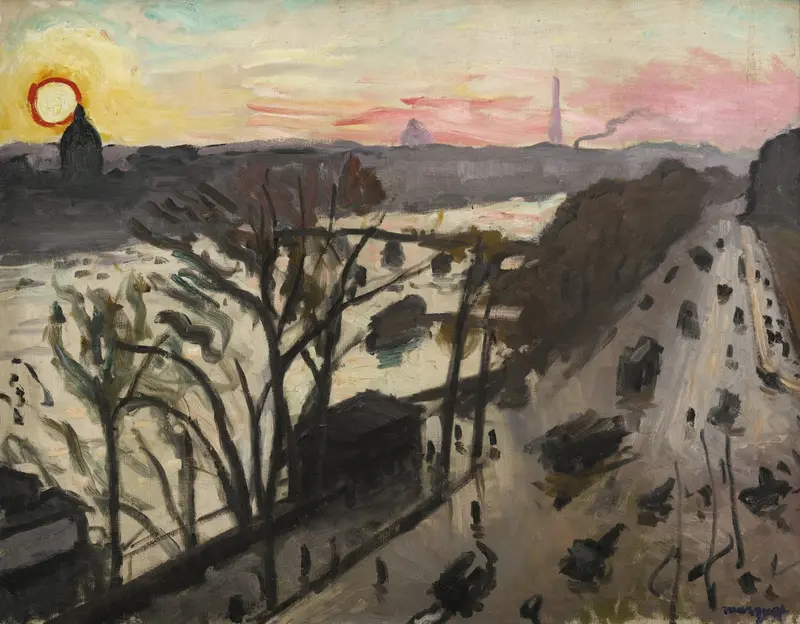
Paris, quai du Louvre, soleil d’hiver
Albert Marquet
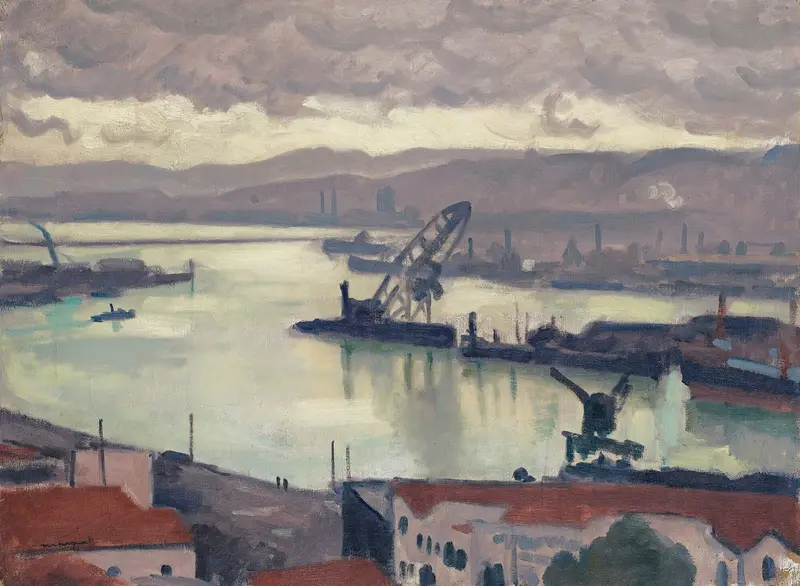
Alger, Temps Gris
Albert Marquet

Berge de la Seine à Méricourt
Albert Marquet
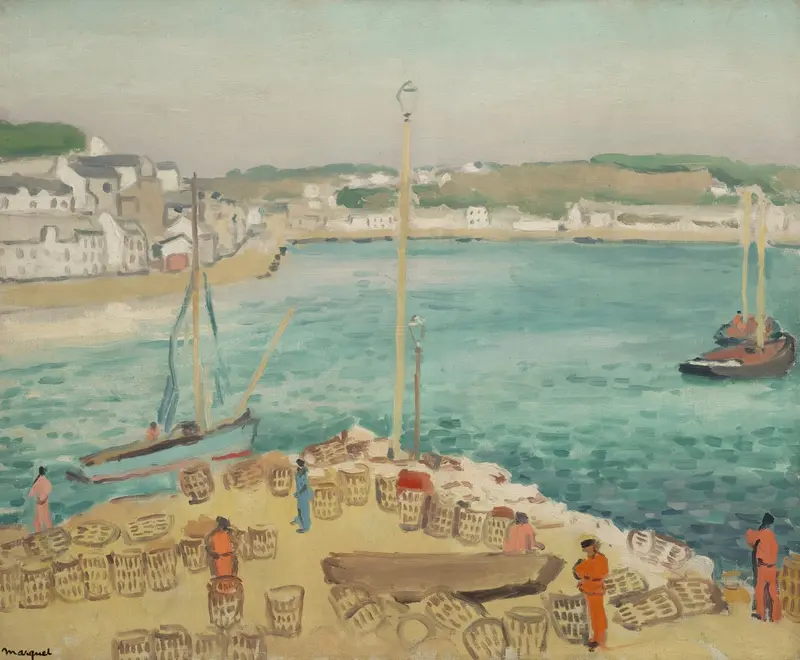
Audierne, les tonneaux
Albert Marquet
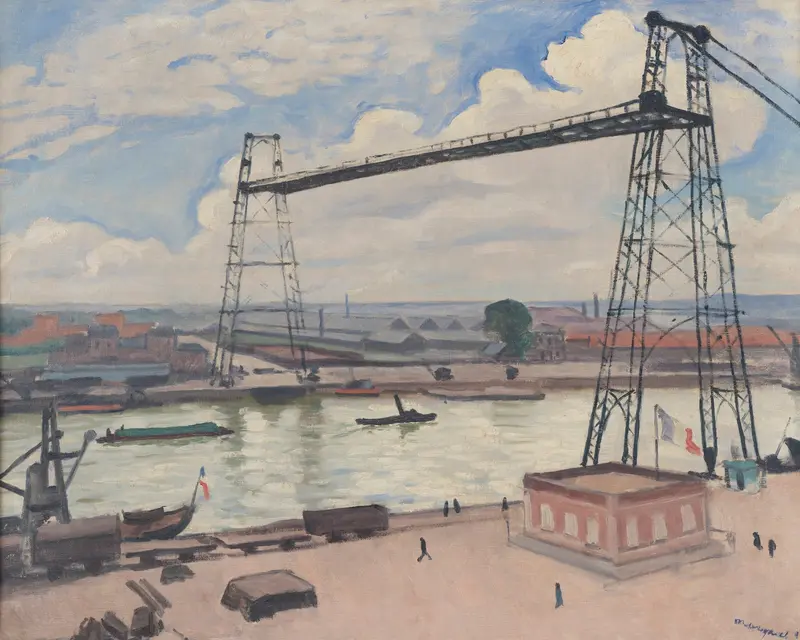
Rouen, le pont transbordeur
Albert Marquet
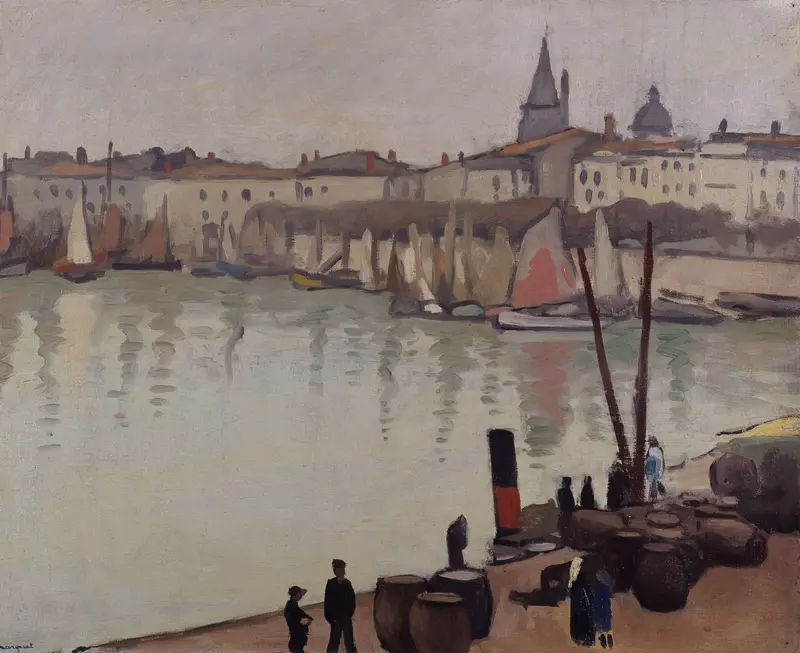
Port of La Rochelle
Albert Marquet
More Landscape Art

The Starry Night
Vincent van Gogh

View of Delft
Johannes Vermeer

Water Lilies
Claude Monet

The Grand Canal, Venice, looking north-west from the Ca' Corner to the Ca' Contarini degli Scrigni, with the campanile of Santa Maria della Carità
Canaletto

Windsor Castle
Canaletto

The Grand Canal looking North-East from the Palazzo Dolfin-Manin to the Rialto Bridge
Canaletto