
Port — History & Facts
This whispered truth resonates through the vibrant strokes of a master artist, hinting at the renewing power of nature and creativity. In Port, the viewer is drawn into a world where the tumult of life yields to serene beauty, suggesting that from disorder, new beginnings can flourish. Focus on the sweeping expanse of the sky, where soft clouds embrace the horizon. Notice how the light dances upon the water’s surface, shimmering with reflections of boats gently bobbing at anchor.
The palette of blues and greens creates a harmonious balance, guiding the eye across the canvas, while the lively brushwork brings the scene to life. The meticulous layering of colors invites viewers to breathe in the atmosphere of this maritime landscape. Deeper meanings lie within the contrasts portrayed in the painting: the tranquil harbor versus the bustling life of the sea, or the fragile beauty of nature juxtaposed with the hardiness of human endeavor. The boats, both humble and proud, symbolize the constant push and pull between ambition and the grounding force of the natural world.
Each stroke serves as a reminder of the cyclical nature of life and rebirth, encapsulating moments of stillness amidst the chaos. Eugène Boudin created Port between 1870 and 1878, during a transformative period in his life. He was deeply influenced by plein air painting and the Impressionist movement, which was gaining momentum in France. This period saw him exploring the nuances of light and atmosphere, as well as his passion for capturing the essence of coastal scenes.
Boudin's connection to the sea and its rhythms profoundly shaped his artistic vision, marking a pivotal moment in his career.
More Artworks by Eugène Boudin
Browse all →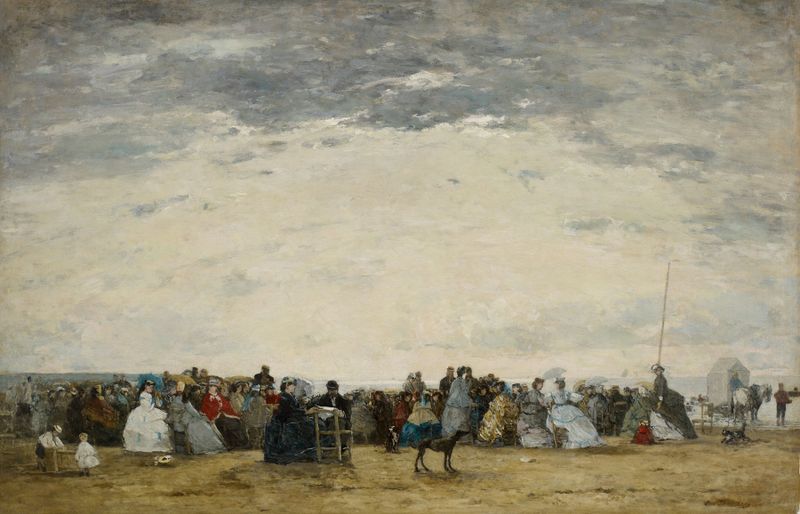
Vacationers on the Beach at Trouville
Eugène Boudin

Washerwoman near Trouville
Eugène Boudin
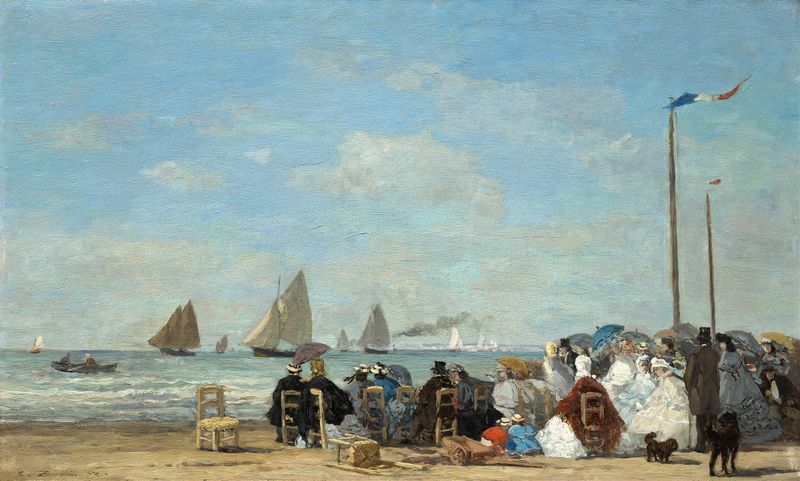
Beach Scene at Trouville
Eugène Boudin

Port aux environs d’Honfleur
Eugène Boudin

Le Faou, un coin du village
Eugène Boudin
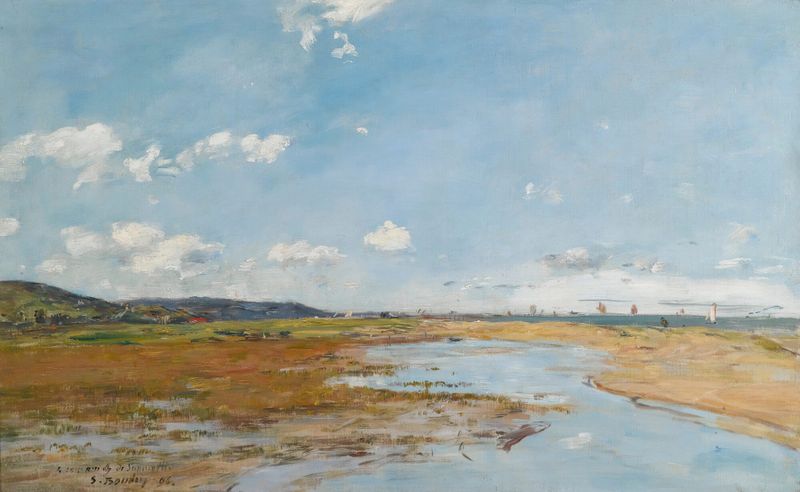
Deauville. Le Rivage
Eugène Boudin
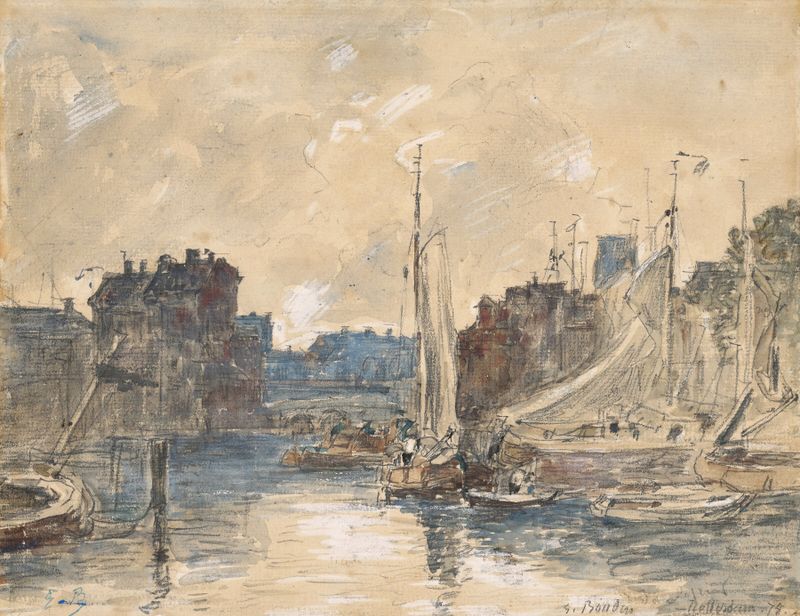
Port de Rotterdam
Eugène Boudin

View of Bordeaux, from the Quai des Chartrons
Eugène Boudin

Trouville, Scène De Plage
Eugène Boudin

Trouville, Le Port
Eugène Boudin





