
Port, navires à quai — History & Facts
In the delicate interplay of light and shadow, the essence of awakening is captured — a moment where time stands still, yet pulses with life. Look to the left at the gentle sway of the boats, each vessel anchored gracefully amidst the calm waters. The shimmering reflections ripple across the surface as dawn breaks, casting a warm glow over the scene. Notice how the artist employs soft blues and muted earth tones to evoke a serene atmosphere, while light dances tantalizingly across the sails and masts, suggesting a world poised on the brink of day. Hints of emotional tension lie beneath the surface; the quiet of the harbor juxtaposes the vibrant, anticipatory energy of the boats, suggesting the promise of journeys awaiting.
Each brushstroke whispers of both solitude and community, as if the vessels themselves are silent witnesses to the lives that will soon unfold upon them. The horizon, slightly blurred, invites the viewer to dream beyond the frame, prompting reflections on adventure and the passage of time. Created between 1885 and 1888, this work reflects Eugène Boudin’s deep engagement with coastal landscapes and marine life. Painted in the port town of Honfleur, France, during a period when Impressionism was gaining momentum, the artist sought to capture the ephemeral beauty of nature.
Boudin, often credited as a mentor to Monet, was at a pivotal moment in his career, honing his techniques to depict the dynamic interplay of light and atmosphere that would define modern art.
More Artworks by Eugène Boudin
Browse all →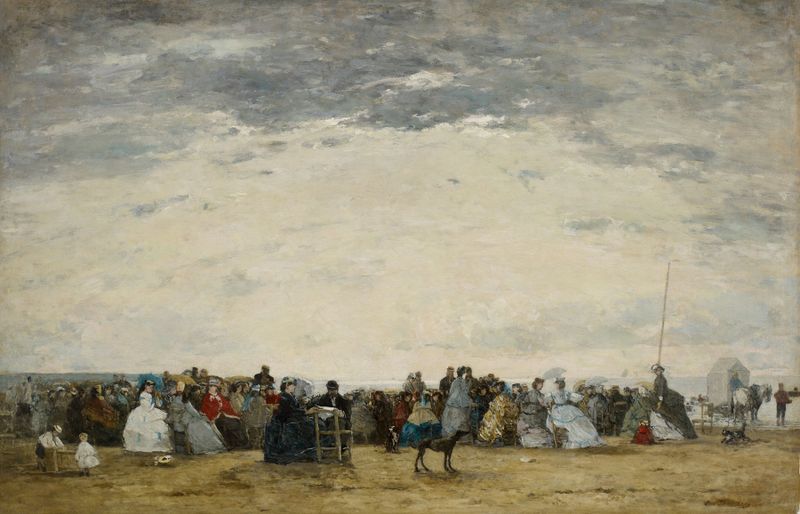
Vacationers on the Beach at Trouville
Eugène Boudin

Washerwoman near Trouville
Eugène Boudin
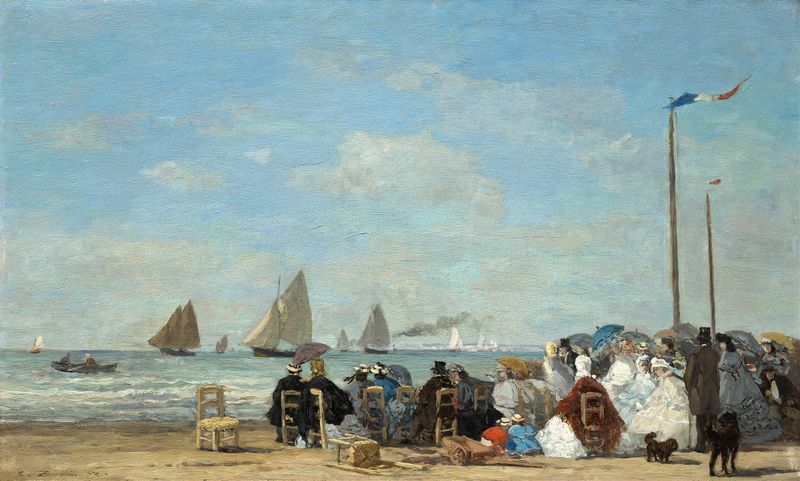
Beach Scene at Trouville
Eugène Boudin

Port aux environs d’Honfleur
Eugène Boudin

Le Faou, un coin du village
Eugène Boudin
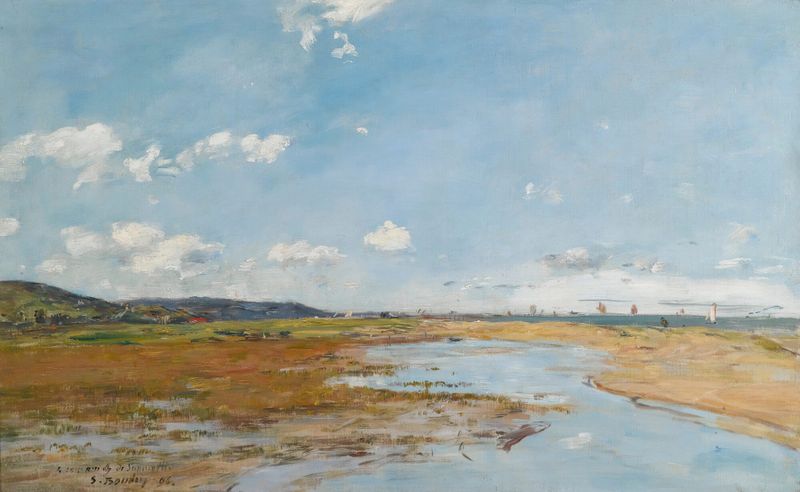
Deauville. Le Rivage
Eugène Boudin
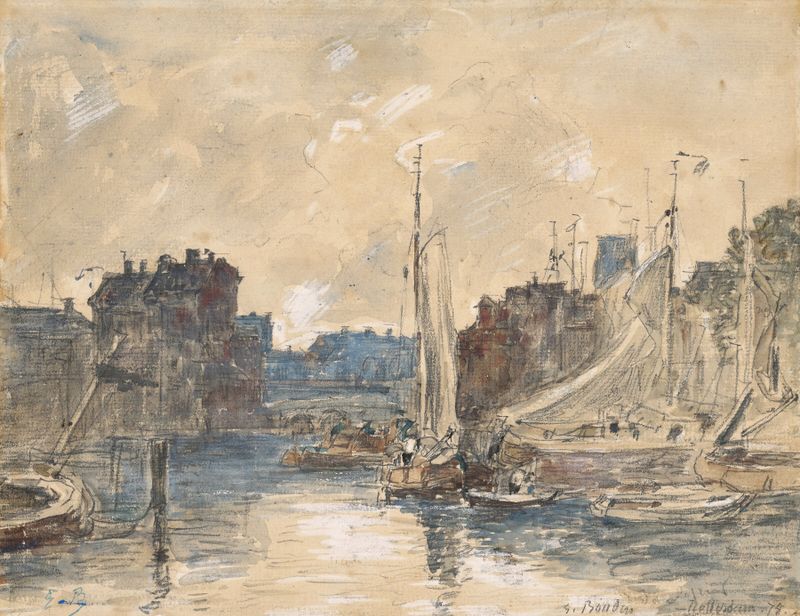
Port de Rotterdam
Eugène Boudin

View of Bordeaux, from the Quai des Chartrons
Eugène Boudin

Trouville, Scène De Plage
Eugène Boudin

Trouville, Le Port
Eugène Boudin





