
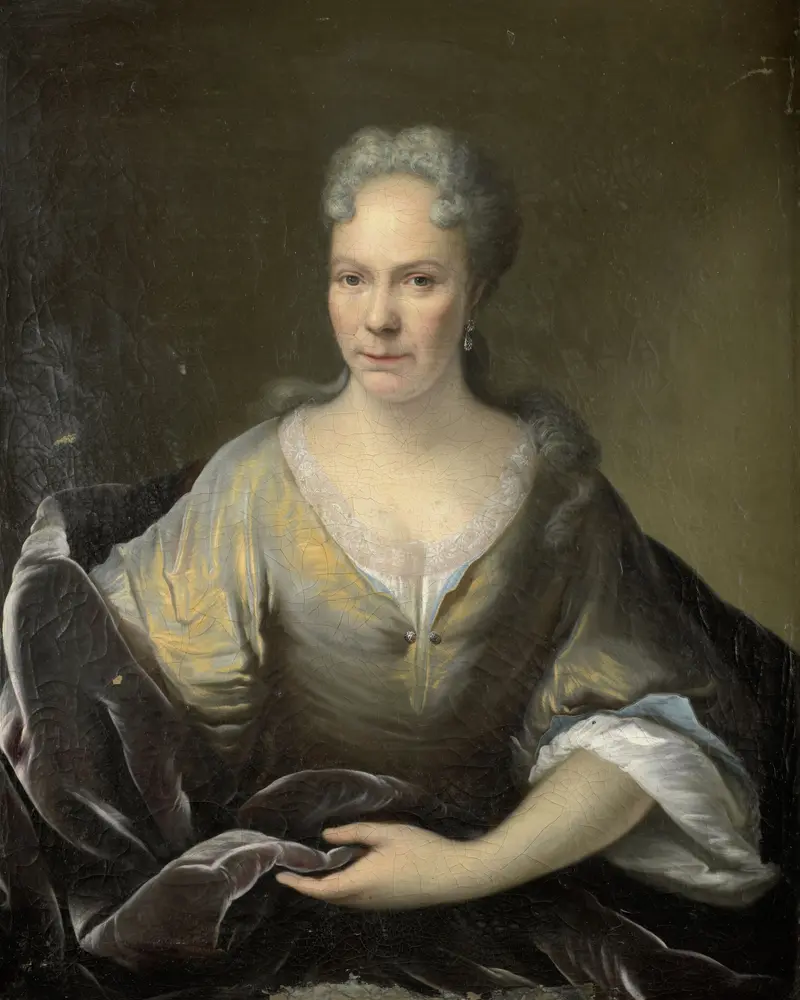
Portrait Brechje Hooft (1640-1721). Widow of Harmen van de Poll — History & Facts
What draws the eye first in Portrait Brechje Hooft (1640-1721). Widow of Harmen van de Poll by Arnold Boonen is the sitter’s direct, almost conspiratorial gaze, paired with a gentle, knowing smile that seems to bridge centuries. The light falls softly on her face and hands, pulling her forward from the shadowy depths of the background, where heavy red drapery frames her like a stage.
Her white cap and cuffs glow against the darkness, signaling both her widowhood and her respectability, while the relaxed pose—one hand poised as if mid-conversation—invites the viewer to imagine the story she might share. The distant landscape glimpsed through the window adds a quiet sense of continuity, hinting at a life lived both indoors and out, private yet connected to the world beyond. This portrait belongs to a tradition that flourished in the Dutch Republic between 1700 and 1729, when citizens of means commissioned likenesses to assert their place in society and commemorate personal milestones. Such works were not only records of appearance but also statements of virtue, resilience, and familial pride—especially for widows like Brechje Hooft, whose status and dignity are underscored by the sober palette and understated elegance of her dress.
Little is recorded about the journey of this particular painting, now in the Rijksmuseum, but its presence in the collection speaks to the enduring value placed on personal legacy and the artistry of remembrance. The quiet confidence in Hooft’s expression invites us to linger, searching her face for the life behind the image.
More Artworks by Arnold Boonen

Portrait of Jan van Huysum
Arnold Boonen
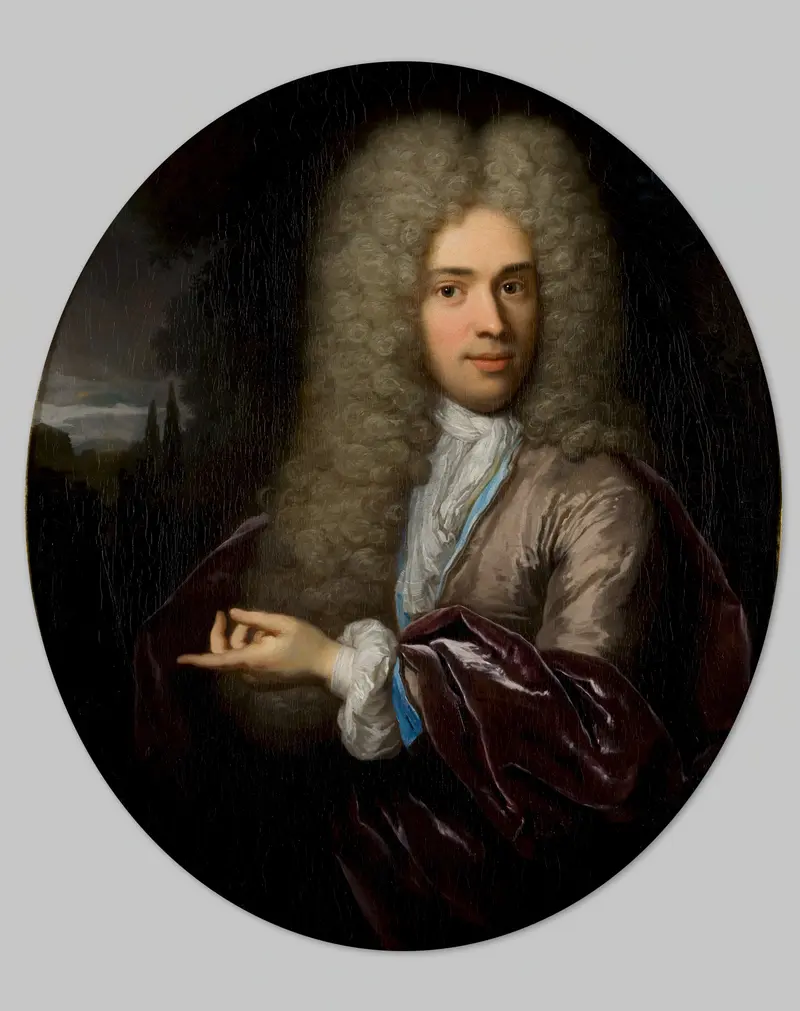
Daniël Deutz
Arnold Boonen
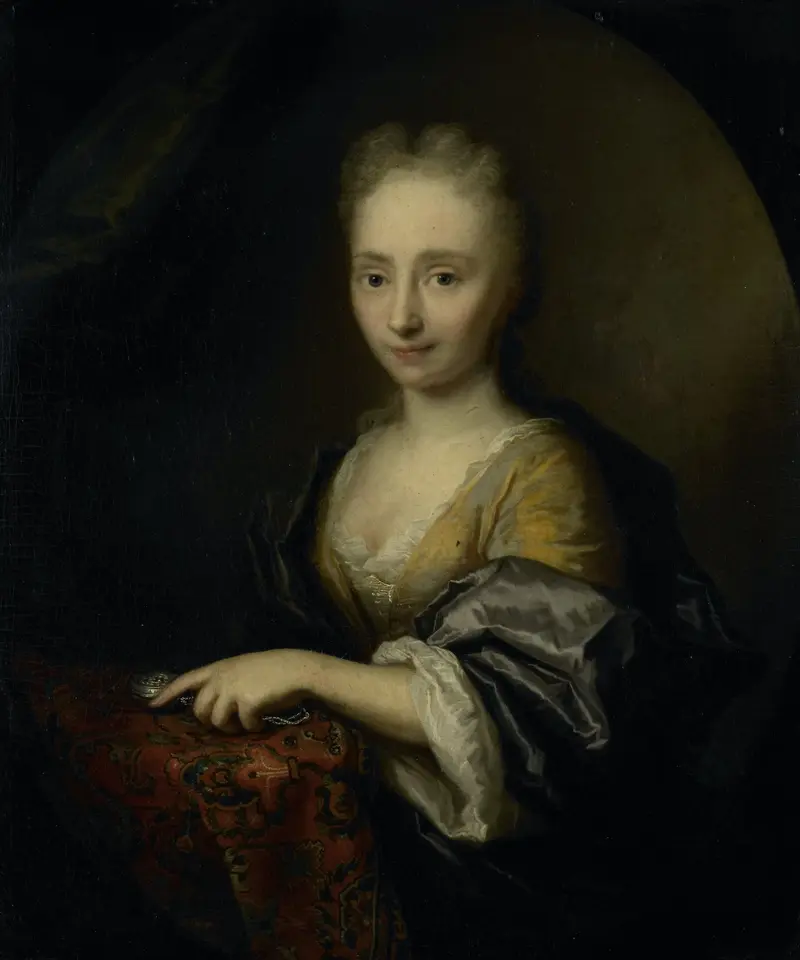
Portrait of a Woman SK-A-
Arnold Boonen
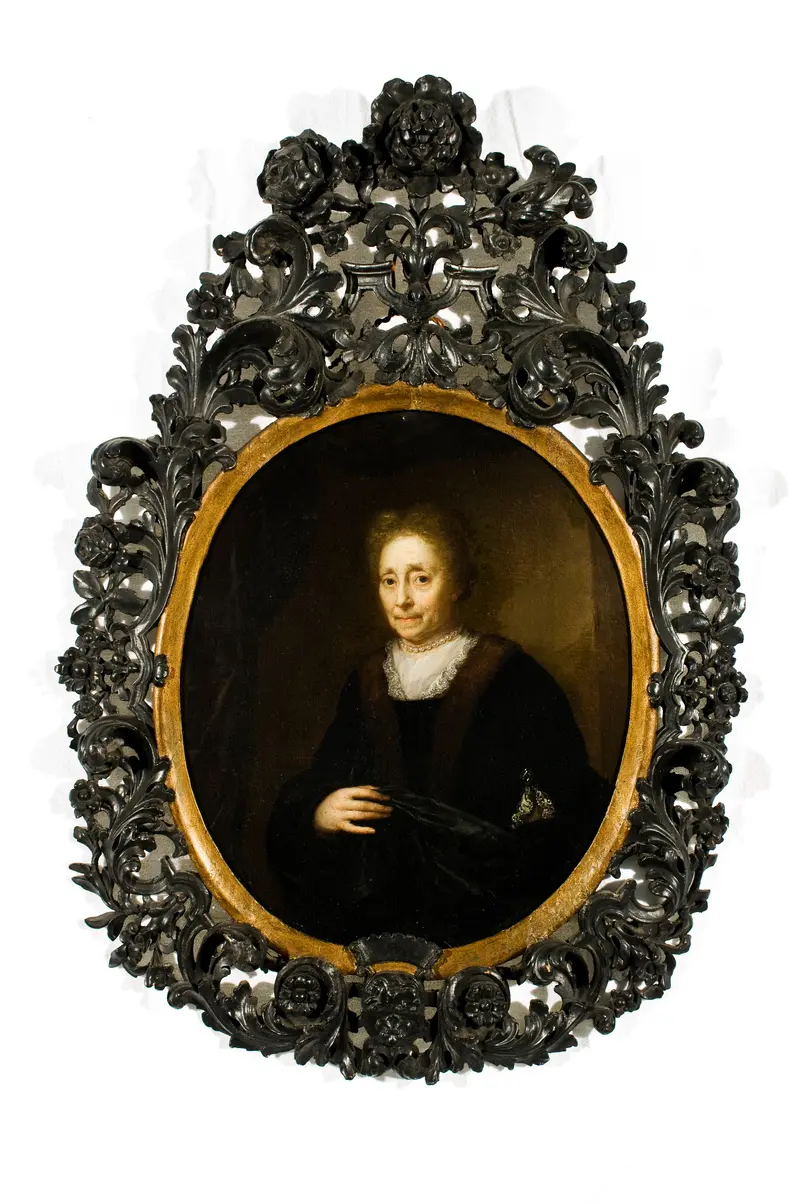
Portret van Elisabeth Schaep van Strijen, echtgenote van Mr. Pieter Schaep DM 011 980 Dordrechts Museum
Arnold Boonen
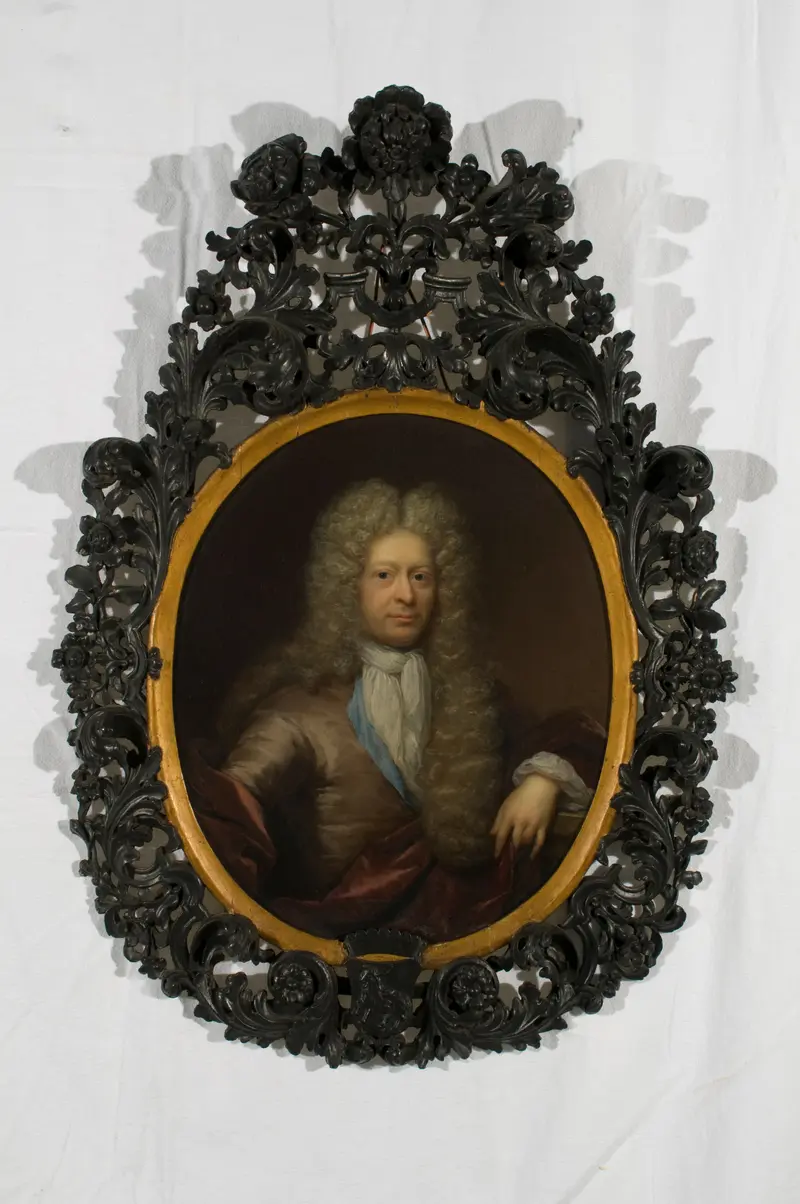
Portret van Mr Reynier Schaep DM 011 981 Dordrechts Museum
Arnold Boonen
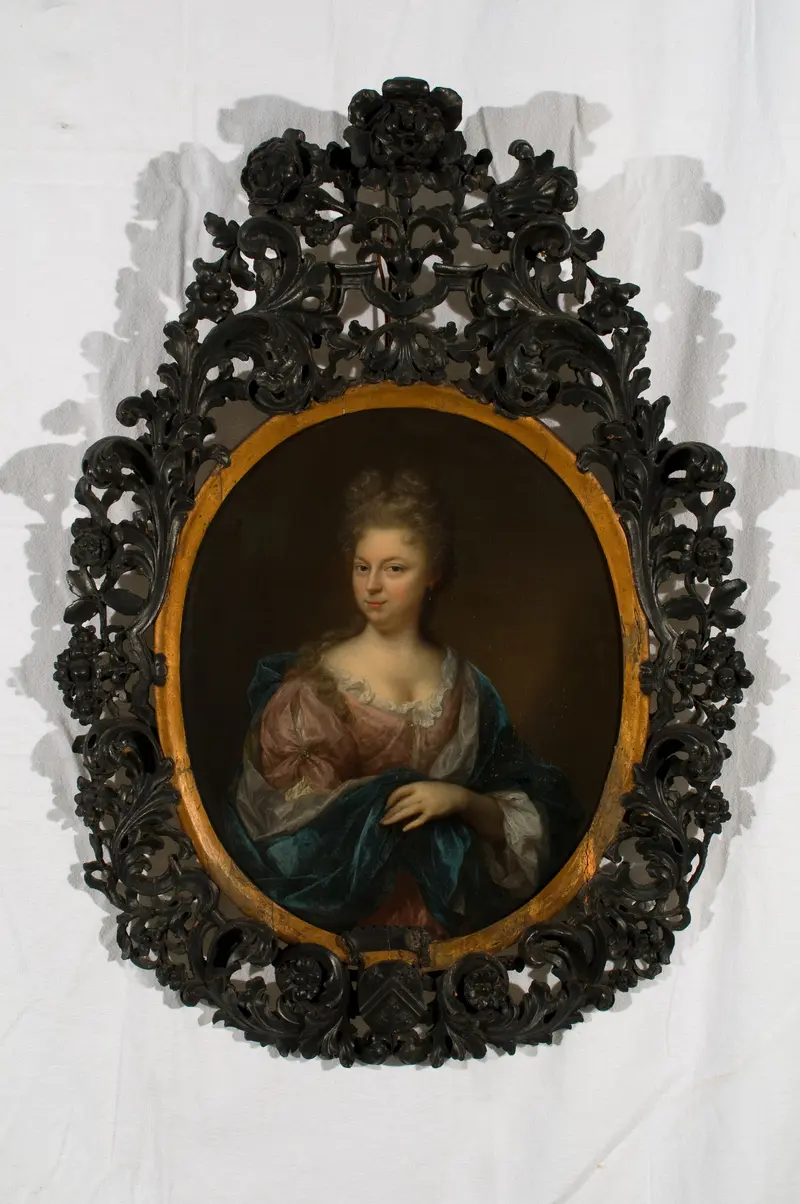
Portret van Eva Maria Muilman DM 011 982 Dordrechts Museum
Arnold Boonen
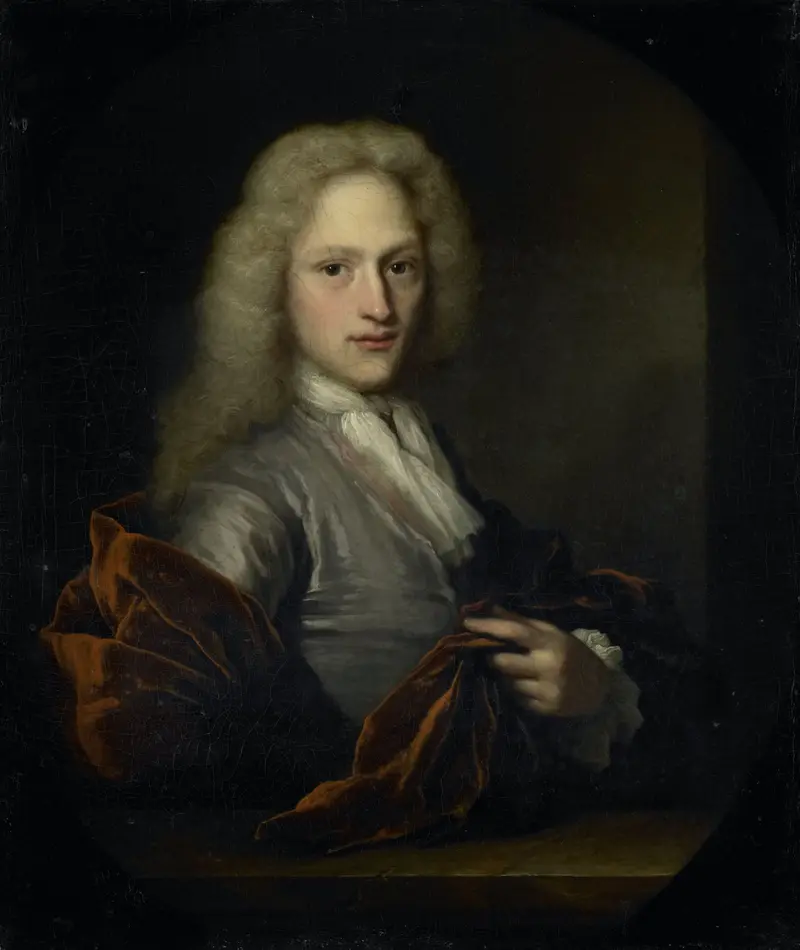
Portrait of a Man SK-A-
Arnold Boonen
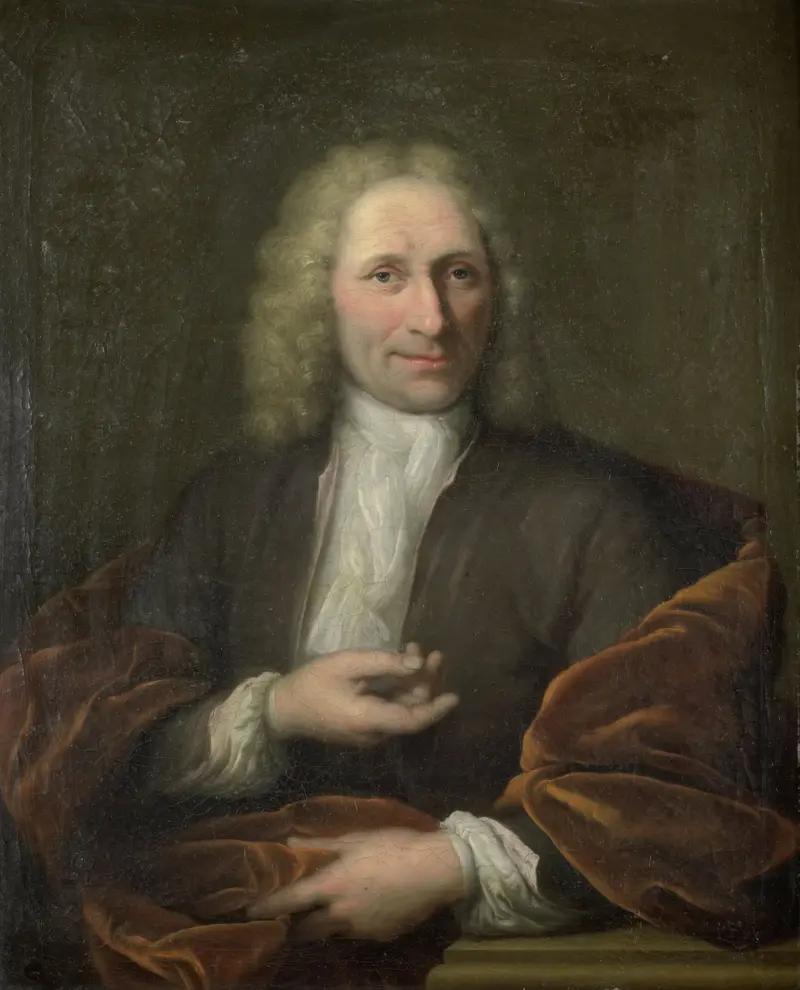
Portrait of a Man
Arnold Boonen
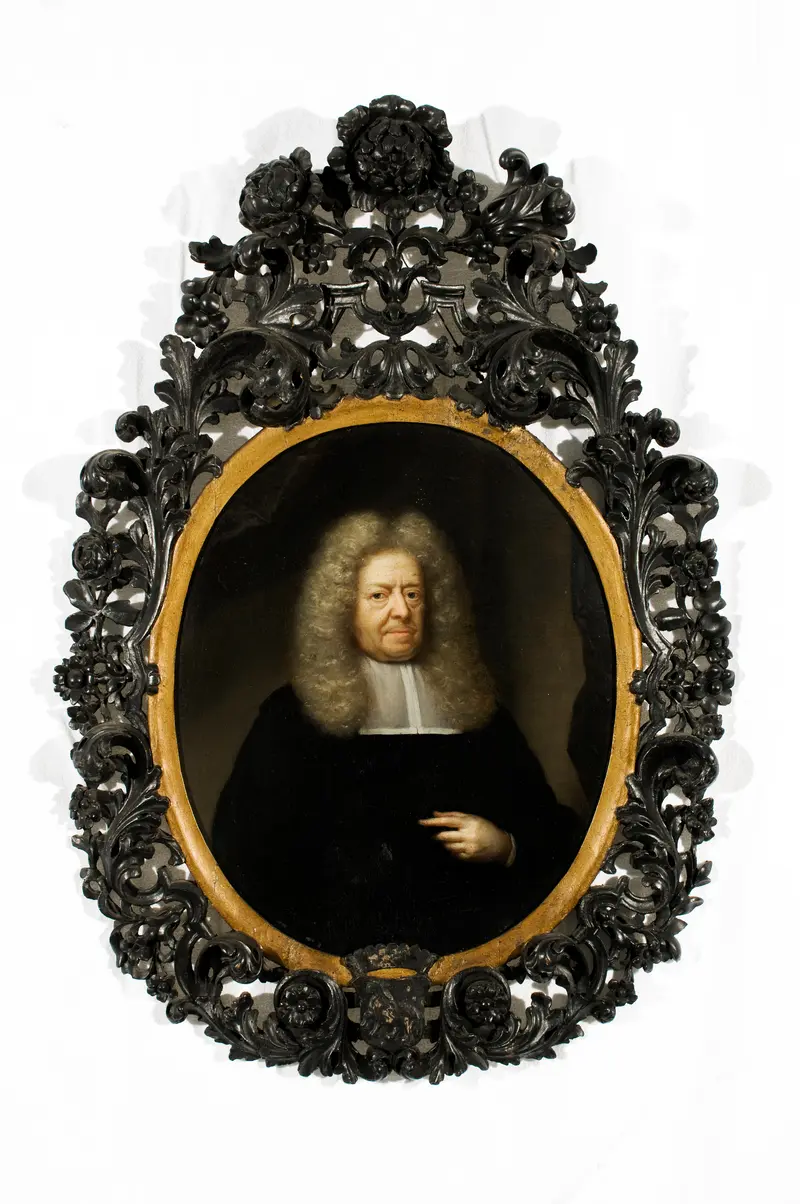
Portret van Mr. Pieter Schaep DM 011 979 Dordrechts Museum
Arnold Boonen
Portrait of a Woman
Arnold Boonen





