
Portrait of a Family in a Landscape — History & Facts
What first draws the eye in Portrait of a Family in a Landscape is the sweep of golden light that stitches together two worlds: the cultivated, dignified figures of the family and the wide, open Dutch countryside behind them. The painter, Aelbert Cuyp, leads us from the hunting party at the left—dog alert, game in hand—across a gentle arc of children, parents, and siblings, each pausing in a moment of connection. The careful arrangement of hands and glances creates a web of relationships: a child steps forward to receive the prize of the hunt, while the adults stand with a composed pride, their elegant attire set off by the earthy tones of the landscape.
The sky, vast and softly clouded, gives a sense of calm, while the distant cattle and tiny windmills remind us that this family’s world is both cultivated and rooted in the rhythms of rural life. Painted in 1641, this work belongs to the Dutch Golden Age, when prosperous burghers commissioned portraits to celebrate their status, virtue, and unity. Family portraits like this one were not only records of lineage but also statements of harmony and good fortune, set against the land that underpinned their wealth. Aelbert Cuyp was known for his luminous landscapes, and here he merges that talent with portraiture, letting the land and sky play as great a role as the sitters themselves.
Though history has kept few traces of this particular family's story, the painting survives as a testament to the ambitions and ideals of its time. Notice how the figures, though formally posed, seem anchored in the real world—inviting us to imagine their lives beyond the painted moment.
More Artworks by Aelbert Cuyp

The Maas at Dordrecht
Aelbert Cuyp
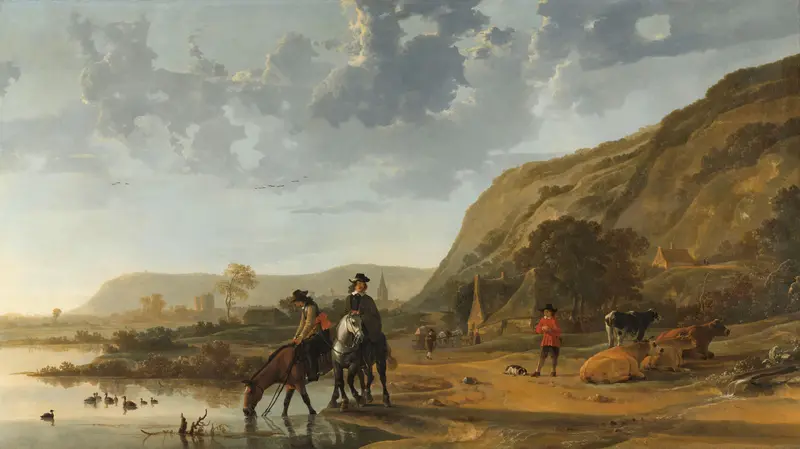
River Landscape with Riders
Aelbert Cuyp

The Maas at Dordrecht
Aelbert Cuyp
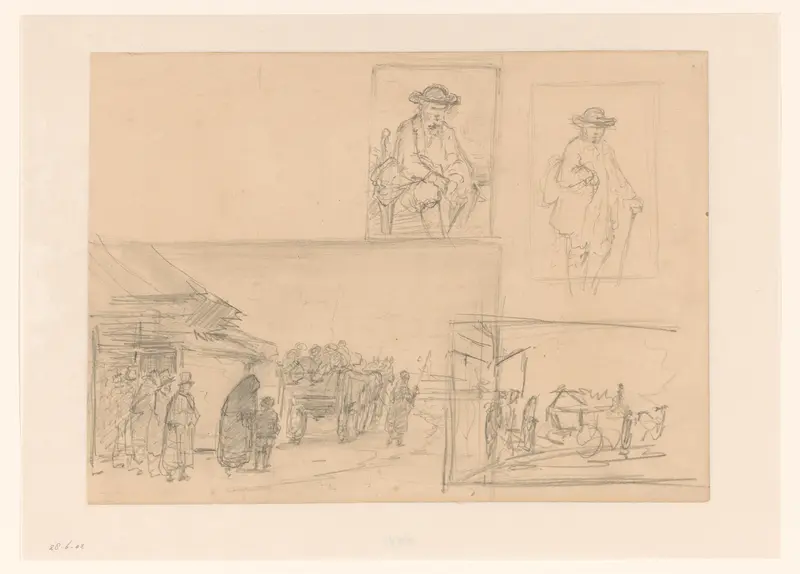
Gezicht op Dordrecht
Aelbert Cuyp
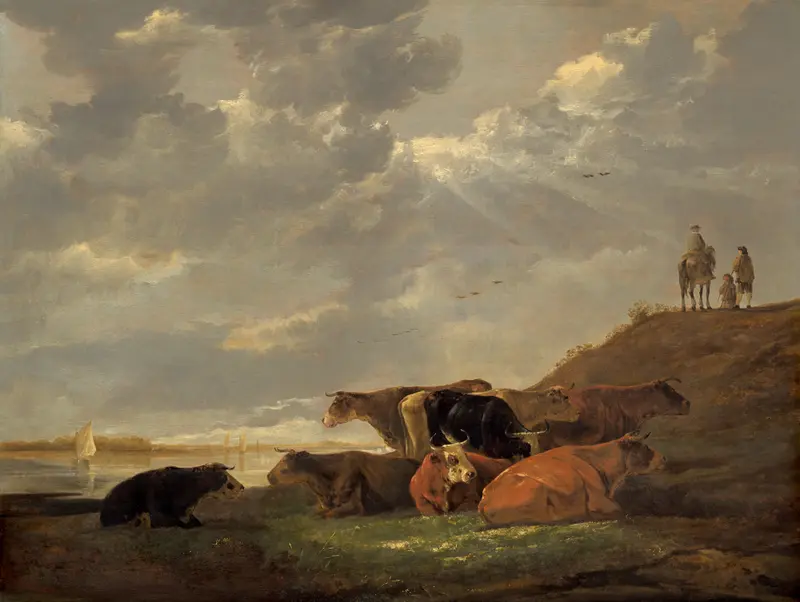
River Landscape with Cows
Aelbert Cuyp
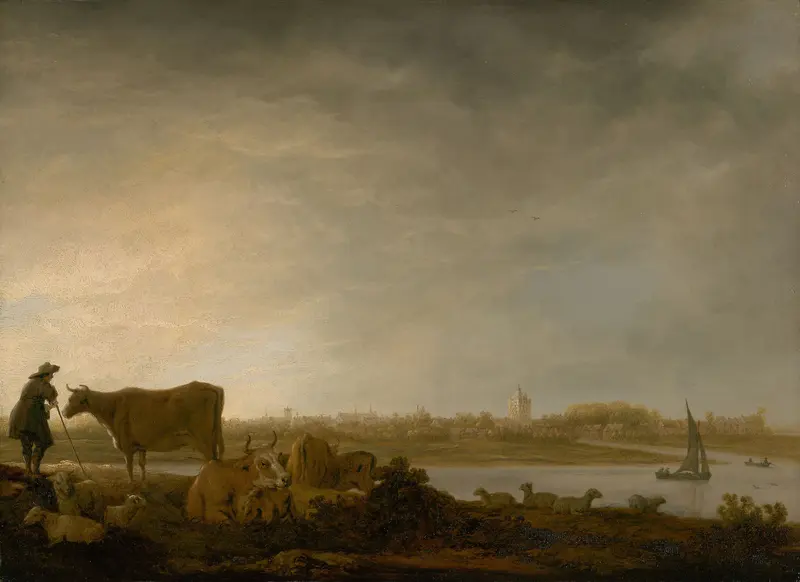
A View of Vianen with a Herdsman and Cattle by a River
Aelbert Cuyp
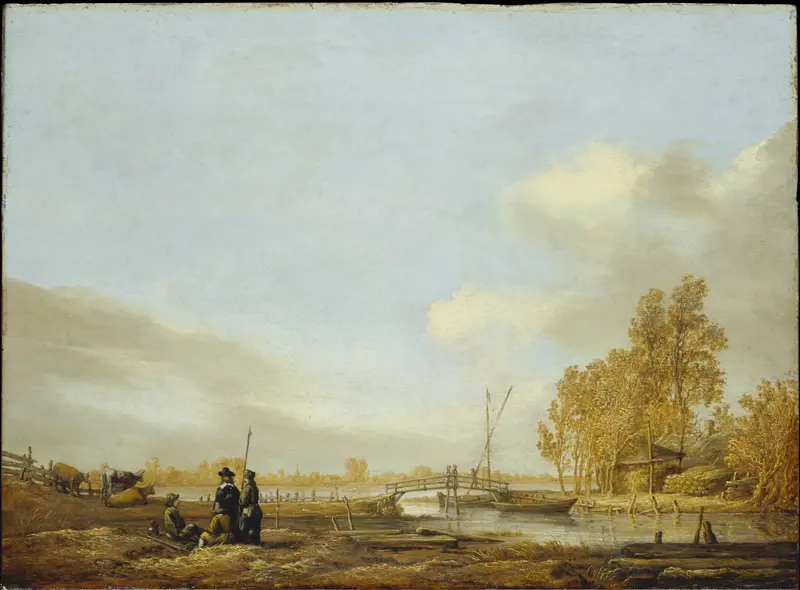
River Landscape with Footbridge
Aelbert Cuyp
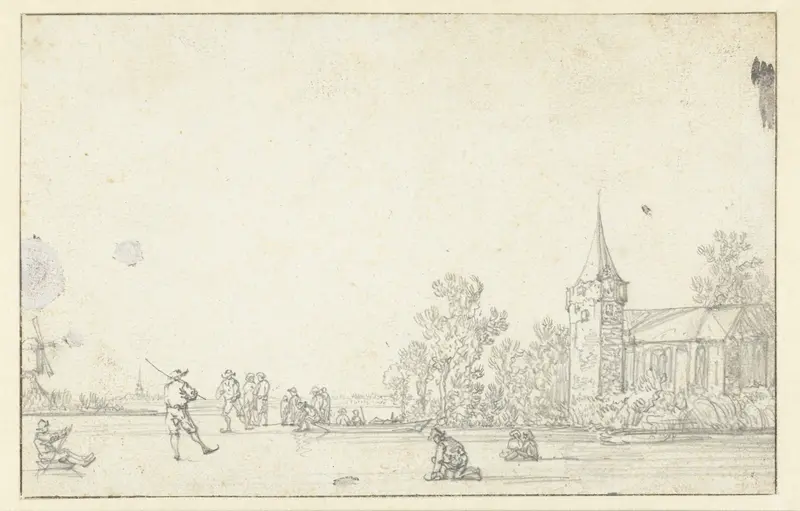
Bevroren rivier met schaatsers bij een kerk
Aelbert Cuyp

Cattle near a River
Aelbert Cuyp
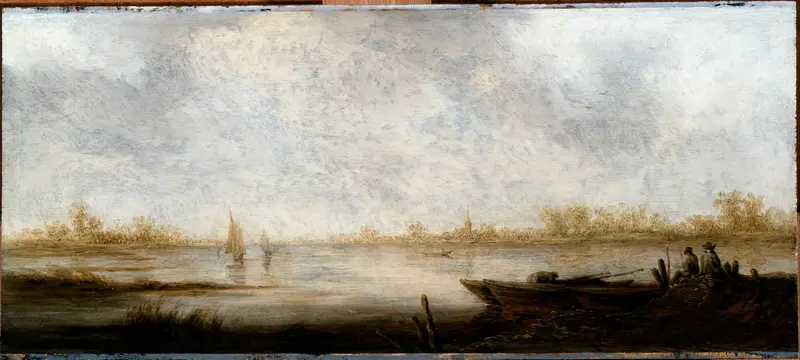
River Landscape
Aelbert Cuyp





