
Portrait of Madame Bouret as Diana — History & Facts
A young woman gazes out from the canvas, poised between myth and reality, her cheeks touched with the flush of evening. She wears not the heavy silks of court but the costume of Diana, goddess of the hunt: a leopard skin draped across her shoulder, a bow resting lightly in her hand, and a quiver of arrows at her side. The gesture of her right hand, extended with a gentle authority, suggests command and invitation both, as if she is about to speak or lead the viewer into the wooded twilight behind her.
The play of light across her bare shoulder and the luminous folds of her white gown draws the eye upward, while the vivid red drapery anchors her presence in the landscape. Every detail, from the delicate rendering of her features to the lively textures of fur and fabric, works to transform a portrait into a scene of masquerade and transformation. Works like this, painted in 1745 by Jean-Marc Nattier, belong to a world where portraiture was both a record and a performance. In the French Rococo era, it was fashionable for noblewomen to be painted as mythological figures—an artful blend of flattery, fantasy, and coded social ambition.
The Museo Thyssen-Bornemisza in Madrid now houses this example, a reminder of how the boundaries between sitter and goddess could blur in the hands of a painter celebrated for his skill in such transformations. Little is recorded of the specific life of this painting, but its style and subject speak volumes about the taste and aspirations of mid-eighteenth-century France. Look again at the sitter’s half-smile and the twilight sky: they hint at a world where identity itself was a kind of elegant game.
More Artworks by Jean-Marc Nattier

Madame Crozat de Thiers and Her Daughter
Jean-Marc Nattier
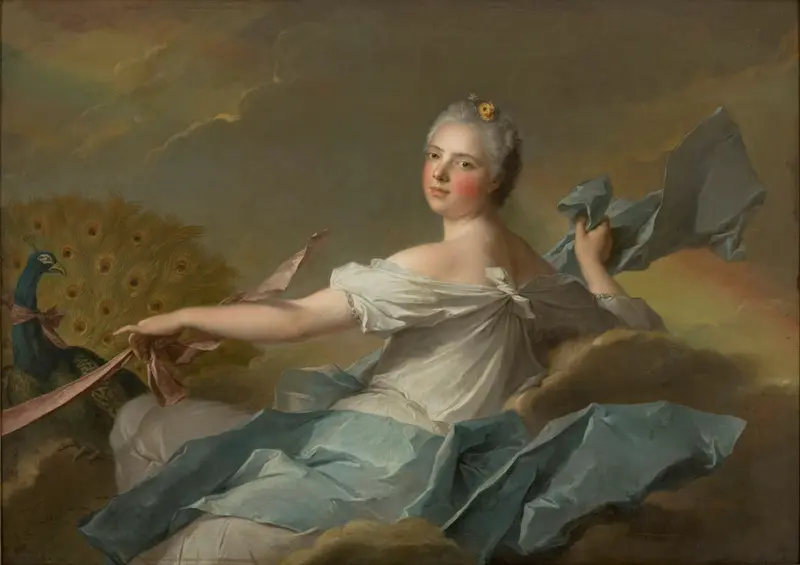
Princess Marie Adélaïde of France - The Air
Jean-Marc Nattier
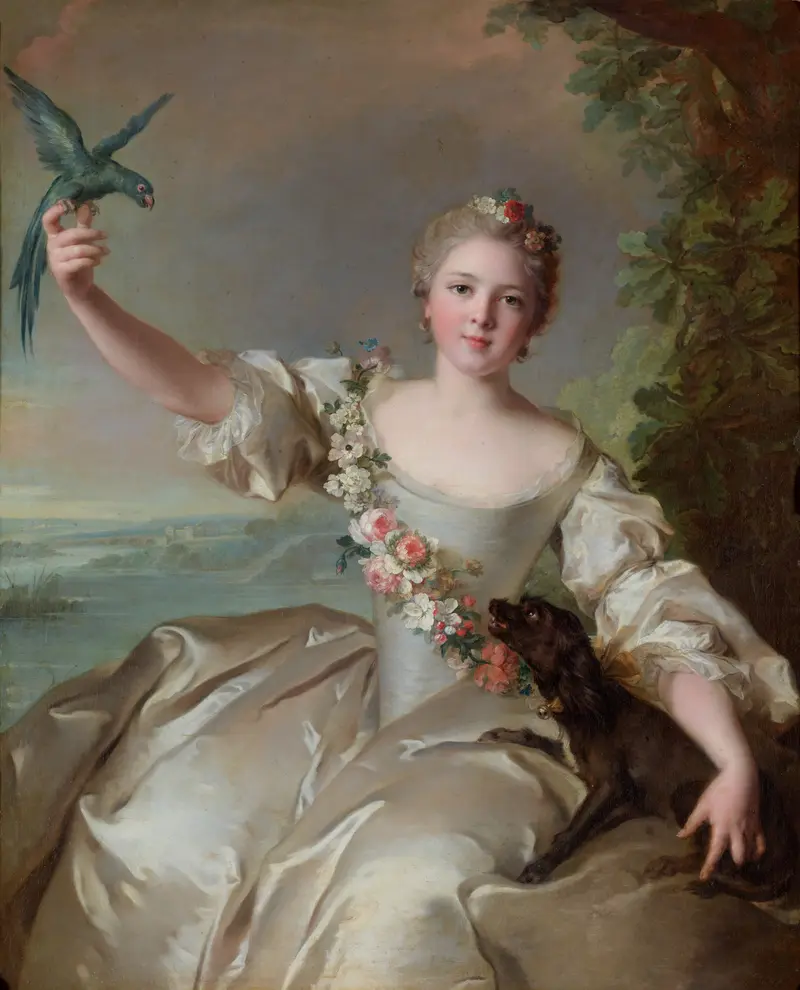
Portrait de Mathilde de Canisy, marquise d'Antin
Jean-Marc Nattier
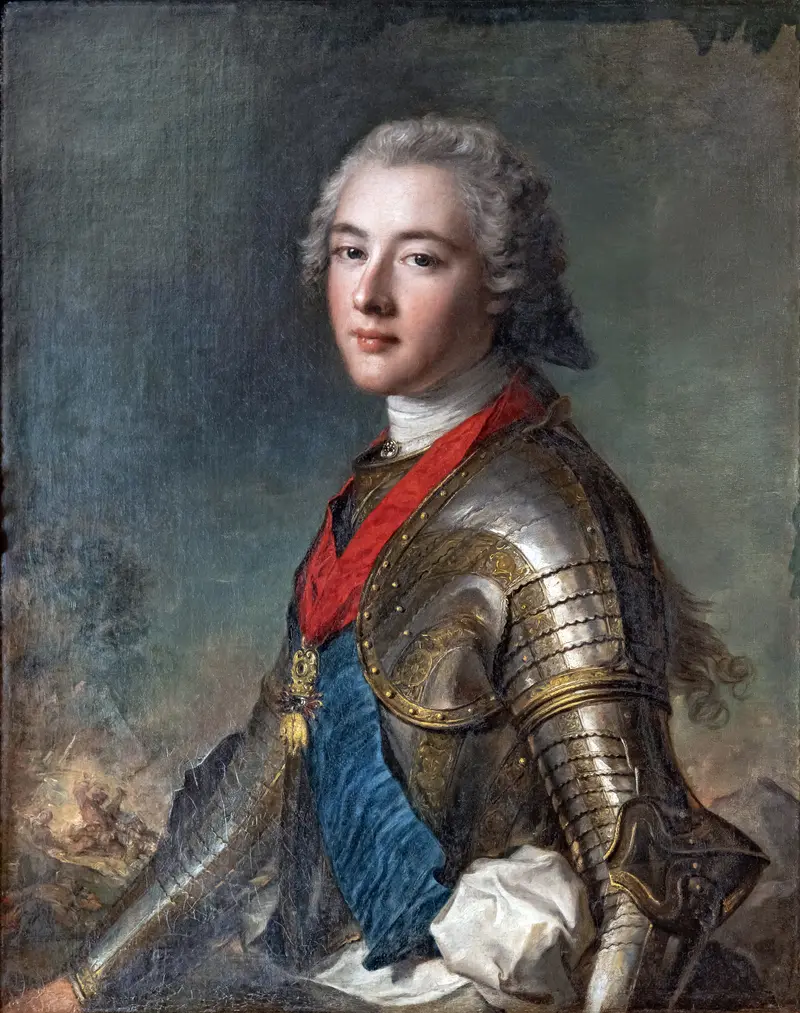
Bemberg Fondation Toulouse - Portrait de Louis Jean Marie de Bourbon, Duc de Penthièvre - Jean Marc Nattier inv.1158 82x65.4
Jean-Marc Nattier
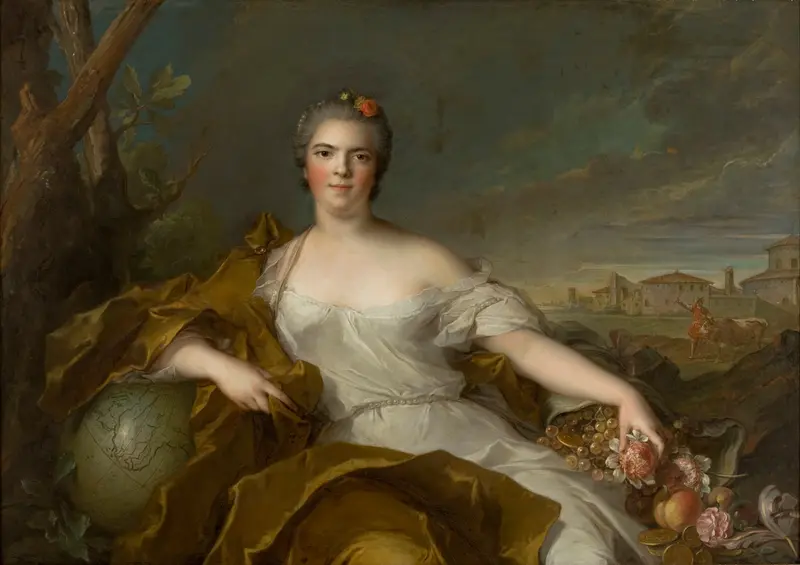
Princess Louise-Élisabeth of France - The Earth
Jean-Marc Nattier
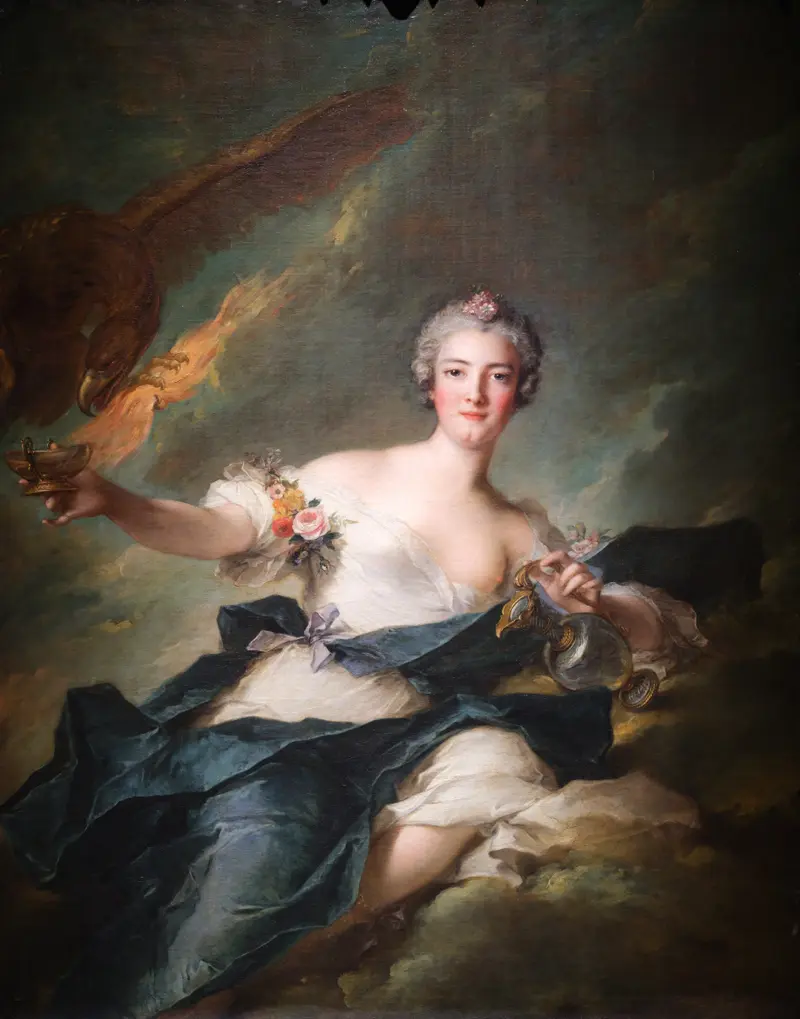
The Duchess of Chaulnes Represented as Hebe
Jean-Marc Nattier
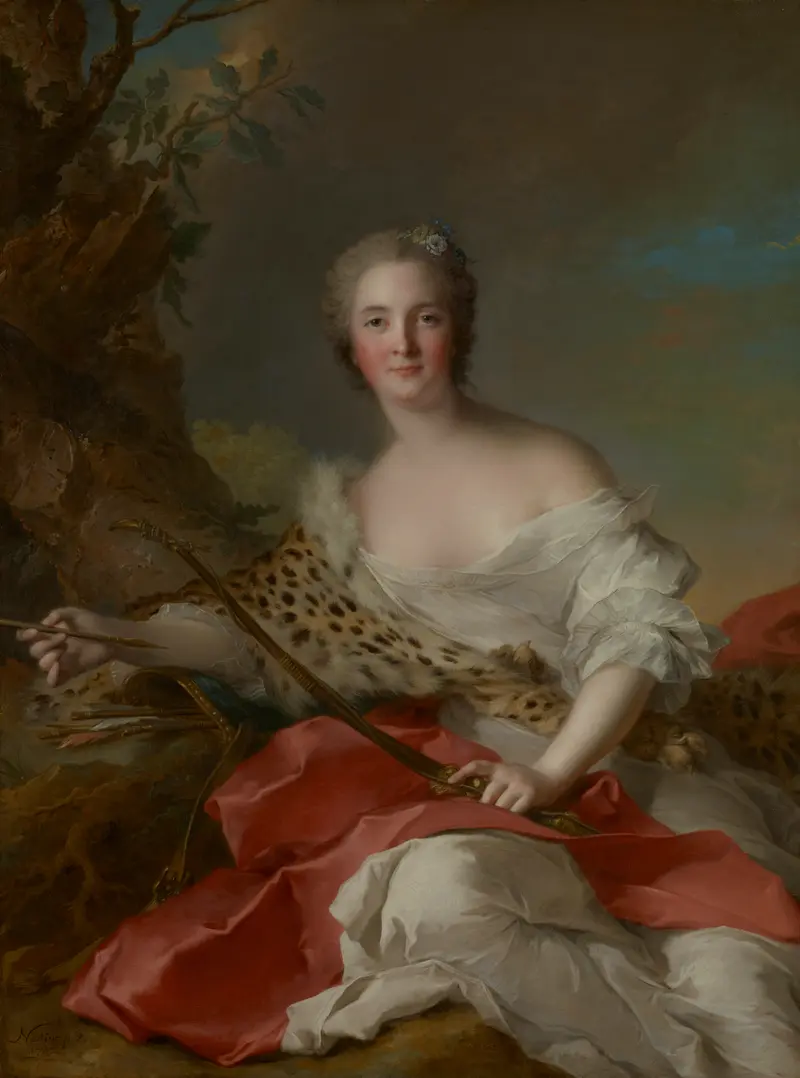
Portrait of Madame Bonnier de la Mosson as Diana (Constance-Gabrielle-Magdeleine du Monciel de Lauraille
Jean-Marc Nattier
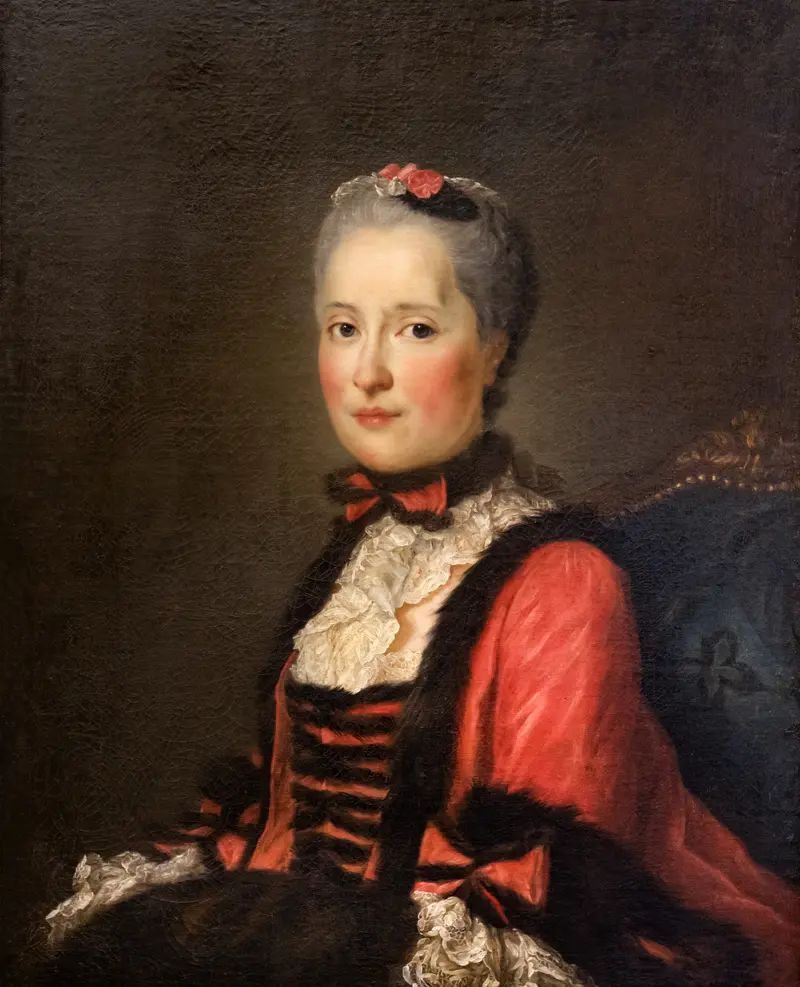
Portrait of Marie-Josephe of Saxony, Dauphine of France
Jean-Marc Nattier
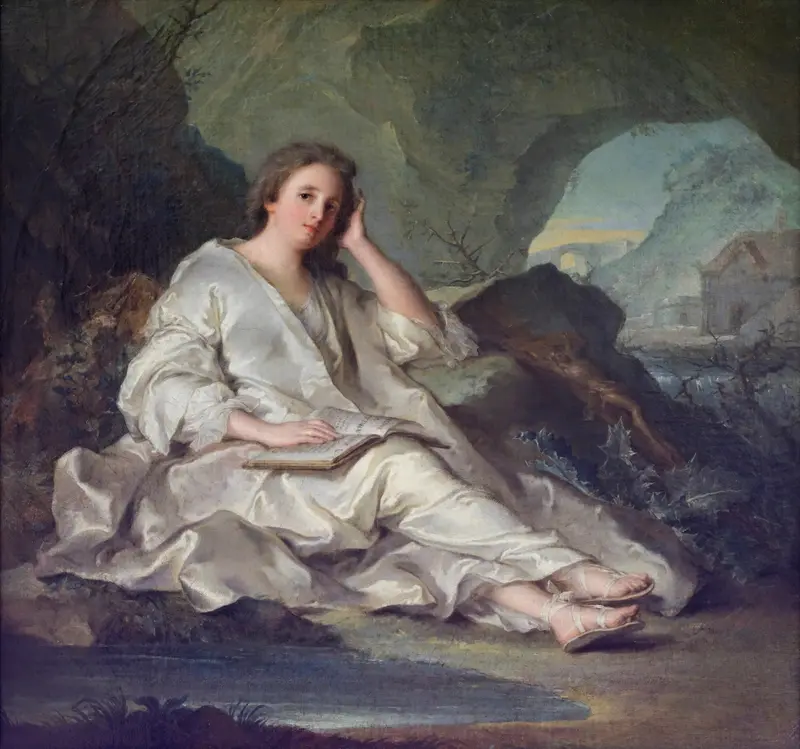
La Madeleine, ou Une Pénitente dans le désert Musée du Louvre Peintures INV 6880 ; MR
Jean-Marc Nattier
Princess Anne-Henriette of France - The Fire
Jean-Marc Nattier





