
Portrait of Philip II of Spain — History & Facts
What first seizes the eye in Portrait of Philip II of Spain is not the future king’s youth, but the gravity he wears like armor. The sitter’s gaze is steady, almost wary, as if weighing the world he is poised to inherit. Every inch of his attire signals rank and vigilance: the black velvet glimmers with gold-threaded patterns, while the thick chain and the insignia of the Order of the Toison d'Or rest with calculated prominence on his chest.
His right hand, relaxed but deliberate, claims a corner of the pink velvet table—a gesture of possession and poise—while his left, clutching gloves, hints at readiness and restraint. The sword at his waist, with its ornate hilt, is less a weapon than a badge of office, completing the tableau of princely authority. This is the world of the Habsburg courts in the mid-sixteenth century, where portraiture was a language of power as much as likeness. Antonis Mor, a Flemish painter favored by the imperial family, brings to this image the cool precision and psychological depth that marked his portraits.
Painted between 1549 and 1550, when Philip was still a prince, the work stands at the intersection of Spanish formality and northern attention to detail. Such portraits were not mere records, but instruments of dynastic strategy—sent across Europe to announce alliances, assert claims, and shape reputations. History has kept few traces of the daily life behind these solemn faces, but the painting’s surface—rich, dark, and meticulously worked—invites us to look closer, to read the ambitions and anxieties stitched into every thread.
More Artworks by Antonis Mor

Portrait of a Man
Antonis Mor
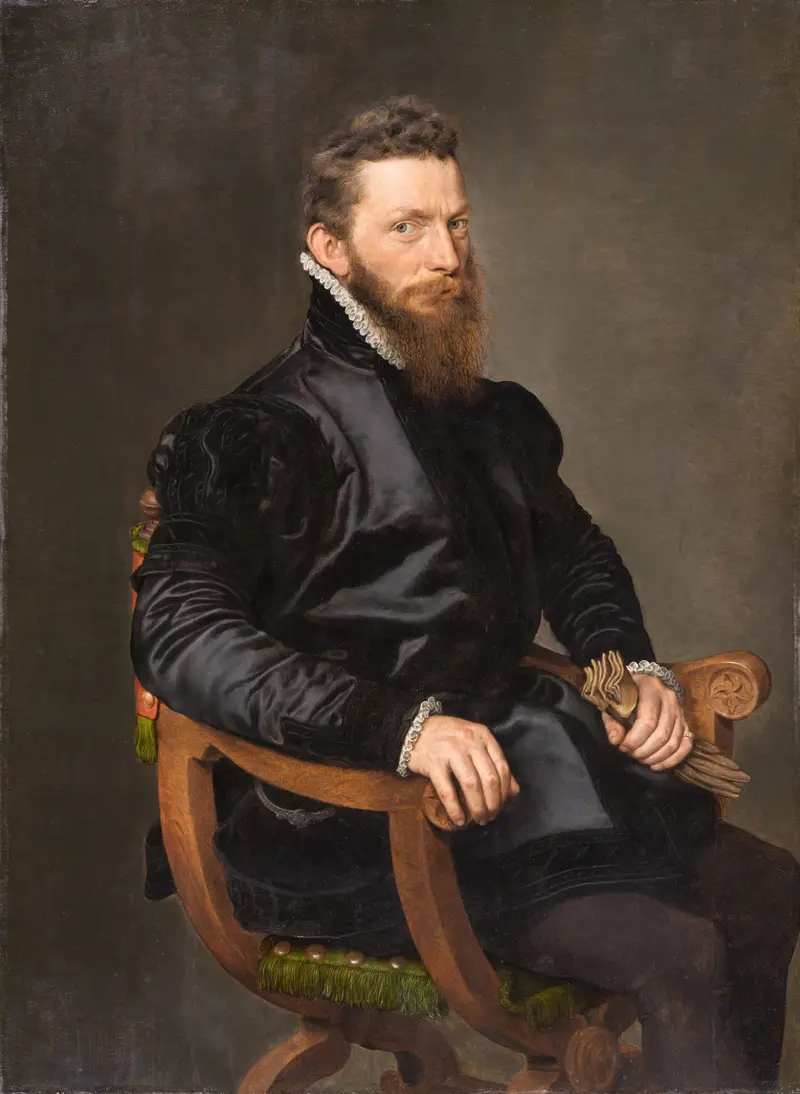
Portrait of a Gentleman
Antonis Mor
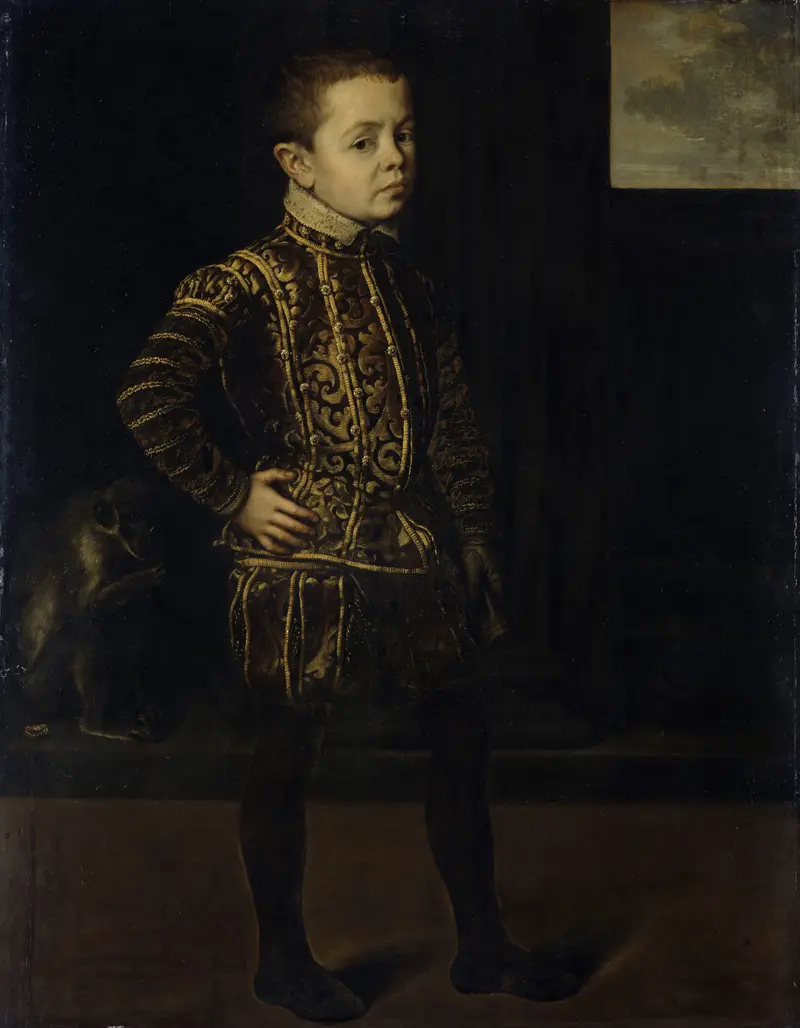
Portrait of a young prince
Antonis Mor
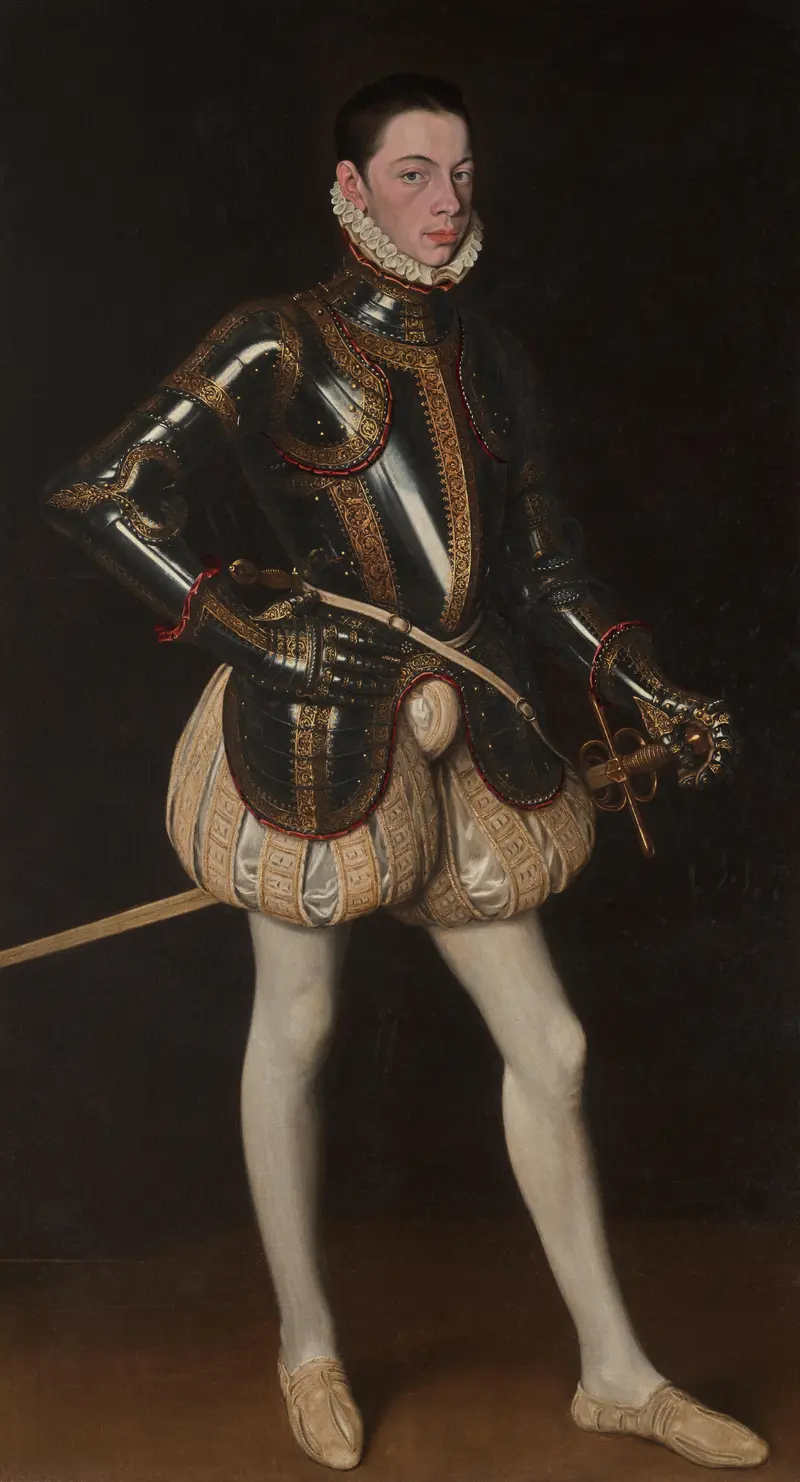
Alessandro Farnese in Armor
Antonis Mor
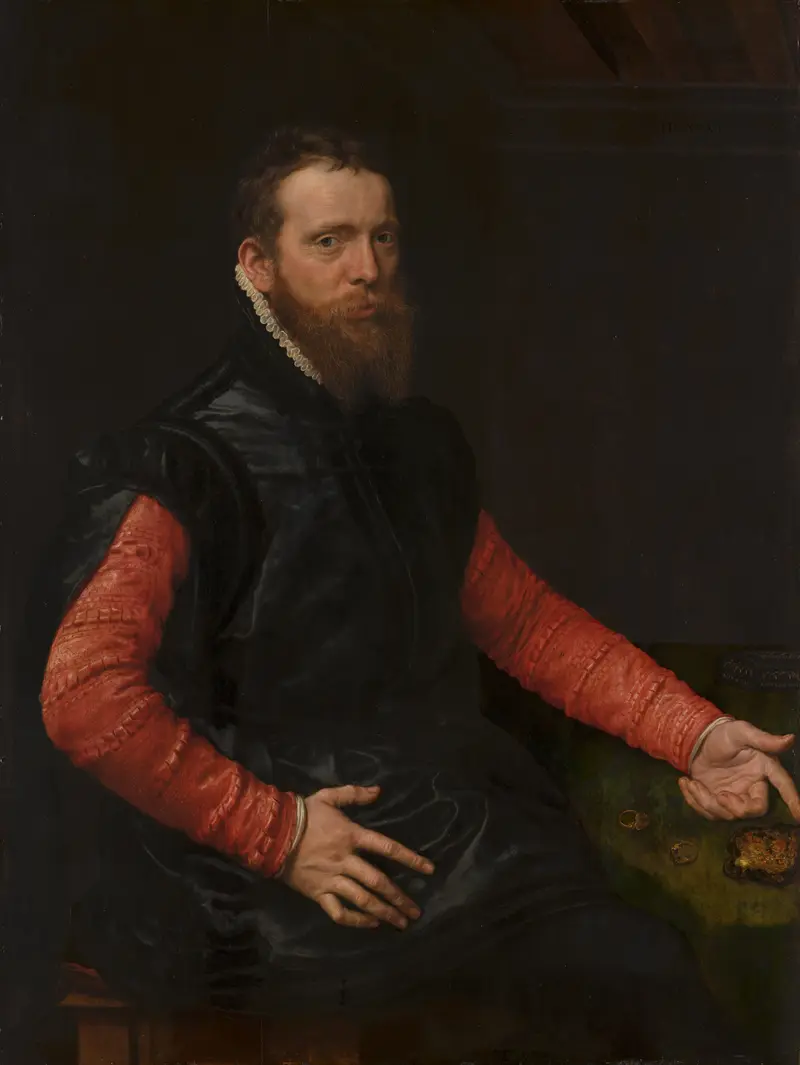
Steven van Herwijck
Antonis Mor
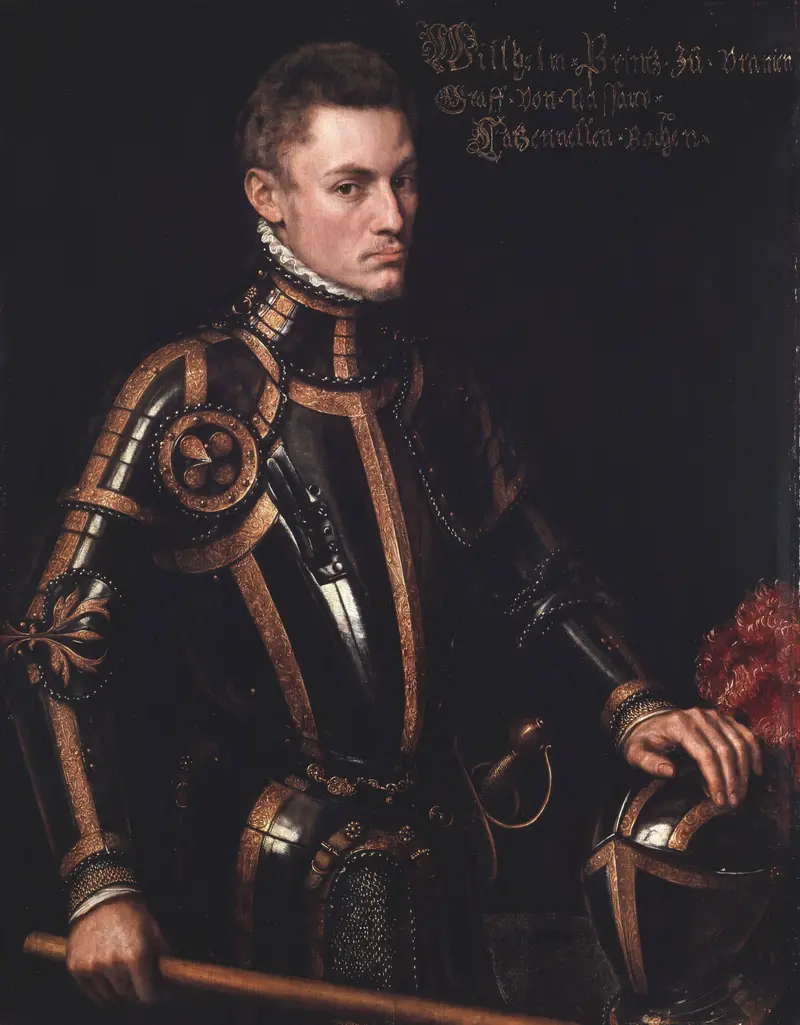
Portrait of William I of Nassau
Antonis Mor
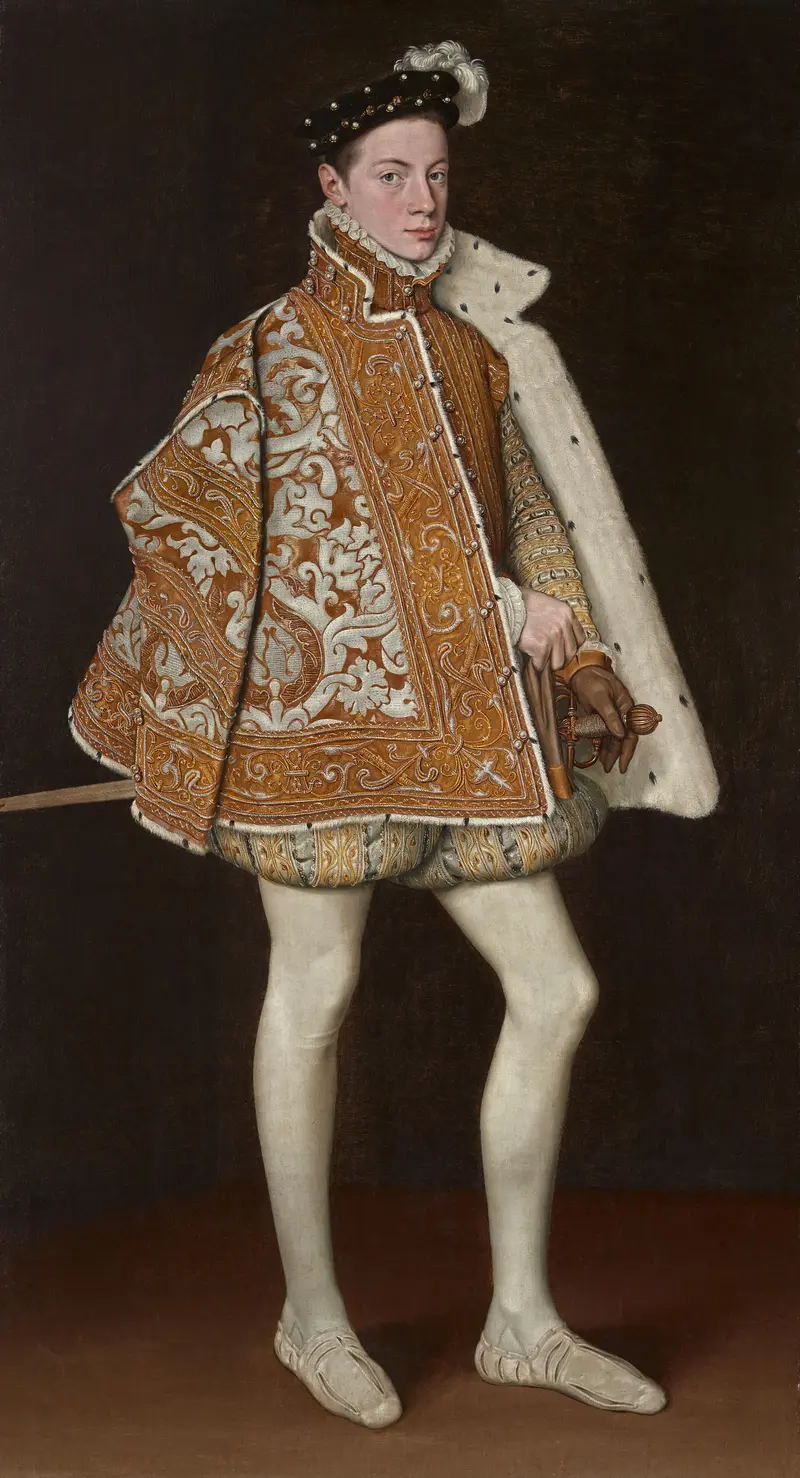
Portrait of Alessandro Farnese in Cape and Black Cap
Antonis Mor
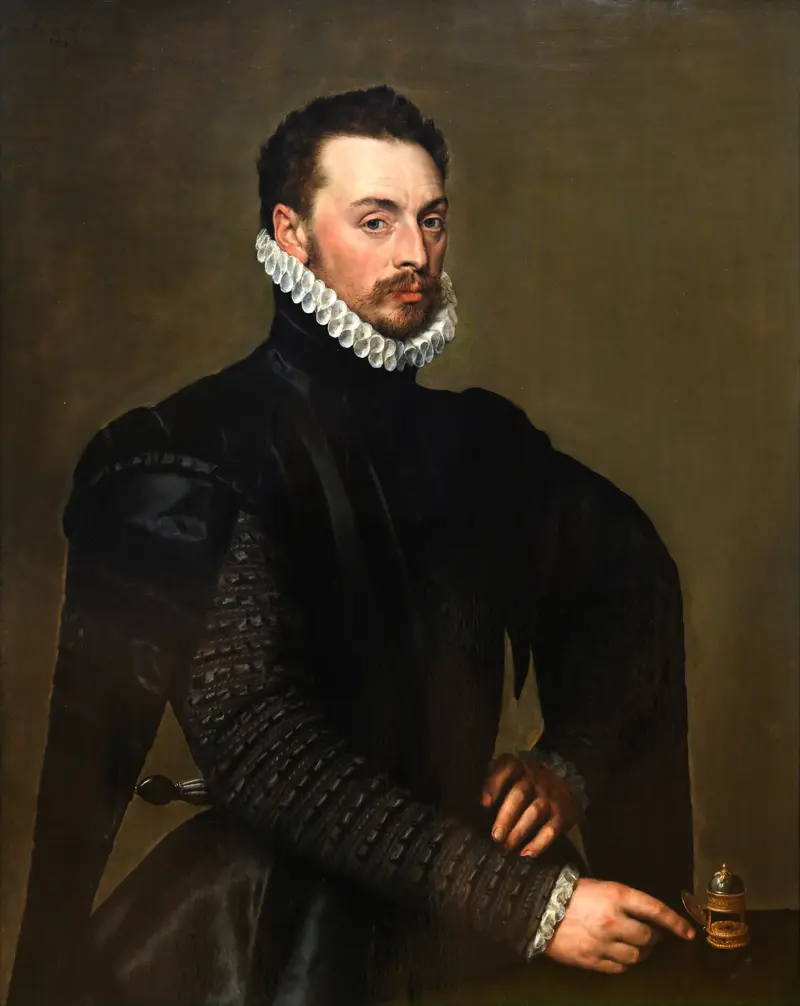
Portrait d'homme désignant une pendule Antonio Moro Musée du Louvre Peintures INV 1582 ; MR 880
Antonis Mor
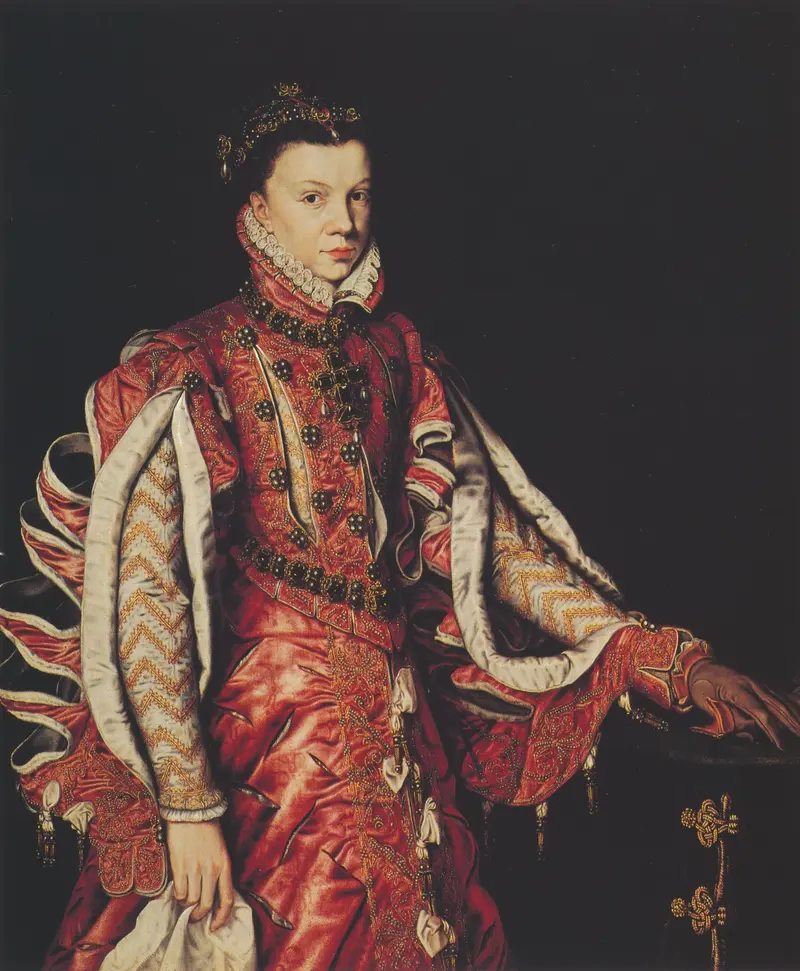
Portrait of Elisabeth of Valois, third wife of King Philip II of Spain
Antonis Mor
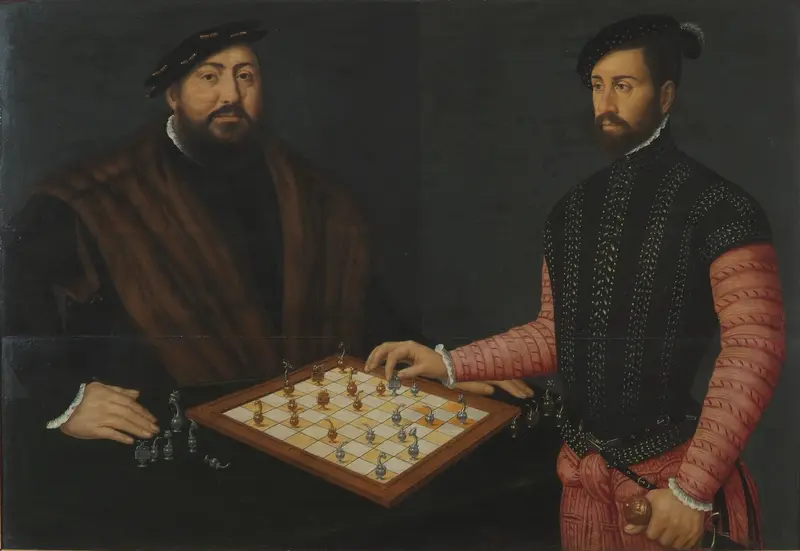
Von Sachsen vs. a Spaniard
Antonis Mor





