
Portrait of the Poet Matsuo Bashō (?) — History & Facts
No one can say for certain whether the figure in Portrait of the Poet Matsuo Bashō (?) is truly the legendary haiku master, and this uncertainty has sparked debate ever since the work surfaced in 1804. The question mark in its title is more than a formality—it signals a genuine mystery. While Katsushika Hokusai was known for his fascination with literary figures, no direct evidence links this portrait to Bashō beyond tradition and style.
Some scholars point to the lack of an inscription or identifying emblem as reason for doubt, while others cite the resemblance to earlier images of the poet. The painting thus stands at the crossroads of art history and literary legend, its subject forever just out of reach. The sitter’s gentle, meditative pose invites the viewer into a moment of quiet reflection, much like the poetry of Bashō himself. The figure, robed in simple garments, sits with eyes downcast, hands resting lightly on a scroll—perhaps a nod to the written word and the fleeting nature of inspiration.
The background is spare, focusing all attention on the sitter’s calm expression and the subtle play of line and shadow across the face. The restraint and clarity recall other portraits of literary figures in Japanese art, such as Yosa Buson’s depictions of poets, yet Hokusai’s hand is unmistakable in the fluid, expressive brushwork. Every detail, from the folds of the robe to the delicate rendering of the hands, suggests a life spent in contemplation. The physical history of this painting is as elusive as its subject.
Its medium remains uncertain, though it is likely to be ink and color on paper or silk, in keeping with Hokusai’s practice around 1804. There is no record of a specific patron, and the work’s early provenance is undocumented, typical for many Japanese portraits of the Edo period. Over time, it has been attributed to Hokusai based on stylistic grounds, though some still question its authorship.
Today, the portrait is valued as a rare intersection of visual art and poetry from the late Edo era, offering a glimpse into the world of Hokusai at a time when he was experimenting with new subjects and forms.
More Artworks by Katsushika Hokusai

The Great Wave off Kanagawa
Katsushika Hokusai
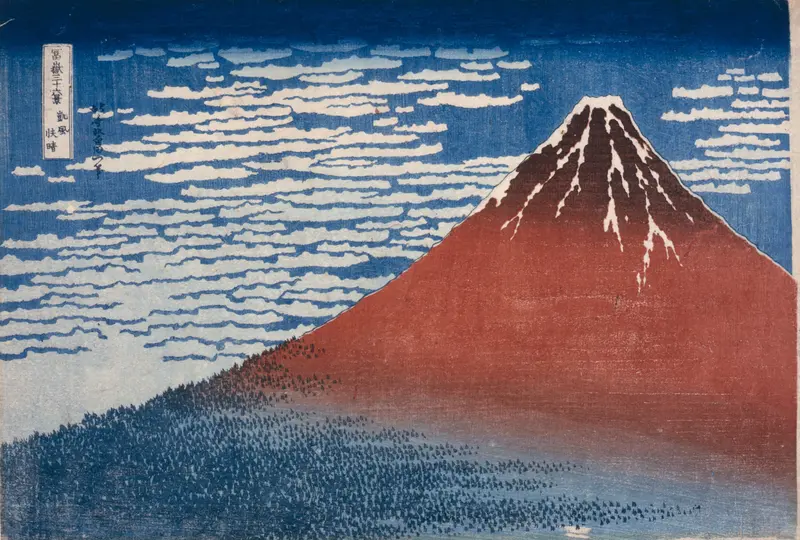
Fine Wind, Clear Morning (Red Fuji)
Katsushika Hokusai
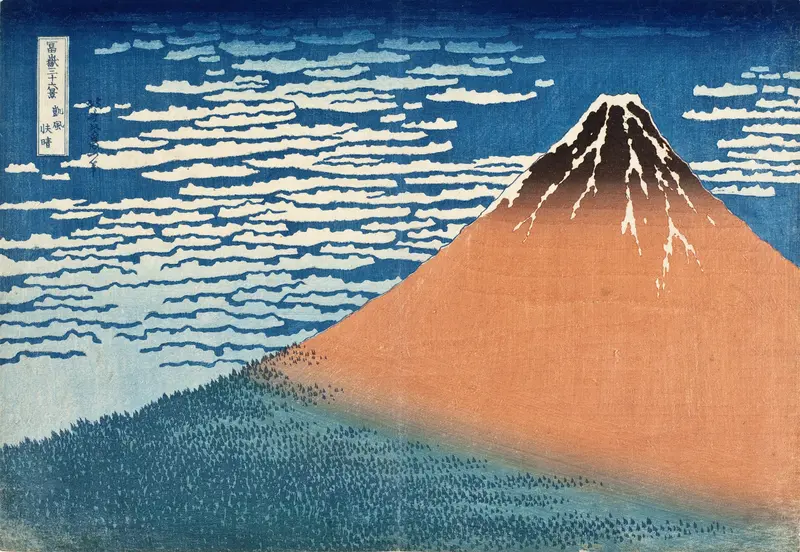
South Wind, Clear Dawn
Katsushika Hokusai
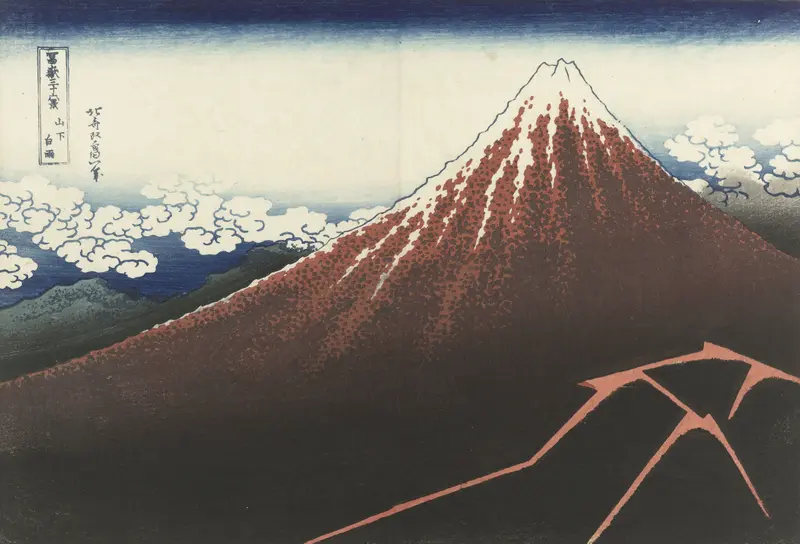
Rainstorm Beneath the Summit
Katsushika Hokusai
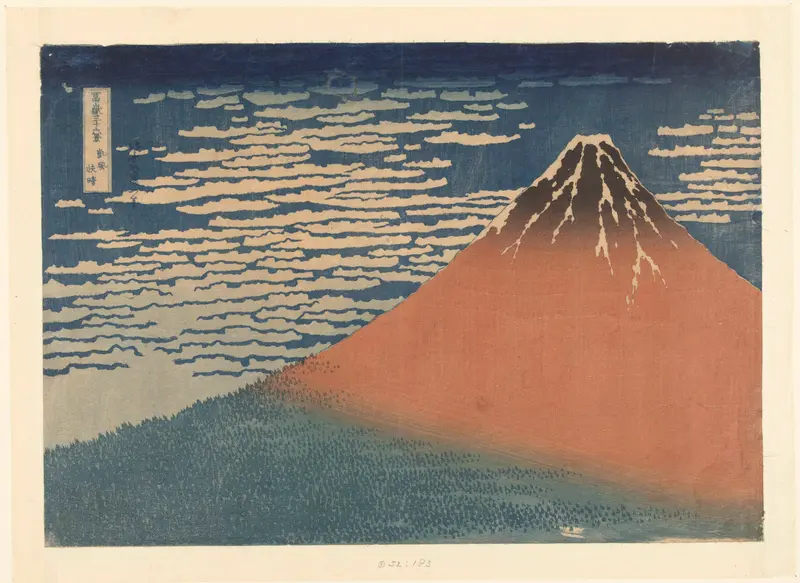
Clear Weather with a Southerly Wind
Katsushika Hokusai
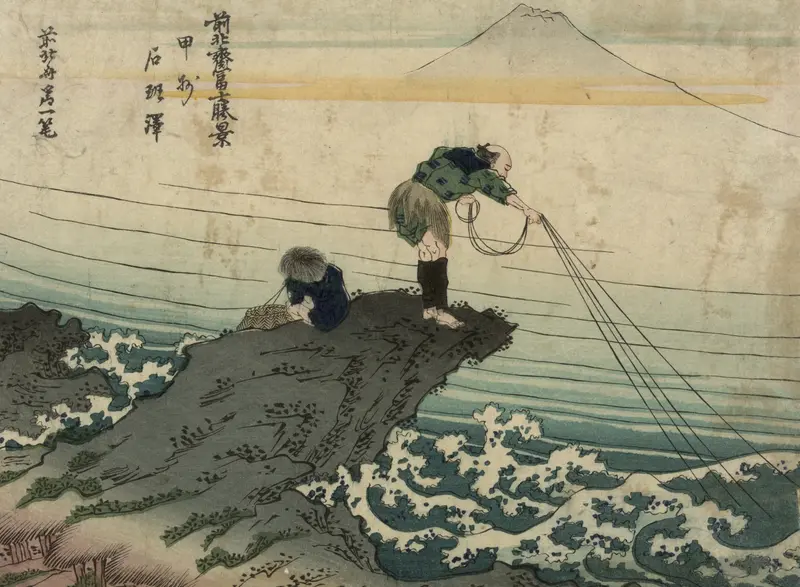
Kōshū kajikazawa
Katsushika Hokusai
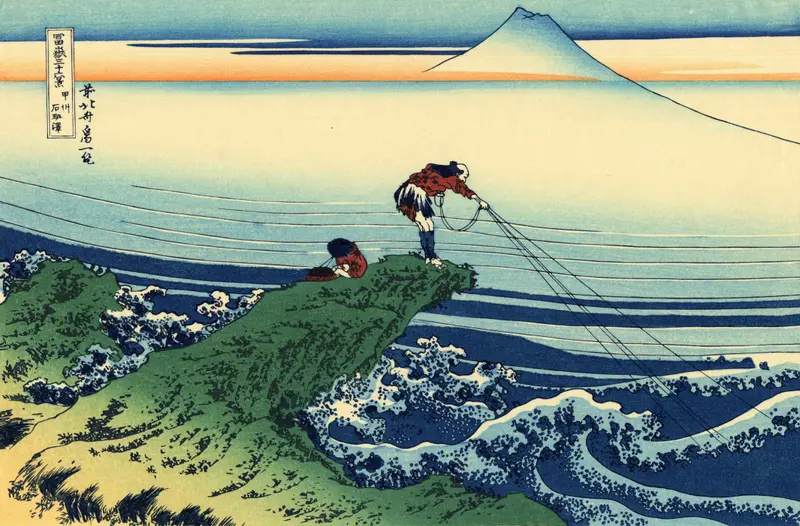
Kōshū kajikazawa 2
Katsushika Hokusai
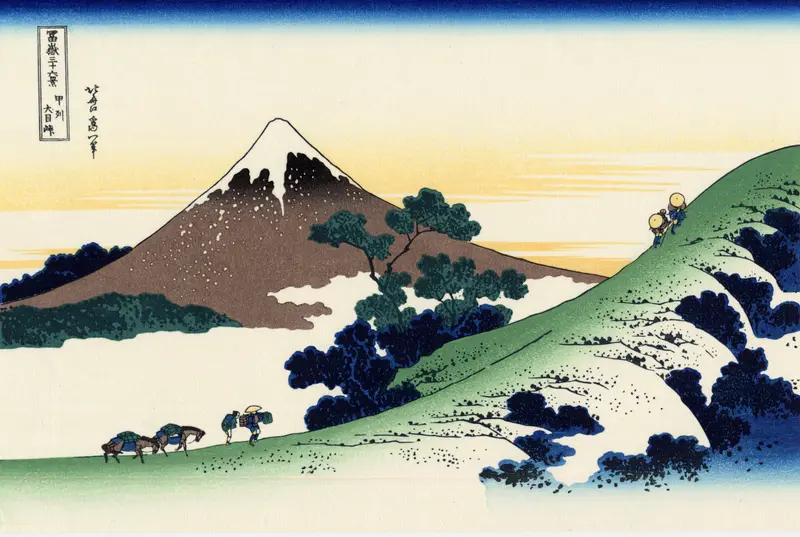
Inume Pass in Kai Province (Kôshû inume-tôge)
Katsushika Hokusai

Yoro Falls in Mino Province (Mino no Yoro no taki), from the series "A Tour of Waterfalls in Various Provinces (Shokoku taki meguri)"
Katsushika Hokusai
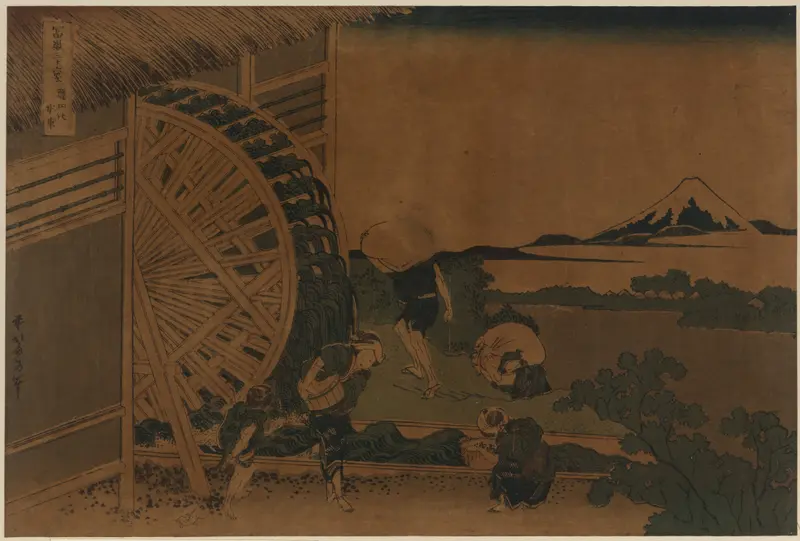
Onden no suisha
Katsushika Hokusai





