
Portrait présumé de Mme de Mailly , en Hébé P486 Musée Carnavalet — History & Facts
What first draws the eye in this portrait is not the sitter’s face, but the theatrical sweep of blue silk and the sudden, mythic presence of an eagle, its beak aflame, reaching for a golden cup. The woman, poised on a cloud, is dressed not as herself but as the goddess Hebe, cupbearer to the gods. Her arm extends confidently, offering the vessel with a grace that is both formal and playful, while her other hand clasps a jug, ready to refill.
The flowers at her shoulder and the soft light on her skin set a mood of gentle festivity, but the eagle—Zeus in disguise—adds a flicker of danger and power. The painter guides our gaze in a spiral: from the eagle’s fire, to her calm, knowing smile, and down through the luminous folds of fabric. Works like this, painted in the 1730s by Jean-Marc Nattier, belong to a world where portraiture and myth were often intertwined. In the French court and among the Parisian elite, it became fashionable to be depicted as a figure from antiquity, blurring the lines between personal vanity and allegory.
Such portraits were tokens of status and wit, meant to be seen and talked about in salons hung with mirrors and candlelight. This painting, now in the collection of Paris Musées, is part of that tradition: a glimpse into the Rococo era’s taste for fantasy, elegance, and subtle self-promotion. Look again at the sitter’s eyes—she seems to know the game she is playing, and invites us to play along.
More Artworks by Jean-Marc Nattier

Madame Crozat de Thiers and Her Daughter
Jean-Marc Nattier
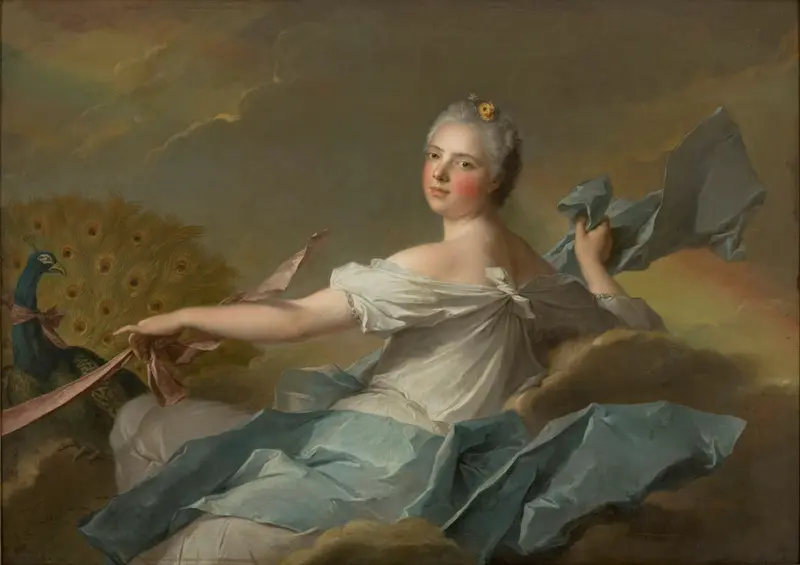
Princess Marie Adélaïde of France - The Air
Jean-Marc Nattier
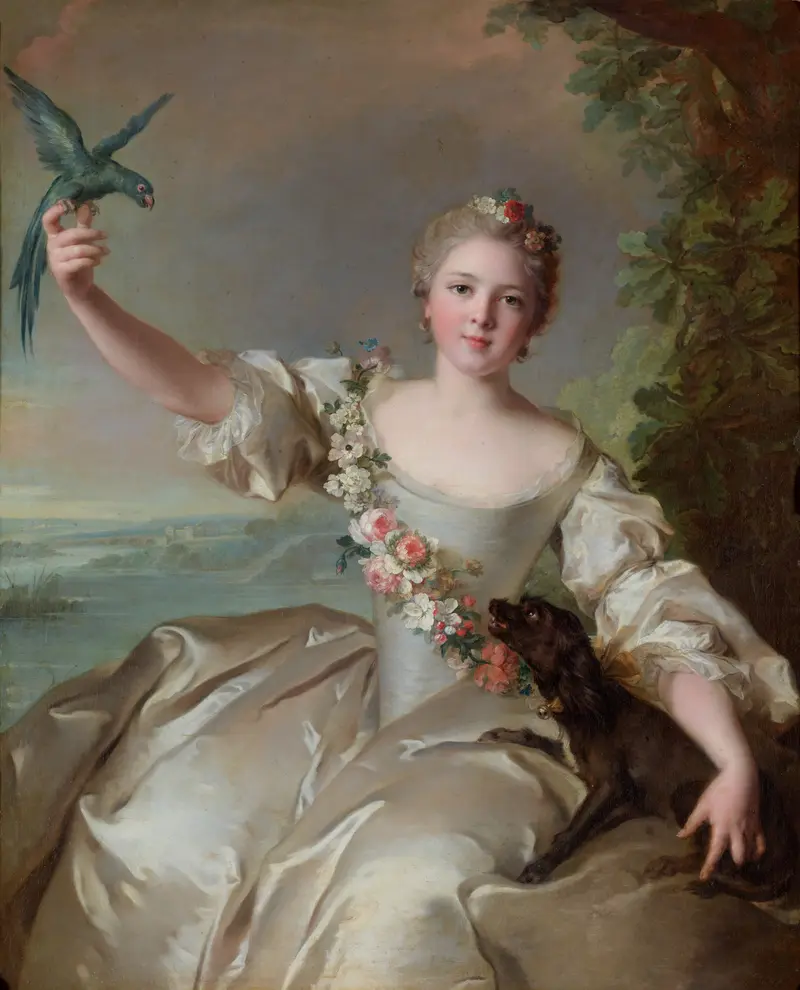
Portrait de Mathilde de Canisy, marquise d'Antin
Jean-Marc Nattier
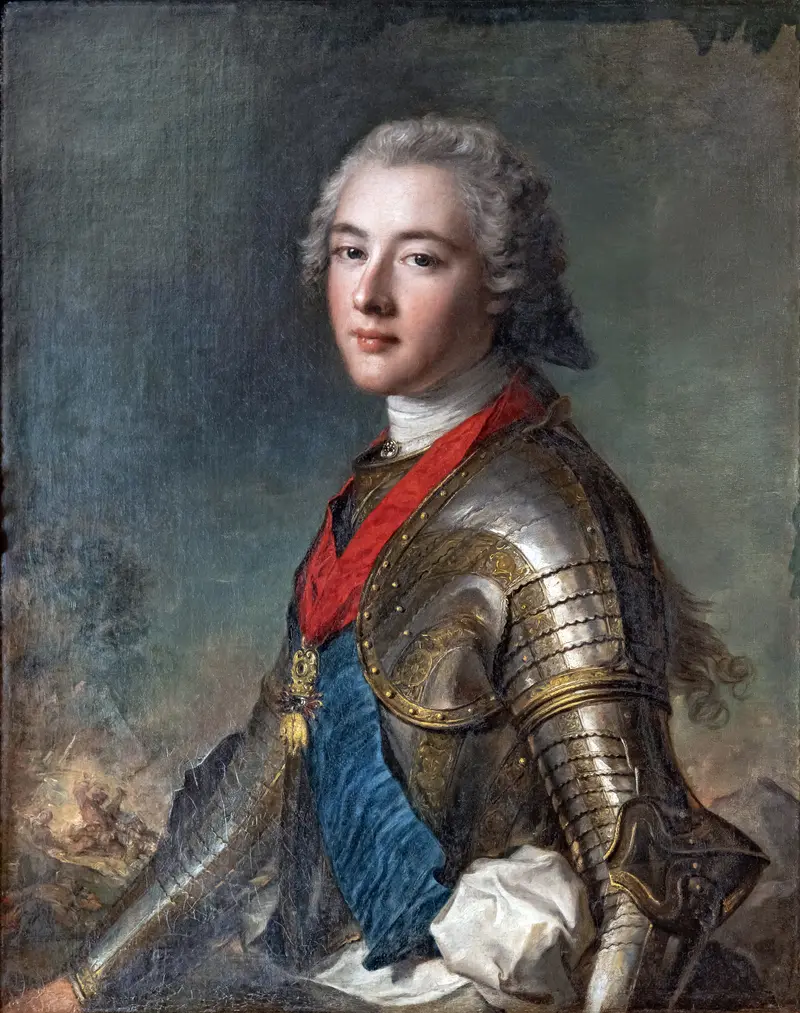
Bemberg Fondation Toulouse - Portrait de Louis Jean Marie de Bourbon, Duc de Penthièvre - Jean Marc Nattier inv.1158 82x65.4
Jean-Marc Nattier
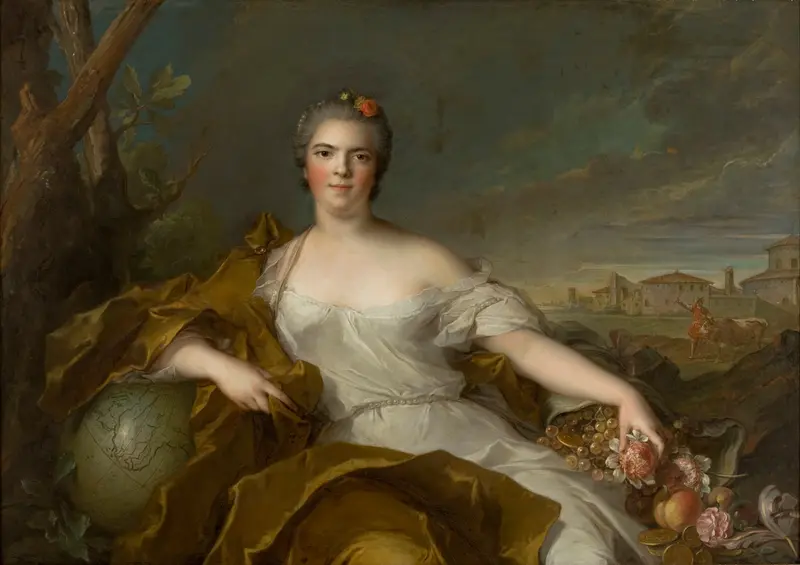
Princess Louise-Élisabeth of France - The Earth
Jean-Marc Nattier
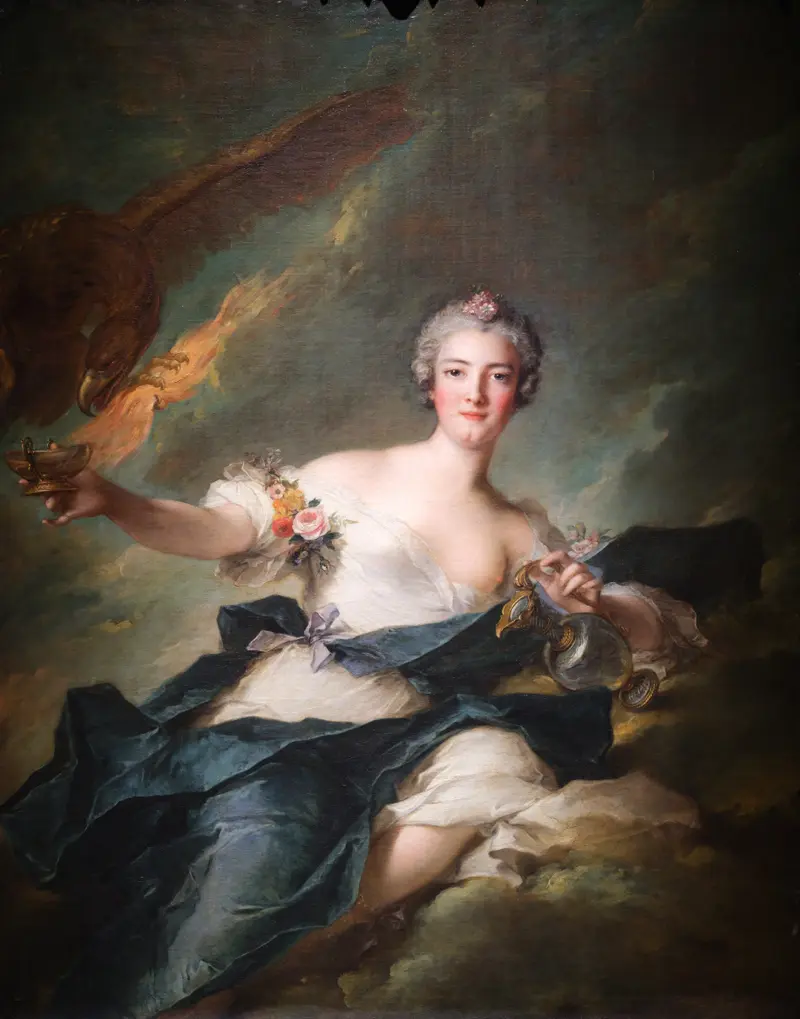
The Duchess of Chaulnes Represented as Hebe
Jean-Marc Nattier
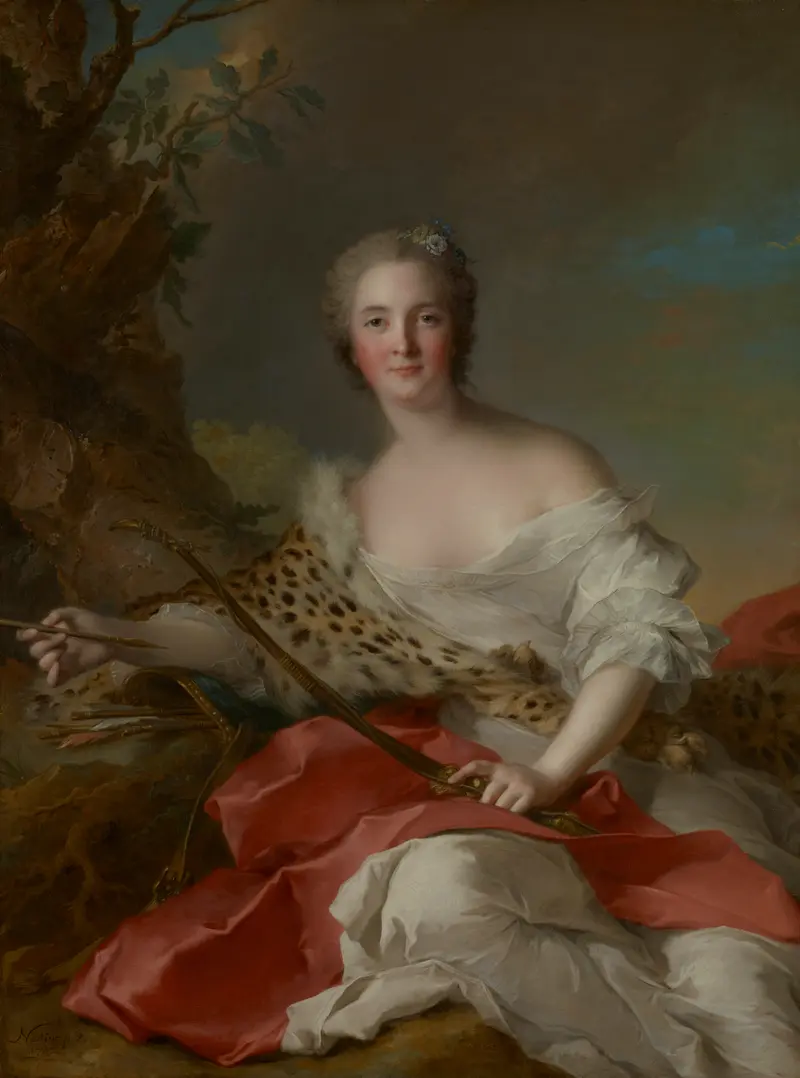
Portrait of Madame Bonnier de la Mosson as Diana (Constance-Gabrielle-Magdeleine du Monciel de Lauraille
Jean-Marc Nattier
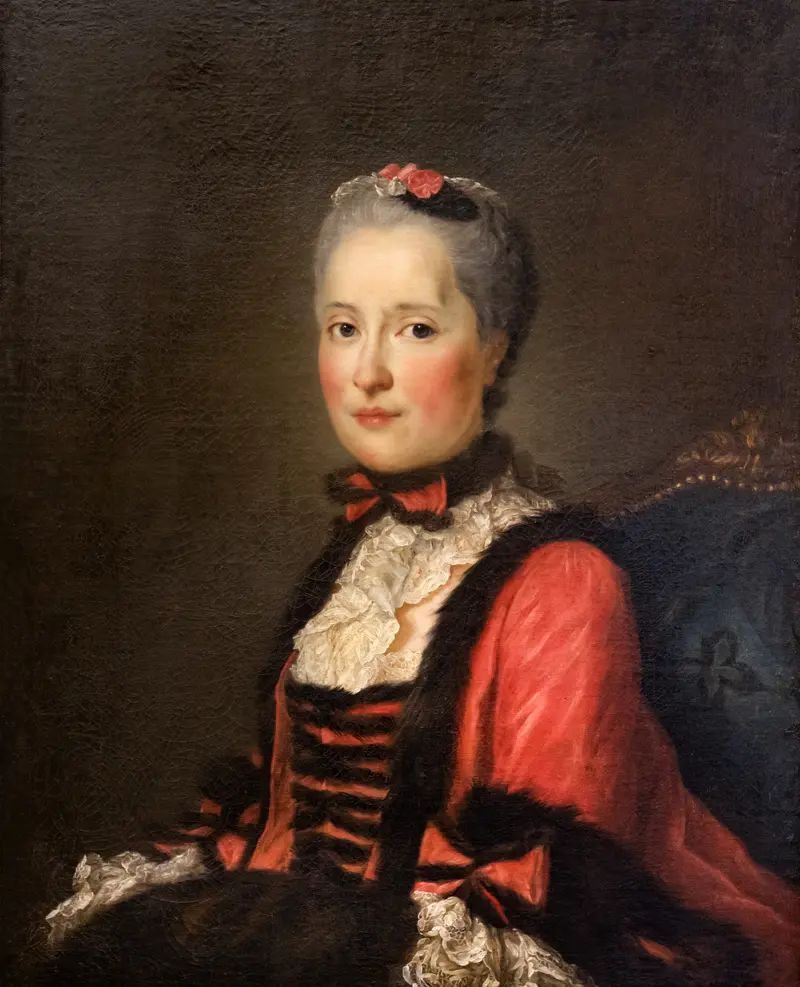
Portrait of Marie-Josephe of Saxony, Dauphine of France
Jean-Marc Nattier
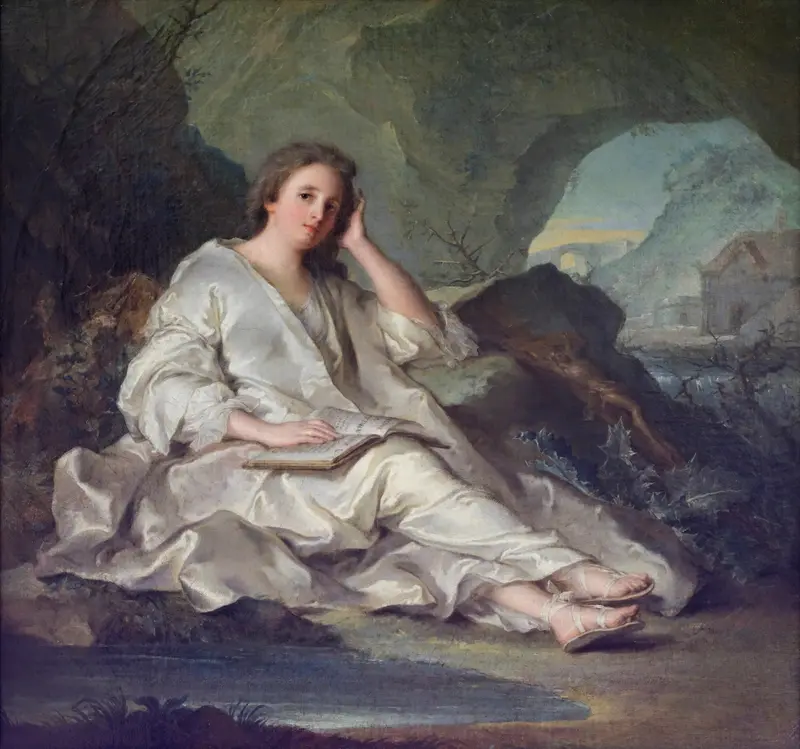
La Madeleine, ou Une Pénitente dans le désert Musée du Louvre Peintures INV 6880 ; MR
Jean-Marc Nattier
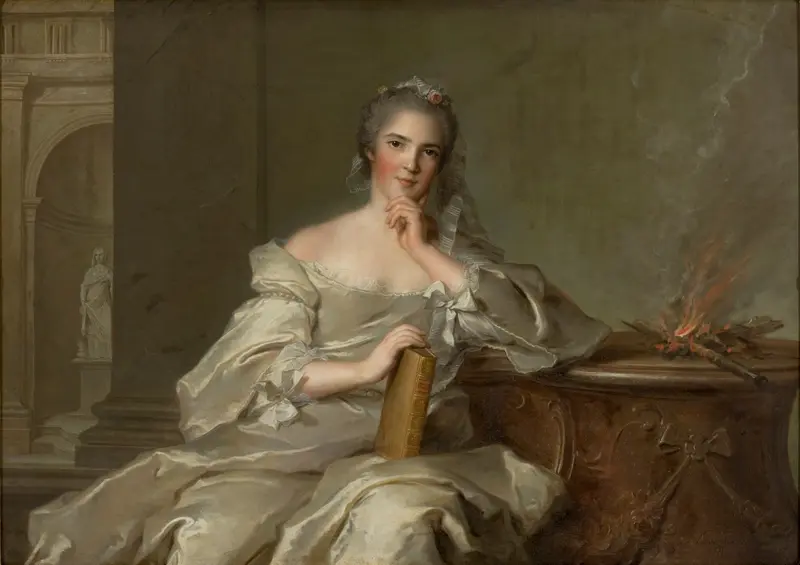
Princess Anne-Henriette of France - The Fire
Jean-Marc Nattier





