
Portrieux, Le Port — History & Facts
In the gentle embrace of coastal light, destiny unfurls upon the canvas, capturing the transient beauty of a moment lost to time. Focus on the shimmering waters that dance before the dock, as soft strokes of blue and gray weave together to create a seamless horizon. Look to the left at the gathering boats, their sails billowing gently in the breeze, each hinting at the untold stories of those aboard. The rich application of paint illustrates the texture of the scene; here, a light touch evokes the caress of the wind, while layered brushwork conveys the deeper currents of the sea. Amidst this serene coastal tableau, the emotional tension lies in the contrast between the stability of the harbor and the ephemeral nature of the sky's reflections.
The warm hues of the setting sun play against the cool shadows cast upon the water, suggesting an underlying duality — a fleeting moment cradled by the eternal. The juxtaposition speaks to the uncertainty of fate, as each ripple in the water signifies a choice, a chance, an inevitable passage. Eugène Boudin painted Portrieux, Le Port around 1874, during a period when Impressionism was gaining momentum. Living in Normandy, he drew inspiration from the ever-changing coastal environment, capturing ephemeral moments that echoed the sentiments of modernity.
At this time, Boudin was mentoring younger artists, including Claude Monet, and his focus on light and atmosphere signaled a profound shift in the art world, moving away from traditional forms toward the celebration of impression and experience.
More Artworks by Eugène Boudin
Browse all →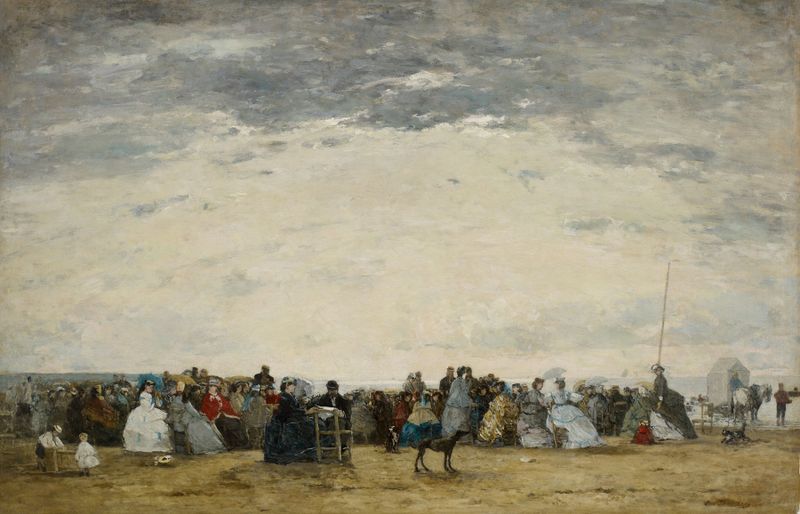
Vacationers on the Beach at Trouville
Eugène Boudin

Washerwoman near Trouville
Eugène Boudin
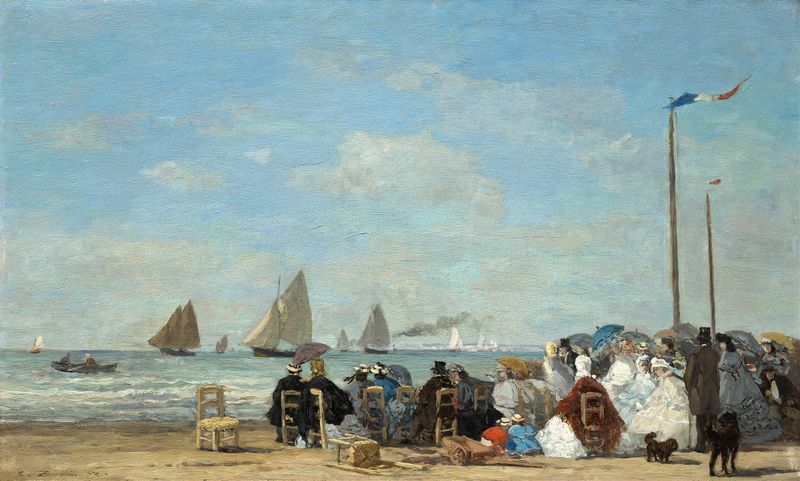
Beach Scene at Trouville
Eugène Boudin

Port aux environs d’Honfleur
Eugène Boudin

Le Faou, un coin du village
Eugène Boudin
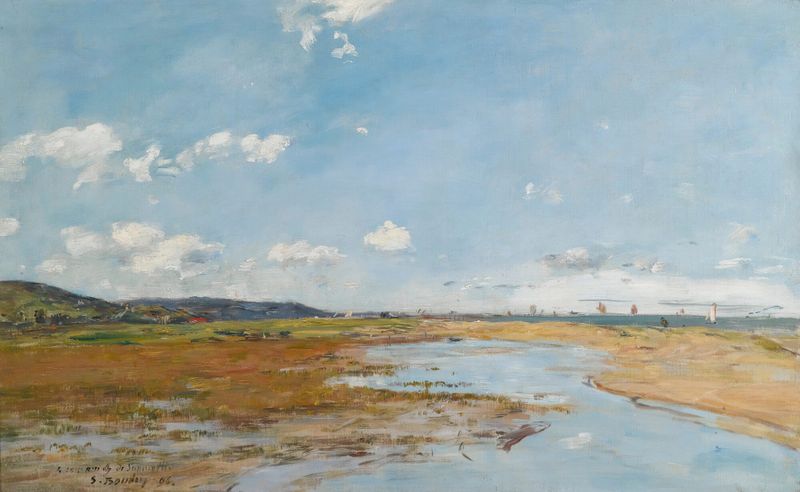
Deauville. Le Rivage
Eugène Boudin
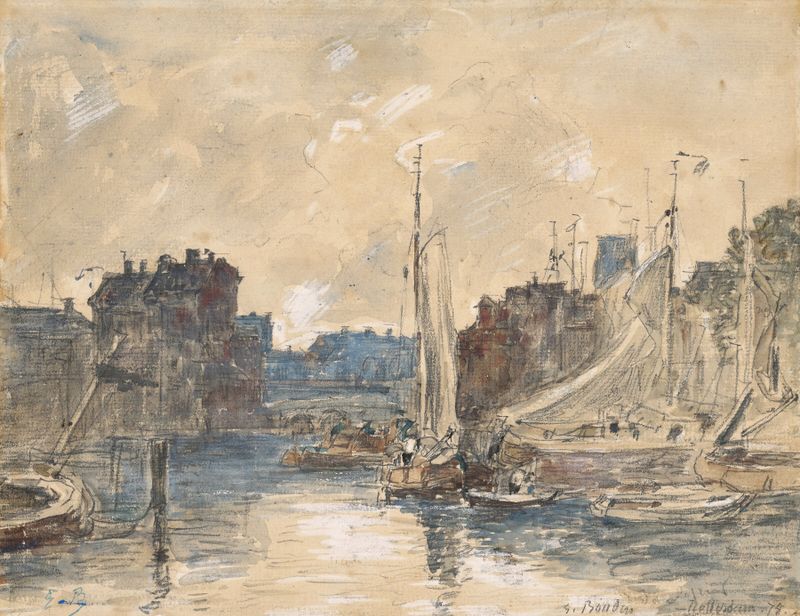
Port de Rotterdam
Eugène Boudin

View of Bordeaux, from the Quai des Chartrons
Eugène Boudin

Trouville, Scène De Plage
Eugène Boudin

Trouville, Le Port
Eugène Boudin





