
Prince Maurice and Frederick Henry at the Valkenburg Horse Fair — History & Facts
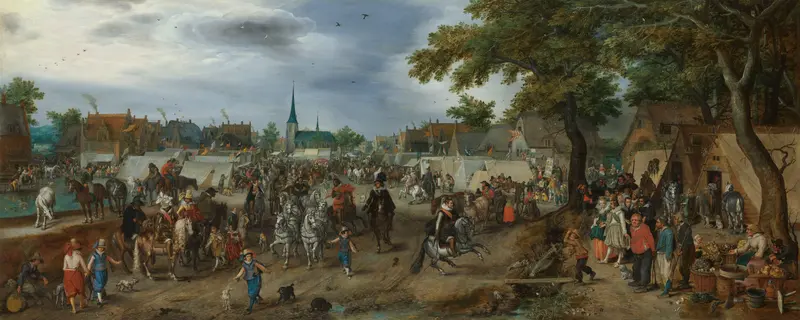
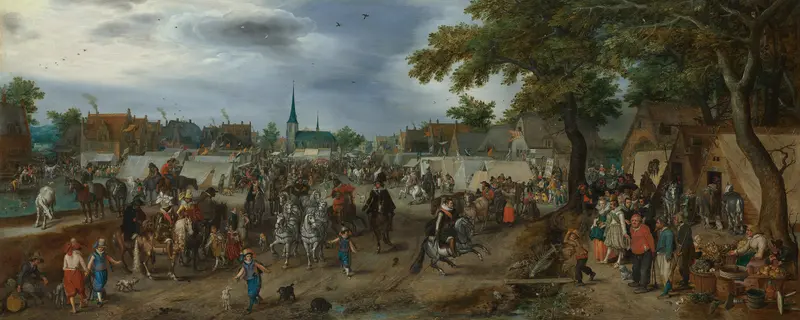
The eye is first caught by the grand, six-horse carriage at the heart of the bustle—a rare sight, even in a scene so alive with movement and trade. This is no ordinary market day: the presence of finely dressed figures in the carriage, paired with the subtle deference of those around them, signals the arrival of Prince Maurice and Frederick Henry among the townsfolk of Valkenburg. The painter, Adriaen Pietersz van de Venne, orchestrates a lively spectacle, guiding the viewer through a tapestry of Dutch life in 1618.
The tents and wagons, the horses being shown and traded, and the market sellers—each detail is a thread in the larger fabric of the fair, while the light falls evenly across the scene, inviting the viewer to linger over every interaction. This is a world in motion, where the ceremonial and the everyday intermingle. Children dart across the foreground, dogs weave between legs, and a fruit seller, bent over her wares, anchors the lower right corner in earthy reality. The two princes, though central, are not isolated; instead, they are woven into the crowd, their carriage flanked by soldiers and townspeople alike.
The distant church spire and the orderly tents create a sense of civic pride and communal gathering, while the palette—cool skies, warm earth, flashes of red and blue—evokes both festivity and the grounded rhythm of rural life. This kind of scene, with its careful balance of pageantry and ordinary activity, reflects a broader Dutch fascination with the rituals of daily and public life, a theme explored by many artists of the period but here rendered with particular wit and density. Painted in 1618, Prince Maurice and Frederick Henry at the Valkenburg Horse Fair belongs to the collection of the Rijksmuseum, where it stands as a vivid record of its time. Works like this were often commissioned to commemorate notable visits or civic events, capturing not only the likenesses of the powerful but also the spirit of the people they governed.
While history has preserved few traces of the painting’s early journey, its survival allows us to step into a moment when the boundaries between ruler and subject, spectacle and routine, were negotiated in the open air of a bustling fairground. The longer you look, the more stories the crowd seems to offer up.
More Artworks by Adriaen Pietersz van de Venne
Princes Maurice and Frederick Henry at the Valkenburg Horse Fair
Adriaen Pietersz van de Venne
Merry Company in an Arbor
Adriaen Pietersz van de Venne
Princes Maurice and Frederick Henry at the Valkenburg Horse Fair
Adriaen Pietersz van de Venne
Allegory of the Stadtholdership of Prince Frederick Henry
Adriaen Pietersz van de Venne
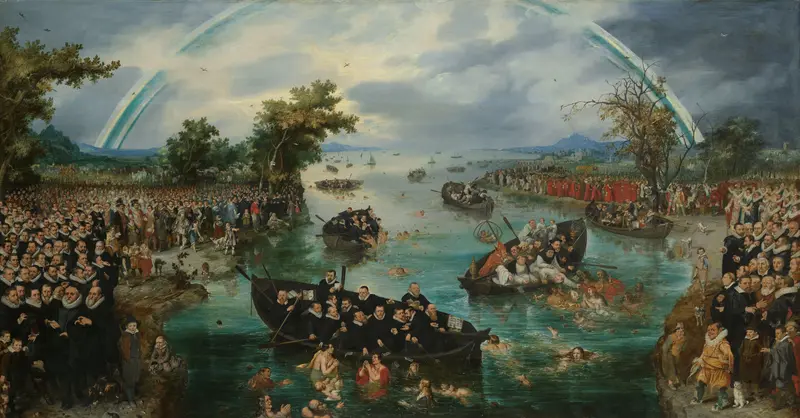
Fishing for Souls
Adriaen Pietersz van de Venne
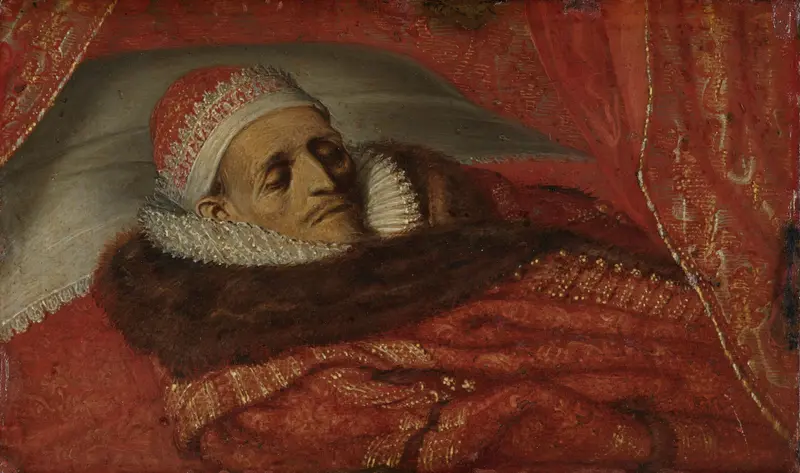
Stadtholder Prince Maurice Lying in State
Adriaen Pietersz van de Venne
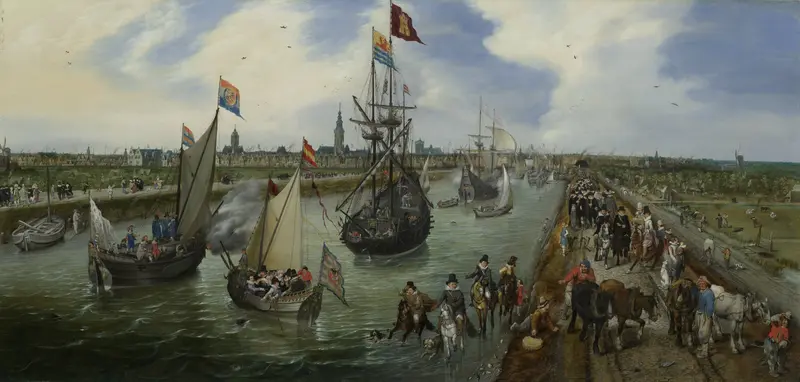
The Departure of a Dignitary from Middelburg
Adriaen Pietersz van de Venne
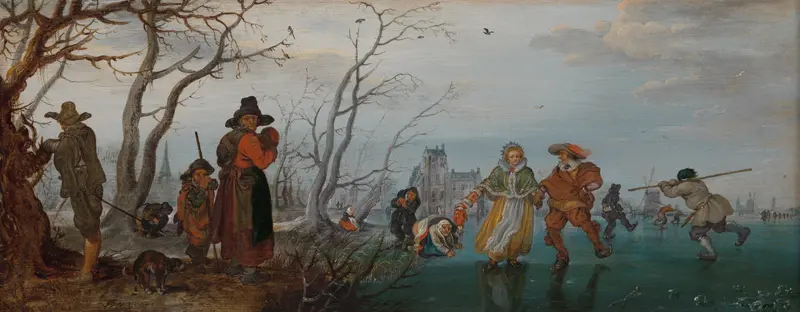
Winter
Adriaen Pietersz van de Venne

A Jeu de Paume Before a Country Palace
Adriaen Pietersz van de Venne
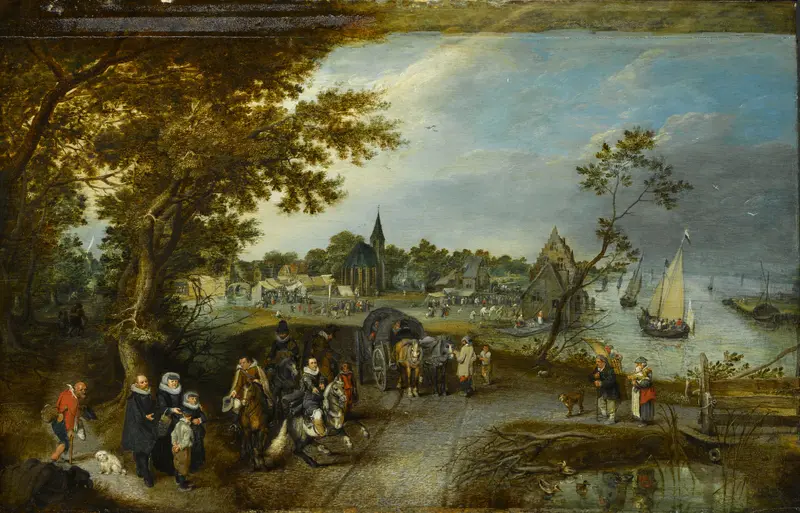
Landscape with Figures and a Village Fair (Village Kermesse)
Adriaen Pietersz van de Venne
More Genre Scene Art

Banquet of the Officers of the St George Civic Guard
Frans Hals

Rembrandt and Saskia in the Scene of the Prodigal Son
Rembrandt van Rijn

Bal du moulin de la Galette
Pierre-Auguste Renoir

Quadrille at the Moulin Rouge
Henri de Toulouse-Lautrec

A Burial at Ornans
Gustave Courbet

When Will You Marry?
Paul Gauguin