
Queues de comète sur fond noir — History & Facts
What first catches the eye in Queues de comète sur fond noir is the sensation of motion suspended in deep space. Three panels stretch side by side, each hosting pale, comet-like forms that seem to drift, dissolve, or burst against a pitch-black void. The shapes are neither entirely abstract nor strictly representational; they hover between liquid and flame, their contours soft yet purposeful.
The black ground flattens the sense of depth, so these ghostly streaks appear to float forward, as if illuminated by an invisible cosmic light. Léger’s palette—icy whites and cool blues—lends the scene a chill, otherworldly calm, inviting the viewer to linger on the boundary between the familiar and the unknown. Painted in 1930, this work stands at the crossroads of interwar modernism, a period when artists like Fernand Léger were pushing the boundaries of form and perception. Léger, known for his fascination with machinery and the rhythms of modern life, here turns his gaze upward, echoing the era’s fascination with science and the cosmos.
The title itself, Queues de comète sur fond noir, signals a poetic embrace of the astronomical, a theme that resonated in the wake of technological leaps and a world still reeling from upheaval. While little is recorded about this specific work’s journey, its presence in a 2013 Sotheby’s auction speaks to the enduring intrigue of these enigmatic forms. Léger’s comets, forever frozen mid-flight, invite us to imagine the universe as he saw it: mysterious, dynamic, and always in motion.
More Artworks by Fernand Léger

The Tugboat Bridge
Fernand Léger
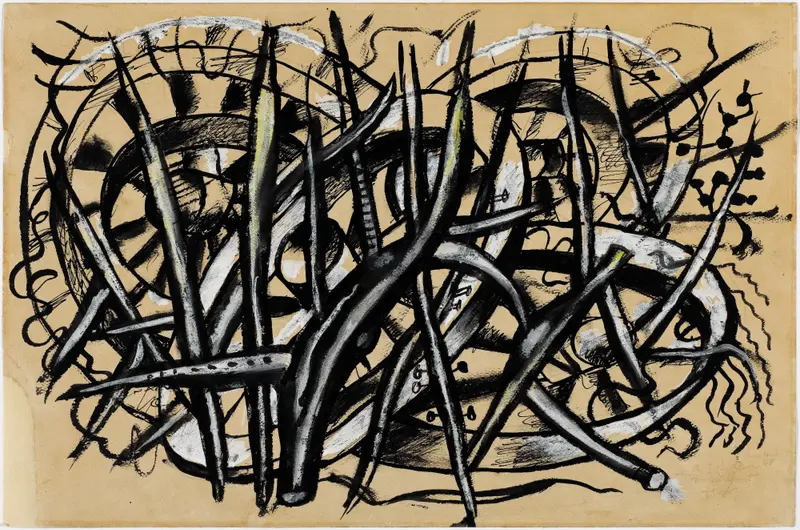
The Wheels
Fernand Léger

Le Cirque Médrano
Fernand Léger
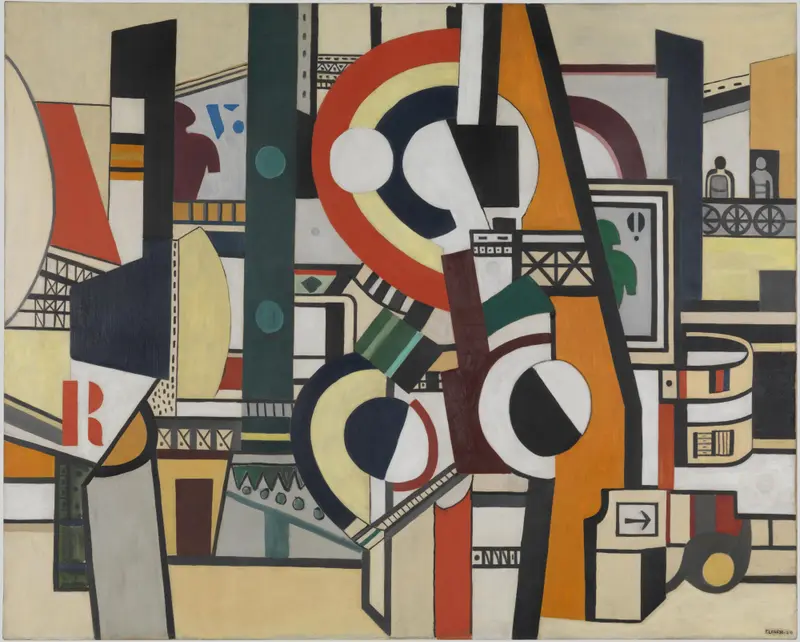
The Disks in the City
Fernand Léger
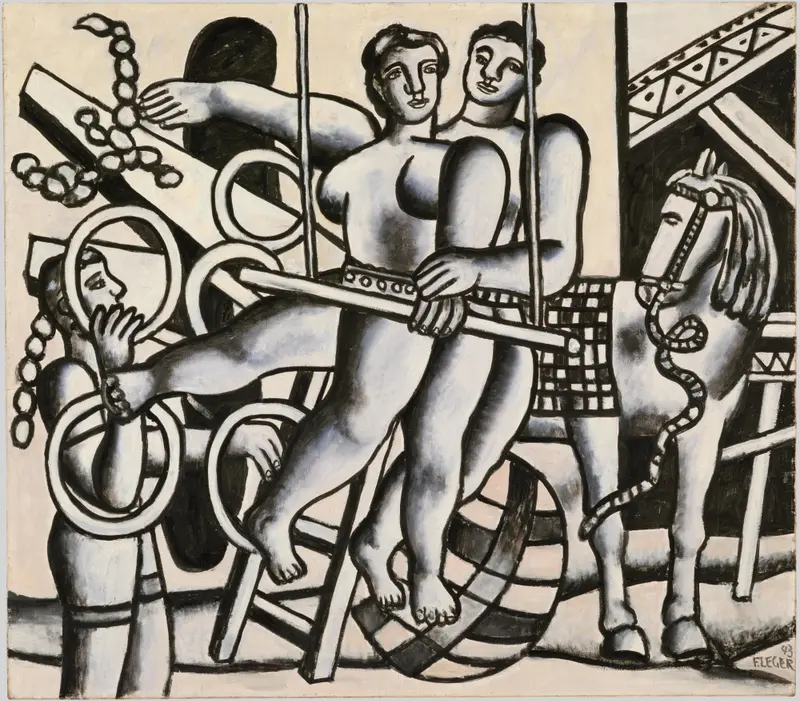
Le Jongleur et les acrobates
Fernand Léger
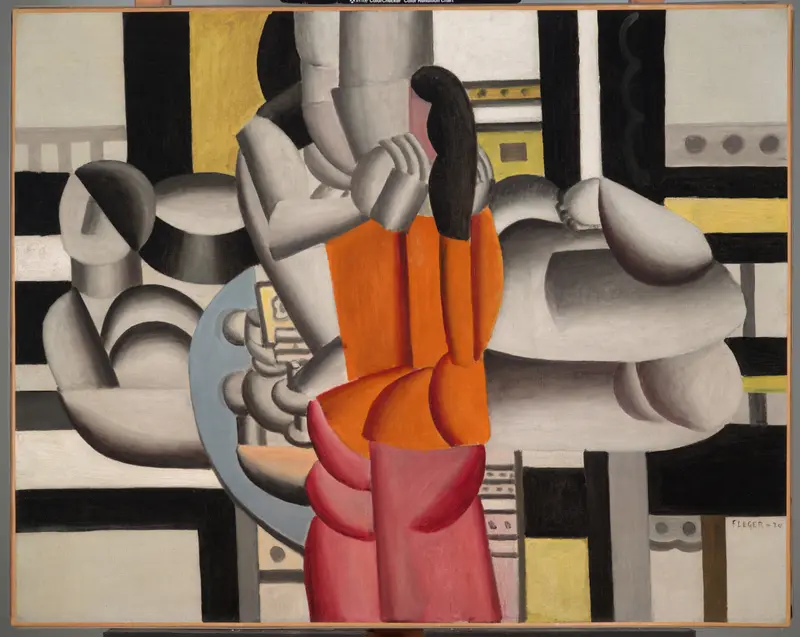
Three Women and Still Life (Déjeuner)
Fernand Léger

Reading
Fernand Léger
Femme couchée
Fernand Léger
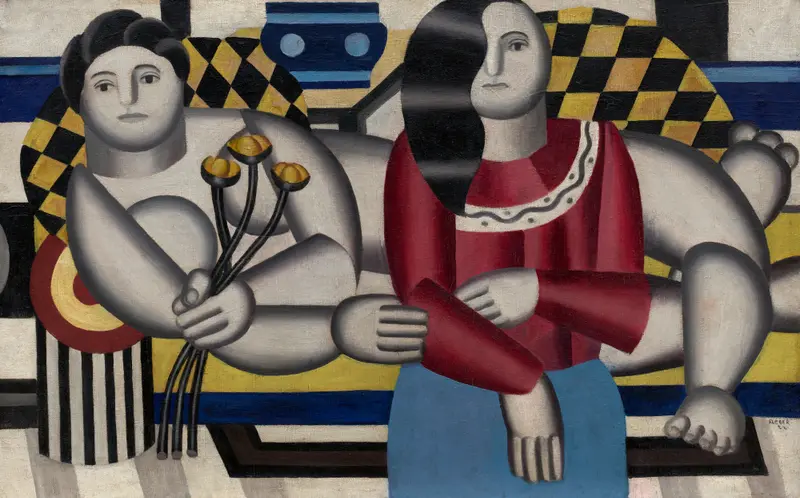
Woman holding flowers
Fernand Léger
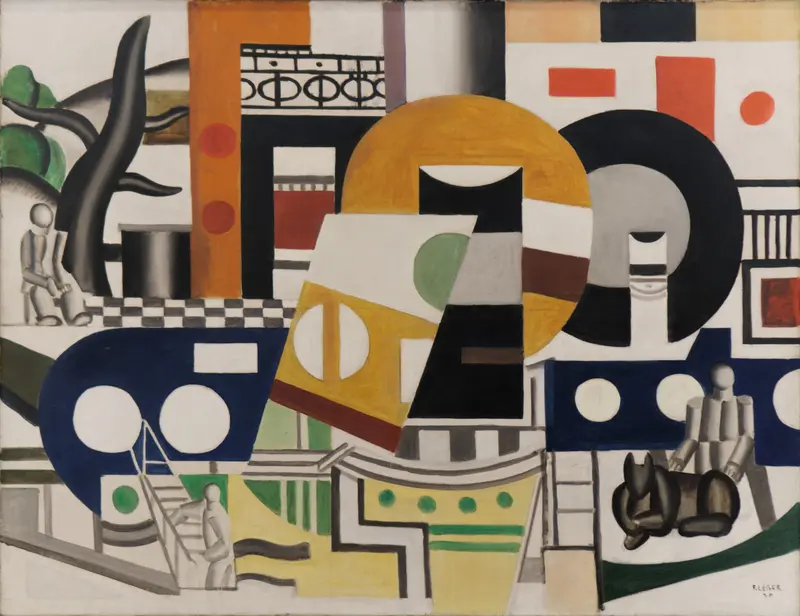
The Tug
Fernand Léger





