
Reading Rabbi — History & Facts
What draws the eye first in Reading Rabbi is the hush: a scholar, wrapped in a thick red robe and fur hat, leans into the pool of lamplight, utterly absorbed by the book before him. The table is heavy, battered, and strewn with more volumes—each one a silent companion to his study. His finger marks the line, lips almost moving, as if the words themselves are being tasted.
The light is careful and deliberate, illuminating the rabbi’s face and hands but leaving the rest of the room in shadow, so that the world seems to narrow to this desk, this moment, this act of reading. The palette is warm but muted, the textures of wood and wool and parchment rendered with a quiet intimacy. Works like this, painted by Theodoros Ralli between 1896 and 1897, belong to a world fascinated by the dignity of tradition and the rituals of learning. In the late nineteenth century, artists across Europe turned their attention to scenes of everyday life, often seeking out communities whose customs seemed untouched by modernity.
Such paintings were collected by patrons eager to display both their own sophistication and their respect for the cultures depicted. History has kept few traces of this particular rabbi or his study, but the painting’s silent concentration invites us to imagine the generations of scholars who have bent over their books in pursuit of understanding. The longer you look, the more the stillness in the room seems to deepen.
More Artworks by Theodoros Ralli

The Sleeping Concubine
Theodoros Ralli
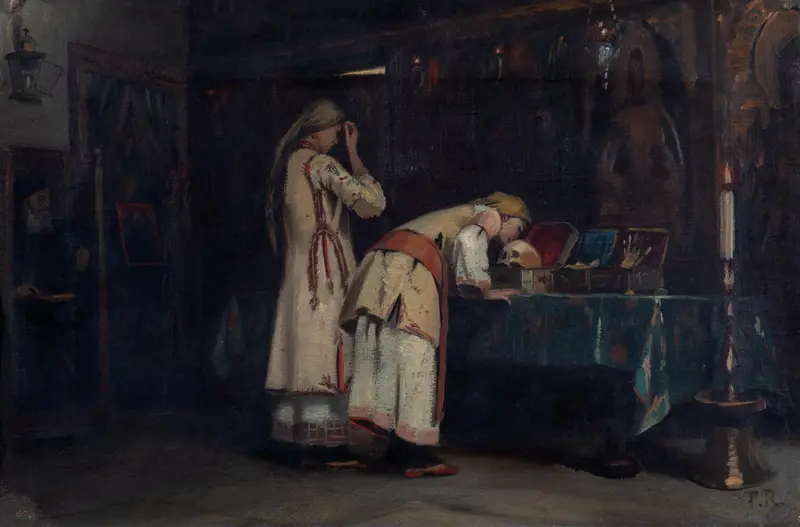
Holy Relics
Theodoros Ralli
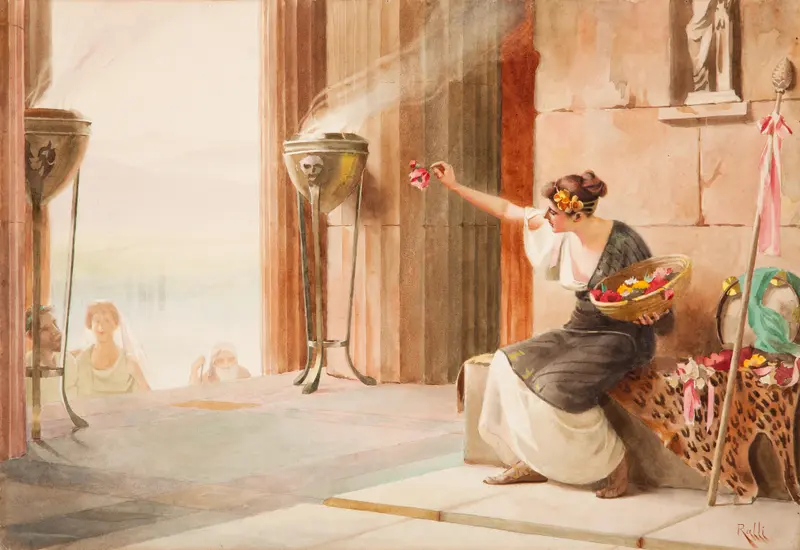
Flower Seller at the Parthenon
Theodoros Ralli
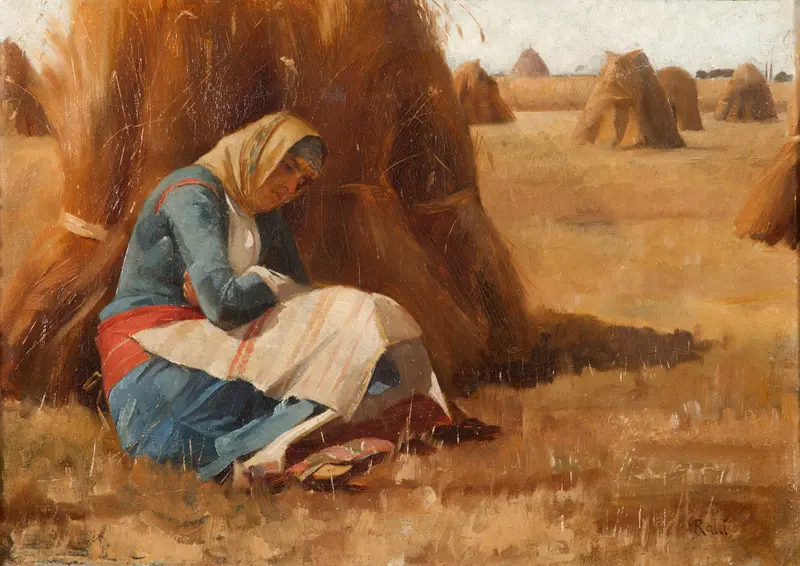
Resting by a Haystack
Theodoros Ralli
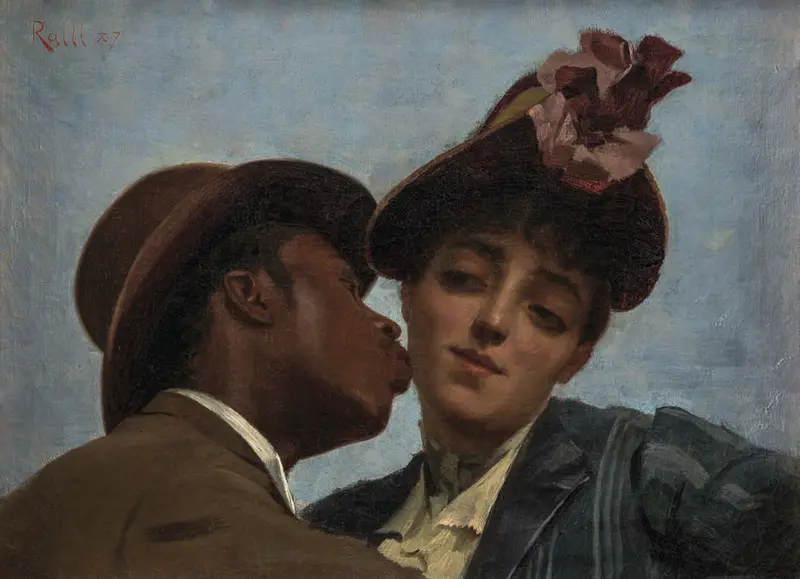
The Kiss (Ralli)
Theodoros Ralli
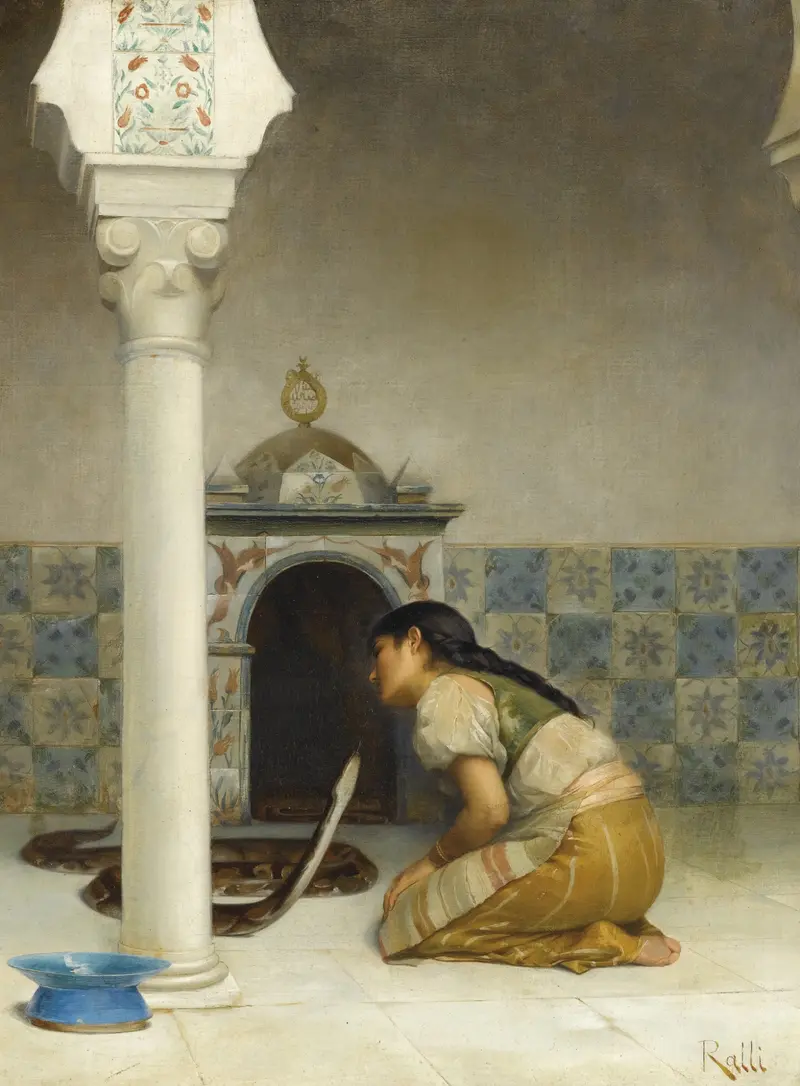
The Sacred Serpent
Theodoros Ralli
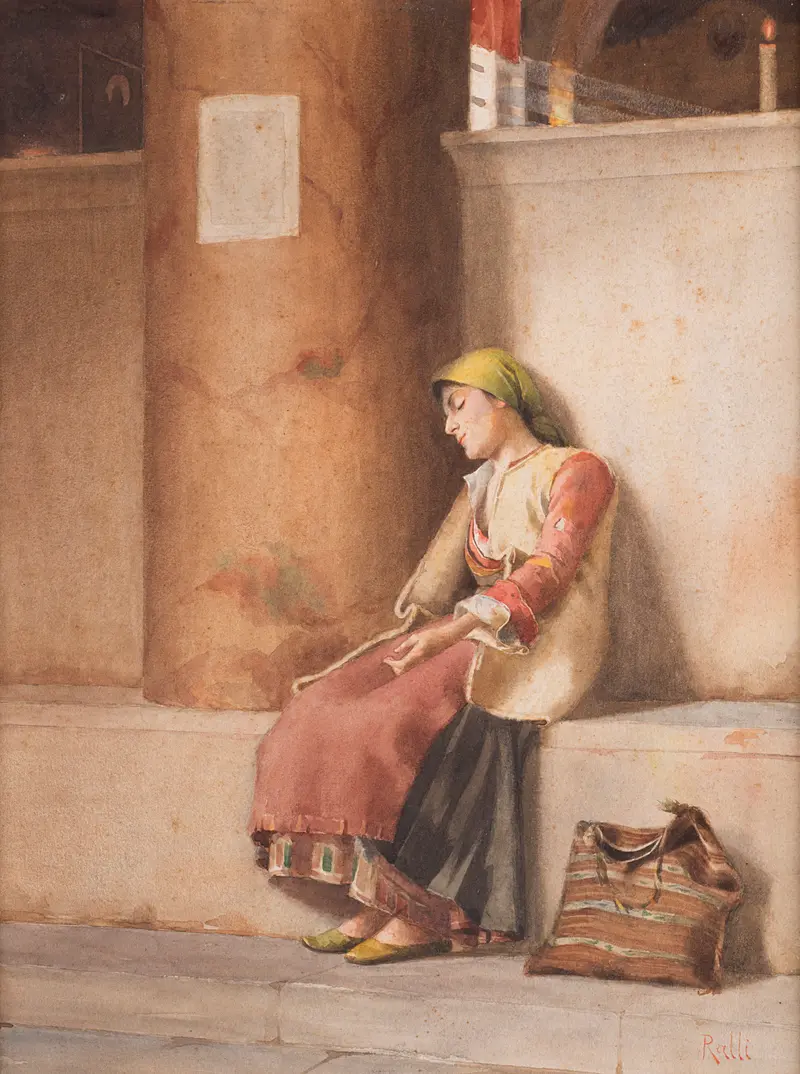
A Moment of Reflection
Theodoros Ralli
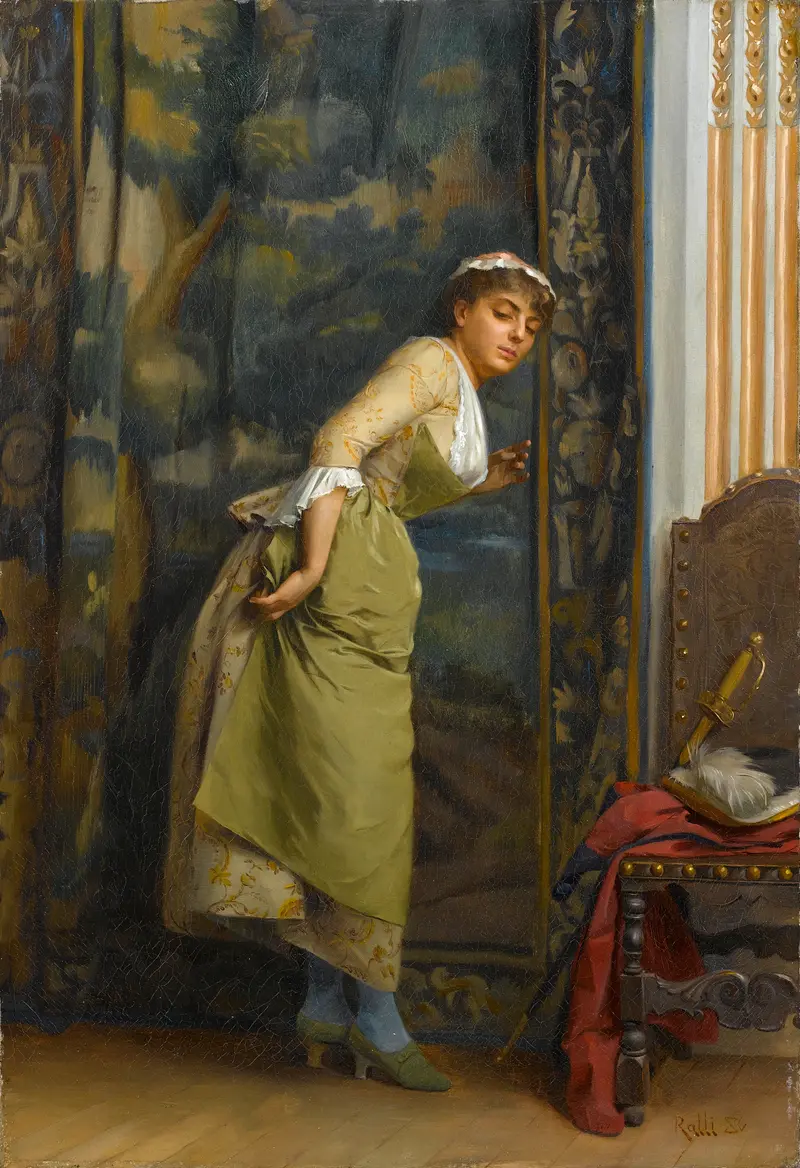
Eavesdropping (Ralli)
Theodoros Ralli
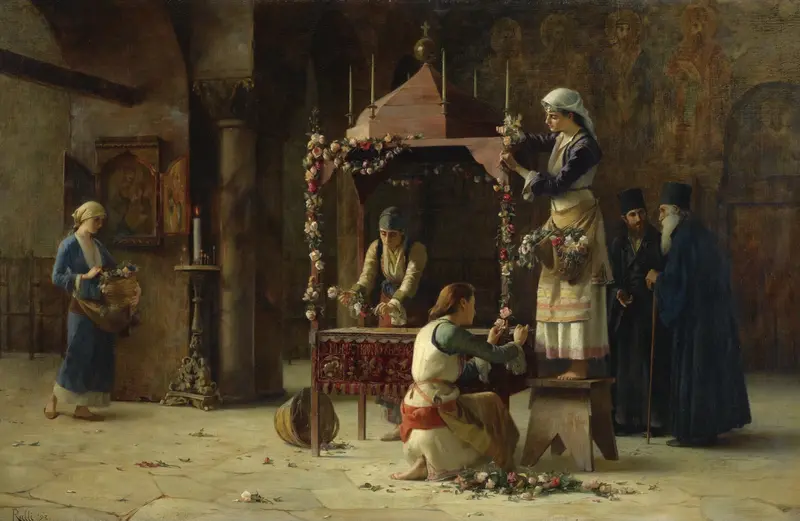
Holy Friday, Greece
Theodoros Ralli
A Moment's Rest
Theodoros Ralli
More Genre Scene Art

Banquet of the Officers of the St George Civic Guard
Frans Hals

Rembrandt and Saskia in the Scene of the Prodigal Son
Rembrandt van Rijn

Bal du moulin de la Galette
Pierre-Auguste Renoir

Quadrille at the Moulin Rouge
Henri de Toulouse-Lautrec

A Burial at Ornans
Gustave Courbet

When Will You Marry?
Paul Gauguin