
Red Shell — History & Facts
The first thing that seizes the eye in Red Shell is the bold sweep of red, a curve so assertive it seems to slice the composition in two. Around it, shapes jostle and collide: a black form with a chalk-white highlight, a blue vertical that hints at architecture, a patch of yellow that radiates warmth. Fernand Léger’s language here is one of fragments, each outlined with a confident hand, their boundaries stitched together by dotted lines and abrupt shifts in color.
The grey background is not empty but alive with brushwork, setting off the crisp geometry of the forms. The red, in particular, acts as both barrier and invitation, drawing the viewer deeper into the puzzle of interlocking shapes. Painted in 1928, this work belongs to a world on the move—between the machine age and the organic, between abstraction and the lingering memory of objects. Léger, a central figure in early twentieth-century modernism, was fascinated by the rhythms of industry and the possibilities of pure form.
In Paris, artists and designers were reimagining everything from city plans to teapots, and paintings like this one were both a reflection and a catalyst for change. The title, Red Shell, and the date inscribed by the artist anchor it to a moment when the boundaries of painting were being redrawn. Léger’s forms invite us to look again, to find new order in apparent chaos—an invitation that still feels urgent today.
More Artworks by Fernand Léger

The Tugboat Bridge
Fernand Léger
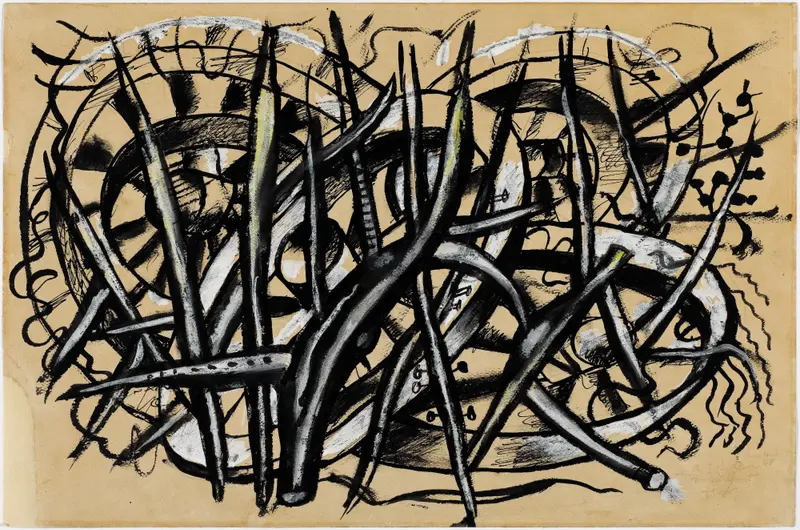
The Wheels
Fernand Léger

Le Cirque Médrano
Fernand Léger
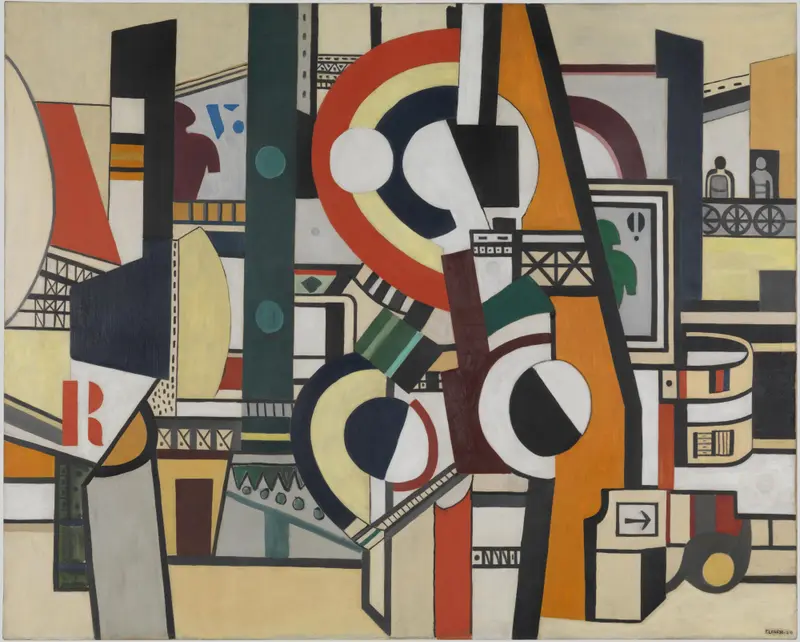
The Disks in the City
Fernand Léger
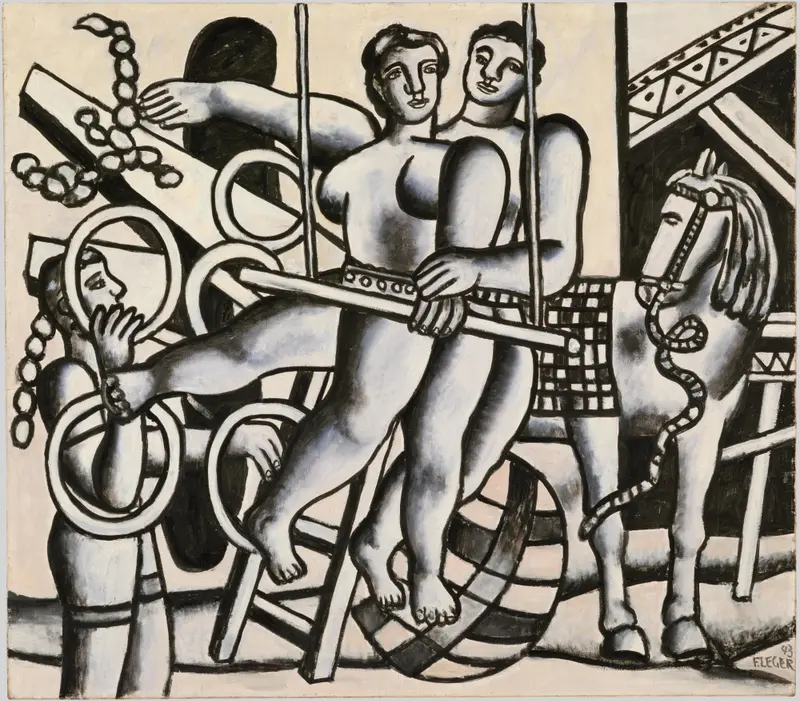
Le Jongleur et les acrobates
Fernand Léger
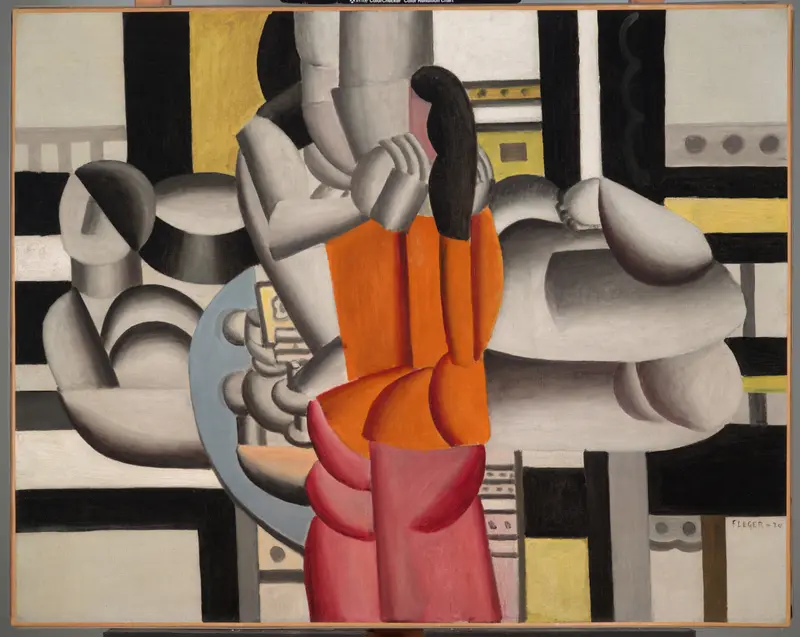
Three Women and Still Life (Déjeuner)
Fernand Léger

Reading
Fernand Léger
Femme couchée
Fernand Léger
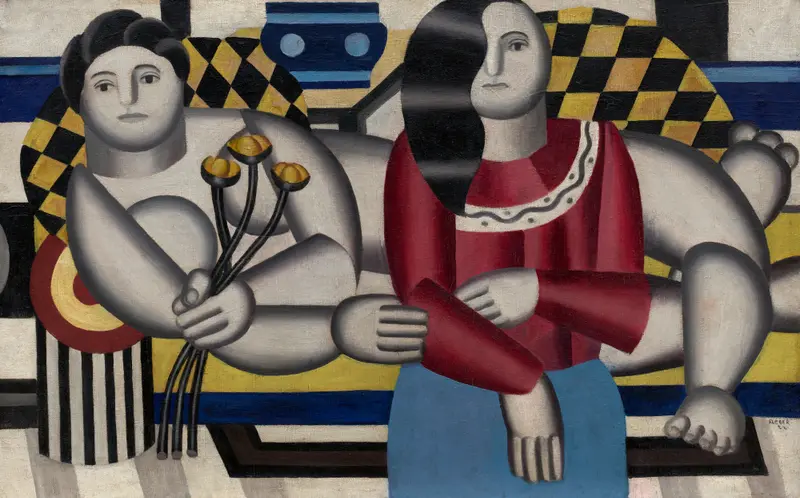
Woman holding flowers
Fernand Léger
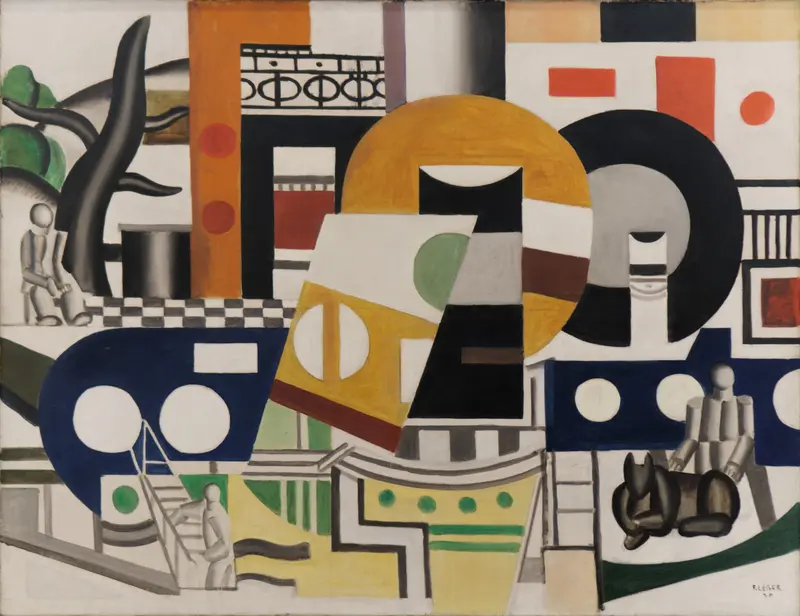
The Tug
Fernand Léger





