
Restaurant in Smyrna — History & Facts
A shaft of sunlight slices across a shadowed interior, drawing the eye to a solitary figure at work—this is not the bustling restaurant its title suggests, but a quiet, almost theatrical stage within the heart of Smyrna. The painter, Theodoros Ralli, frames the scene with the deep shadow of an archway, focusing all attention on the man seated before a tiled oven. The glow of the light picks out the folds of his clothing and the curve of his back as he leans into his task, while the warm reds and ochres of the tiles and bread evoke the heat and comfort of the kitchen.
Every object is placed with intent: the bowl of fruit, the green jug, the wooden box beneath the table—each hints at daily life, but the figure’s isolation and the enveloping darkness suggest a moment of private labor rather than public festivity. Works like this, painted between 1873 and 1909, belong to a world fascinated by the textures and rituals of the Eastern Mediterranean. In the late nineteenth century, artists such as Ralli—himself a Greek painter who spent much of his career in Paris—turned to scenes of everyday life in Ottoman cities, capturing their atmosphere for a European audience hungry for images of distant cultures. These paintings were often collected by cosmopolitan patrons or exhibited at international salons, where their blend of realism and exoticism appealed to Western tastes.
Little is recorded about the journey of this particular canvas, but its careful observation and intimate scale invite viewers to linger, imagining the rhythms of Smyrna’s vanished streets and the quiet dignity of its working people.
More Artworks by Theodoros Ralli

The Sleeping Concubine
Theodoros Ralli
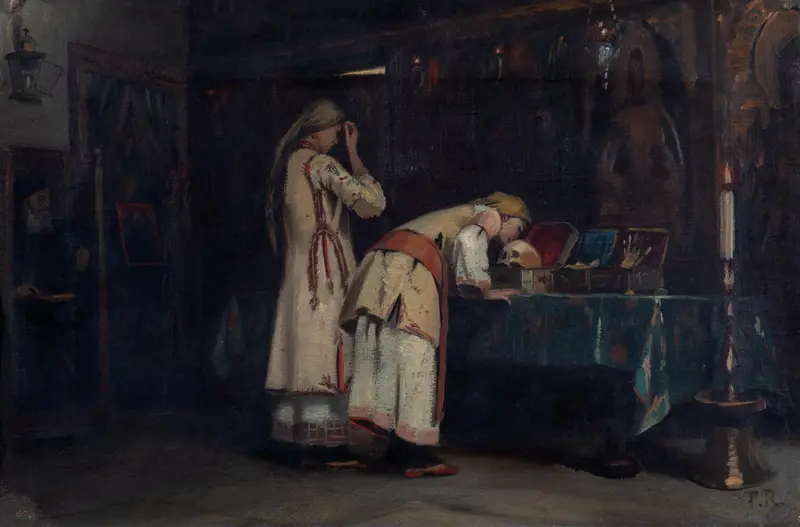
Holy Relics
Theodoros Ralli
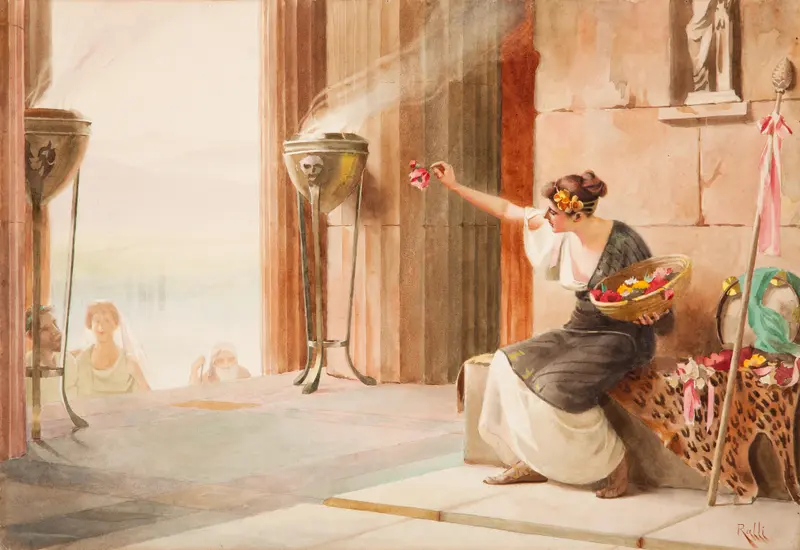
Flower Seller at the Parthenon
Theodoros Ralli
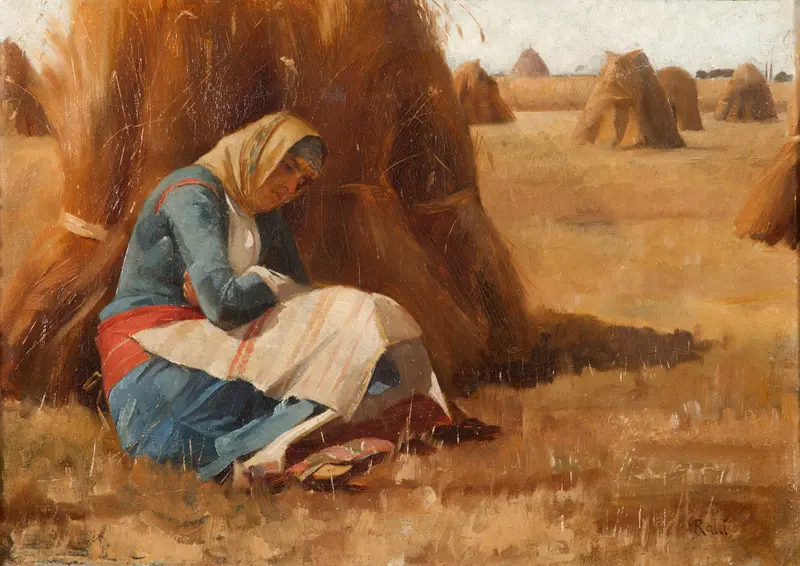
Resting by a Haystack
Theodoros Ralli
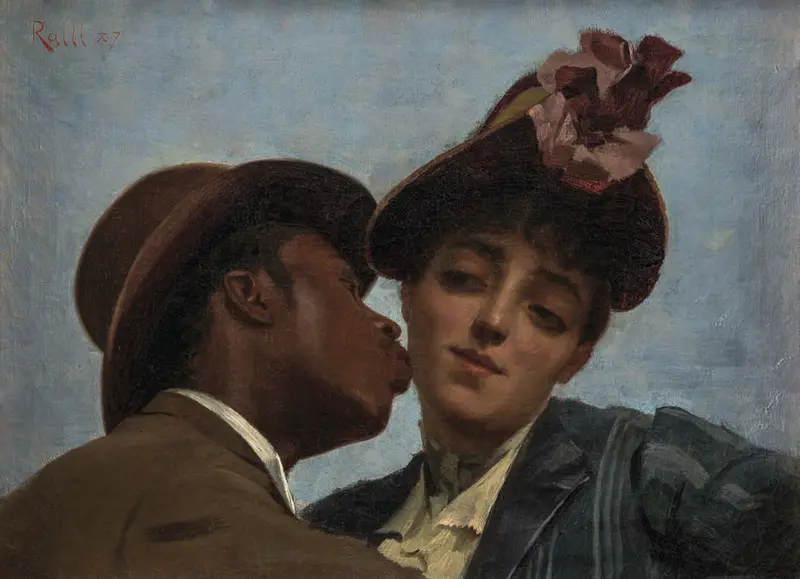
The Kiss (Ralli)
Theodoros Ralli
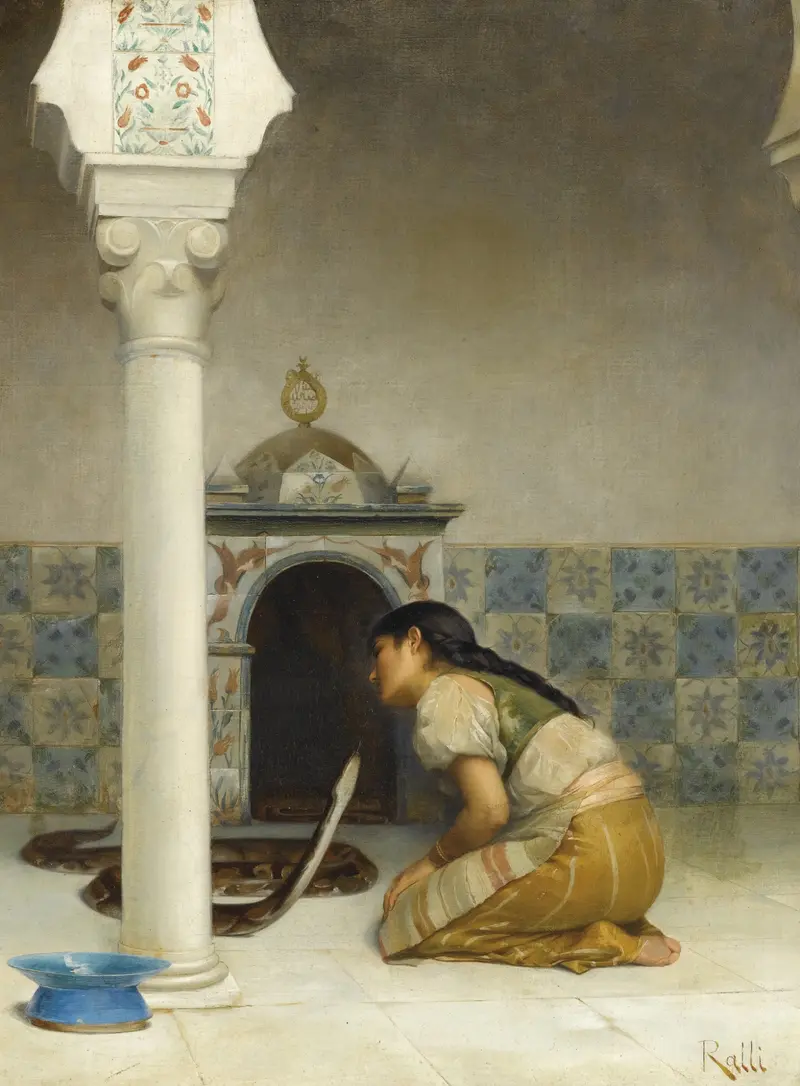
The Sacred Serpent
Theodoros Ralli
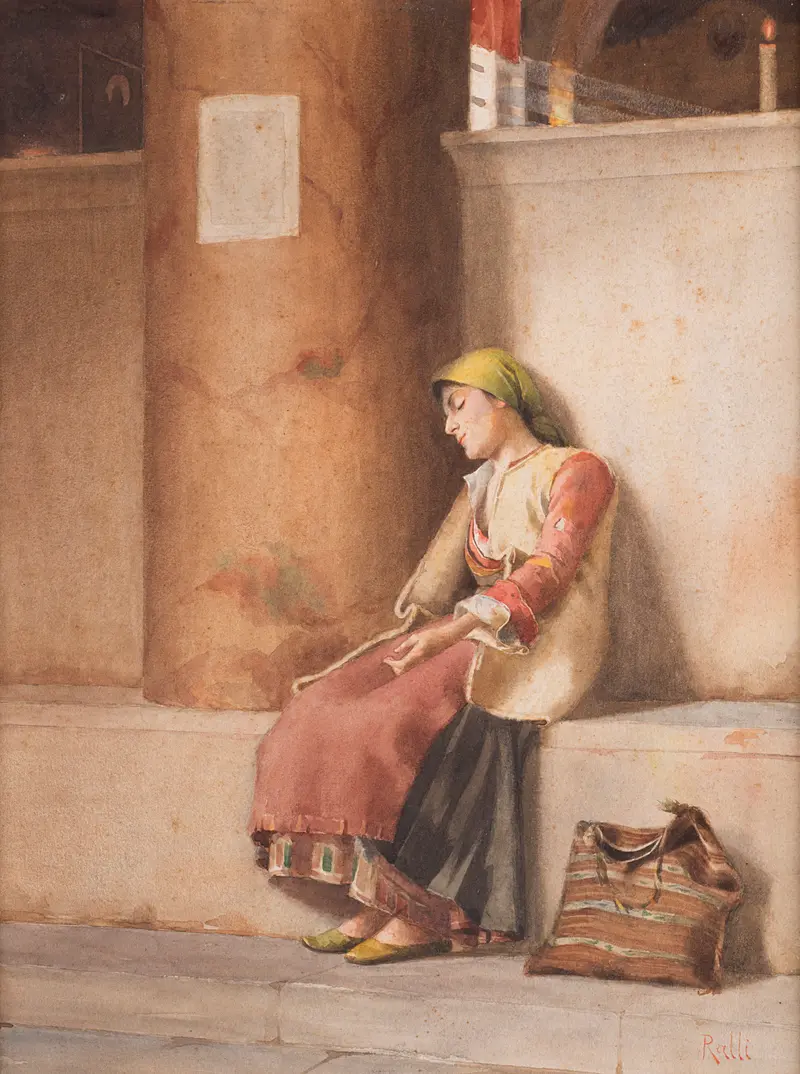
A Moment of Reflection
Theodoros Ralli
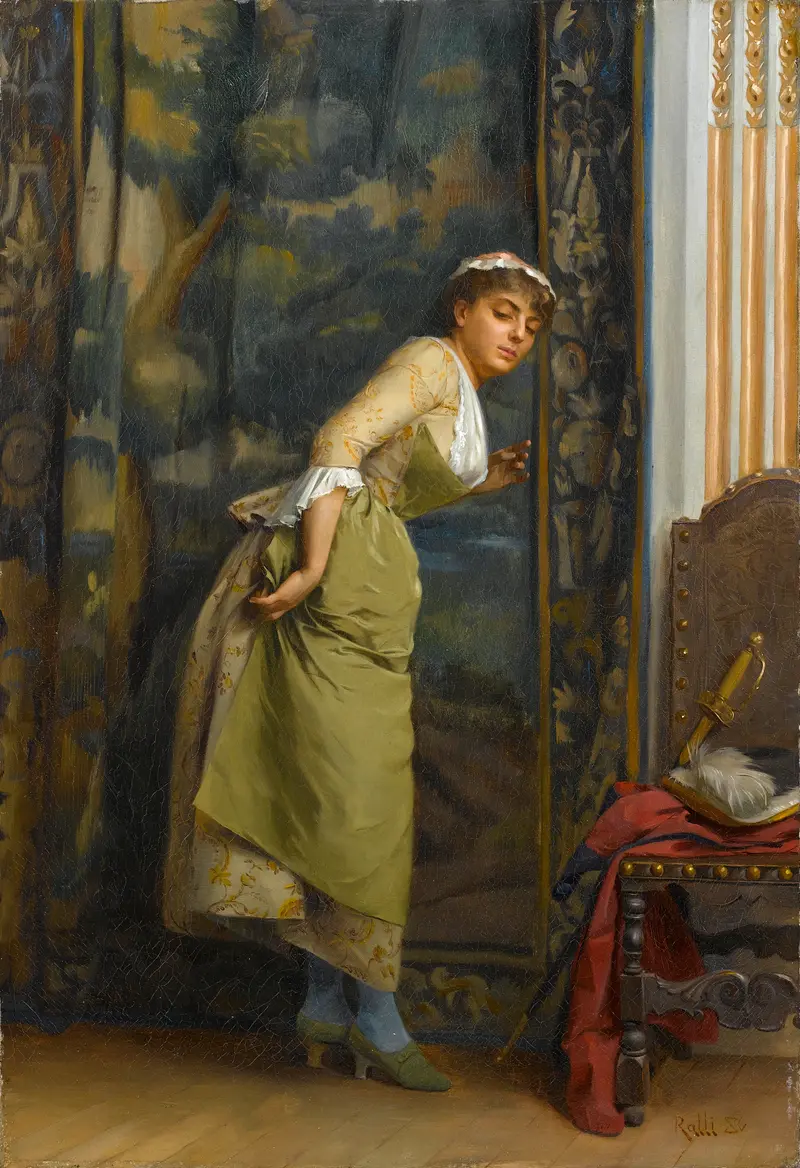
Eavesdropping (Ralli)
Theodoros Ralli
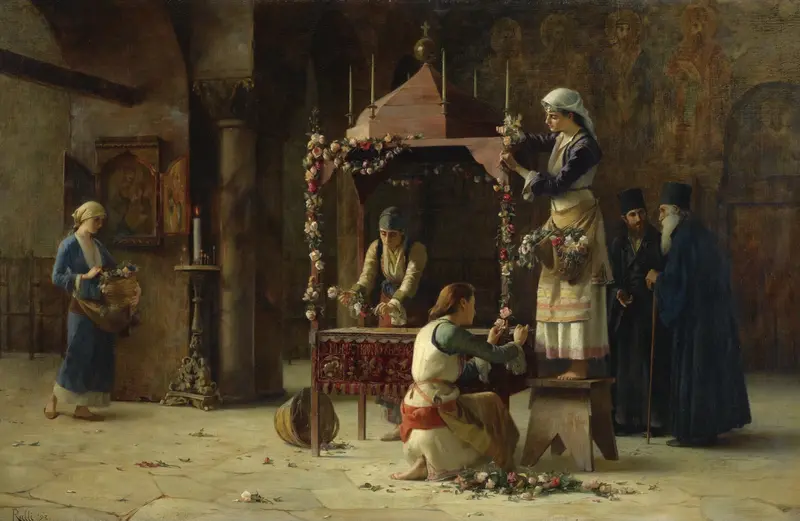
Holy Friday, Greece
Theodoros Ralli
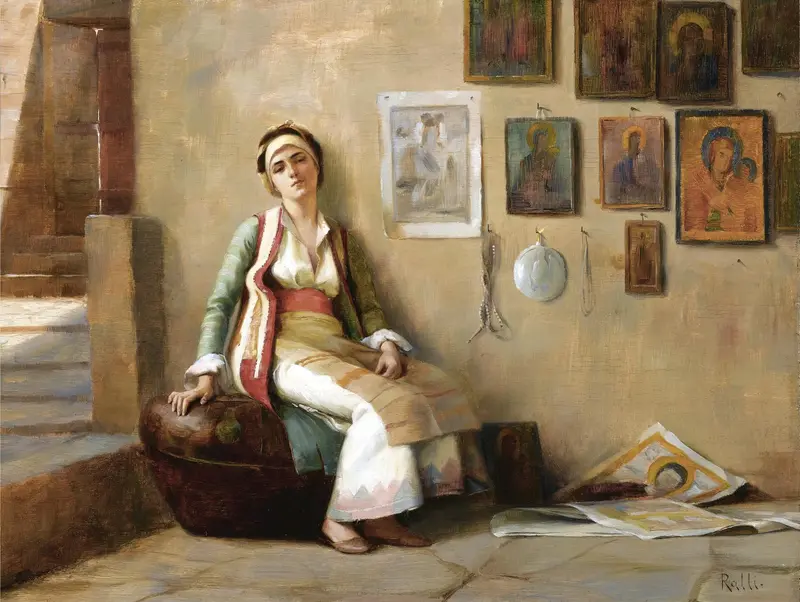
A Moment's Rest
Theodoros Ralli
More Genre Scene Art

Banquet of the Officers of the St George Civic Guard
Frans Hals

Rembrandt and Saskia in the Scene of the Prodigal Son
Rembrandt van Rijn

Bal du moulin de la Galette
Pierre-Auguste Renoir

Quadrille at the Moulin Rouge
Henri de Toulouse-Lautrec

A Burial at Ornans
Gustave Courbet

When Will You Marry?
Paul Gauguin