
Riña en una taberna — History & Facts
The first thing that catches the eye in Riña en una taberna is not the fight itself, but the thick, smoky hush that seems to hang over the entire scene. Light falls in patches, picking out the red waistcoat of a man seated on a barrel, his back turned to us, as if shielding himself from the commotion behind. The drama is not in grand gestures but in the tension of bodies: a raised arm, a wary glance, a hand gripping a shoulder.
Around the rough wooden table, faces emerge from the gloom, each one caught between confrontation and retreat. The palette is earthbound, the shadows deep, as if the painter wants us to feel the closeness of the air and the uncertainty of the outcome. Works like this, painted by Adriaen van Ostade in the Dutch Golden Age, were windows into the everyday world of taverns and common folk. In the bustling seventeenth-century Netherlands, scenes of village life were prized by a new class of buyers—merchants, craftsmen, and burghers who saw themselves in these rough-hewn gatherings.
Van Ostade was celebrated for his ability to capture the grit and humor of such interiors, and paintings like this one—now in the collection of the Museo Nacional de Bellas Artes—invite us to look past the surface scuffle and glimpse the social theater of the time. History has kept few traces of the specific stories behind each canvas, but the mood and detail still pull us into that smoky, crowded room.
More Artworks by Adriaen van Ostade

Dans in de herberg
Adriaen van Ostade
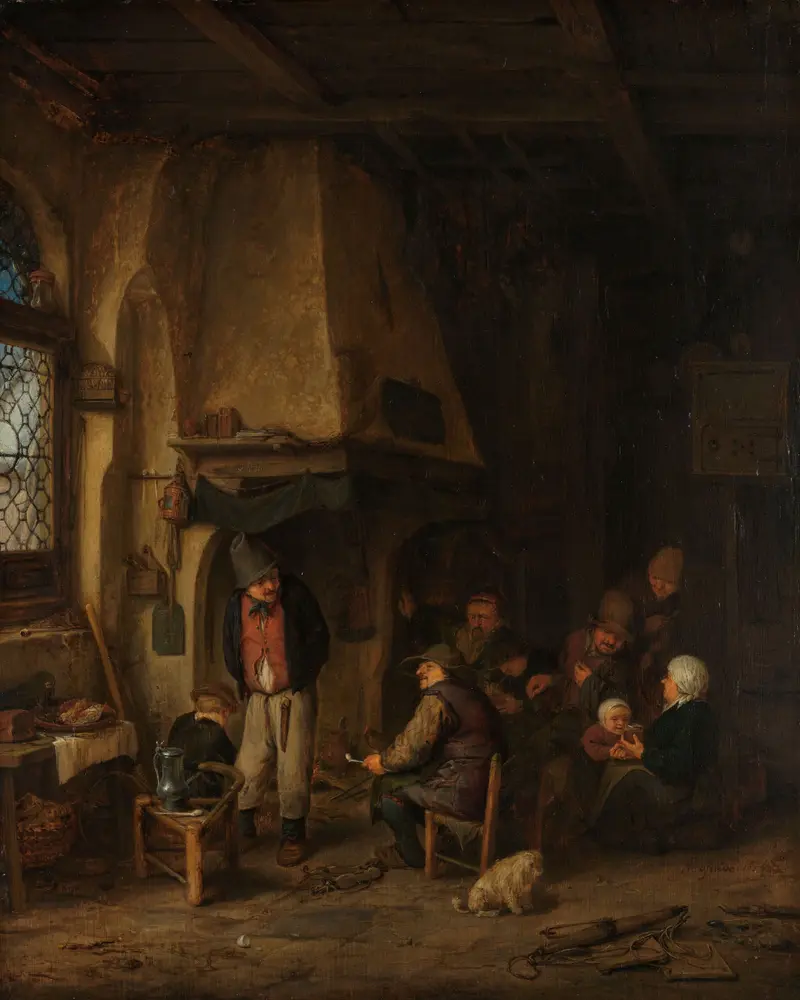
‘The Skaters’: Peasants in an Interior
Adriaen van Ostade
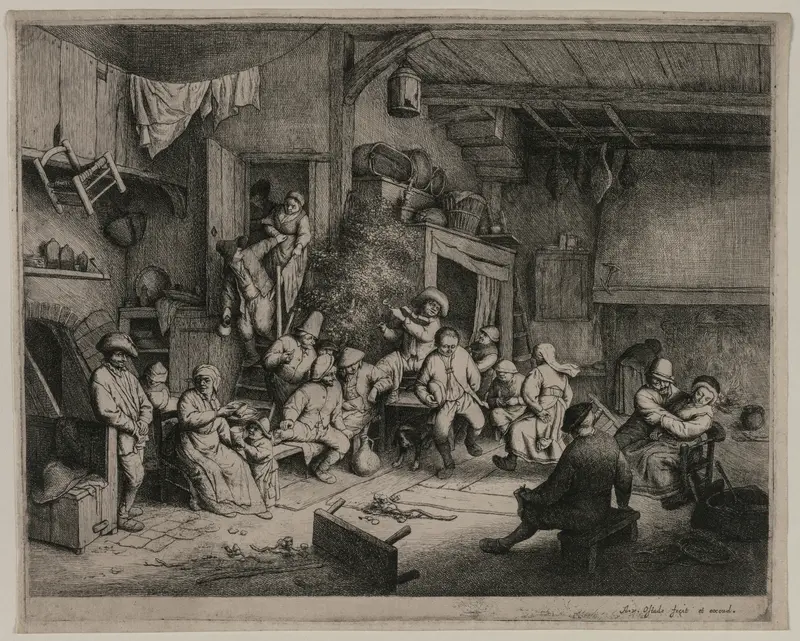
Dance at the Inn
Adriaen van Ostade
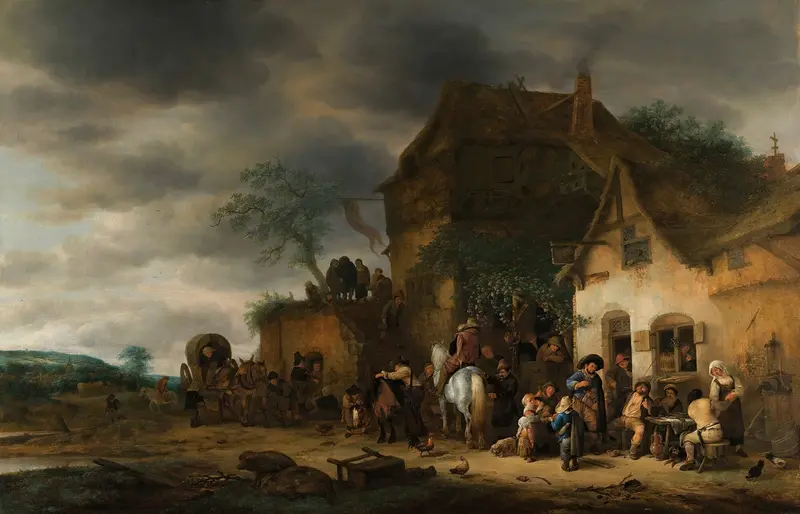
Travellers Halted At A Country Inn
Adriaen van Ostade
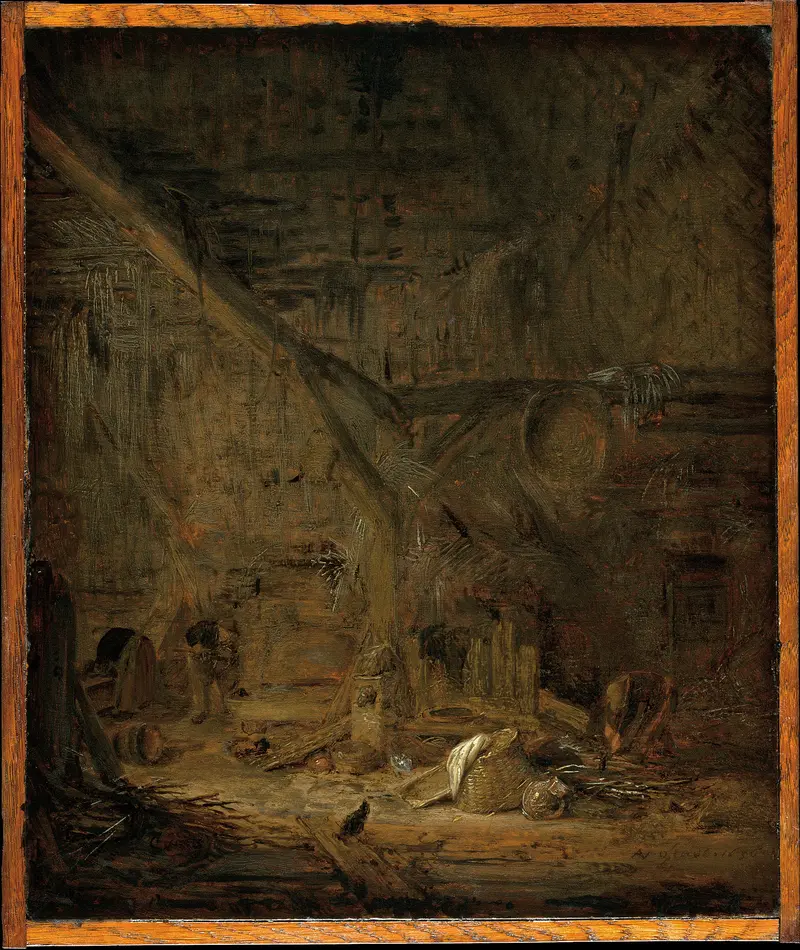
Interior of a Barn
Adriaen van Ostade
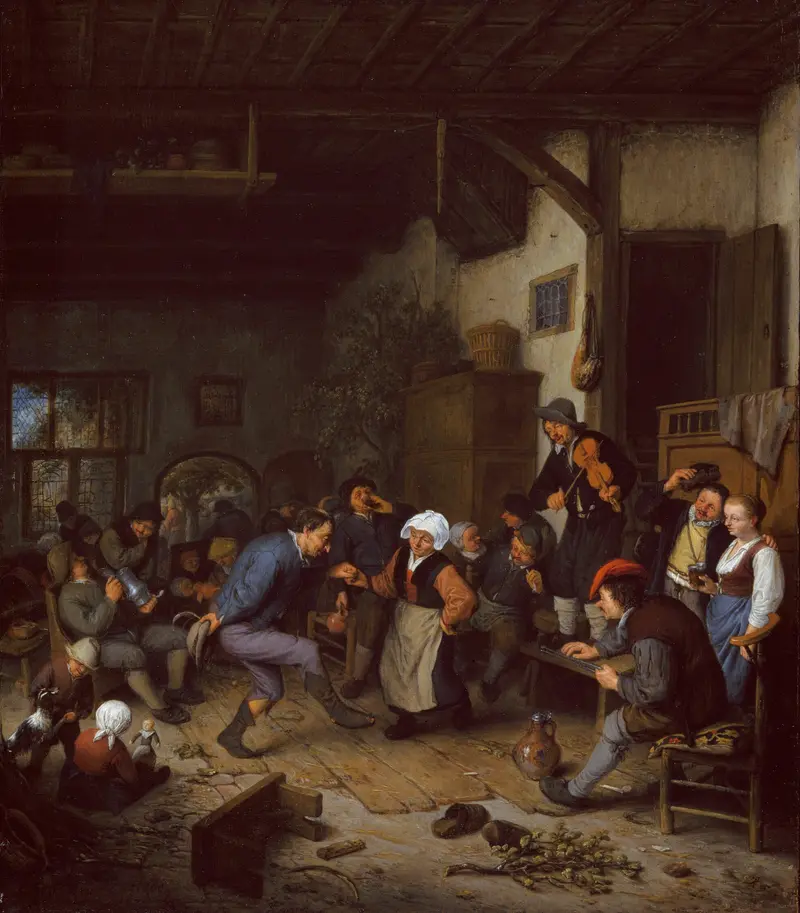
Merrymakers in an Inn
Adriaen van Ostade
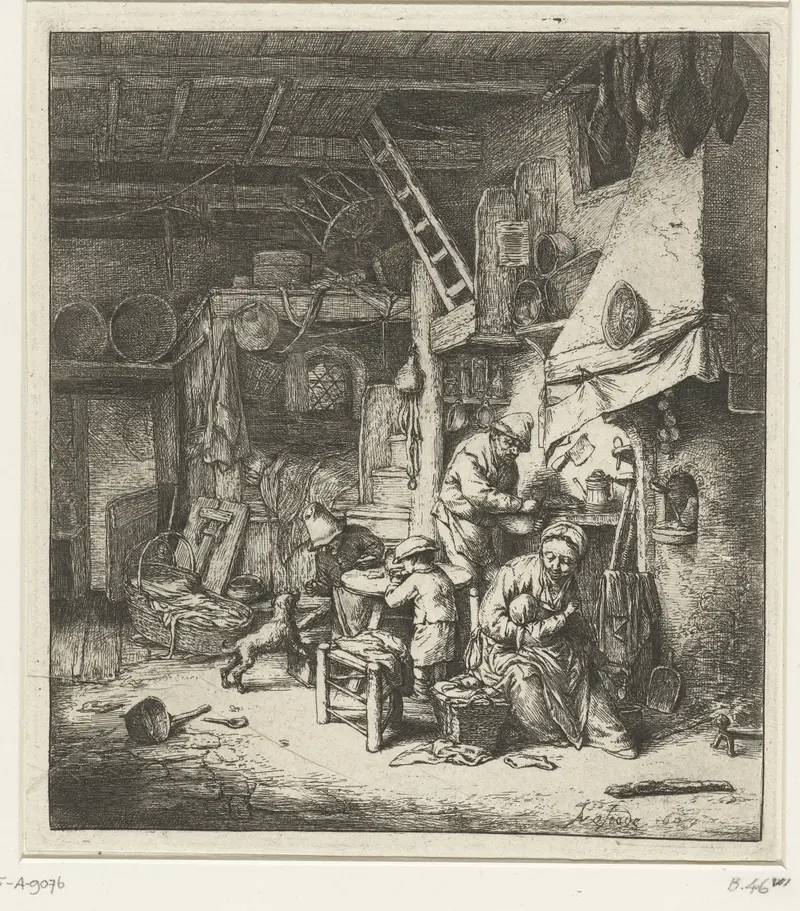
Boerengezin in interieur
Adriaen van Ostade
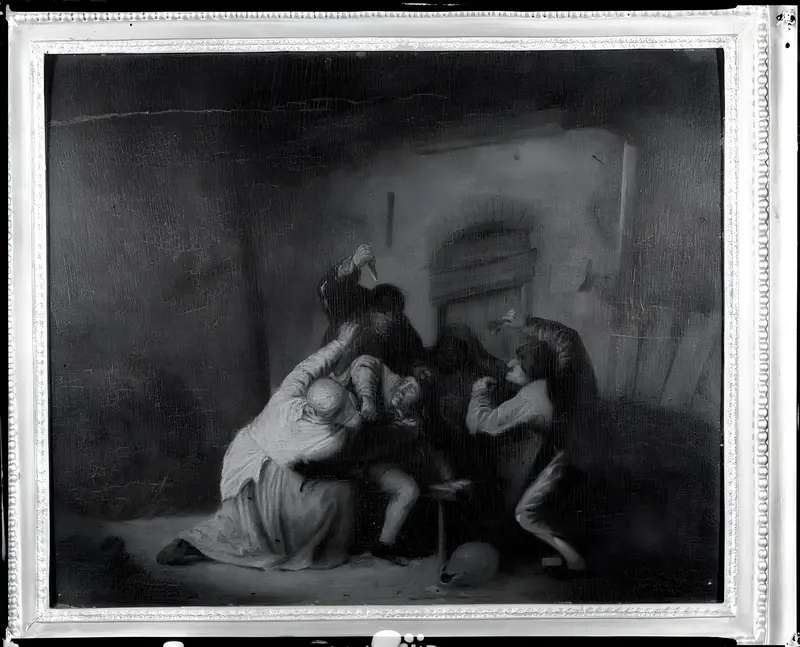
Peasants Brawling in a Tavern
Adriaen van Ostade
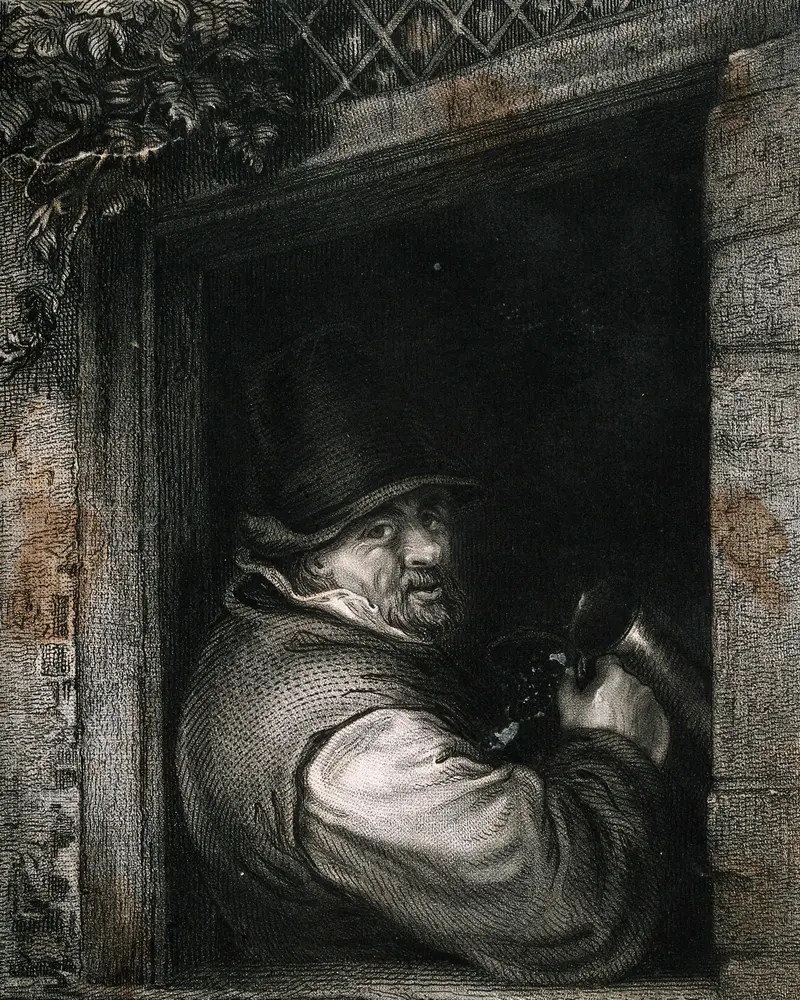
Man with a Tankard at a Window
Adriaen van Ostade
Dans in de herberg
Adriaen van Ostade
More Genre Scene Art

Banquet of the Officers of the St George Civic Guard
Frans Hals

Rembrandt and Saskia in the Scene of the Prodigal Son
Rembrandt van Rijn

Bal du moulin de la Galette
Pierre-Auguste Renoir

Quadrille at the Moulin Rouge
Henri de Toulouse-Lautrec

A Burial at Ornans
Gustave Courbet

When Will You Marry?
Paul Gauguin