
Rivage Breton — History & Facts
Can paint confess what words never could? In Rivage Breton, the harmonious interplay of land and sea whispers secrets of balance, inviting us into a world where nature’s elements coexist in serene beauty. Look to the horizon, where the gentle curve of the coastline meets the tumultuous waves. The soft, muted palette evokes a sense of calm—sandy browns and cool blues dance together, creating depth and texture. Notice how the light falls upon the water, shimmering like a thousand tiny mirrors reflecting the sky above.
The composition guides your gaze across the canvas, inviting you to explore the subtle transitions between the roughness of the rocky shore and the smoothness of the sea. Delve deeper into the emotional tension present in this work. The juxtaposition of the solidity of the land against the fluidity of the water symbolizes stability amidst chaos. The flecks of sunlight breaking through the clouds hint at hope and renewal, suggesting a moment of reprieve in the ever-changing rhythms of nature.
Each brushstroke seems to capture a breath, a pause in time, where the viewer can feel both the weight of the earth and the lightness of the air. Eugène Boudin painted Rivage Breton between 1870 and 1873, during a period of personal exploration in the coastal regions of France. At this juncture in his career, he was a pioneering figure in plein air painting, capturing the nuances of light and atmosphere. This artwork reflects his commitment to depicting the natural landscape, offering a glimpse into an artist who was at the forefront of impressionist principles, preparing the way for future generations.
More Artworks by Eugène Boudin
Browse all →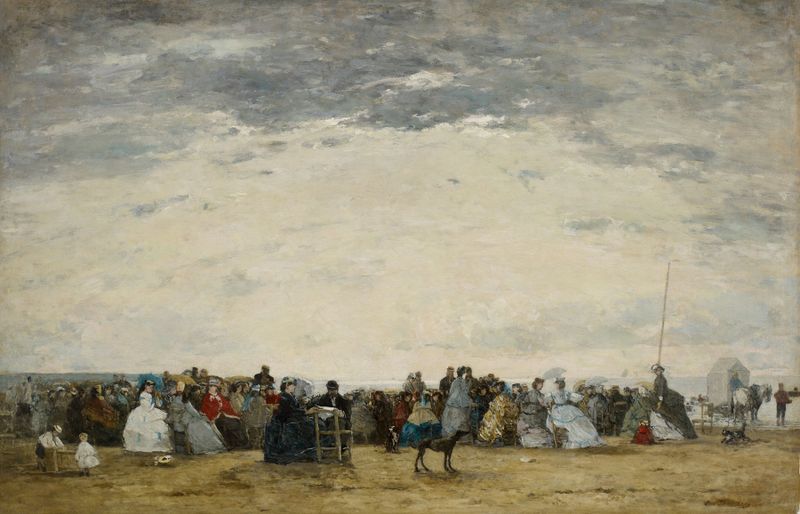
Vacationers on the Beach at Trouville
Eugène Boudin

Washerwoman near Trouville
Eugène Boudin
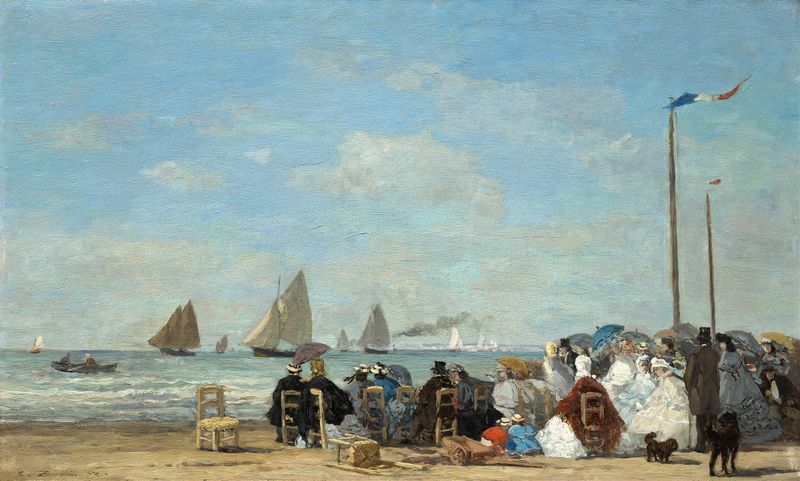
Beach Scene at Trouville
Eugène Boudin

Port aux environs d’Honfleur
Eugène Boudin

Le Faou, un coin du village
Eugène Boudin
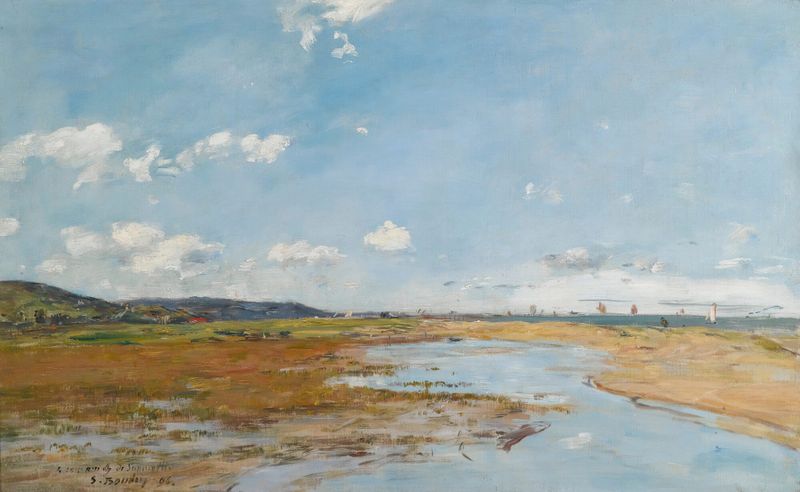
Deauville. Le Rivage
Eugène Boudin
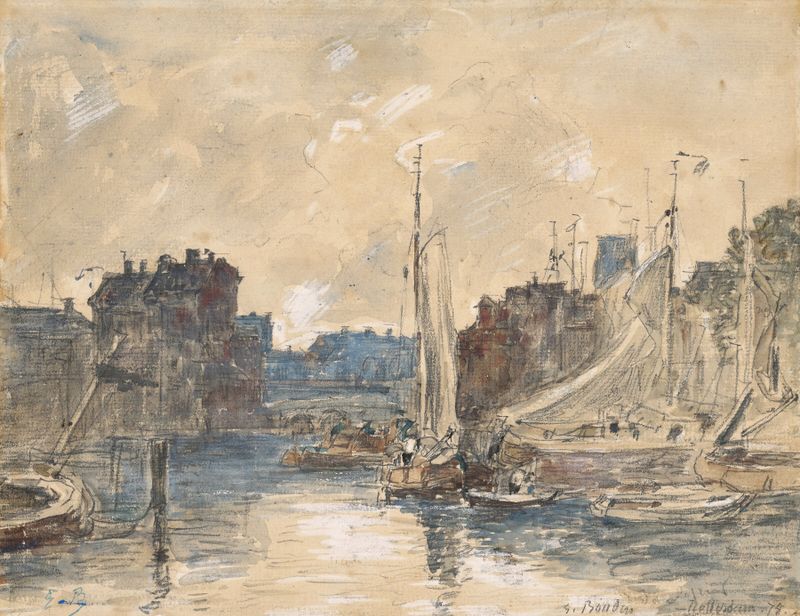
Port de Rotterdam
Eugène Boudin

View of Bordeaux, from the Quai des Chartrons
Eugène Boudin

Trouville, Scène De Plage
Eugène Boudin

Trouville, Le Port
Eugène Boudin





