
Roman Ruins With Turbaned Figures — History & Facts
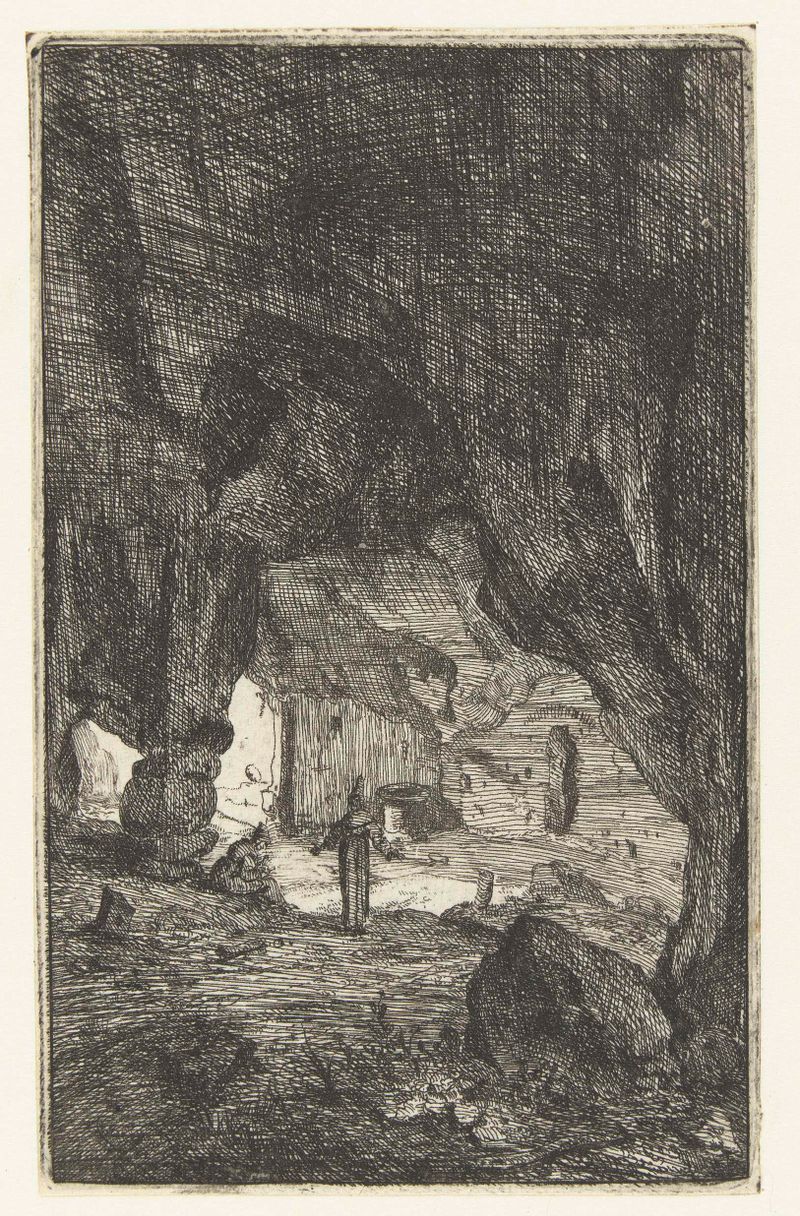
In this evocative tableau, shadow becomes a character of its own, weaving through the remnants of history and the presence of figures cloaked in cultural narratives. The interplay of light and dark invites contemplation, urging viewers to explore the unspoken truths embedded within each stroke. Look to the foreground, where two turbaned figures stand amidst the ruins, their postures suggesting conversation, yet their expressions remain unreadable. The crumbling columns rise behind them, casting elongated shadows that stretch across the uneven ground.
Notice how the light illuminates the rich textures of their garments, contrasting with the starkness of the stone. Breenbergh’s delicate brushwork captures both the warmth of flesh and the coldness of the ruins, drawing a vivid line between life and the remnants of a bygone era. As you delve deeper, consider the juxtaposition of vitality and decay that this scene embodies. The figures, seemingly rooted in the present, are surrounded by the relics of a past civilization, hinting at the passage of time and the stories left untold.
The shadows offer a visual metaphor for memory—what lingers in our minds beneath the surface, waiting for recognition. This tension invites a reflection on cultural identities and the transient nature of existence, urging us to acknowledge the legacies we inherit. Painted in the early 17th century, this work emerged during a period of great exploration and cultural exchange for Breenbergh, a Dutch artist residing in Italy. Here, he delved into themes of antiquity, showcasing the influence of classical ruins while reflecting the era's fascination with the exotic.
His ability to blend these elements reveals a moment of artistic dialogue, one that resonates with the viewer long after they leave the canvas behind.
More Artworks by Bartholomeus Breenbergh
Browse all →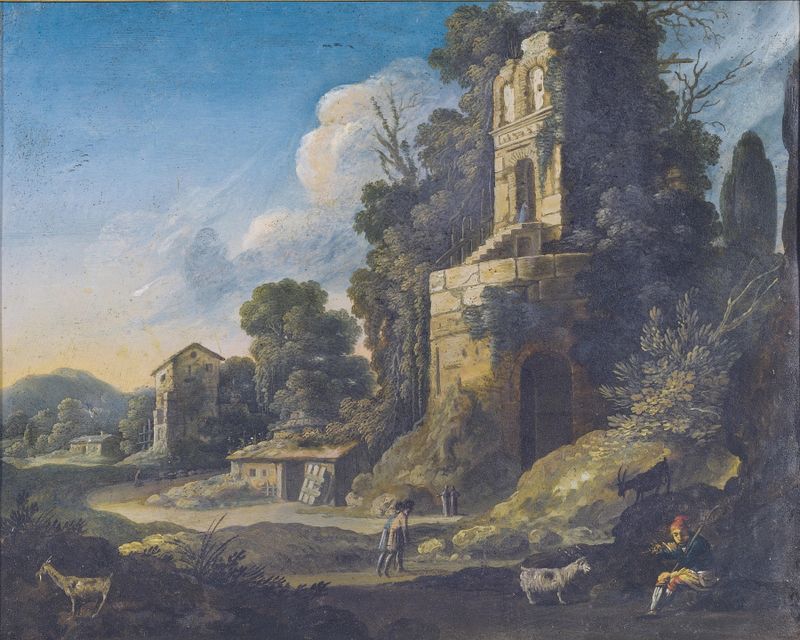
Italianate landscape with buildings and a herdsman playing pipes
Bartholomeus Breenbergh

Arcadian Landscape
Bartholomeus Breenbergh

Ruïnes van keizerlijk paleis te Rome
Bartholomeus Breenbergh

Ruïne van het Colosseum
Bartholomeus Breenbergh
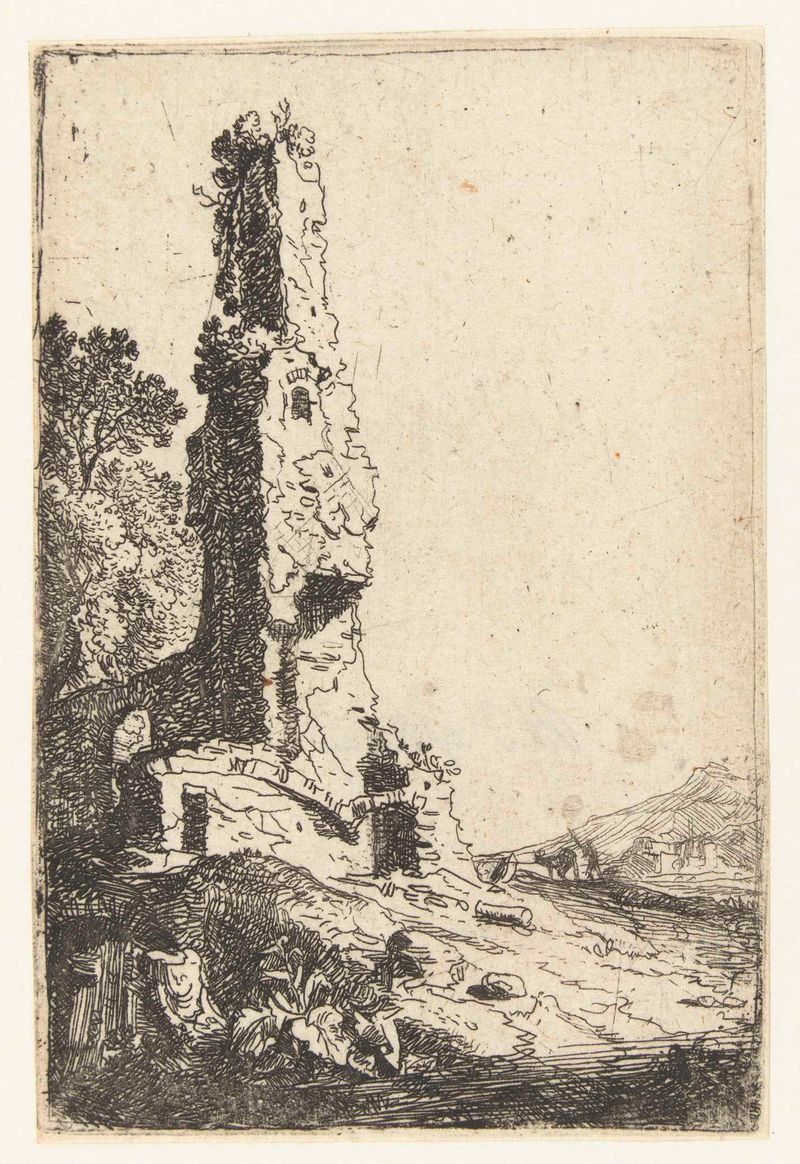
Ruïnes van de stadsmuren van Rome
Bartholomeus Breenbergh
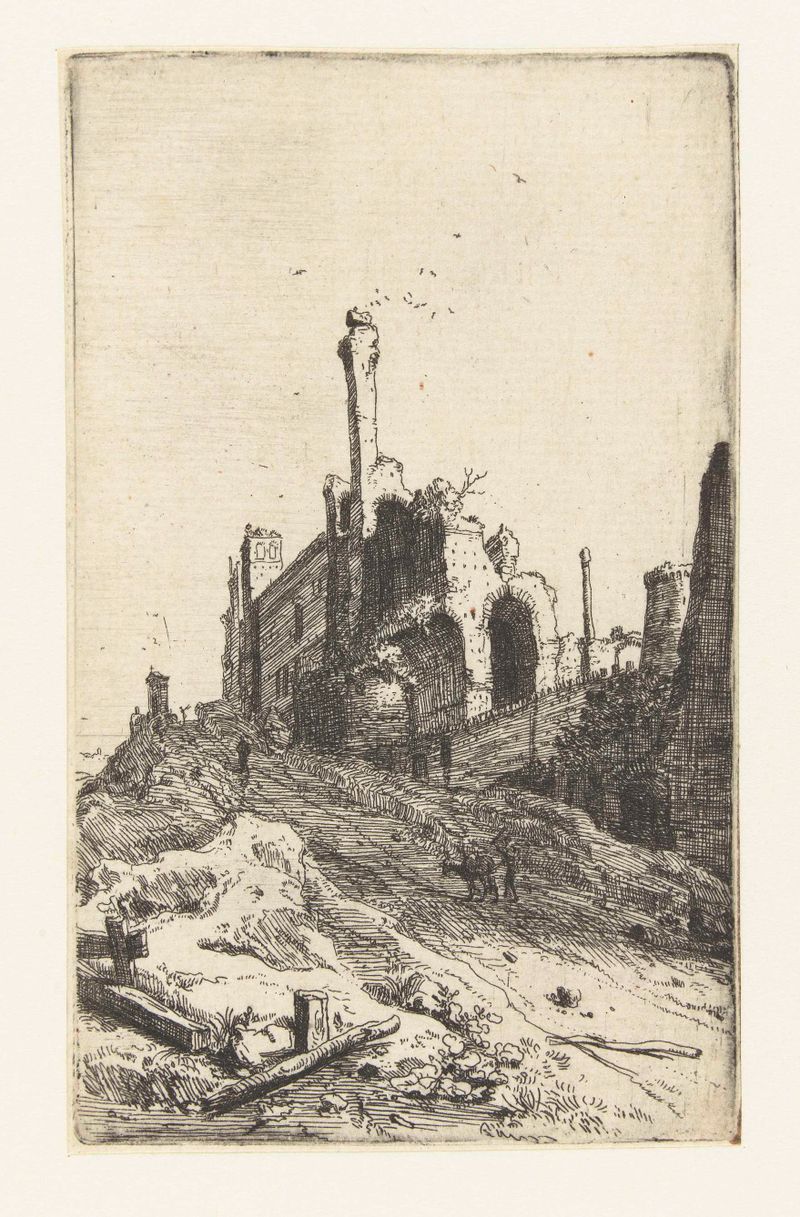
Ruïnes van een paleis te Tivoli
Bartholomeus Breenbergh

Figures Among Ruins By The Tiber
Bartholomeus Breenbergh

Italian Landscape with the Aurelian Wall
Bartholomeus Breenbergh
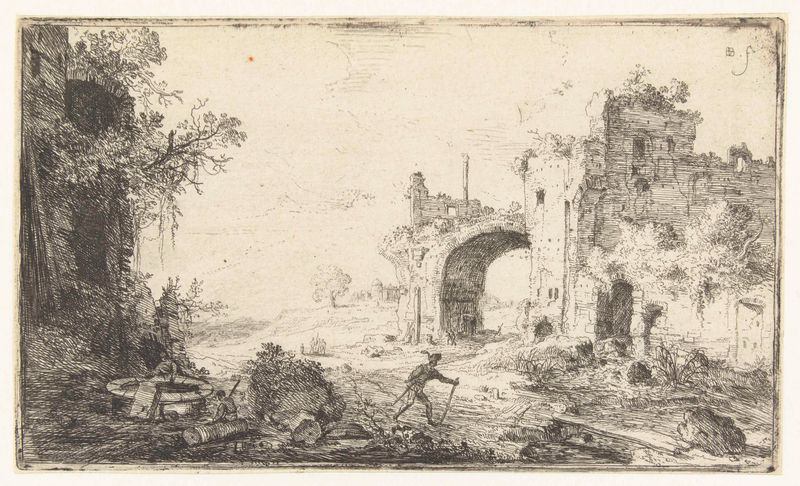
Ruïnes van de thermen van Caracalla
Bartholomeus Breenbergh
Interieur van een grot
Bartholomeus Breenbergh





