
Rouen — History & Facts
A city unfolds in fragments, each view stitched together like memories recalled out of order. In Rouen, Auguste Lepère invites the eye to wander through a tapestry of riverbanks, bustling quays, and cathedral spires, all rendered in a crisp, graphic hand. The topmost scene draws you in with the dense congregation of townsfolk on the promenade, their faces turned towards the Seine and the gothic silhouette of Rouen Cathedral, while the lamp’s glow and the restless sky hint at the city’s restless energy.
Below, vignettes of industry and leisure—boats, cranes, and riverside gatherings—capture the pulse of a port city in flux, each detail chosen to anchor the viewer in a specific moment and mood. Created in 1888, this work belongs to a period when artists across Europe were fascinated by the changing face of the modern city. Lepère, known for his mastery of printmaking, here assembles a portrait of Rouen that is both documentary and poetic, reflecting the late nineteenth-century appetite for scenes of daily life and urban transformation. The fragmented composition echoes the era’s illustrated journals and travel albums, which brought distant places into the homes of an expanding middle class.
Preserved today through the efforts of the National Gallery of Art’s open access initiative, Rouen stands as a window into a world where industry, architecture, and the rhythms of ordinary people converged along the banks of the Seine—inviting us to linger over every line and shadow.
More Artworks by Auguste Lepère

Le Pont-Neuf (Paris)
Auguste Lepère
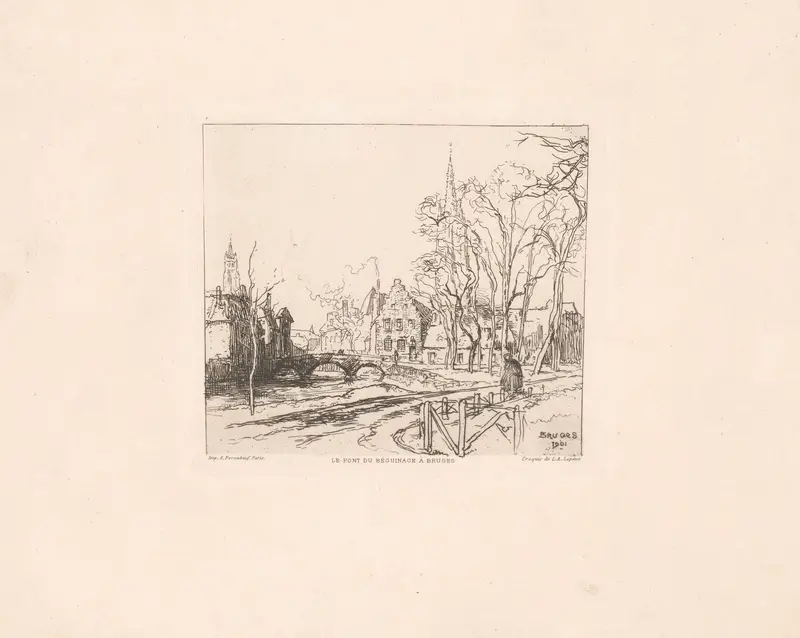
Le pont du Beguinage à Bruges
Auguste Lepère
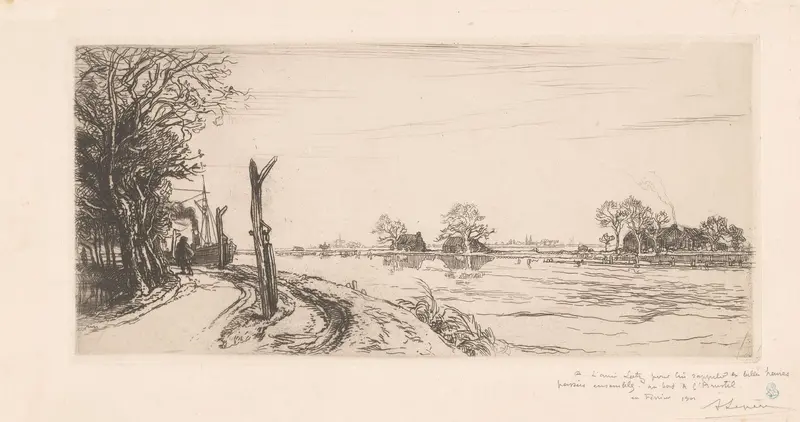
Au bord de l’Amstel
Auguste Lepère
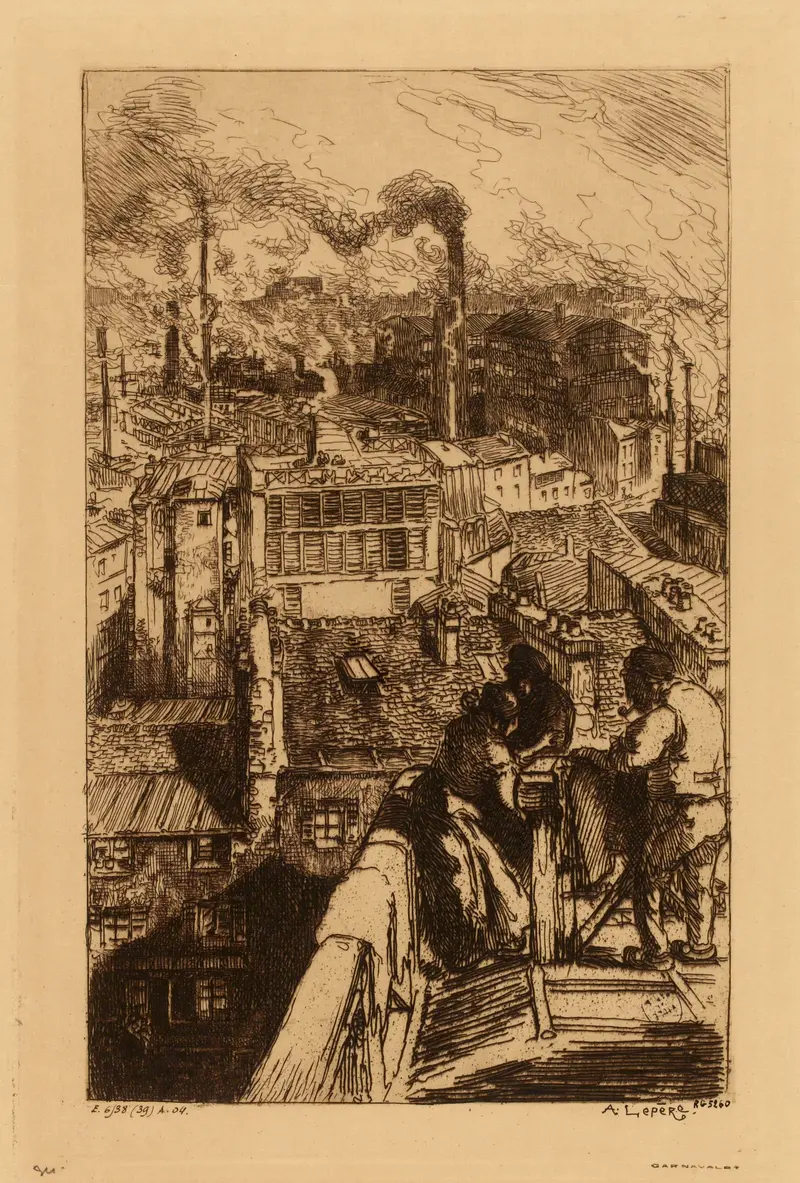
Le quartier des Gobelins
Auguste Lepère
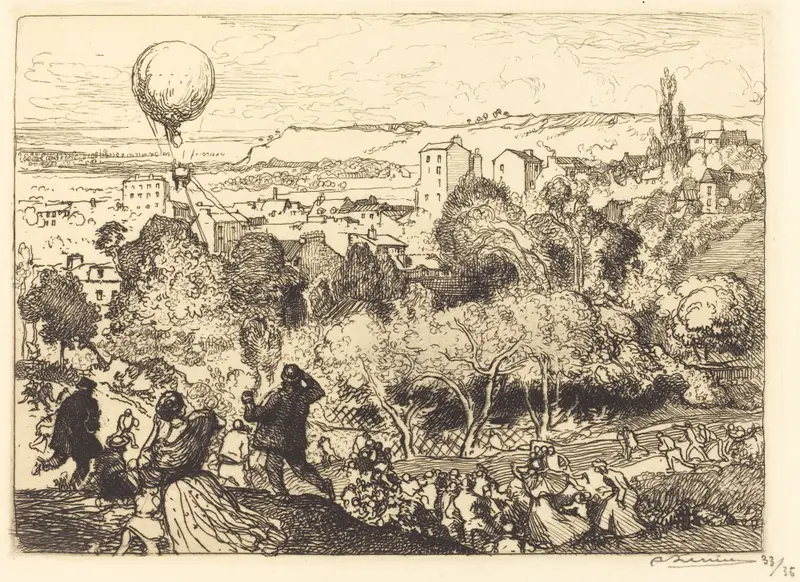
The Falling Balloon, in Pre-Saint-Gervais (Lebaloon qui tombe, au Pre-Saint-Gervais)
Auguste Lepère
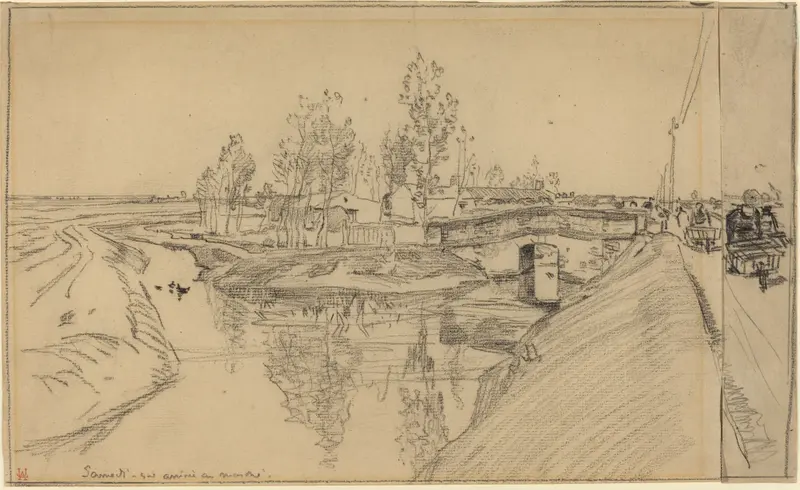
Arrivee au Marche
Auguste Lepère
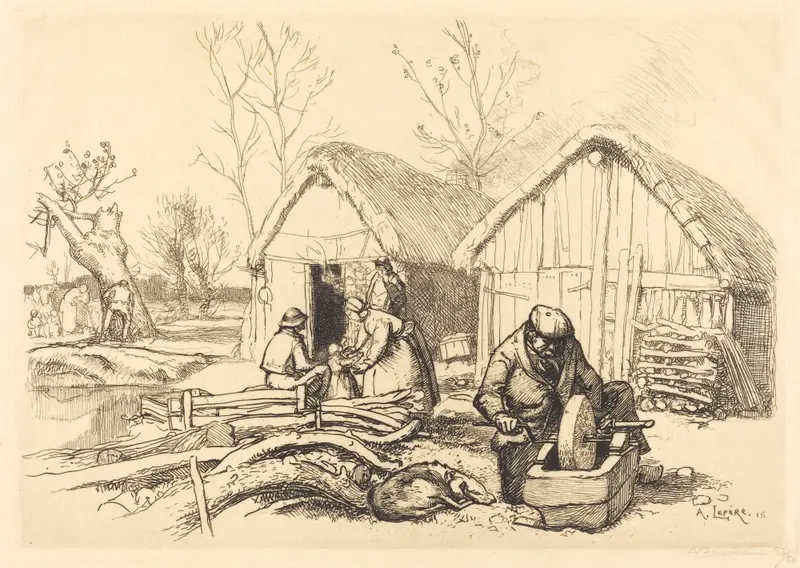
The House of the Woodcutter, Vendee (La maison du bucheron, Vendee)
Auguste Lepère
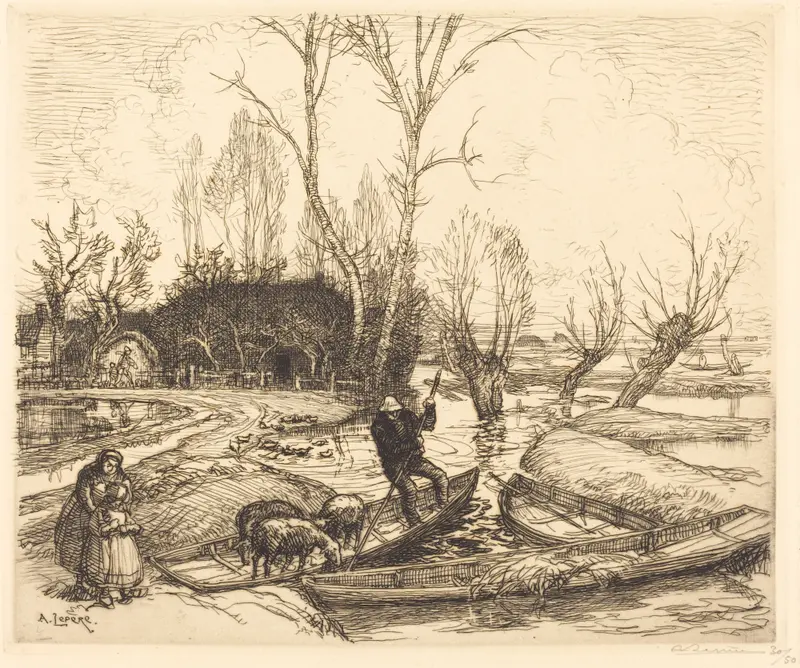
In the Deluged Marsh - The Shepherd (Au marais inonde - Le berger)
Auguste Lepère
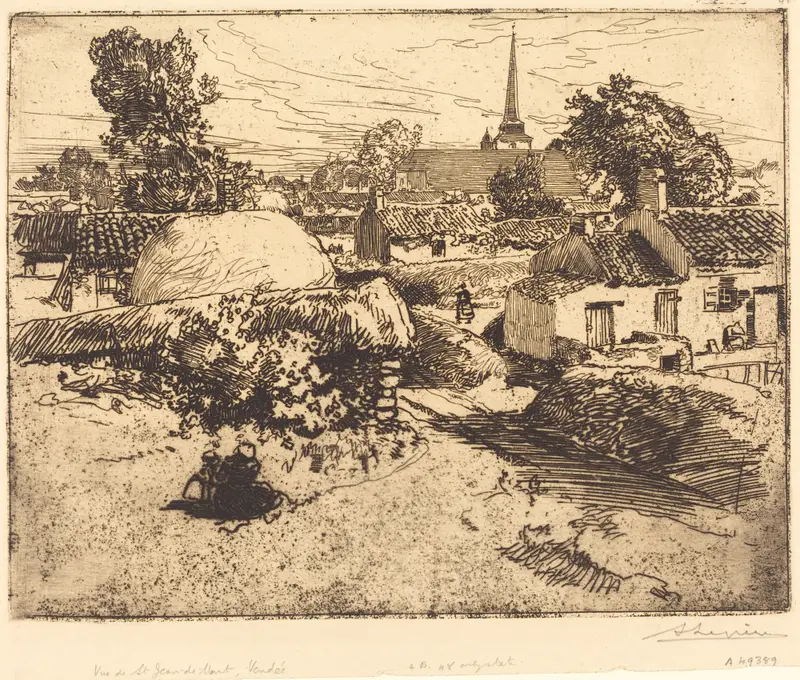
View of St.-Jean-de-Mont, Vendee (Vue de St.-Jean-de-Mont, Vendee)
Auguste Lepère
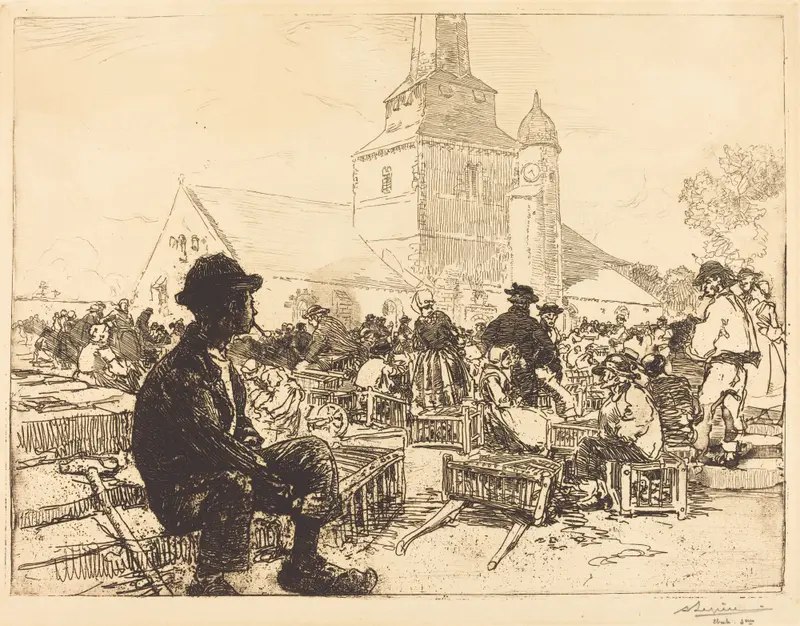
Poultry Market at St.-Jean-de-Mont (Marche a la volaille, a St.-Jean-de-Mont)
Auguste Lepère
More Genre Scene Art

Banquet of the Officers of the St George Civic Guard
Frans Hals

Rembrandt and Saskia in the Scene of the Prodigal Son
Rembrandt van Rijn

Bal du moulin de la Galette
Pierre-Auguste Renoir

Quadrille at the Moulin Rouge
Henri de Toulouse-Lautrec

A Burial at Ornans
Gustave Courbet

When Will You Marry?
Paul Gauguin