
Rue du Maure et passage de la Réunion donnant rue Beaubourg et rue Saint Martin — History & Facts
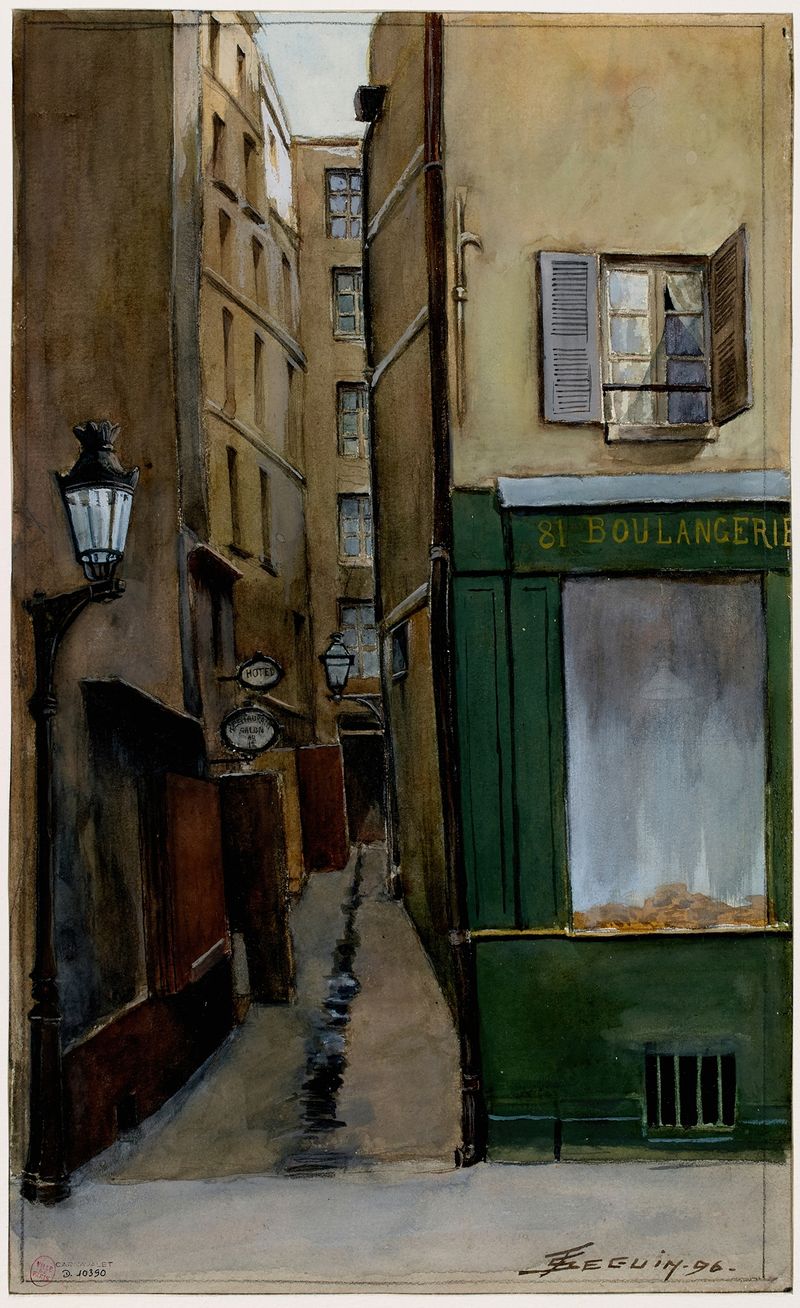
In this work, the artist transforms the frenetic energy of urban life into a harmonious vision, inviting viewers to explore the ecstasy of a Parisian street. Focus on the vibrant palette that bursts forth from the canvas — the lush greens of the trees and the soft pastels of the buildings. Notice how the rhythmic strokes create a sense of movement, drawing your eye down the narrow lane. The convergence of lines leads to a kaleidoscope of activity, where pedestrians weave through the scene, their silhouettes almost merging with the soft glow of the street lamps that flicker like distant stars. Look closely at the subtle contrasts within the painting.
The warmth of sunlight dapples the cobblestone, suggesting a moment frozen in time, while the shadows linger just beyond the figures, hinting at the stories and lives that pulse beneath the surface. The juxtaposition of light and dark not only captures the physical space but also evokes an emotional landscape of joy and longing, revealing how the heart of the city throbs beneath its everyday grind. In 1896, F. Séguin painted this piece amidst a flourishing Paris, where Impressionism was waning and new movements began to emerge.
Living in the throes of artistic experimentation, he sought to capture the essence of modern life — a bustling city forever in motion. This painting reflects not just a moment but a vibrant period where every brushstroke resonated with the electric energy of change in the air.
More Artworks by F. Séguin
Browse all →
Rue Brantôme. (anciennement rue des Petits Champs donnant rue Saint Martin et rue Beaubourg)
F. Séguin
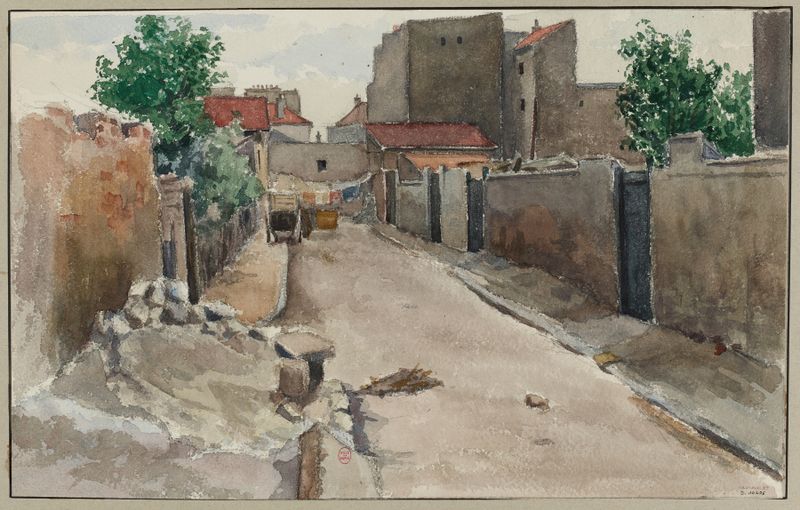
La rue de Chambéry, prise de la rue de Nice la Frontière
F. Séguin
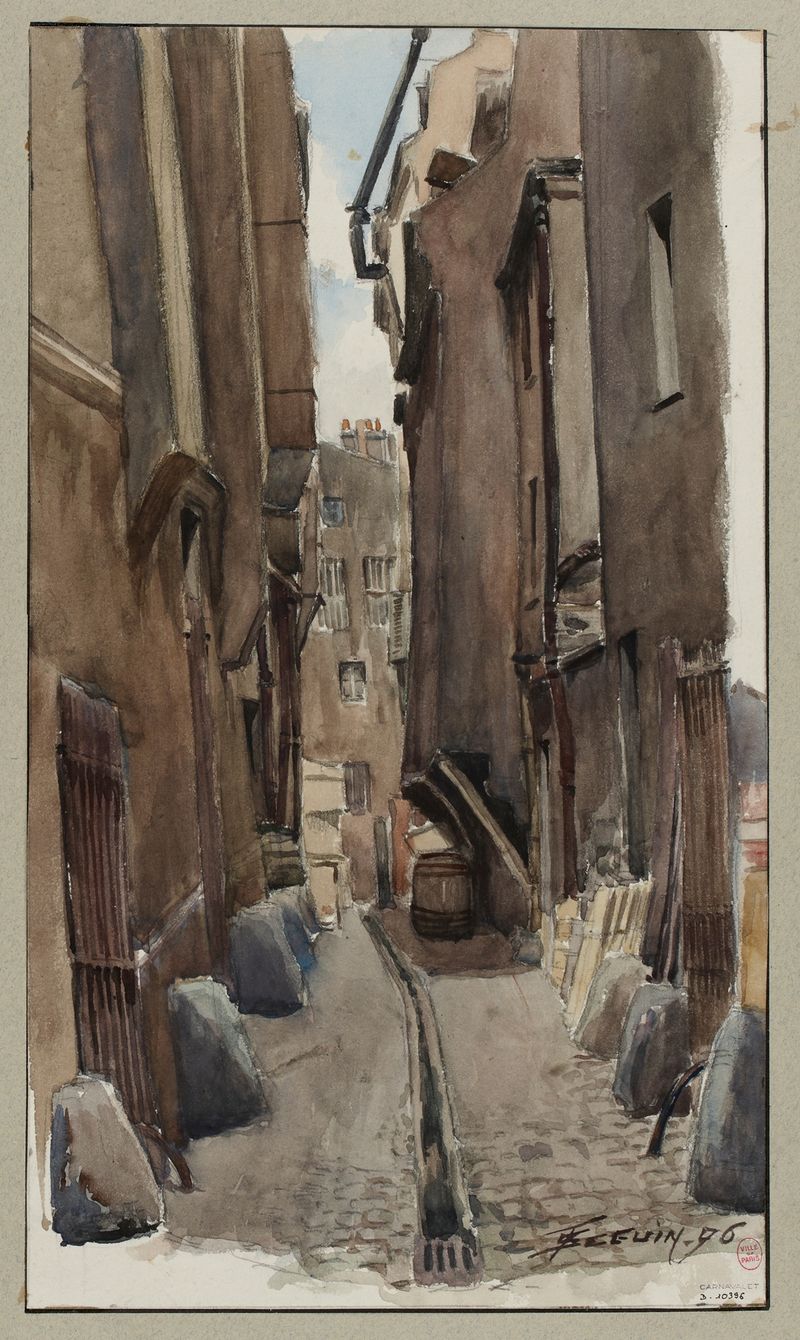
Le Cul de sac du Bœuf, (rue Saint Merri)
F. Séguin

Rue Descartes
F. Séguin
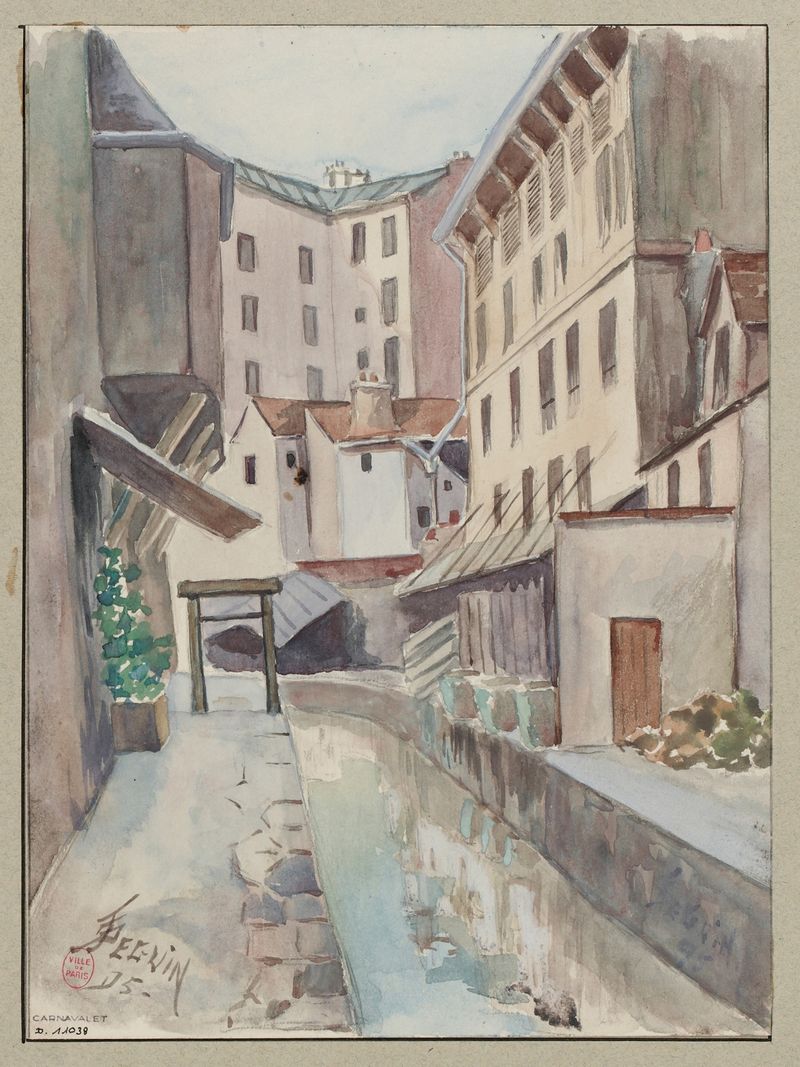
Le bord de la Bièvre à l’avenue des Gobelins
F. Séguin

Villa des Otages mur où furent fusillés les 52 derniers otages de la Commune, rue Haxo
F. Séguin
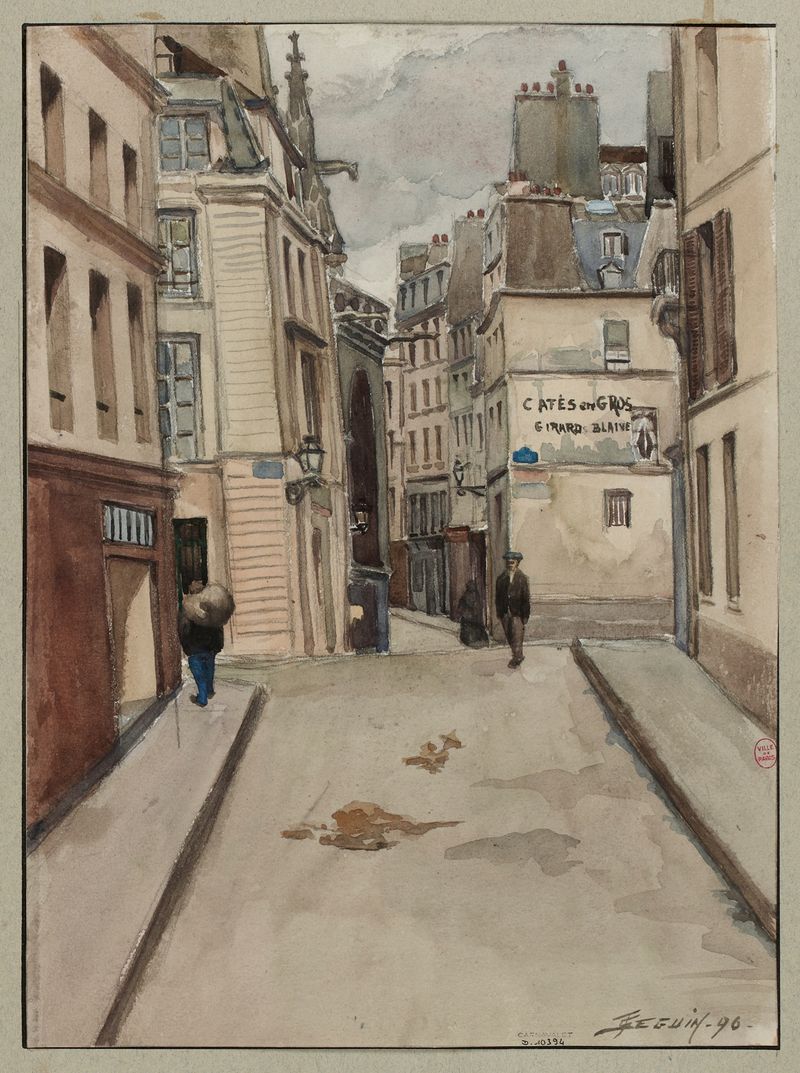
Rue du Cloître Saint Mérry, de la rue du Renard à la rue Saint Martin
F. Séguin
Cul de sac du Fiacre, 81 rue Saint Martin
F. Séguin
Angle de l’impasse Carlier et au 24 rue des Morillons, Vaugirard
F. Séguin
Rue Franquet
F. Séguin





