
Ruin of a Villa near the Sea — History & Facts
A hush falls over the crumbling villa as the last light slips behind the sea’s edge, leaving only the silhouettes of cypress trees and the stark archway to hold back the gathering dusk. The artist, Arnold Böcklin, draws the viewer into a world where nature and memory entwine—where the ruins, half-swallowed by shadow and overgrown with brush, seem to brood over their own forgotten stories. A flock of dark birds wheels overhead, their flight echoing the restless energy of the clouds, while the stonework below hints at a grandeur long surrendered to time.
Every element in the scene works to heighten the sense of abandonment and longing: the archway frames the last glimmer of the horizon, suggesting both passage and loss, while the dense trees stand as silent witnesses to what once was. Painted between 1878 and 1880, Ruin of a Villa near the Sea belongs to a moment in European art when ruins were not just picturesque, but charged with meaning—reminders of mortality, the passage of empires, and the lure of the unknown. In the late nineteenth century, artists like Böcklin, working within the Symbolist movement, often turned to such scenes to evoke emotions beyond the visible. These paintings were rarely made for grand salons; instead, they appealed to private collectors drawn to the mysterious and the melancholic.
Little is recorded about the specific journey of this work, now preserved in a modern collection, but its brooding mood and careful composition speak to a time when ruins were not merely relics, but invitations to wander through the landscapes of the mind. Stand before it long enough, and you may find yourself listening for the stories the stones refuse to tell.
More Artworks by Arnold Böcklin

Die Toteninsel III
Arnold Böcklin
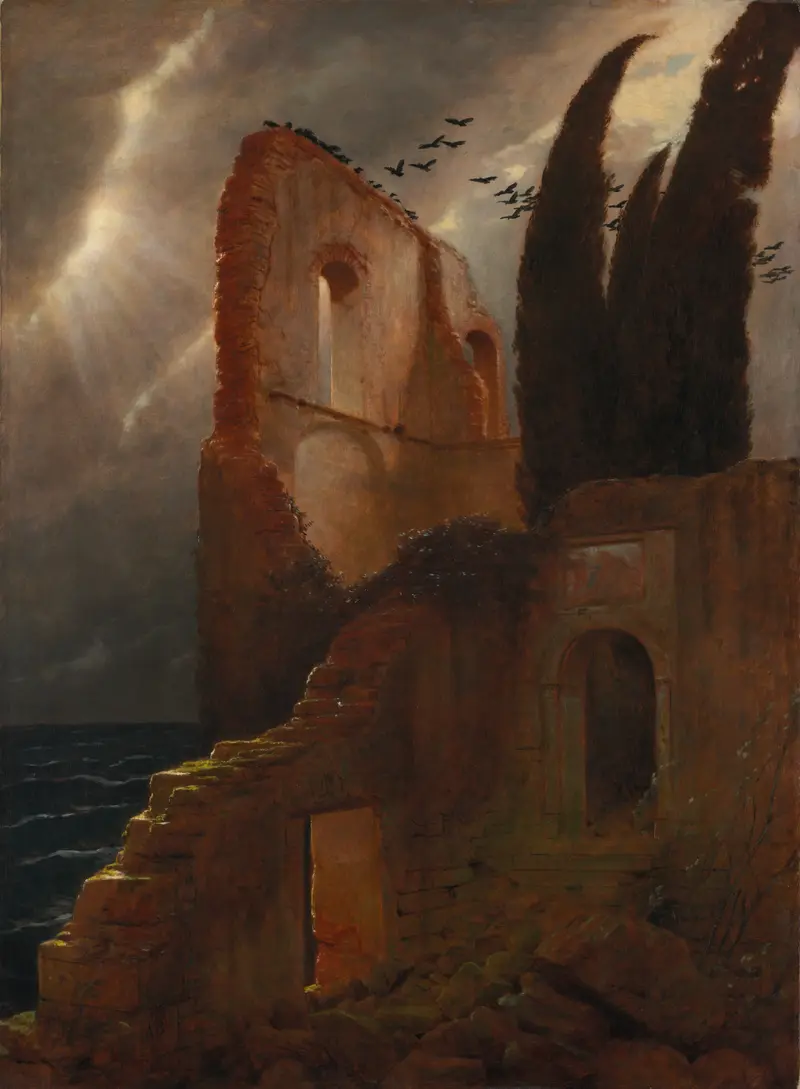
Ruin by the Sea
Arnold Böcklin
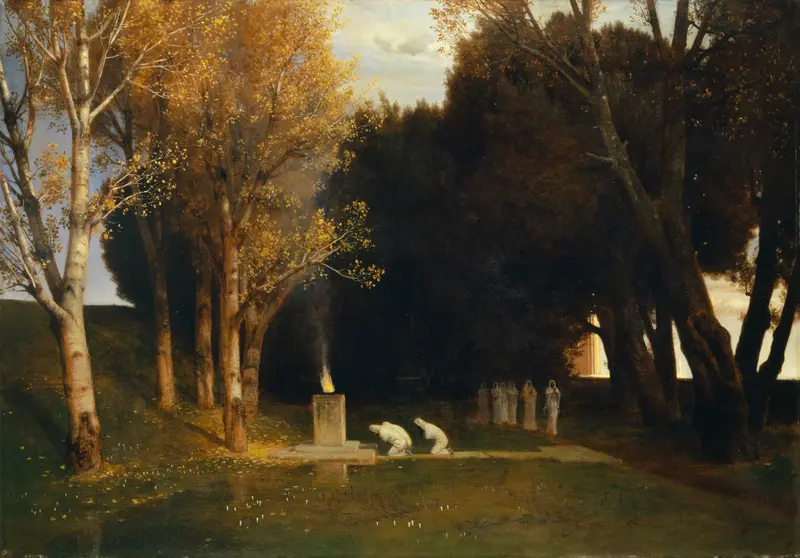
The Sacred Grove
Arnold Böcklin
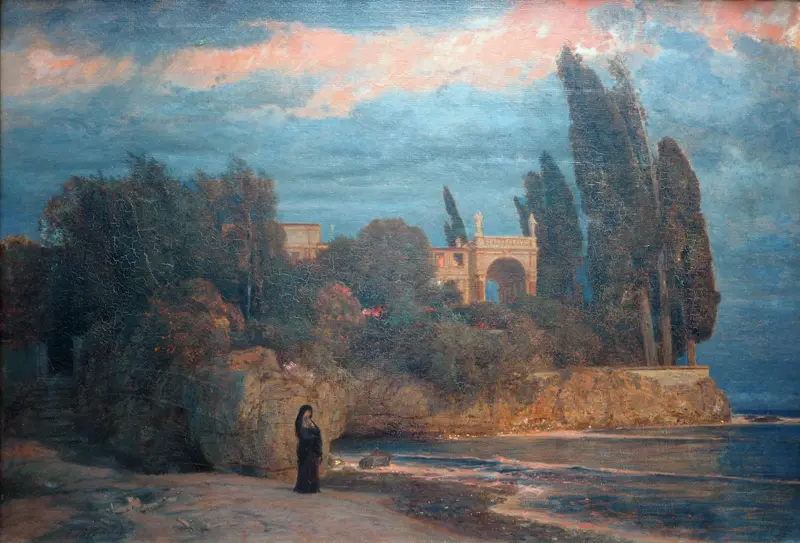
Villa by the Sea
Arnold Böcklin
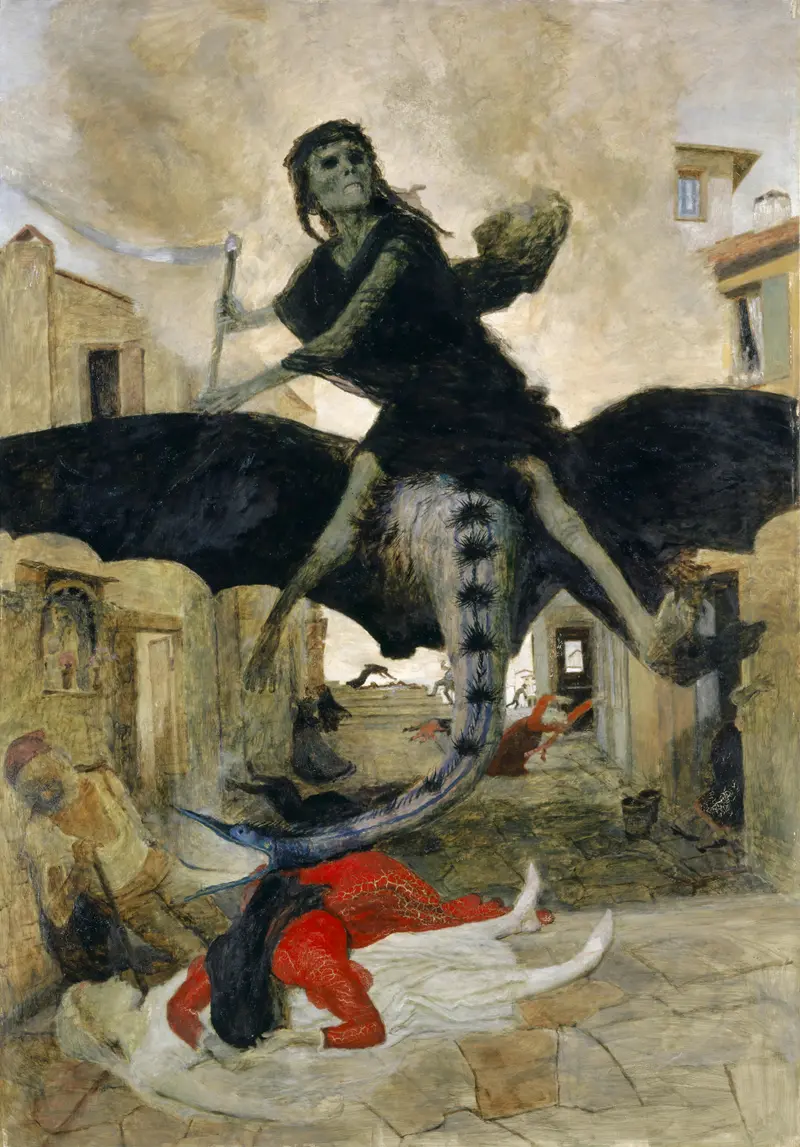
The Plague
Arnold Böcklin
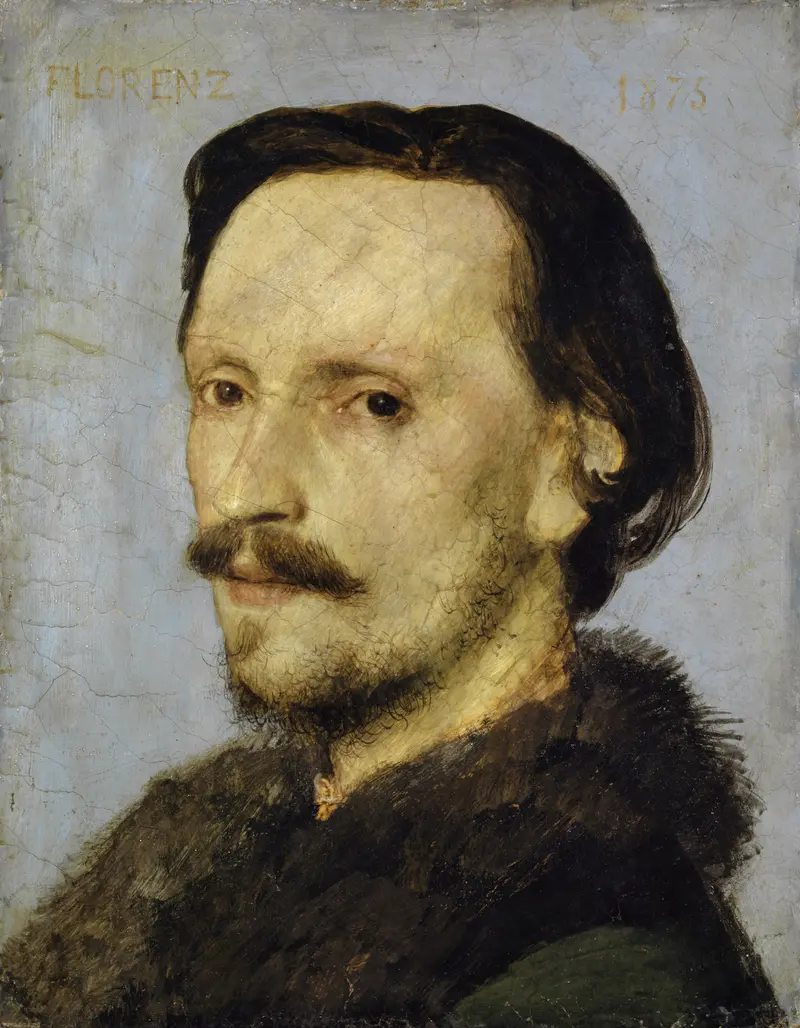
Böcklin Bildnis des Kunsthistorikers Adolph Bayersdorfer, 1875
Arnold Böcklin
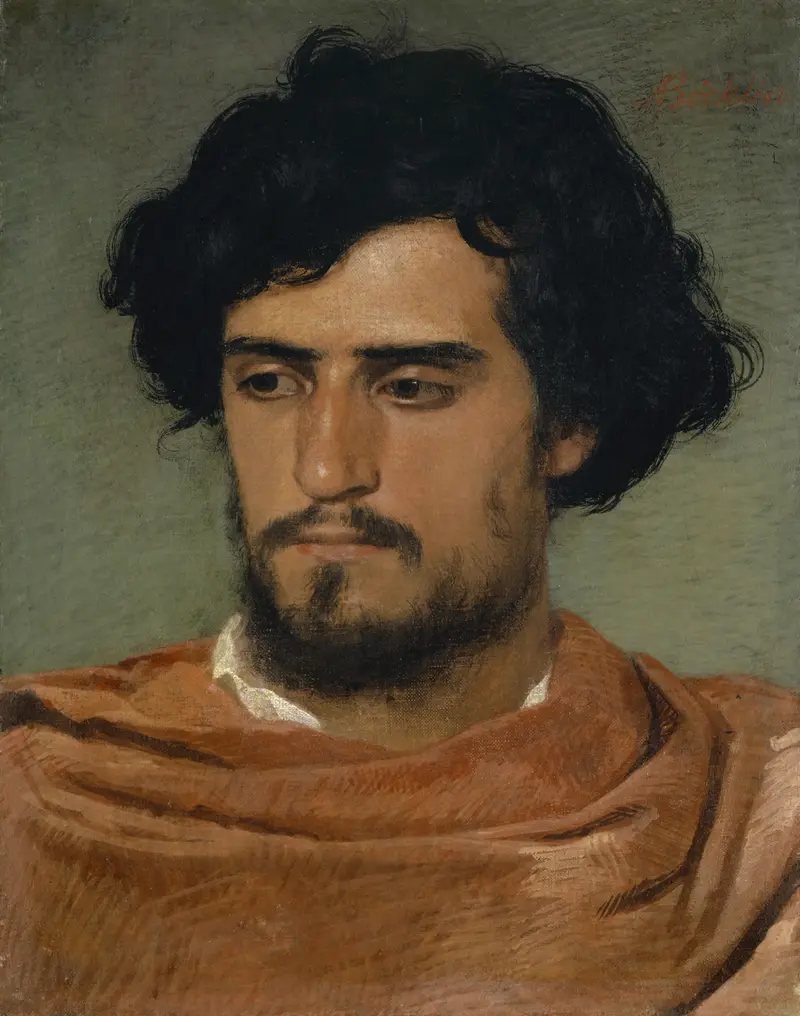
Head of a Roman
Arnold Böcklin
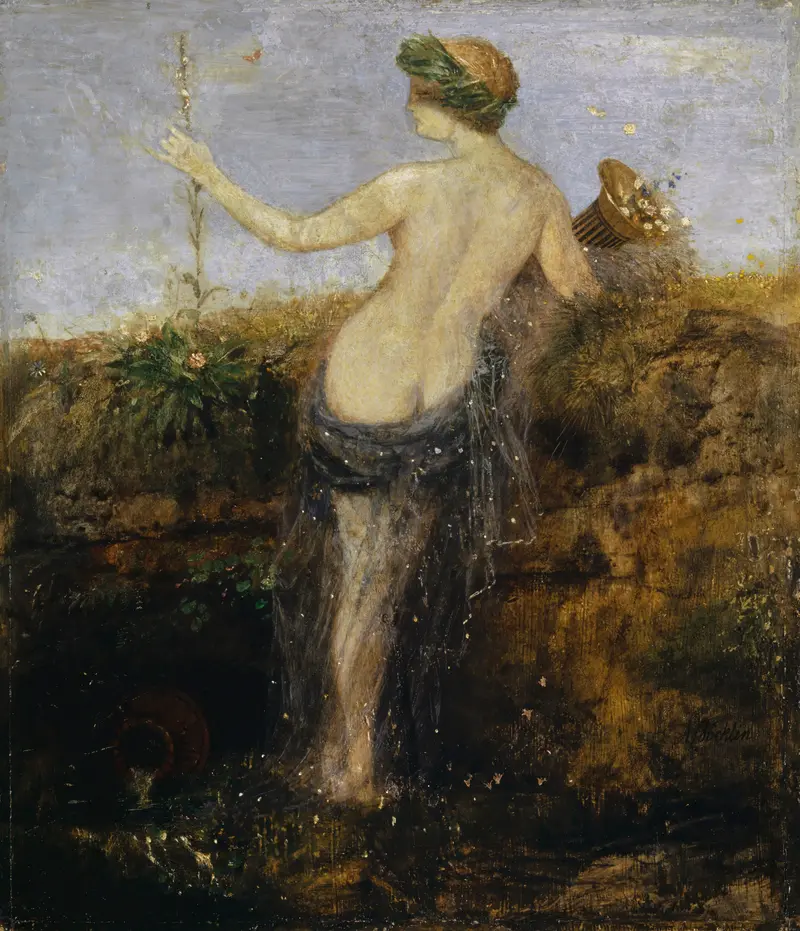
Nymphe with Horn of Plenty
Arnold Böcklin
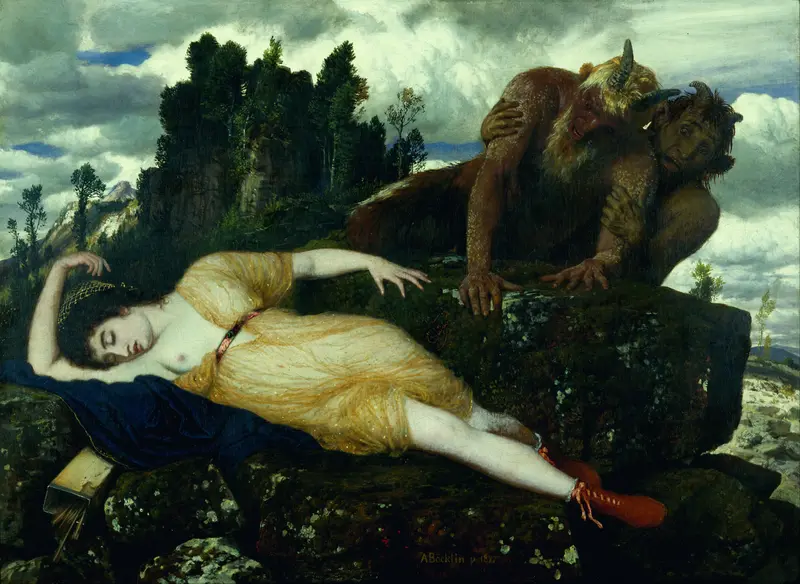
Sleeping Diana Watched by Two Fauns
Arnold Böcklin
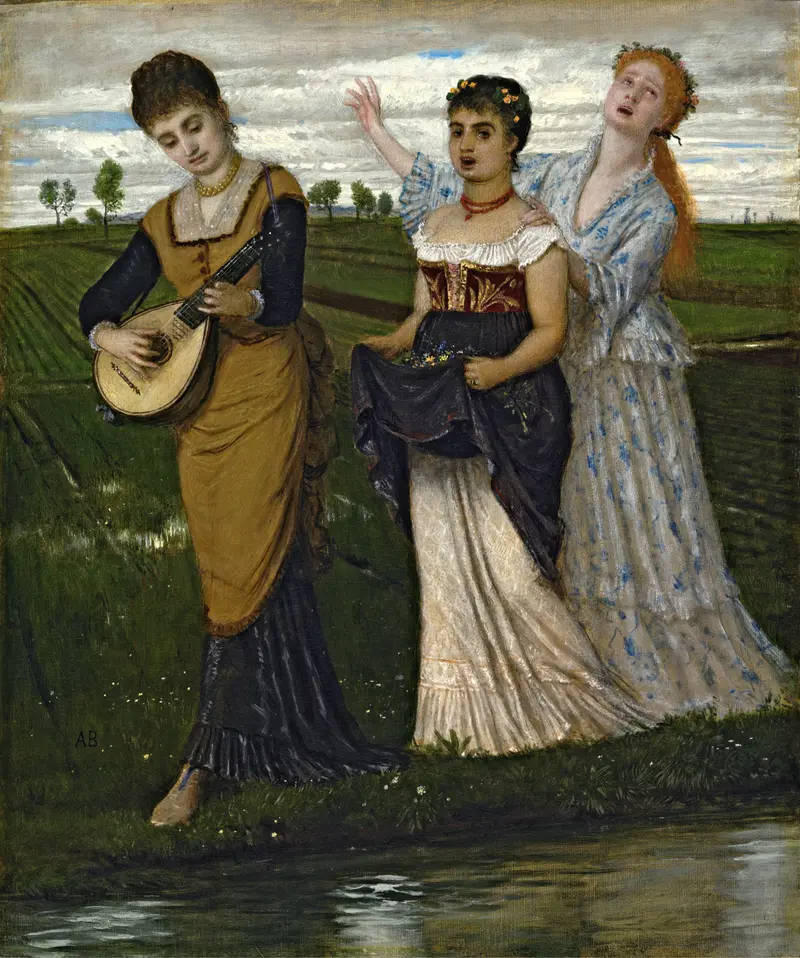
Spring (Songs of Spring)
Arnold Böcklin
More Landscape Art

The Starry Night
Vincent van Gogh

View of Delft
Johannes Vermeer

Water Lilies
Claude Monet

The Grand Canal, Venice, looking north-west from the Ca' Corner to the Ca' Contarini degli Scrigni, with the campanile of Santa Maria della Carità
Canaletto

Windsor Castle
Canaletto

The Grand Canal looking North-East from the Palazzo Dolfin-Manin to the Rialto Bridge
Canaletto