
Ruined House on a Hillside — History & Facts
Can beauty exist without sorrow? In Ruined House on a Hillside, we find the poignant answer nestled within the quiet decay of time and solitude. Look to the foreground, where the crumbling ruins of a house stand resilient against the backdrop of a vast, melancholic sky. Notice how Legros masterfully employs muted earth tones, evoking a sense of desolation that envelops the structure. The subtle interplay of light and shadow creates a somber atmosphere, guiding your gaze upwards toward the distant horizon, where the land meets the sky in a soft, hazy embrace. In this artwork, emptiness reigns supreme.
The absence of life within the house speaks volumes, a testament to forgotten memories and unfulfilled dreams. The weathered stone juxtaposes the surrounding greenery, hinting at nature's relentless reclamation of what once was. There's an emotional tension between the steadfast ruins and the ephemeral beauty of the landscape, inviting viewers to reflect on the passage of time and the fragility of existence. Alphonse Legros painted this work between 1857 and 1911, during a period marked by personal transformation and evolving artistic movements.
Settled in England after leaving his native France, he found himself amidst a flourishing art scene while grappling with his own identity. The rise of the Pre-Raphaelites and their fascination with nature and rural life influenced his oeuvre, yet Legros retained a unique perspective, capturing moments of stillness and contemplation, as evident in this melancholic portrayal of a once-vibrant home.
More Artworks by Alphonse Legros
Browse all →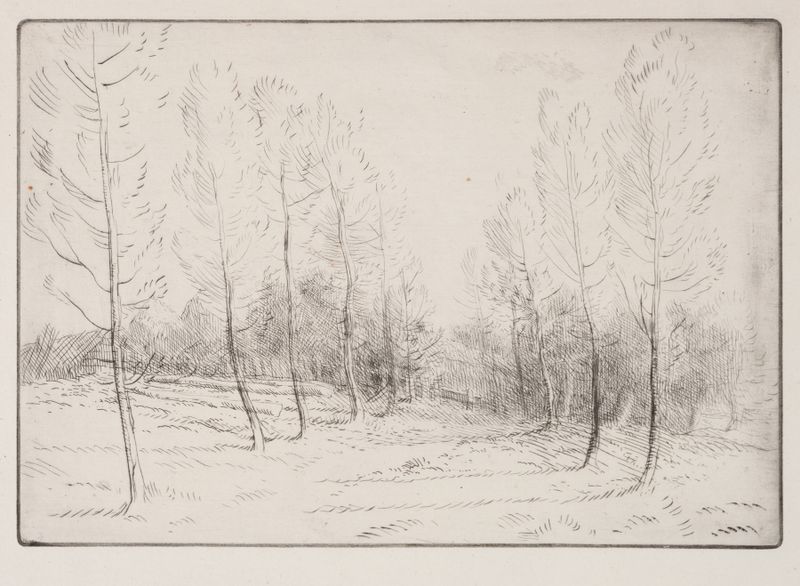
Avenue of Poplars
Alphonse Legros
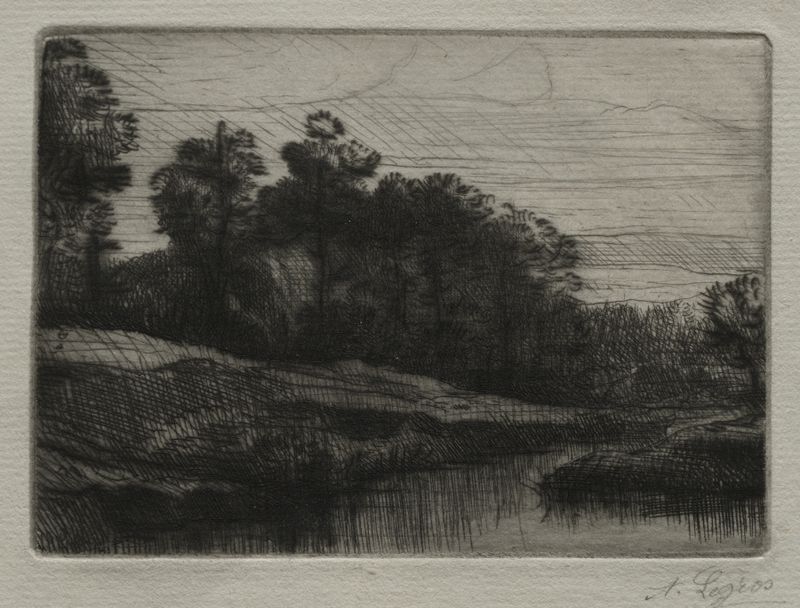
Evening
Alphonse Legros

The Fish in the Hoop Net
Alphonse Legros

The Little Beggar
Alphonse Legros
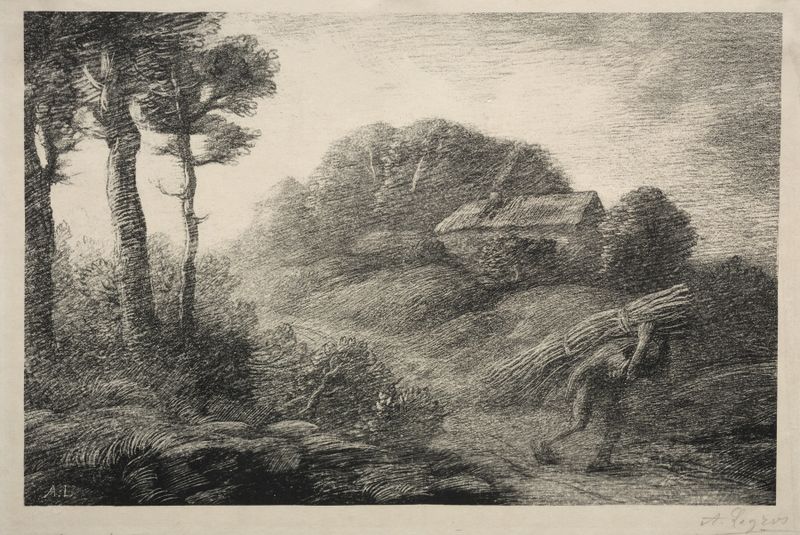
The Return of the Fagot Gatherer
Alphonse Legros

Storm
Alphonse Legros
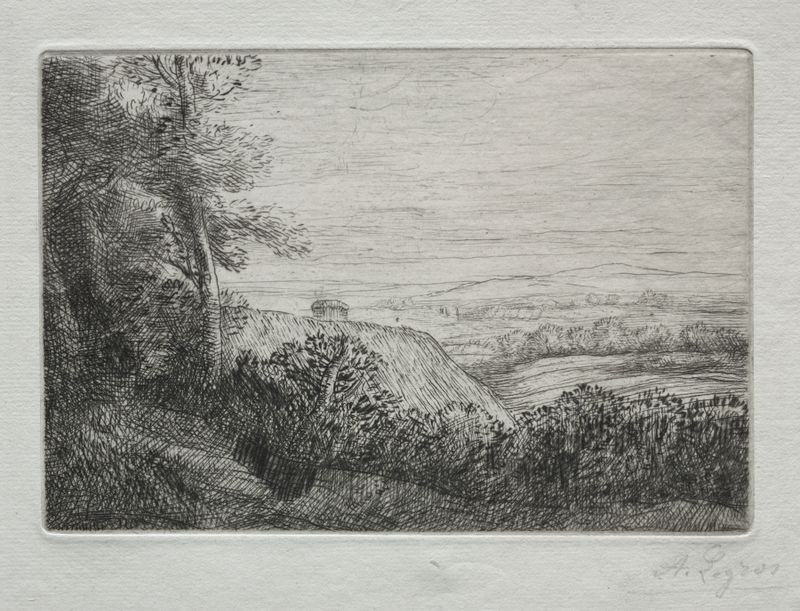
Les dernière Rayons de Soleil
Alphonse Legros
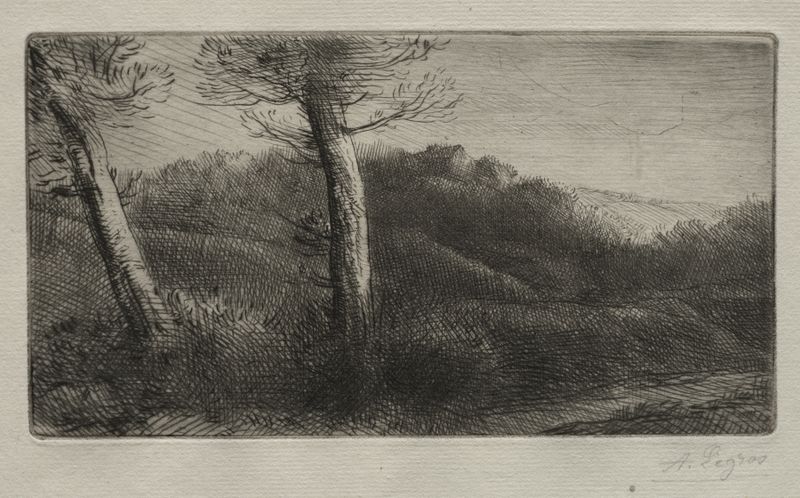
The Traveler Stretched out on the Grass
Alphonse Legros
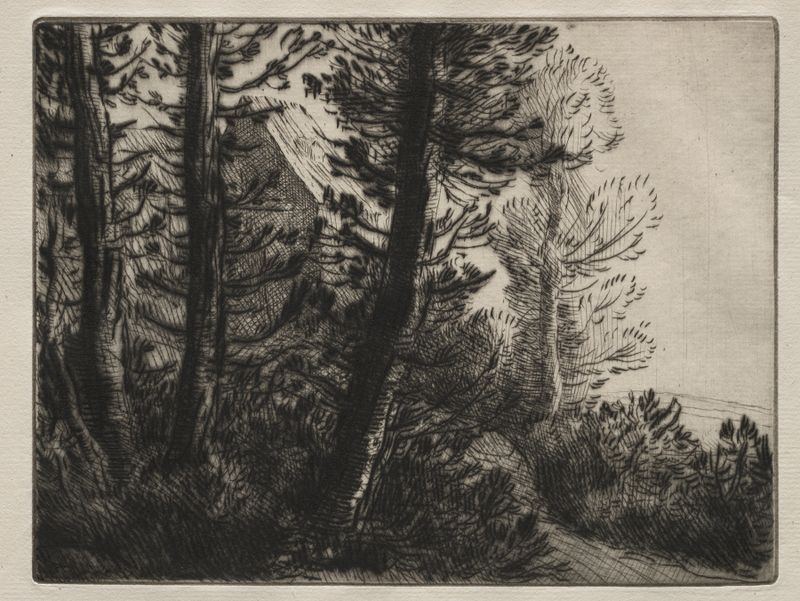
Guard House
Alphonse Legros

Death of a Vagabond
Alphonse Legros





